
|

 |
 WARWICKSHIRE & COVENTRY WARWICKSHIRE & COVENTRYTOURIST GUIDE |
|||
|
|
||||
| Welcome to Mercia. Press Control+B to Bookmark this site for later reference. | ||||
|
||||

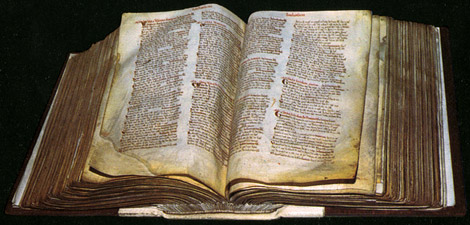 THE DOOMSDAY
BOOK THE DOOMSDAY
BOOK |

 I'm Sammy, Your Webmistress. |
 THE MERCIA TOURIST BOARD  Our Group has generated over 400 million visits to our sites since 1999, and this is your opportunity to participate in the success. Join up with these leading UK advertising sites to maximise your website's viewing in Britain. Click on the appropriate banners or Links below. |
 |



Our Group has generated over 380 million visits to our sites since 1999, and this is your opportunity to participate in the success. Join up with these leading UK advertising sites to maximise your website's viewing in Britain.
(All Our Sites are based on England's Anglo-Saxon Heritage)
 Warwickshire situated in the English Midlands. Historically, bounded to the north-west by Staffordshire, by Leicestershire to the north-east, Northamptonshire to the east, Worcestershire to the west, Oxfordshire to the south and Gloucestershire to the south-west. Areas historically part of Warwickshire include Coventry, Solihull, Sutton Coldfield and a small area of central Birmingham including Aston and Edgbaston. These became part of the metropolitan county of West Midlands (Sutton Coldfield becoming part of Birmingham) following local government re-organisation in 1974 after the passage of the Local Government Act 1972. Much of northwestern Warwickshire, including that area now forming part of Coventry, Solihull and Birmingham, was covered by the ancient Forest of Arden which was still the case at the time of the Domesday Book but much of which was later cut down to provide fuel for industrialisation. Thus the names of a number of places in the northwestern part of Warwickshire end with either the Old English "ley" or "leah" meaning a clearing in a forest[2] or laterly the phrase "-in-Arden", such as Henley-in-Arden, Hampton-in-Arden and Tanworth-in-Arden. Even at the time of the Domeday Book the forested area has been calculated to be a quarter of the whole county or half of the northern area, the "Arden". The remaining southern area, not part of the forest, was called the Felden - from fielden. Historically, two towns dominate the county, Warwick, the county town and Coventry an important medieval city.  After the
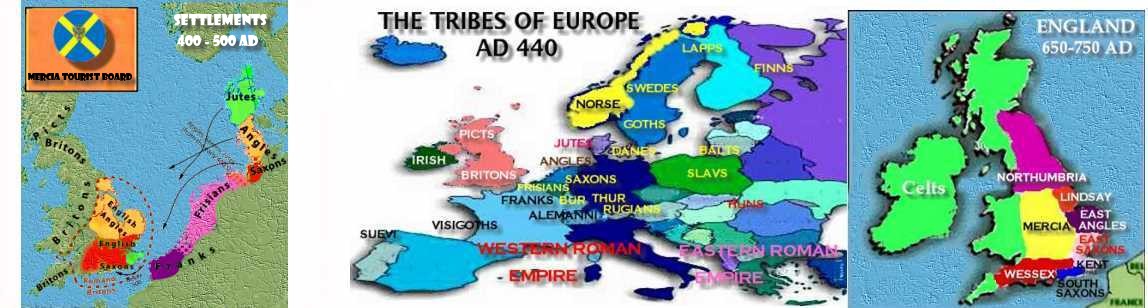
Romans left Britain in the 5th century, the
Warwickshire area was settled by Anglo Saxon
tribes becaming a part of the kingdom of Mercia.
While its earliest boundaries will never be known,
there is general agreement that the territory that
was called "the first of the Mercians" in the
Tribal Hidage covered much of south Derbyshire,
Leicestershire, Nottinghamshire, Staffordshire and
Northern Warwickshire. After the
Romans left Britain in the 5th century, the
Warwickshire area was settled by Anglo Saxon
tribes becaming a part of the kingdom of Mercia.
While its earliest boundaries will never be known,
there is general agreement that the territory that
was called "the first of the Mercians" in the
Tribal Hidage covered much of south Derbyshire,
Leicestershire, Nottinghamshire, Staffordshire and
Northern Warwickshire. Following the decline of the Mercian kingdom during the early 9th century, large parts of Mercia to the east of Warwickshire were ceded in 878 to Danish (Viking) invaders by King Alfred's Treaty of Wedmore with the Danish leader Guthrum. Watling Street, on the north-eastern edge of Warwickshire, became the boundary between the Danelaw (the kingdom of the Danes) to the east and the much reduced Mercia to the west. There was also a boundary with the kingdom of Wessex to the south. Owing to its location at the frontier between two kingdoms, what is now Warwickshire needed to establish defences against the threat of Danish invasion. Between, 911 and 918 this task was undertaken by the "Lady of the Mercians"Ethelfleda, daughter of King Alfred, who was responsible for defences against the Danes at Tamworth (see Tamworth Castle) in 914 and the building of the first parts of Warwick Castle in 916. Periodic fighting between Danes and Saxons occurred until the 11th century. The establishment of the burh by Ethelfleda in 914 and Warwick's subsequent status as a shire town must have given some impetus to economic development. The town was, at any rate, sufficiently important to have had one of the two royal mints set up in Warwickshire (the other was at Tamworth). |
Coins are first known to have been issued in the
reign of Athelstan (925-39). In the early
11th century, new internal boundaries within the
Mercian kingdom were drawn and Warwickshire came
into being as the lands administered from Warwick.
The county was initially divided into ten
hundreds. The first recorded use of the name
Warwickshire being in the year 1001, named after
Warwick (meaning "dwellings by the weir").
Warwickshire was invaded in 1016 during the
Christmas period by Cnut as part of his ultimately
successful invasion against Æthelred the Unready
and his son Edmund Ironside, destroying
Coventry and massacring the local saint, Osberg,
virgin and martyr. The Norman conquest in 1066 brought with it the most active and notable period of military architecture resulting in the building of much of Warwick Castle and others at Kenilworth Maxstoke and Tamworth. Others existed at Anesley near Arley, Aston Cantlow, Baginton, Beaudesert, Bickenhill, Birmingham, Brandon, Brinklow, Caludon at Wyken near Coventry, Castle Bromwich, Coleshill, Fillongley, Fulbrooke, Hartshill, Rugby and Studley, but in many cases only the earthworks can now be seen. Many of the main settlements of Warwickshire were established in the Middle Ages as market towns, including Birmingham, Bedworth, Nuneaton, Rugby and Stratford-upon-Avon amongst others.Many of the main settlements of Warwickshire were established in the Middle Ages as market towns, including Birmingham, Bedworth, Nuneaton, Rugby and Stratford-upon-Avon amongst others. The county was dominated throughout the medieval period by Coventry which became one of the most important cities in England and an important centre of wool and textiles trades. The city has held the title of episcopal see, Lichfield and Coventry, from the time of Earl Leofric early in the 11th century arising from the monastery he and his wife, Godiva, founded in 1043. Henry VI and his queen Margaret of Anjou made several visits to Coventry, and in 1451, as a mark of favour, Coventry and certain hamlets and villages adjacent became an entire and separate county, the County of the City of Coventry and the Bailiffs raised to the rank of Sheriffs. The Parliamentum Diabolicum assembled in Coventry in 1459 to pass bills of attainder for high treason against the Duke of York and other Yorkist nobles at the start of a new stage of the Wars of the Roses. The citizens remained loyal to Henry, and the Lancastrian cause, in his struggle with Edward IV and when Edward reached the city in 1470, the gates were closed against him. However, when Edward was safely seated on the throne, he withdrew the privileges of the city, only restoring them on payment of a fine of 500 marks From the accession of Henry VII in 1485 till the accession of the Hanoverian dynasty under George I in 1714. Mary Queen of Scots was imprisoned at Coventry in 1566, where she lodged in the house of the mayor and again in 1569 where she was confined in the Bull Inn. The Gunpowder Plot of 1605 was a Warwickshire conspiracy. The conspirators' principal aim was to kill King James, however another important objective was the kidnapping of the King's daughter, third in the line of succession, Princess Elizabeth. Housed at Coombe Abbey near Coventry, the Princess lived only ten miles north of Warwick, convenient for the plotters, most of whom lived in the Midlands. Once the King and his Parliament were dead, the plotters intended to install Elizabeth on the English throne as a titular Queen.[30] Robert Catesby, the prime mover in the consiratory, was a Warwickshire man, born probaly at Bushwood, near Lapworth and [[John Grant (Gunpowder Plot) ]], whose house at Northbrook, Snitterfield, was the rendezvous and powder magazine of the conspirators, was of the gentry of the county. Other conspirators rented houses in the neighbourhood, Ambrose Rokewood rented Clopton House, near Stratford, Everard Digby, to whom the task of rousing the Catholic gentry of the Midlands was assigned rented Coughton Court the home of the Throckmortons under the guise of a "hunting party". The Wrights moved to Lapworth and the rooms in London were rented by Thomas Percy from Henry Ferrers whose home of Baddesley Clinton was in turn rented to the Vaux sisters, relatives of Catesby. After the discovery of the plot and the arrest of Guy Fawkes was known, the conspirators rode from London to Warwickshire, meeting Digby's hunting party at the Red Lion at Dunchurch to discuss their plans The final flight took place on 6 November, the fugitives raided Warwick Castle for supplies and continued to Norbrook to collect weapons. |
From there they
continued their journey to Huddington. Thomas
Bates left the group and travelled to Coughton
Court to deliver a letter from Catesby, to Father
Garnet and the other priests, informing them of
what had transpired, and asking for their help in
raising an army. Garnet replied by begging Catesby
and his followers to stop their "wicked actions",
before himself fleeing. The closing events now
take place out of Warwickshire as they continued
on to Holbeche House on the border of
Staffordshire where they were captured
During the English Civil War in the 17th century
the county was generally on the Parliamentarian
side, Lord Brooke of Warwick Castle being one of
the fiecest enemies of the king. ]The Battle of
Edgehill (1642) was fought in Warwickshire, near
the Oxfordshire border. Prince Rupert, who was
in charge of the Royalist forces, marched his
soldiers through Henley in Arden in 1643 on his
way to Birmingham and pillaged the
neighbourhood. Charles II was assisted in
his escape following his defeat at the Battle of
Worcester in 1651 by Jane Lane who, disguising
the king as her man-servant accompanied him
across the county, passing through Wooton Wawen,
Stratford-upon-Avon and Long Marston. The
footpath the Monarch's Way commemorates the
events and approximates the route of his escape
where the modern landscape permits. During the
18th and 19th centuries Warwickshire became one
of Britain's foremost industrial counties. The
coalfields of northern Warwickshire were amongst
the most productive in the country, and greatly
enhanced the industrial growth of Coventry and
Birmingham. One notable exception was the town
of Leamington Spa which grew from a small
village to a medium sized town during the 19th
century on the back of the fashionable spa water
tourist movement of the time. 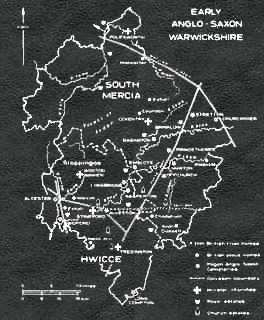 |
| LOCAL TRAFFIC, DISTANCES
& WEATHER |
|||||||||||||||||||||||||||||||||||||||||||||||||||||||||||||||||||||||||
| A
Widget by Frixo Travel | M10 Traffic |
Click on arrow for The Weather in Coventry To plan your journey by car or public transport click on to the Door-to-Door Journey Planner  |
||||||||||||||||||||||||||||||||||||||||||||||||||||||||||||||||||||||||
| Bus & Rail
information 01926 414140 National Coach Enquiries National Express 0870 580 8080 National Rail Enquiries 0845 748 4950 Rail Europe 0870 584 8848 |
Rail Europe
0870 584 8848 Birmingham Airport 0121 767 5511 East Midlands Airport 01332 852852 Gatwick Airport 01293 535353 |
Heathrow Airport
020 8759 4321 Luton Airport 01582 405100 |
|||||||||||||||||||||||||||||||||||||||||||||||||||||||||||||||||||||||
 |
|||||||||||||||||||||||||||||||||||||||||||||||||||||||||||||||||||||||||



|


















 |
PICTURE |
 Details |
Website |
| Tourist Information
Centres in Warwickshire are the place to go to
pick up information on the town or area you're
visiting and local events. As well as giving
advice on local attractions and having an
excellent array of leaflets, TIC's can also help
with booking accommodation or even with what
local restaurants are best for your tastes. They're also a great place to pick up
that special reminder of your visit including
souvenirs, confectionary, greeting cards, books,
postcards and maps. Tourist Information
Centres are not just walk in centres, they have
friendly and helpful staff that will answer
queries via the telephone or via email. See
below for contact details of all Tourist
Information Centres in Warwickshire. |
|||
| Atherstone
Tourist Information Centre |
 |
Atherstone Library, Long Street, Atherstone CV9 1AX Tel: 01827 712395 / 712034 Fax: 01827 720285 Email: atherstonelibrary@warwickshire.gov.uk |
Atherstone Library and Information Centre |
|
Coventry Tourist
Information Centre |
 |
The city
centre Visitor Information Centre is located
within the tower of St Michael's Cathedral ruins.
Climb the Cathedral Tower for the best view in
Coventry! Coventry Cathedral, Priory Street Coventry CV1 5AB Tel: 024 7622 5616 or 024 7622 1413 Email: tic@cvone.co.uk |
Coventry Tourist Information Centre |
| Kenilworth Tourist Information Centre |
 |
Kenilworth's library offers book, CD and film loan and much more. The Library Smalley Place Kenilworth CV8 1QG Tel: 01926 852595 Fax: 01926 864503 Email: kenilworthlibrary@warwickshire.gov.uk |
Kenilworth Library and Information Centre |
| Leamington
Visitor Information Centre |
 |
The TIC in
Royal Leamington Spa is located in the elegant
Royal Pump Rooms: a cultural complex worthy of the
21st century. Royal Pump Rooms The Parade Royal Leamington Spa Warwickshire CV32 4AA Tel: 01926 742762 vic@warwickdc.gov.uk |
Leamington Spa Tourist Information Centre |
| Nuneaton
Tourist Information Centre |
 |
Contains local
history collection and George Eliot collection of
photos, letters, first editions, biography and
criticism Nuneaton Library, Church Street, Nuneaton CV11 4DR Tel: 024 7638 4027 Fax: 024 7635 0125 Email: nuneatonlibrary@warwickshire.gov.uk |
Nuneaton Library and Information Centre |
| Rugby
Tourist Information Centre |
 |
Contemporary
art & craft exhibitions; museum showcasing the
Tripontium Collection of Roman artefacts &
Rugby's Social History; the Rugby Collection of
20th century & contemporary British
art(annually); fun activities for
children/families. Rugby Visitor Centre Rugby Art Gallery & Museum Little Elborrow St Rugby CV21 3BZ Tel: 01788 533217 Fax: 01788 533212 Email: visitor.centre@rugby.gov.uk |
Rugby Visitor Centre |
| Stratford upon Avon Tourist Information Centre |
 |
At Stratford TIC you will
find friendly welcoming people who will be only
too happy to help and provide you with current
information on things to see and do. 62 Henley Street, Stratford-upon-Avon, Warwickshire, CV37 6PT Tel: 01789 264293 Email: tic@discover-stratford.com |
Stratford Tourist Information Centre |
| Warwick Tourist Information Centre |
 |
Whilst visiting Warwick make
your first stop the Tourist Information Centre
situated in the Court House, Jury Street, in the
centre of town The Court House Jury Street Warwick CV34 4EW Tel: 01926 492212 Email: touristinfo@warwick-uk.co.uk |
Warwick Tourist Information Centre |
|
||||||||||||||||||||||||
| Alcester | Atherstone | Bedworth | Bidford-on-Avon | Bulkington | Coleshill | City of Coventry | ||||||||||||||||||
| Dunchurch | Gaydon | Henley-in-Arden | Kenilworth | Kineton | Lapworth | Royal Leamington Spa | ||||||||||||||||||
| Long Itchington | Mancetter | Nuneaton | Offchurch | Polesworth | Rugby | Shipston on Stour | ||||||||||||||||||
| Southam | Stratford-Upon-Avon | Studley | Tanworth-in-Arden | Thurlaston | Warwick | Wellesbourne |
||||||||||||||||||
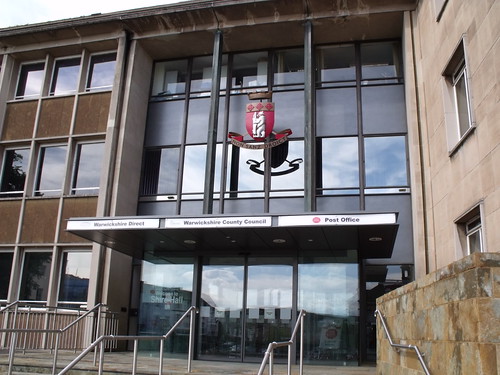


ATTRACTION |
PICTURE | ADDRESS & CLICK | Tel NO |
|
Alcester
is
the quintessential English market town, an
architectural gem with a lively community feel
set in the attractive, rolling 'Shakespeare's
Countryside', just seven miles west of
Stratford-on-Avon, home of the bard.
Situated on the River Arrow, its medieval street pattern survives almost intact, along with many ancient properties including the wonderful church of St Nicholas with its 14th century tower and the early 17th century town hall. Alcester's history extends back to the Romans. The town has been the subject of numerous archaeological digs and is now one of the best understood Roman settlements in the country. The town centre boasts some of the finest Tudor buildings and the whole area is steeped in history and some beautiful natural surroundings. In the heart of Shakespeare country it is no wonder that many visitors compare Alcester to Stratford on Avon and seem to appreciate Alcester all the more for its timeless surroundings. Nestling alongside the River Arrow the street scene is very much as it was in medieval times and if you are visiting then a trip to the church of St Nicholas is worth the effort. The church of St Nicholas dates back to the 14th century although it is said that a church has been in this location since the 11th century, whilst the hall is said to date from the 17th century. For the visitor there is a delight around every corner and a trip around the heritage trail will reveal more of the town’s history and its buildings and if a this becomes too tiring then there are plenty of old inns and hostelries to enjoy whilst the traditional stores in the town centre have, in the main, retained their independence and offer a wide range of goods. Alcester and Local District History Society - Lots of articles about the history of Alcester Windows on Warwickshire - A great website showing old photographs of Warwickshire. There are 100s of pictures of Alcester, just type Alcester in the quick search box and press find. Alcester Train Station - The Warwickshire Railways web site contains interesting information and photographs of the old train station. This site is created for the railway enthusiast, local historian and railway modeller by fellow enthusiasts. Haselor & Walcote: Through The Lens Of Time Roman Alcester - A partnership between Stratford on Avon District Council, Alcester Heritage Trust and Warwickshire County Council. Roman Alcester Catalogue Roman Britain - A great introduction to Roman Alcester - This on-line version of the book is a photographic survey of the buildings within the Parish of Haselor in the year 2000. Coupled with this survey there are many old photographs that have been located in order to show a 'now and then' concept. - Explore archaeological finds from Alcester's early history |
  |
ALCESTER CLICK www.alcester.co.uk/ Alcester at the Open Directory Project |
|
|
COUGHTON
COURT
Coughton Court near Alcester has been the ancestral home to the Throckmortons since 1409, a Catholic family with members directly involved in the Gunpowder plot of 1605. The house features a number of priest holes and a magnificent hall and award-winning gardens that are owned, managed and entirely funded by the family.The name Coughton (pronounced "Coat-un") suggests a settlement or farm known for the hunting of woodcock or gamebirds. It is believed that there was a medieval house on the site when John de Throckmorton arrived in 1409 to marry into the de Spiney family. Behind the Tudor gatehouse house you will find the courtyard with its fine Elizabethan half-timbering, where a knot garden leads to lawns and fine vistas of the Warwickshire countryside. |
 |
Coughton Alcester Warwickshire B49 5JA secretary@ throckmortons.co.uk COUGHTON COURT CLICK |
Tel 01789 762 542 |
| GUIDE LINK
Joyce and Alan
Griffiths have experience in providing guides
for visitors from many different countries. We
use professional Blue Badge Tourist Guides and
fees are based on rates recommended by the Guild
of Registered Tourist Guides. We can provide
several guides for major events and individual
guides for walking and car/coach tours in many
places. We can cover specialised visits to
places such as museums, country houses and
gardens, and tours including religious
connections, industrial sites etc. We can cover
other parts of the country too and we will
prepare itineraries for specific, general or
educational tours/visits, whether by car, by
coach or on foot.
|
 |
Stoneyard, Exhall, Alcester, B49 6EA GUIDE LINK CLICK |
Tel: 01789 772786 Mobile: 07711 088430 |
| HILLIERS We love good food and if you do too, why not visit Hillers, a family run enterprise that is passionate about bringing you the best in quality local produce and customer service that’s second to none! So whether you want to browse in the award winning farm shop, enjoy a delicious meal in the café, walk round the beautiful display garden or find a gift for that special someone, visit Hillers where you’ll be assured of a warm welcome. |
 |
The
Hiller Garden & Plant Centre Dunnington Heath
Farm Dunnington ALCESTER B495PD HILLIERS CLICK |
Tel: 01789 491342 |
| JERWOOD
SCULPTURE PARK Since 2004 Jerwood Sculpture Park has been set in the magnificent grounds of Ragley in Warwickshire, home of the Marques and Marchioness of Hertford. The collection is set along a two-mile sculpture trail, featuring some of the most inspiring pieces of sculpture from the 20th and the 21st centuries. Works on display include pieces from eminent sculptors such as Elisabeth Frink, Lynn Chadwick and Anthony Gormley. |
Ragley
Hall, Alcester, Warwickshire B49 5NJ - JERWOOD SCULPTURE PARK CLICK |
Tel: 0800 093 0290 | |
|
KINWARTON DOVECOTE
A lovely and rare 14th-century circular dovecote with metre-thick walls, hundreds of nesting holes and original rotating ladder, nestled in the heart of the Warwickshire countryside. National Trust property circular 14th-century dovecote that is still home to to doves. |
 |
Kinwarton, near Alcester, B49 6H Email:Kinwarton Dovecote KINWARTON DOVECOTE CLICK |
Tele :
01789 400777 |
| RAGLEY HALL
PARK & GARDENS Whether it’s an action-packed day out for the whole family, a stunning venue at which to hold your corporate event or wedding, or somewhere tranquil to get lost in your own thoughts, Ragley has it all...With so much to see and do, visitors often begin with a tour of the delightful Palladian House designed by Robert Hooke in 1680. Ragley has been, and remains, the family home of the Marquess and Marchioness of Hertford and manages to retain it’s family charm despite the thousands of people who visit each year. The House itself stands majestically in well-maintained formal gardens within beautiful ‘Capability’ Brown parkland. As well as being architecturally stunning, the Stables house an impressive collection of carriages really bringing to mind the extravagance of times past.Ragley Estate includes: • Ragley Home Farm – 3,300 acres cattle and sheep rearing, rape, onion and wheat crops • Ragley Woodlands and Sawmill – 1,000 acres Forestry management and Sawmill with sales to public • Ragley Estate Meats – butchery and sales of meat and prepared foods to public You are now able to purchase Ragley Estate Meat products direct from us. Click here to see our range of products available via mail order. • Ragley Property Management & Maintenance Rental properties and maintenance of Estate property • Ragley Hall Park & Gardens – 400 acres Open to the public for summer season and throughout the year for civil wedding ceremonies, corporate functions, wedding receptions, seminars, educational and schools. |
 |
Alcester Warwickshire B49 5NJ ragley@ragleyhall.com RAGLEY HALL CLICK |
Tel 01789 762 090 |
| ROMAN
ALCESTER HERITAGE CENTRE Roman Alcester is an exciting new exhibition interpreting and displaying objects from Alcester's Roman past. -Alcester is one of the most investigated Roman small towns in the country, with over 100 archaeological digs in the last 80 years. Recent excavations have revealed much about the area of the Roman town which would have been outside the boundary wall built in the 3rd century AD. |
 |
Globe
House Priory Road Alcester B49 5DZ ROMAN ALCESTER HERITAGE CENTRE CLICK |
Tel 01789 762216 |
| SKIRMISH
PAINTBALL
Skirmish
Paintball Games - Operating for 25 years.
Privately run venue prices start from just £9.99
per person. Suitable for adults, juniors
(minimum age 11 years and above), groups,
individuals, stags, hens of just a group of
friends.
|
 |
Old Park Wood, Arrow Lane, Alcester, B49 5LR SKIRMISH PAINTBALL CLICK |
Tel: 01543 451455 |
| TOWN HALL The Hall is held in Trust for the people of Alcester as a Village Hall and is not a municipal building. It is situated at the junction of Henley Street, Church Street and Butter Street, and provides the Town with important Function Rooms. The lower storey of the Town Hall was built circa 1620 by the then Lord of the Manor, (Sir Fulke Greville)as an open market, replacing the original market cross. It was later filled in to form a covered market, which also contained the town "lock-up", the door of which is preserved and can be seen in the entrance hall. Also to be seen in the Hall are the Town Stocks. The upper room, with its outstanding hammerbeam roof has remained largely as it was constructed in 1641.Following a public meeting in 1919, the building was purchased on behalf of the people of Alcester for £620. from the Marquess of Hertford, to serve as a memorial to the men from Alcester who gave their lives in the First World War. A plaque to this effect can be seen on the wall facing the "Hollybush", unveiled in 1938. The administration of the Hall at this time was entrusted to the High Bailiff during his term of office. The Hall is now administered as a Charity and is run by a committee of Trustees and Townspeople who are duly elected each year. The committee has been responsible for extensive renovations in recent years, leaving the Hall in very good shape. |
 |
Alcester
Town Hall Alcester B49 5QX ALCESTER TOWN HALL CLICK |
Tel 01789 400868 |
| ATHERSTONE Atherstone town is located near the northernmost tip of Warwickshire, close to the border with Staffordshire and Leicestershire. The town has a Saxon origin, its original name being Ardeston, the “town in Arden”, or in the great wood. Its name in Domesday Book is written Aderestone.Atherstone has a long history dating back to Roman times. An important defended Roman settlement named Manduessedum existed at Mancetter near the site of modern day Atherstone, and the Roman road, the Watling Street (now known as the A5) ran through the town. It is believed by some historians that the rebel Queen of the Britons, Boudica was defeated at the Battle of Watling Street by the Romans in her final battle near Manduessedum. The Domesday Book of 1086, records that Atherstone was held by Countess Godiva The ancient St. Mary’s Chapel in Atherstone dates from the early 12th century when the monks of Bec made a donation of 12 acres (4.9 ha) to a house of friars and hermits, later referred to as “Austin friars”. According to Nichols the chapel was granted to Henry Cartwright in 1542, then left abandoned and neglected until 1692 when Samuel Bracebridge settled a yearly sum for the parson of Mancetter to preach there every other Sunday in the winter season After this, St. Mary’s Chapel seems to have experienced something of a revival. Its square tower being rebuilt in the fashionable “Gothic” style in 1782. This drastic alteration probably aroused some controversy. although the fine architectural drawing of the chapel made by Mr. Schnebbelie in 1790 prompted Nichols to assert that “the new tower provides a good effect”. St Mary's was further redesigned in 1849 by Thomas Henry Wyatt and David Brandon. It is said that the Battle of Bosworth actually took place in the fields of Merevale above Atherstone. Certainly reparation was made to Atherstone after the battle and not to Market Bosworth.Atherstone was once an important hatting town, and became well known for its felt hats. The industry began in the 17th century and at its height there were seven firms employing 3,000 people. Due to cheap imports, the trade had largely died out by the 1960s and ended completely in 1998. |
  |
Atherstone Tourist Information Centre Atherstone Library, Long Street, Atherstone CV9 1AX Email: atherstonelibrary@warwickshire.gov.uk Atherstone Library and Information Centre ATHERSTONE CLICK Atherstone History A comprehensive history of Atherstone and the surrounding area from the Romans up until the 20th century. Links Atherstone Recorder Atherstone Forum Atherstone Organised |
Tel: 01827 712395 / 712034 Fax: 01827 720285 |
| ATHERSTONE
BALL GAME This famous ball game has kicked off in the town centre every Shrove Tuesday since the 13th Century. Not even wars could stop it going ahead! The game sees hundreds of participants charging through the town trying to be the last man standing with the giant water-filled ball after two hours. The ball, made by the famous manufacturers Gilbert of Rugby, weighs a mighty four pounds and has four ribbons attached, one in red, one blue, one white and one gold. Participants struggle to gather a ribbon each and receive a prize if they're ribbon holders at the end of the game.The main prize though is the ball itself and the game can frequently turn into an extremely physical encounter with a series of scrummages taking place as the game progresses.No one knows exactly where the ball game comes from - whether it came from border disputes or as a challenge between young men from different areas - but the tradition remains and is only one of two such events that survives today. It is a no-holds-barred contest, and players are not precluded from any tactic necessary to get hold of the ball. It pays to be of stern stuff if you want to take part! For further details contact Atherstone Library on 01827 712 395. |
 |
Tel: 01827 712 395. |
|
| GARLANDS OFF
ROAD & CORPORATE LEISURE Outdoor Adventure Events for Corporate Entertainment, Stag and Hen Parties & Private Groups based at Mythe Farm in the Midlands 30 minutes from Birmingham We are centrally located between Birmingham, Coventry, Leicester and Burton Upon Trent in the heart of the Midlands. Set in 100 acres of beautiful Warwickshire / Leicestershire countryside Garlands Off Road & Corporate Leisure offers a wide range of outdoor activities for corporate activity days , team building, stag & hen parties and other group occasions. All of our activities are available as single activity sessions or can be combined to create multi activity half or full day corporate or private party packages. We offer great flexibility in tailor making activity packages to suit individual requirements. We work closely with several local hotels and arrange accommodation and conference facilities as part of the service. Whether you are organising a single activity event or a conference with overnight accommodation and a corporate multi activity day, our event organisers are experienced in making your job as easy as possible, and our trained instructors and marshals supervise the activities throughout to ensure your maximum enjoyment and safety. |
 |
Garlands
Leisure Ltd Mythe Farm Pinwall Lane Sheepy Magna Atherstone Warwickshire CV9 3PF GARLANDS OFF ROAD & CORPORATE LEISURE CLICK |
Tel: 01827 722 123 |
| MEREVALE
CHURCH (Church of Our Lady) Situated near Atherstone on Merevale Lane (B4116) off the A5 - accessed through the archway of the gate house.The ruins of the Abbey (founded in 1148), have now been incorporated into farm buildings and can be seen to the east of the churchyard. Opening Times: Limited opening - key-holder notice on display Facilities: Limited parking, kitchen and toilets. Gifts on sale including books and information on the church. Disabled access to the church (not toilets). Originally the Gate Chapel of Merevale Abbey, the church dates back to 1240. It is the only Cistercian Gate Chapel in the United Kingdom which is still used throughout the year. Features include an important Jesse stained glass window of 1340, and a rare 1777 organ by Johannes Snetzler. The ruins of the Abbey (founded in 1148), have now been incorporated into farm buildings and can be seen to the east of the churchyard. |
 |
Merevale
Lane Atherstone CV9 2JQ MEREVALE CHURCH CLICK |
Tel 01827 874252 |
| TWYCROSS ZOO Twycross Zoo is dedicated to preserving threatened species whilst providing education, study and wonder for our many visitors. Through our successful breeding programmes we are providing a safe haven for wildlife in an increasingly crowded planet. Your visit here will help us build upon past successes and maintain our strong commitment to conservation, education and research. |
Burton
Road, Atherstone, CV9 3PX TWYCROSS ZOO CLICK |
Phone:
+44 (0)1827 880250 - Fax: +44 (0)1827
880700 |
|
| BEDWORTH Bedworth is a market town in the Nuneaton and Bedworth district of Warwickshire, England. It lies 101 miles (163 km) northwest of London, 19 miles (31 km) east of Birmingham, and 15 miles (24 km) north northeast of the county town of Warwick. It is situated between Coventry, 5.5 miles (9 km) to the south, and Nuneaton, 3 miles (5 km) to the north. In the 2001 census the town had a population of 32,268. Residents are known as "Bedworthians". Bedworth is often pronounced "Beduth" by many (but not all) residents of the town and inhabitants of nearby Coventry and Nuneaton, though the standard "Bed-worth" pronunciation is used virtually everywhere else. Originally a small market town with Saxon origin, Bedworth developed into an industrial town in the 18th and 19th centuries, due largely to coal mining and the overspill of ribbon weaving and textile industries from nearby Coventry The opening of the Coventry Canal in 1769 and later, the railway in 1850 enhanced the town's growth ] Until quite recently Bedworth was primarily a coal mining town, but the last colliery was closed in 1994. In the middle of the Nineteenth century, the large number of public houses, and thirsty miners lead to the town being called 'Black Bedworth'. Due to its good transport links, and proximity to major cities such as Coventry, Birmingham and Leicester, Bedworth is now growing rapidly as a dormitory town.From 1894 Bedworth was a civil parish within the Foleshill Rural District. In 1928 Bedworth was incorporated as an urban district in its own right In 1974 the Bedworth Urban District was merged with the borough of Nuneaton to create the borough of Nuneaton and Bedworth. |
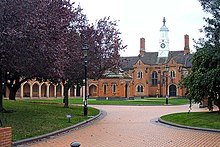  |
BEDWORTH
CLICK |
|
|
ASTLEY
BOOK FARM
Based
in Warwickshire, Astley Book Farm is the biggest
second-hand bookshop in the Midlands. Boasting a
stock of over 75,000 used, rare and out of print
books we can comfortably accommodate even the
most extreme literary tastes. We encourage
customers to visit the farm to sample the range
of books we carry, but we also offer an
internet-based store allowing you to buy from us
any where, any time. There's a Children's
Hayloft, Science Fiction and Fantasy Barn, all
housed in a range of old farm buildings.
|
 |
Astley
Book Farm Soar End Astley Lane Bedworth CV12 0NE info@astleybookfarm.com ASTLEY BOOK FARM CLICK |
Telephone 024 76490235 |
| BEDWORTH
ARTS CENTRE A combined coffee bar, lounge & exhibition gallery, studio theatre with lighting & sound for both professional and amateur, regular workshops for artist, drama, music, yoga, decoupage, family history, T’ai Chi Ch’uan. Workshops cover young people, the disabled and the older generation. Open: Mon
& Wed 9.30am-10pm, Tues 9.30am-8.30 pm,
Thurs
9.30am-9.30pm, Fri & Sat 9.30am–1.00 pm
|
 |
C/o The Civic
Hall High Street Bedworth CV12 8NF BEDWORTH ARTS CENTRE CLICK See Our Theatre Website |
Tel: 024 7664 3255 |
| BEDWORTH
CIVIC HALL The Civic Hall is truly a regional venue attracting customers from a wide area covering Coventry, Rugby, Nuneaton, Hinckley, Leicester and Tamworth.The auditorium is multi-purpose with 763 seats in its theatre setting and over 400 capacity in a flat floor arrangement. Our huge sprung dance floor is one of the largest in the Midlands and is ideal for ballroom to northern soul dancing. Shows vary from rock bands to ballet and our annual pantomime is always a popular event. In recent years Nuneaton and Bedworth Borough Council have, through the Civic Hall, actively promoted high quality arts and entertainment events. The Civic Hall has become established on the touring circuit of most promoters throughout the UK, bringing "star" names to the venue. The venue also has excellent conference and meeting facilities. |
 |
High
Street Bedworth CV12 8NF civic.hall@ nuneatonandbedworth.gov.uk BEDWORTH CIVIC HALL CLICK See Our Theatre Website |
Tel: 02476 376 707 |
| BEDWORTH
HERITAGE CENTRE This building is a beautiful piece of architecture, representative of some of the finest building work that went on in this area of the Midlands. The house and Almshouses have been converted into a fascinating museum that is dedicated to the history of this borough. There is a large collection of artefacts, maps and documents that are not only interesting but extremely well arranged to bring history to life. |
 |
All
Saints Square, Bedworth, CV12 8NR BEDWORTH HERITAGE CENTRE CLICK |
Phone:
+44 (0)24 7636 4446 - Fax: +44 (0)24
7636 4446 |
| BEDWORTH
LEISURE CENTRE Set in the Miners Welfare Park, Bedworth Leisure Centre boasts a 25 metre main and learner pool, an 81 metre flume, a brand new fitness studio with over 40 stations, dance studio, creche, squash court and cafe facilities. There are also outdoor facilities including a floodlit multi sports area known as 'The Brink', a skate/BMX park with 7 pieces of equipment, tennis courts and pitch & putt facilities. Whether training or simply keeping fit, the centre offers something for everyone. |
 |
Coventry
Road, Bedworth, Warwickshire, CV12 8NN BEDWORTH LEISURE CENTRE CLICK |
Tel:
024 7637 6714 |
| NICHOLAS
CHAMBERLAINE ALMSHOUSES The magnificent 1840 Nicholas Chamberlaine Almshouses are named after a 17th Century rector who left money in his Will for the original Almshouses (that were on another site opposite the Civic Hall) to be built. The buildings today continue to provide the care they were originally set up to do all those years ago. They continue to be on the public register of social landlords and look after residents in 27 sheltered housing apartments in the almshouses. |
 |
Chapel
Street Bedworth CV12 8PY NICHOLAS CHAMBERLAINE ALMSHOUSES CLICK |
|
| BIDFORD ON AVON Bidford-on-Avon is a large village and civil parish in the English county of Warwickshire. In the 2001 census it had a population of 4,830.William Shakespeare is said to have joined a party of Startford folk which set itself to outdrink a drinking club at Bidford-on-Avon, and as a result of his labours in that regard to have fallen asleep under the crab tree of which a descendant is still called Shakespeares tree. When morning dawned his friends wished to renew the encounter but he wisely said "No I have drunk with “Piping Pebworth, Dancing Marston, Haunted Hillboro’, Hungry Grafton, Dodging Exhall, Papist Wixford, Beggarly Broom and Drunken Bidford” and so, presumably, I will drink no more. The story is said to date from the 17th century but of its truth or of any connection of the story or the verse to Shakespeare there is no evidence. The Falcon Inn was a favorite tavern in his day. There is also an ancient Saxon burial ground under the free car park located just behind Spice Avon, formerly the pub "The Anglo-Saxon". |
 |
tBIDFORD
ON
AVON CLICK |
|
| ANTIQUE
DOLL & TEDDIES COLLECTION |
Wixford
Road,Bidford-on-Avon, B50 4LG |
Tel : 01789 772 420 |
|
| BUNGOS
FAMILY PLAY BARN Come and visit our massive themed play barn in Bidford-on-Avon ... from the Deadly Drop Slide and Chill out zone with internet and plasma screen TV for older children to the under 5’s soft play area with a farmer Bungo’s tractor track there is something for the whole family. The Play Barn is decorated with fun farmyard characters ' JBC the tractor, Bitz and Honey the dogs and Jaffacat the cat ... come and see if you can spot them and many others! |
 |
Waterloo
Road Bidford-upon-Avon B50 4JH BUNGOS FAMILY PLAY BARN CLICK |
|
| BULKINGTON Bulkington is a large village and former parish in the Nuneaton and Bedworth district of Warwickshire, UK. In the 2001 census it had a population of 6,303. It is located around 6 miles (10 km) north-east of Coventry, just east of the towns of Nuneaton and Bedworth and 4 miles (6 km) south-west of Hinckley. Despite historically having stronger links with Bedworth, the northern edge of Bulkington is separated from the Whitestone area of Nuneaton by only a small area of green belt land. Bulkington was mentioned in the Domesday Book as Bochintone, meaning "estate associated with a man called Bulca" The parish originally contained seven hamlets, two of which were subsumed by Bulkington village following residential building expansion which began in the 1930s. Historically the main industry in Bulkington was ribbon weaving.[5] Today Bulkington is largely a commuter village for larger nearby urban centres such as Coventry, Nuneaton, Bedworth, Hinckley and Leicester. Bulkington has connections with the locally-born author George Eliot (Mary Ann Evans), who knew the village well. She referred to it as Raveloe in her book Silas Marner (1861). The church of St James is where George Eliot's uncle and aunt are buried. |
  |
Bulkington
Congregational
Church Our Lady of the Sacred Heart Catholic Church Ryton Methodist Church St James' Parish Church Arden Forest Infant School St James' Junior School |
|
| COLESHILL Coleshill is located on a ridge between the rivers Cole and Blythe which converge to the north with the River Tame. It is just to the east of the border with West Midlands county outside Birmingham. According to 2001 census statistics it is part of the West Midlands conurbation, despite gaps of open green belt land between Coleshill and the rest of the conurbation. The Green Belt narrows to approximately 150 yards to the north near Water Orton, and to approximately 700 yards at the southern tip of the settlement boundary where Coleshill meets Chelmsley Wood, Solihull but is in excess of a mile at some points in between. In the 1970s, Coleshill narrowly avoided being absorbed into Birmingham. Coleshill began life in the Iron Age, before the Roman Conquest of 43 AD, as the Grimstock Hill Romano-British settlement, north of the River Cole. Evidence of Hut Circles was found by archaeologists at the end of the 1970s. These excavations showed that throughout the Roman period there was a Romano-Celtic temple on Grimstock Hill. It had developed over the earlier Iron Age huts and had gone through at least three phases of development. The area was at the junction of two powerful Celtic Tribes - the Coritanii to the east from Leicester, and to the west the Cornovii from Wroxeter. In the post Roman or Arthurian period (The Dark Ages) the nucleus of Coleshill moved about a kilometre to the south - to the top of the hill. Here the present church is set and the medieval town developed around it. By 1066 the town was a Royal Manor held by King Edward the Confessor and is recorded in the Domesday Book of 1086 as land held by William the Conqueror. Henry II granted the manor to the de Clinton family, then it passed to the de Montford's who had moated manor houses at Coleshill and Kingshurst. King Henry VII granted the lands to Simon Digby in 1496. His descendants (Wingfield-Digby) still hold the titles. Coleshill was granted a Market Charter by King John in 1207, alongside Liverpool, Leek and Great Yarmouth. During the Coaching Trade and the Turnpike Trusts Coleshill became important as a major staging post on the coaching roads from London to Holyhead and from London to Chester to Liverpool. At one point there were over twenty inns in the town. The Coleshill to Lichfield Turnpike dates from 1743 .Coleshill affords easy access to nearby attractions including the Bosworth Battlefield site near Nuneaton, family attractions like Drayton Manor Theme Park and a choice of premier golf courses including Ryder Cup favourites the Belfry and the Forest of Arden golf courses. Kingsbury Water Park is also just a 10 minute drive from Coleshill. Coleshill town centre is well serviced with a good mix of high street and independent shops. The town features a striking medieval church with a high steeple and the historic Market Square is the site of Coleshill's famous stocks with Pillory and Whipping Post. Traditional pubs in Coleshill are a highlight in the town, many of which are historic 17th and 18th century coaching inns, a legacy of Coleshill's former coaching stop heyday on the London to Liverpool road. Coleshill also offers an excellent choice of restaurants and bars giving the town a lively nightlife edge. Farmers markets in Coleshill are monthly on the fourth Friday of each month. At the top of Coleshill, just past Packington Lane, is a red post box that bears the Royal Seal of Edward VIII. It is one of a small number to have been placed in the UK before his abdication, of which only 14 remain.. |
   |
This is
Coleshill-Community Website Coleshillweb.co.uk Coleshillutd.co.uk Coleshill Community Coleshill Town Band Coleshill Roundtable www.coleshillinbloom.org.uk, www.coleshillutd.co.uk/ |
|
| COLESHILL
OLD MARKET HALL Having undergone extensive restoration by Coleshill Civic Society, the Old Market Hall was opened by the Duke of Gloucester in May 1999. The building has seen a variety of uses including a Victorian reading room, a Magistrate's Court and a weekly market. Today, the building with its magnificent roof trusses and market arches, houses a heritage centre and exhibition area. The Civic Society also presents lectures and hosts a varied events programme.Local hall open for youth groups, dances and community events. Archives open Saturdays from 10am-Noon. |
 |
Church
Hill Coleshill B46 3AS COLESHILL OLD MARKET HALL CLICK |
01675
465 557 |
| COLESHILL
PILLORY Coleshill pillory, a wooden frame with holes for the offender's neck and wrists, which dates back to the Medieval period. The pillory also has stocks attached and acted as a whipping post. Originally situated in front of the Market Hall it is now on Church Street, Coleshill .It has a post about 4.6m high with a turned moulded head, a platform or standing board and a transom with holes for the heads and hands of two persons. Lower are the shackles for whipping and at the foot one of the former pair for the stocks. The pillory is unique in Warwickshire, and almost the whole country, because it has a three-fold combination of pillory, whipping post and stocks. It was last used in 1863. An act of the British parliament, dated June 30th, 1837, put an end to the use of the pillory in the United Kingdom, a mode of punishment so barbarous, and at the same time so indefinite in its severity, that we can only wonder it should not have been extinguished long before. |
 |
Church
Hill Coleshill B46 |
|
| FACE
PAINTING BY MADICA Provides face painting for parties and events.Face Painting and Glitter Tattoos by Madica is based in Coleshill and takes bookings for parties and events in the Coleshill, Solihull, Tamworth, Birmingham, Coventry and Warwickshire areas. Face painting is a great idea for a childs party. It will complement any party, whether at home or in a hired venue. Children love having their faces painted - making the boys into pirates and soldiers and the girls into pretty butterflies with dots of glitter. Faces I offer a wide selection of options for the children, who will chose the face they want from the pictures I have. The faces include Butterfly, Tiger, Soldier, Pirate, Dalmation Doggy, Panda, Princess Butterfly, Ladybird and Spiderman plus a range of cheek art. |
 |
Springfields, Coleshill B46 3EG MADICA FACE PAINTING CLICK |
Tel: 07944 042524 |
| MAXSTOKE
CASTLE This 14th century moated castle was built by William de Clinton, Earl of Huntingdon. Although the original wooden bridge and drawbridge have been replaced by a stone bridge, the gatehouse, crenulated curtain walls and corner towers remain complete. The Castle was bought by Sir Thomas Dilke in 1599 and the Fetherston-Dilke family still live in it today.It is only open one day a year under the National Gardens scheme; |
 |
Nr
Colehill, Warwickshire, B46 2RD Situated in Castle Lane 3 miles east of Coleshill (Junction 4 on the M6). MAXSTOKE CASTLE CLICK |
Tel:
024 7669 6521 |
ST.PETER & ST.PAUL CHURCH Church of St Paul and St Paul, Market Square. Church dating from the 13th century with a 52m spire Inside there is a 12th century font of Norman origin, which is one of the finest examples in the country. There are also medieval table tombs with effigies of Knights, including John de Clinton. Just outside the south door are the preserved remains of a medieval cross Our church has been standing for Christ at the heart of the community for hundreds of years. Our aim as God's people in this place has always been to serve the Lord Jesus Christ, make his name and love known as widely as possible, and to serve the community in which God has placed us. |
 |
Church
Hill Coleshill B46 3AJ ST.PETER & ST.PAUL CHURCH CLICK |
Tel:
01675 462188 |
 CITY OF
COVENTRY THE 9th LARGEST CITY IN ENGLAND CITY OF
COVENTRY THE 9th LARGEST CITY IN ENGLANDIn ancient times, much of the land traditionally covered by Warwickshire was made up of two main areas known as Arden and Feldon. The River Avon formed the boundary between the two, running from north-east to south-west. It was near the eastern reaches of the forest of Arden where a settlement formed which was to become Coventry. Whereas most of the Feldon area to the south east was open countryside which was readily farmable, the dense clay soil of Arden was relatively hostile to crop growing but was, however, a suitable condition for oak trees of which much of the forest comprised. From necessity, many of the hamlets that developed in the Forest of Arden were created in clearings, either man-made or perhaps natural openings in the woods. The old English word for a clearing was "lea", and derivatives of this include leah, ley and leigh, so we can see how many of the settlements with which we're familiar today gained their names. Examples are: Keresley, Henley, Corley, Whoberley, Binley, Allesley, Fillongley, plus many others. The name Henley-in-Arden in fact contains a double reference to its ancient roots. The area from which Coventry grew did, however, contain a particularly good resource.... water. The Sherbourne was much larger in Saxon times, and a large lake called Babbu Lacu filled much of the low lying land along the northern edge of the hamlet. Therefore, a supply of fish and drinking water was always plentiful, and the land was also more easily defended in times of trouble. The only remnant of the lake is now a small pool - the Swanswell. With the forest being mostly unsuitable for the cultivation of crops, the Saxon settlers in this area concentrated on cattle and sheep, and so it was this which would eventually lead to Coventry's great wealth in the middle ages with its wool industry. Although Coventry's documented history stretches back at least a thousand years, its true beginnings are still shrouded in mystery. There is good reason to suggest that the first settlement here grew around a Saxon nunnery, which had been founded around 700 AD by St. Osburga, and which stood in the vicinity of St. Mary's Priory. |
   |
Coventry Tourist Information Centre Coventry Cathedral, Priory Street Coventry CV1 5AB Email: tic@cvone.co.uk Coventry Tourist Information Centre |
Tel:
024 7622 5616 or 024 7622 1413 |
| AIRBASE AIRBASE is far from your typical aeroplane ‘museum’ – this is a working museum, where aeroplanes are maintained and prepared for flight. AIRBASE visitors can see, hear and even smell these historic aircraft as they reach for the skies. Meet the crew and photograph the aircraft in action. Among the gems on show is the world’s only airworthy Gloster Meteor Night Fighter. This aircraft was built at... Coventry Airport in 1952 and flies on in memory of those who strived to make jet technology a reality. |
 |
Shackleton House
Coventry Airport West Baginton CV8 3AZ AIRBASE CLICK |
Tel: 024 7688 2616 |
| ALAN HIGGS
CENTRE The Alan Higgs Centre is an £8million leisure centre that has been built to provide much needed sports and leisure facilities for people living in the South East of Coventry. The surrounding areas, which include Stoke Aldermoor, Binley and Willenhall, have been in need of community based leisure facilities for many years. The centre opened in October 2004 and boasts some of the most modern facilities within Coventry such as Indoor and Outdoor 3G football pitches, 4 court sports hall, netball courts, fitness suite, health suite, dance studio and function rooms. |
 |
Allard
Way, Coventry, West Midlands, CV3 1HW ALAN HIGGS CENTRE CLICK |
Tel:
024 7630 8244 |
| ALL SAINT'S CHURCH This beautiful church is one of the most historic religious buildings in Coventry, dating from around 1130. Sadly, very little remains of the original 12th Century structure and it is thought that the tower and spire were rebuilt in the 13th Century, and the majority of the building that we see today was probably moulded around an 1863 design. The church contains some beautiful stained glass windows. There has been a church on this site in Allesley for over 800 years. Christians here have sought to worship God, to tell people the Good News of Jesus Christ, and to serve the people of the parish. All Saints ChurchThe work carries on today. Visitors will find an active parish church with a variety of worship styles at its services on Sunday, and a network of small groups that meet throughout the week. |
 |
Rectory
Lane, Coventry, West Midlands CV5 9EQ We are located in Allesley, a small village near Coventry situated just off the A45 in the direction of Birmingham. ALL SAINT'S CHURCH CLICK |
Phone:
+44 (0)24 7640 2006 |
| ALLESLEY HALL
GARDENS & DOVECOTES
A beautiful
garden setting within which Allesley Hall is
situated. The Dovecotes have been converted and
form part of Allesley Hall residential
home.Built in 1909 Allesley Hall was originally
a private residence before becoming a
convalesence home in the 1950s. The Hall is now
a residential care/nursing home offering
sheltered accommodation.
|
 |
Allesley Hall
Drive, Allesley, Coventry, West Midlands, CV5 9AD ALLESLEY HALL GARDENS & DOVECOTES CLICK |
Tel: 024 7667 9977 |
| ALLESLEY PARK
The Park was
formerly part of a Deer Park, probably 5 times
larger than the present park. The original
mansion known as Allesley Hall was built as a
private house in the mid 17th century, today the
hall is a residential home for the elderly and
provides a superb setting for Bands in the Park
concerts in the summer. The park provides
pleasant walks with wonderful views. It also has
a children's play area and pitch & putt
golf.
|
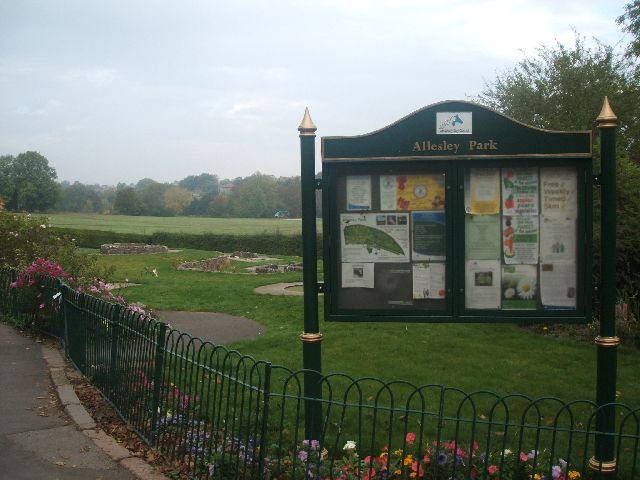 |
Allesley Hall Drive, Allesley, Coventry, West Midlands, CV5 9NS | Tel: 024 7683 2441 |
| ALLESLEY
WALLED GARDEN
The Allesley
Park Walled Garden is a fine example of an
authentic 18th Century kitchen garden and is
part of Coventry's heritage. It is maintained by
a group of dedicated volunteers and is
frequently used as an educational resource.
|
 |
Allesley Hall
Drive, Allesley, Coventry, West Midlands, CV5 9AD ALLESLEY WALLED GARDEN CLICK |
Tel: 0207640 2059 |
| BAGINGTON
CASTLE Baginton Castle was originally a 13th century fortified manor house, founded by the de Derlye family. The large rectangular platform, partly encased by a wide ditch, stands against the steep banks of the River Sowe. In the 14th century, Sir William Bagot founded the stone castle, when adding a tower house encased by a ditch. Sadly only the foundations of the tower remain, with vaulted chambers in basement, a spiral stair turret and a rectangular garderobe turret. Although the platform is clear, the rest of the site is heavily overgrown, so it is best viewed in winter. |
 |
SP
342-747 Baginton Castle is located in the village centre, off Church Road. 3 miles south of Coventry, on the B4113-A45. The site is visible from a public footpath, which passes the castle from the church. Car parking is by the side of the road. BAGINGTON CASTLE CLICK |
|
| BELGRADE
THEATRE Holding 866 seats in its two-tier auditorium, the theatre remains one of the largest regional producing theatres in the country and hosts a wide variety of different plays. The Belgrade Theatre was the first civic theatre to be built after the war and was opened in March 1958, part of a large scale re-development of the City of Coventry. Now an English Heritage grade II listed building, the Belgrade acquired its name in recognition and thanks for a gift of timber from the Yugoslav city of Belgrade that was used extensively in the construction of the auditorium. Holding 866 seats in its two-tier auditorium, the theatre remains one of the largest regional producing theatres in the country. Opened by HRH the Duchess of Kent, the Belgrade has presented over 800 shows ranging from lavish musicals to comedies and serious drama to a total audience of over 4 million. Since its launch under its first director Bryan Bailey, the Belgrade has pursed a policy of producing innovative and new work. Autumn 2007 saw the re-opening of the Belgrade Theatre after completion of its major capital project, including a new 250-300 seat second space and refurbishment of the existing listed building. The improved facilities now allow audiences to enjoy a wider range of work including an expanded range of home-produced plays and presenting productions from visiting companies. |
 |
Belgrade
Square Coventry CV1 1GS BELGRADE THEATRE CLICK See Our Theatre Website |
Tel :02476 553 055 |
| BLACK SWAN
TERRACE Black Swan Terrace is a series of houses that have been fully restored just as they would have been in 1560. Visitors are invited to see how a traditional weaver would have lived his or her life in Coventry at this time. There is also a medieval garden that has been planted with flowers and plants that would have been particularly prevalent in this area at that time. This experience represents a fascinating step back in time. |
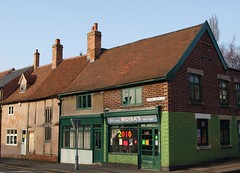 |
Upper
Spon Street, Coventry, West Midlands CV1 3BQ |
Phone:
+44 (0)24 7655 5567 - Fax: +44 (0)24
7655 5567 |
| BONDS
HOSPITAL & OLD BABLAKE SCHOOL In 1344 Queen Isabella, the widow of Richard II endowed the land for the building of Bablake and Bonds hospital in an act of philanthropy. The money to found the school (Bablake) was provided by one Thomas Wheatley, a wealthy self made merchant. Bablake and Bond's hospital share the same frontage. They are either side of a gateway. Bond's Hospital is to the right of the gateway. It was endowed by one Thomas Bond - Mayor of Coventry in 1497 - in his will of 1506 as an alms house for deserving old men. It provided for ten men for life, each was to be a member of the Holy Trinity Guild, and one woman to act as housekeeper. In 1832 the hospital was restored and by 1940 such was the income from Bond's endowment that 85 Almsmen could be provided with six shillings per week. To the left of the gateway is Old Bablake school. This is the site of the collegiate buildings since 1344. In 1550 the 14th Century priests quarters were re-modeled as a boys hospital which later became a boys school. The 16th Century Old Bablake School, one of Coventry's oldest school buildings forms a delightful courtyard with the Almshouse - Bonds Hospital, still used to this day for residential accommodation for the elderly. Togther with St John's Church, forever associated with 'sent to Coventry', they form an historic corner of Coventry's old city. Viewable externally only. |
 |
Hill
Street, Coventry, West Midlands, CV1 4AN BONDS HOSPITAL CLICK |
|
| BRANDON
CASTLE Brandon Castle was originally a 12th century earthwork motte and bailey fortress, founded by Geoffrey de Clinton. In the 13th century, the de Verdon family founded the stone castle, when adding the keep and a large outer enclosure. The low motte, stands in the middle of two rectangular platforms and is encased with concentric wet ditches. In 1947, excavations on the motte, found it supported the foundations of a small rectangular keep. This masonry is the only visible remains of the castle, the garrison of Kenilworth Castle attacked and slighted in 1265. |
 |
SP
407-759 Brandon Castle is located north of Wolston, off Brandon Lane. 5 miles south-east of Coventry, on the A428. The site is visible from the road. Car parking is by the side of the road. BRANDON CASTLE CLICK |
|
| BRANDON
MARSH NATURE RESERVE Brandon Marsh Nature Reserve is made up of two hundred acres of lakes, marshes, woods and grassland. The area is home to a massive array of beautiful and rare plants and animals that come from across the region to enjoy this unique habitat. The visitor centre offers a range of information about the area and its history, as well as having a set of hands on activities to get involved with. |
 |
Brandon
Lane, Coventry, West Midlands CV3 3GW BRANDON MARSH CLICK |
Phone:
+44 (0)24 7630 8999 |
| CALUDON
CASTLE Caludon Castle was originally a 12th century fortified manor house, founded by Ranulf Blundeville, earl of Chester. In 1305, Stephen de Segrave founded the stone castle when King Edward I, granted him a licence to crenellate his manor house. The large rectangular platform, encased by a moat, now supports the north wall of a first-floor hall, with majestic windows. Founded by John Mowbray, the mid 14th century hall house was built above a low undercroft but it fell into disrepair in the late 14th century, after the banishment of Thomas Mowbray by King Richard II. In 1580, the house was remodelled by Lord Berkley and in the 17th century the castle received structural alterations, only to be abandoned after the Civil War. |
 |
SP
374-801 Caludon Castle is located in Caludon park, off Farren Road. 3 miles east of Coventry, on the A4600. The site is freely accessible in daylight hours. Car parking is by the side of the road. CALUDON CASTLE CLICK |
|
| CENTRAL
LIBRARY Opening times: Monday - Friday 9.00am to 8.00pm Saturday 9.00am to 4.30pm Sunday12noon to 4.00pm Access: Level access, automatic doors, lift to main library and upper level. All public areas are wheelchair accessible. |
 |
Central
Library Smithford Way City Centre Coventry CV1 1FY CENTRAL LIBRARY CLICK |
Tel: 024 7683 2314 |
| CENTRE AT7 Centre AT7 is a community sports facility located in the North East of Coventry. The centre was built in 1987 to encourage participation from the surrounding communities which have been recognised as experiencing under representation and deprivation. In addition to an extensive range of facilities for sport, exercise and recreational participation, Centre AT7 also incorporates a specialist provision of Outdoor Activities through its outdoor adventure area, which includes a 35ft climbing / abseiling tower and high and low level ropes courses. A partnership with Goals Soccer Centres Ltd in 2009 has resulted in the construction of ten new 5 aside pitches along with the complete refurbishment and modernisation of the sports hall, indoor children's play area, reception, bar and changing areas. |
 |
Bell
Green Road, Coventry, CV6 7GP CENTRE AT7 CLICK |
Tel: 024 7666 5530 |
| CHEYLESMORE
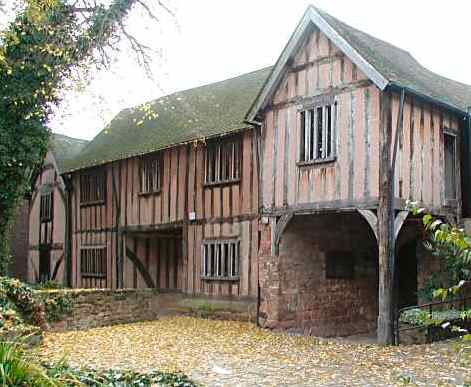
MANOR This beautiful ancient building is one of the best preserved in the city and is now home to the registry office for the community. The construction is said to be the only unfortified royal palace outside of London. Built in the 16th Century the building has strong associations with Queen Isabella the wife of Edward II and her grandson, the Black Prince. The fantastic building is well worth inspecting from outside, and can be viewed internally by appointment. |
 |
Manor
House Drive, New Union Street, Coventry, West
Midlands CV1 2ND |
Phone:
+44 (0)24 7683 3141 |
| CHRISTCHURCH
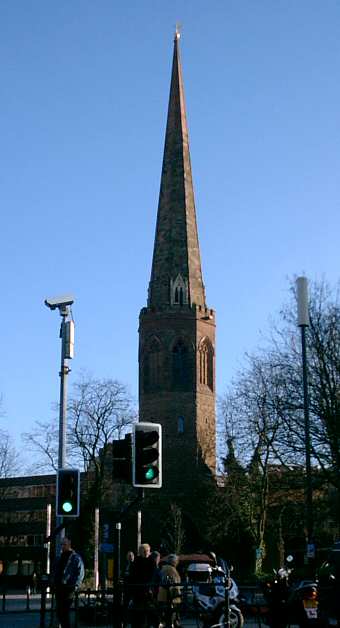
SPIRE The third of Coventry's famous three spires. Henry VIII's commissioners demolished its first church. Its second was lost to bombing in 1941. Exterior viewing only. |
 |
New
Union Street, Coventry, West Midlands, CV1 2PS |
|
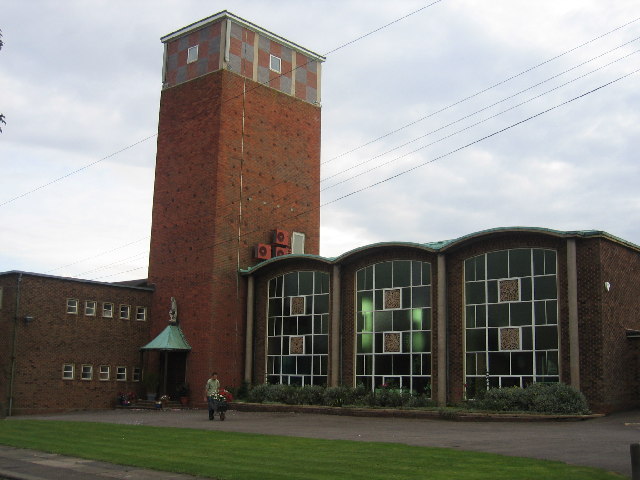
| CHRIST CHURCH
Dating back to
Queen Isobel and the Black Prince, all that
remains on the original site of the Christ
Church is the famous third spire of Coventry
after the rest of the mediaeval church was
destroyed during the Second World War. The new
Christ Church was moved to Cheylesmore and
opened in 1958 and boasts sculptures by John
Skelton and stained glass by Pierre
Fourmaintraux.
|
 |
11 Frankpledge
Road, Cheylesmore, Coventry, West Midlands, CV3
5GT CHRIST CHURCH CLICK |
Tel: 024 7650 2770 |
| CITY COLLEGE
THEATRE A 650 seater theatre with an original 1930's interior. Host to a range of amateur and professional productions, including musicals, dancing shows, variety and concerts, including an annual panto and much more. There is parking at the rear, a licensed bar and a warm welcome. |
 |
City
College Coventry, The Butts, Coventry, West
Midlands, CV1 3GD CITY COLLEGE THEATRE CLICK See Our Theatre Website |
Tel:
024 7652 6700 |
| CITY OF
COVENTRY STADIUM The City of Coventry Stadium is a modern stadium which hosts a variety of music, business, and sporting events, and also includes a shopping centre, exhibition areas, and a casino. A venue for some of the 2012 Olympic football events during the London Summer Olympics, the stadium is world class and has an impressive 32,500 capacity. It is also the home of Coventry City Football Club and situated very close to Coventry city centre, where public transport links are available. |
 |
71
Phoenix Way, Foleshill, Coventry CV6 6GE CITY OF COVENTRY STADIUM CLICK |
Tel: 0844 873 6500 |
| COOK STREET
& SWANSWELL GATES The only two of Coventry's twelve mediaeval gates to survive. Between them lies the most complete section of the city's impressive wall now incorporated in Lady Herbert's Garden. |
 |
Cook
Street, Coventry, West Midlands, CV1 1XX |
|
| COOMBE
COUNTRY PARK & NATURE RESERVE It has taken ten centuries and the vision of many individuals for the magnificent country park to reach its present spelndour. Come and explore 500 acres of historic parkland made up of gardens, woodlands and lakeside walks. Become on with nature and relax in magnificent surroundings. View key to symbolskeyCoach parties accepted Credit cards accepted (no fee) Disabled access Disabled toilets Education/study area Facilities for groups Facilities for educational visits Gift shop On-site catering Picnic site Public toilets Accepts groups Baby changing facilities Facilities for conferencing Facilities for corporate hospitality On-site light refreshments Telephone (public) Children welcomeDisabled accessDogs not accepted (except guidedogs)Guided tours for groupsGrounds for outdoor activities Prices Free entry Entrance to the park is free. Car Park - pay & display. Open all the time Open daily 7.30am to dusk. The Visitor Centre is open 9.30am until 4pm in the winter and 9.30am until 5pm in the summer. |
 |
Brinklow
Road, Binley, Coventry, CV3 2AB COOMBE COUNTRY PARK & NATURE RESERVE CLICK |
Tel:
024 7645 3720 |
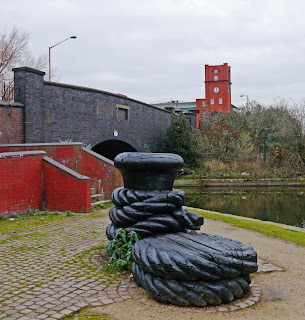
| COVENTRY
CANAL ART TRAIL Public Art Trail from Coventry Canal Basin to Hawkesbury Junction along the Coventry Canal. Five and a half miles of art comprising 39 pieces by 34 artists. Includes sculptures, ironwork, murals, community projects and more. Britains longest waterside art gallery. |
 |
Unit 5
Canal Basin, St Nicholas Street, Coventry, West Midlands, CV1 4LY COVENTRY CANAL ART TRAIL CLICK |
|
| CANAL BASIN
OF COVENTRY Termination of the Coventry Canal. Popular with boats/easy access to city centre shops etc. Restored, original early 19th century wharf, also newer development including bar/cafe, newsagent, tea shop, canal rangers and more. Regular venue for public and community events. Free parking. |
St
Nicholas Street, Coventry, CV1 4LY COVENTRY CANAL CLICK |
Tel:
024 7678 2368 |
|
| COUNTY HALL Coventry was once a County in its own right. The Boundary act of 1847 removed this status from Coventry but the old County Hall retained it's name. The County Hall was built in 1783-4 and was designed by the architect Samuel Eglington. It was used for County Court and quarter sessions and is the only remaining 18th Century building of architectural distinction in Coventry. At one time it also housed the Prison governer of the adjoining jail which stood next door in Trinity Lane. The last public execution to take place in Coventry was in the street outside the County Hall (Cuckoo Lane) in 1849. |
 |
Cuckoo
Lane, Coventry CV1 1LN. |
|
| COVENTRY
CATHEDRAL Glorious 20th century Cathedral, with stunning 1950's art & architecture, rising above the stark ruins of the medieval Cathedral destroyed by German air raids in 1940. The Visitor Information Centre housed in St Michael's Tower. |
 |
Coventry
Cathedral 1 Hill Top Coventry CV1 5AB COVENTRY CATHEDRAL CLICK |
Tel: +44 (0)24
7652 1200
Fax: +44 (0)24 7652 1220 |
| COVENTRY CITY
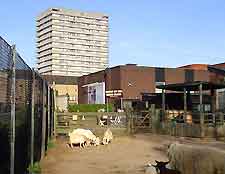
FARM Coventry City Farm site was taken over and reopened by the Warwickshire Wildlife Trust this summer and now hosts fun and interactive workshops for children. The workshops aim to promote teamwork, communication and education whilst still including an element of fun. During November two workshops will be taking place; WildPlay and Allotment Activities. Allotment activity sessions - aimed at older children will be running every Friday (14th, 21st and 28th) between 10am - 12pm. WildPlay sessions will be taking place each Saturday (1st, 15th, 22th and 29th) between 1:30pm - 2:30pm. On Saturday 8th November 12:00-3:00pm there is also going to be an open day with a free BBQ, DVD Screening and children and family activities. This will be your chance to influence the future of the site and find out what the Warwickshire Wildlife Trust is planning to do. Please note all children must be accompanied by an adult and as Coventry City Farm has closed down the site no longer has any of the farm animals. |
 |
1 Clarence Street, Hillfields, Coventry, West Midlands, CV1 4SF | Tel: +44 (0)24 7622 5323 |
 COVENTRY
CITY FOOTBALL CLUB COVENTRY
CITY FOOTBALL CLUBThe club was founded in 1883 by Willie Stanley, an employee of cycle firm Singers. The club as a result was known as Singers FC until 1898 when the name was changed to Coventry City. Early matches were played at Dowells Field, off Binley Road until a move to Stoke Road in 1887 before the move to the Highfield Road site in 1899.The brightest light for the Sky Blues came on October 2003 when the City Council gave the greenlight for the Arena project in the north of Coventry which would house the club's new 32,000 seater stadium. Now Playing in the Championship . They won the FA Cup in 1986. |
 |
Ricoh
Arena Phoenix Way, Foleshill, Coventry, CV6 6GE COVENTRY CITY FC CLICK Get A Coventry City Email Address Fixture List See Our Soccer Website |
Main
Telephone No: 0844 873 1883 Fax No: 024 7623 4099 Ticket Office No: 0844 873 1883 (Option 1) |
| COVENTRY
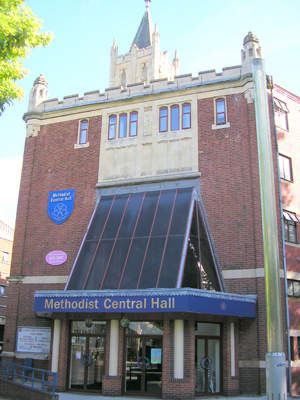
METHODIST CENTRAL HALL
Built on the site of a
Wesleyan chapel and opened in 1932, Central
Hall is one of the few buildings that remained
standing during the Coventry Blitz in 1940,
though it was extensively damaged. Central
Hall has several rooms and halls and is used
as a major business, conference and concert
venue. It is one of 16 places of Methodist
worship in the Coventry circuit.
The church: In the words of the website, "Central Hall is no mere preaching centre – it is a real, living Church and that is the secret of its success." As well as providing three Sunday services, Central Hall also has a weekly youth group, snooker club and prayer breakfast, plus social activities. The neighbourhood: The church is in the heart of Coventry, a thriving city. Coventry was devastated by German bombing on the night of 14 November 1940, when the historic centre of the city, including the Gothic cathedral, was destroyed. |
 |
Warwick Lane,
Coventry, West Midlands, CV1 2HA COVENTRY METHODIST CENTRAL HALL CLICK |
Tele : 024 7622 3564 |
| COVENTRY
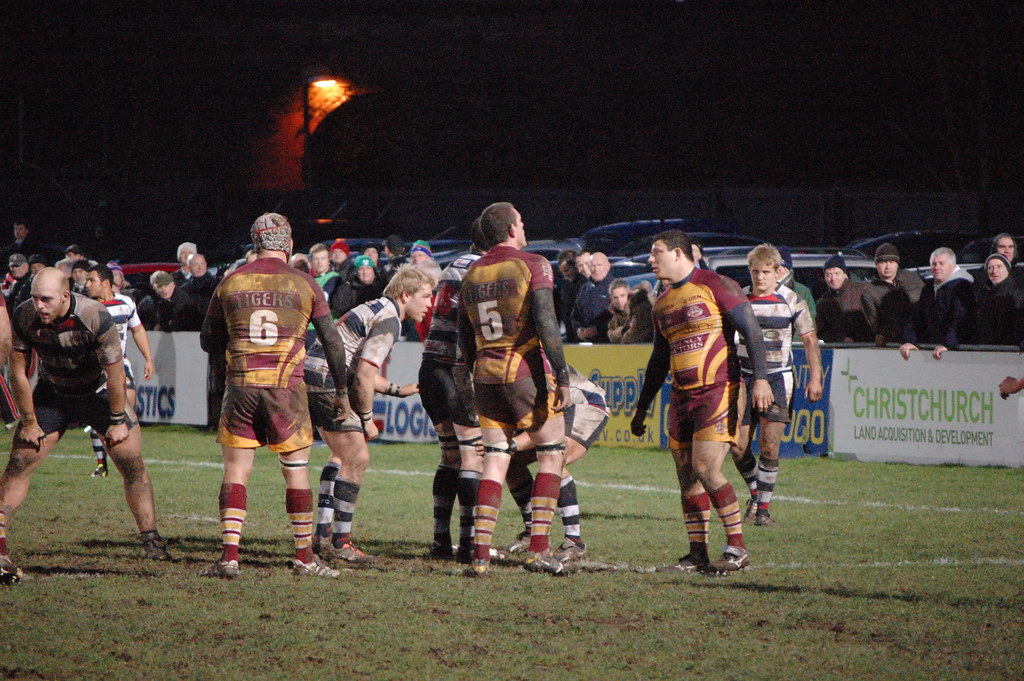
RUGBY FOOTBALL CLUB The club was founded in 1874.Their home ground is the Butts Park Arena, which was opened in Coventry in 2004. From 1921 to 2004 the club played at Coundon Road Stadium, Coventry. It was one of the premier rugby clubs in the UK in the 1960s and 1970s and many of its players were capped during that time for England. These included Phil Judd, George Cole, Bill Gittings, Peter Rossborough, John Barton, Barry Ninnes, Keith Fairbrother, Geoff Evans, Peter Preece, Alan Cowman, Graham Robbins and David Duckham. Other top players of that era were John Gray, Brian Holt and Steve Thomas. The club was renowned for exciting attacking rugby. Playing at Coundon Road Stadium, their major local rivals were Moseley, with whom they had a regular and popular Boxing Day fixture. This was in the days when Leicester were a second order force in Midlands rugby. Cardiff and London Welsh were regular visitors. David Duckham scored the most impressive try of his career against London Welsh in a match in 1973. The latest Coventry player to gain an honour was Jamie Miller who represented the Barbarians in November 2008Now playing in National League 1, |
 |
Butts
Park Arena Coventry CV1 3GE COVENTRY RUGBY FOOTBALL CLUB CLICK |
Tel 024
76 231 001 |
| COVENTRY
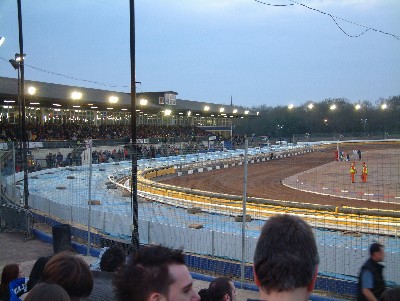
STADIUM SPEEDWAY RACING Experience the excitement of Speedway by visiting the fantastic Coventry Stadium. Home to the Buildbase Bees, a series of races operate throughout the year. The Coventry Bees are based at Coventry Stadium (formerly Brandon Stadium) to the east of the city. The stadium has operated both sides of World War II. The Bees started in 1948 and have operated continuously ever since. They started out in the National League Division three before moving up to the Second Division and, later to the top flight. They have operated at this level ever since. |
 |
Rugby Road Brandon Nr Coventry CV8 3GJ COVENTRY STADIUM CLICK |
Tel :02476 542 395 |
| COVENTRY
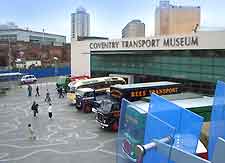
TRANSPORT MUSEUM The Coventry Transport Museum is located in the very heart of the city centre, at Millennium Place. Offering a true blast from the past, this museum contains a host of nostalgia. Ranging from old 'bone-shaker' bicycles to vintage vehicles at their best, the museum is grouped into collections and galleries, with favourites including the Blitz Experience, Futures Gallery and Spirit of Speed. In total, you will find around 250 different cars and vehicles on display here, together with more than 100 motorbikes. Open: daily - 10:00 to 17:00 Admission: free |
 |
Millennium
Place, Hales Street, Coventry, West Midlands CV1
1PN COVENTRY TRANSPORT MUSEUM CLICK |
Phone:
+44 (0)24 7623 4270 - Fax: +44 (0)24
7623 4284 |
| COVENTRY WATCH
MUSEUM
Coventry
has over the past few centuries been home to
several industries of national significance.
Watchmaking was first recorded in the city in
the 1680s, but it was not until the 18th century
that Coventry emerged as one of the main centres
of the watchmaking industry in England. By the
first half of the 19th century Coventry had even
reached a position of national dominance. It was
not however, to last - by the second half of the
century cheaper factory methods in the USA and
improved quality in Switzerland were rapidly
eating away at Coventry's market share. All was
not lost though, as the watchmaking industry
helped developed a skill base that was to
contribute to Coventry's rise as a centre of the
motor car, motor cycle, aircraft and precision
engineering
House within three 19th Century cottages, and a temporary steel building the Trustees and volunteers continue to work towards making this site the Museum's permanent home, proudly illustrating Coventry's influence within the British watch making industry, which dates back to the 1680's.Display of Clocks, Watches, Tools, artefacts and Family History records, unique Air Raid Shelter containing WWII Memorabilia. One of the cottages is reputedly haunted and several interesting vigils have been held there. Entrance: Via the passageway at the side of the Shakespeare Public House. |
 |
Court 7, Spon
Street, Coventry, West Midlands, CV1 3BA COVENTRY WATCH MUSEUM CLICK |
Tel : 024 7650 2916 |
| DELTA FORCE
PAINTBALLING Paintballing and paintball in Warwickshire is more popular than ever, and now it has become easier to organise! Paintball is currently one of the fastest growing extreme sports in Europe; thousands of new UK paintballing enthusiasts try out the most exciting games on our paintball playing fields every month. People are often introduced to paintball action sports through a CORPORATE EVENT, STAG PARTY, BIRTHDAY PARTY or GROUP OF FRIENDS looking for an ACTIVE FUN DAY |
 |
Cut Throat Lane, Earlswood, Hockley Heath, B94 6SE DELTA FORCE PAINTBALLING CLICK |
Tel :0800 849 4911 |
| DRAPER'S HALL
The Drapers'
Hall, opened in 1832, represents at least the
third hall in Bayley Lane belonging to the
drapers' company. This area seems to have been
the centre of the drapers' activities since the
later 14th century when a building called the
Drapery stood in what is now St. Mary's
Street. In 1727 this was pulled down and
the Half Moon Inn was built on the site; at the
same time the linen, flannel, and cloth fairs
were removed to St. Mary's Hall. The
Drapers' Hall, 'a dark gloomy edifice', appears
to have been an adjacent but independent
structure, completed c. 1637,
facing Bayley Lane. This survived until 1775
when it was replaced by a stone building
designed by Henry Couchman.
Exterior viewable only.Currently redundant, at
various times over the last ten years attempts
have been made to bring the building back into
permanent use. A plan drawn up by Coventry
Building Preservation Trust (an offshoot of the
Coventry Society) would have seen the building
re-used as a central community centre and museum
to the cloth trade. But the plan was rejected by
the City Council.
|
 |
Bayley Lane, Coventry, CV1 5R |
|
| EARLSDON
METHODIST CHURCH
Originally
housed in a derelict ribbon factory on
Cromwell Street, the Methodist Church
established itself in Earlsdon in 1873, and
moved once more before finally settling in its
current location. The Earlsdon
Methodist Church was built in 1922 and
opened in 1923. It was designed in the
late Gothic style by Crouch Butler and
Savage, Architects in Birmingham. The
facades have two types of facing bricks
combined with Weldon stone details and
tracery. The large expanse of roof is
covered with sand faced plain clay
tiles. The front elevation has
octagonal brick towers on the corners.
These are topped with open stone turrets and
pinnacles. The corner entrance with
hardwood doors is a later addition.
|
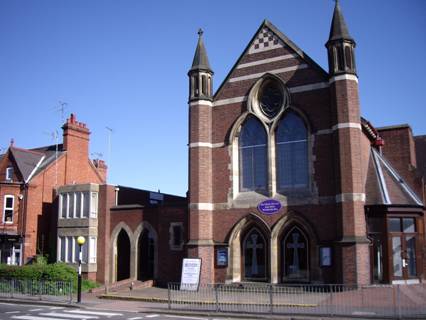 |
Albany Road, Earlsdon, Coventry, West Midlands, CV5 6NF EARLSDON METHODIST CHURCH CLICK |
Tel: 024 7671 4149 |
| FORD'S
HOSPITAL
This hospital or
"almshouse" provided sheltered accommodation for
elderly people and was founded in 1509 by
William Ford. Originally it housed five aged men
and one woman, but was further endowed in 1517
to provide shelter for six couples, and again in
1529 by William Wigston for five more old
couples with a small weekly allowance. On
the night of 14th October 1940 it was struck by
a single bomb which killed the warden, a nurse
and six residents.
The structure itself was quite severely damaged but not totally beyond repair. The building was faithfully restored in 1953 using wherever possible, original materials salvaged from the ruins. Whilst searching through the damage, Coventry historian John Bailey Shelton uncovered the remains of a tiled floor from the 1300's. One tile was decorated with the black eagle of Leofric. It is thought that previously, a chapel associated with Greyfriars monastery stood on this site. Exterior only viewable. Wheelchair accessto courtyard . |
 |
Greyfriar's
Lane, Coventry, CV1 2GY |
|
| G CASINO Las Vegas has come to Coventry in the form of G casino and entertainment complex. Located within the £113 million Ricoh Arena, housing the UK's largest casino with blackjack, roulette and poker tables, as well as a 'high rollers' room. Explore the bars, starting with a drink in the lively Bar 87 or savour a cocktail at the stylish Singers bar while overlooking the 35 metre high waterfall and tropical lagoon. Later check out the live music or entertainment at the show bar. Visitors can also enjoy a delicious meal at Mahir's restaurant or sample the tasty variety offered at the Tradewinds Marketplace foodcourt |
 |
Ricoh
Arena, Phoenix Way, Coventry, West Midlands, CV6
6GE G CASINO CLICK |
Tel:
024 7668 4747 |
| GARDEN OF
INTERNATIONAL FRIENDSHIP
Near the city’s
gates, the Coventry Garden of International
Friendship sits as a fine display of modernly
landscaped impeccable grounds that offer a rare
and superb opportunity for visitors to relax,
enjoy being outdoors, and sneak away from the
busy city life beyond the garden’s peaceful
land. The Phoenix Initiative, a City Council
project meant to create roles for conservation
and archaeology in the process of rebuilding and
refurbishing the city’s center, was the catalyst
for the creation of the International Friendship
gardens and the refurbishing of Lady’ Herbert’s.
The International Friendship Garden was born
from the idea to create something strikingly
different than the beautiful, but formal style
Lady Herbert’s Gardens near by. Bold and almost
state of the art, the layout is quite different
than a classic formal garden, but enjoyable just
the same. The beautifully landscaped grounds are
able to be visited at any time free of charge.
Guests from all over seek out this garden due to
the beauty and tranquility it offers. Visitors
should be aware that there is a charge for
parking. However, the garden is also easily
accessible by public transportation as it is
located just one mile from the Coventry mainline
station. The garden is centrally located so it
makes a great stop if you are on a site seeing
tour of your own in Coventry. Take a moment to
relax and unwind from your busy day or just
pause to plan the upcoming activities for the
remainder of your visit.
|
 |
Hales Street,
Coventry, West Midlands, CV1 2XX |
|
| GREYFRIARS GREEN Two hundred years ago Greyfriars Green was known as Graffery Muck Hill. It was a large dunghill of street-sweepings which was auctioned twice a year. Later it was known as the 'Red Sea' or 'Horse Pool' where the coach men washed down their vehicles. There was even a ducking stool for scolding wives.For many years prior to 1858 the Coventry Fair was held on Greyfriars Green, the drinking tents and stalls aligned on the periphery of the site, the buying and selling taking place in the centre. Greyfriars Green can be found in the very centre of Coventry and was first laid out and structured during the 1850s. This tranquil city park is close to a school attended by acclaimed Victorian novelist George Eliot. During the summer months, swathes of bedding plants fill the gardens with bright colours. Open: daily - dawn to dusk Admission: free |
 |
Greenfriars Road, Coventry, West Midlands, CV1 3RY |
|
| HAWKESBURY
JUNCTION & SUTTON STOP
At the
unusual canal junction at Hawkesbury near
Coventry the Oxford Canal joins the Coventry
Canal. The Oxford originally ran parallel with
the Coventry for a few miles towards Coventry
but the junction beneath the elegant cast iron
bridge was cut through in 1828 when the Oxford
Canal was being shortened by having some of its
tortuous loops cut out. Sutton stop lock, named
after its first lock keeper, is in the distance
on the right hand side in the photo. This has a
very small fall and was built to keep the waters
of the two canals separate.
|
 |
Sutton Stop, Longford, Coventry, West Midlands, CV6 6DF HAWKESBURY JUNCTION & SUTTON STOP CLICK |
Tel: 024 7678 5507 |
| HEARSALL
BAPTIST CHURCH
We are a well
established church that has experienced a growth
of spiritual activity. As Baptists we hold to
the traditional teachings on God's love for all,
shown in the life, death and resurrection of
Jesus Christ. We believe in the importance of
this church for spiritual growth and response,
fellowship and service. Believer's baptism is a
distinctive feature of Baptist church life.
Membership and communion are open to all that
profess Jesus Christ as Lord and Saviour. We
have responsibilities to the wider church,
offering financial and prayer support. People
coming to Hearsall for the first time comment on
the warmth of our welcome. We would be delighted
to welcome you.
|
 |
Queensland
Avenue, Coventry, CV5 8FE HEARSALL BAPTIST CHURCH CLICK |
Tel: 024 7667 8587 |
| HEARSALL COMMON
Hearsall Common
is located in Earlsdon, Coventry in the West
Midlands, central England
The common consists of a large grassy area with a smaller partly tarmacadamed area on one side of Hearsall Common Road, and a wooded nature reserve on the other side. It is free to enter and open to the public as of right, 24 hrs a day; however, after several years of residents complaining about itinerant or nomadic travellers using the common, an embankment was built alongside the roads to prevent vehicles from driving onto the common. Hearsall Common has a long history of being common land going back to at least the thirteenth century. It was reassigned as recreation ground by a Coventry Corporation Act of 1927, along with other areas of common land in Coventry. On this common Frank Whittle, Jet Pioneer, first felt the power of flight. 1916 |
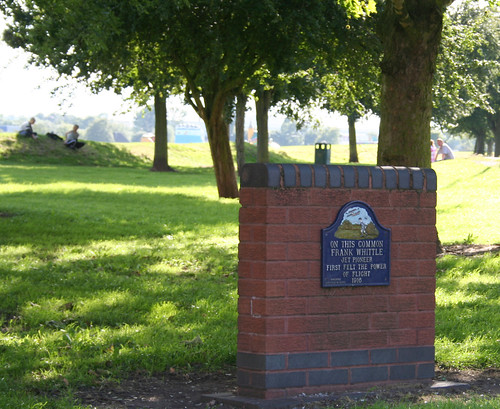 |
Hearsall Lane, Earlsdon, Coventry, West Midlands, CV5 6HJ HEARSALL COMMON CLICK |
|
| HEART OF
ENGLAND COUNTRY PARK & BEACH 'Heart Park' for short - is the product of the vision of Stephen Hammon, Managing Director and owner of the site.Heart of England Conference and Events Centre (sharing the same site) has been providing fantastic facilities to corporate customers for 10 years - and, in 2009, Stephen wanted to open up these fantastic facilities to everyone...with a few extra twists that would make a really special day out for the whole family.At a cost of £1.4m, the site now offers a beautiful, clean lake for paddling, tonnes of soft sand (for castle buidling and sun bathing) - fresh air, open spaces and medieval woodlands. Heart Park is the perfect solution for families who want to spend a day together at the beach - without the four hour round trip to the seaside. Imagine, living in Coventry or Solihull or Birmingham...waking up to a glorious sunny day, packing some beach towels and the children...and finding yourself relaxing on old fashioned deckchairs, watching the children paddle and build sand castles - within THIRTY MINUTES. That's the reality of Heart Park. |
 |
Meriden
Road Fillongley Meriden Warwickshire CV7 8DX HEART OF ENGLAND COUNTRY PARK & BEACH CLICK |
Tel:
01676 540333 |
| THE HERBERT The Herbert is the cultural heart of Coventry and includes a gallery and museum, creative media studio, arts information centre and the city archives. The aim of the centre is to work with the people of Coventry to explore and celebrate the diverse culture and long history of the area. The gallery carries an ever-changing collection of contemporary art and the museum has a range of archaeological discoveries from the West Midlands. |
 |
Jordan
Well, Coventry, West Midlands CV1 5QP THE HERBERT CLICK |
Phone:
+44 (0)24 7683 2386 - Mobile: +44
(0)24 7622 0171 |
| HOLY TRINITY
CHURCH
Holy Trinity's story is a long one! The
first known reference to Holy Trinity
Church is in 1113. Its beginnings are
tied in to the history of the Benedictine
Priory of St Mary which was associated
with Earl Leofric and Lady Godiva. The
church appears to have originally been
established next door to the Priory to act
as a “side chapel” to the priory church
and for the use of the priory’s tenants.
The original Norman church was all but
destroyed in a fire in 1257. The
North porch was the only part of the
original building to survive and is still
in use today. The rest of the church
was entirely rebuilt during the 13th
Century. The walls were brightly
painted, helping those churchgoers who
could not read to understand the messages
of the bible.
The Holy Trinity Church is a
13th Century Parish Church in the city centre.
It features a Medieval Doom Painting of the last
judgement, 14th Century misericords, two superb
stained glass windows. There is a ramp for
wheelchair access. |
 |
Broadgate, Coventry, West Midlands, CV1 5EX HOLY TRINITY CHURCH CLICK |
Tel : 024 7622 0418 |
| JAGUAR &
DAIMLER HERITAGE TRUST MUSEUM The Jaguar and Daimler Heritage Trust Museum is home to over 100 different vehicles, although not all of the cars are on display at any one time. Standing just 5 km / 3 miles from central Coventry, many of the vehicles on display here are in mint condition and as if they have just left the actual factory production line, being in full working order and a reminder of an earlier time. Open: daily - by arrangement only, Monday to Thursday - 09:00 to 16:30, Friday - 09:00 to 15:00 Admission: free |
Browns
Lane, Allesley, Coventry, West Midlands, CV5 9DR JAGUAR & DAIMLER HERITAGE TRUST MUSEUM CLICK |
Tel:
+44 (0)24 7620 3322 |
|
| JAM JAM
BOOMERANG Jam Jam Boomerang is a new multi-level play and party place in Coventry for 0-12 year olds. There's a separate area for babies and the under 4's. As well as having the facility to cater for children's parties, they have a café serving coffee and healthy snacks. Babies are free when accompanied by another paying child. |
 |
Woodhams
Road, Off Sisken Drive, Middlemarch Business
Park, Coventry, Warwickshire, CV3 4FJ, JAM JAM BOOMERANG CLICK |
tel: 024 7630 3893 |
| LADY GODIVA
STATUE
The legend of
Lady Godiva is very special to Coventry;
everyone loves the tale of this proud Lady, who
rode through the streets in protest at the high
taxes that her husband Earl Leofric had imposed
on the town. The statue is located in Broadgate.Lady
Godiva statue by Sir William Reid Dick unveiled
at midday on 22 October 1949 in Broadgate,
Coventry, a £20,000 gift from Mr WH
Bassett-Green, a Coventrian.
|
 |
Broadgate,
Coventry, CV1 1 LADY GODIVA STATUE CLICK HISTORY OF LADY GODIVA |
She
didn't use a mobile telephone. Nowhere to keep it! |
| LADY HERBERT'S
GARDEN
Lady Herbert's
garden lies beside the town's ancient gates and
incorporates part of the old city wall. It was
designed and built by the Coventry industrialist
Sir Alfred Herbert in the 'Arts and Crafts'
style and was dedicated to Lady Herbert who died
in 1930.
|
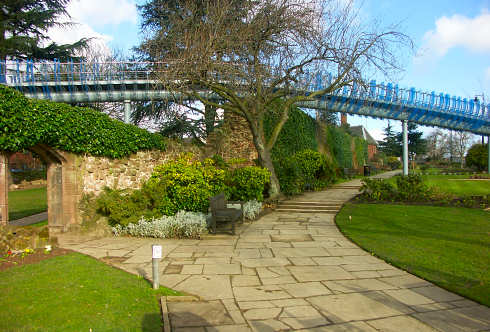 |
Hales Street, Coventry, West Midlands, CV1 |
|
| LONGFORD PARK
This is the
largest of the City's Area Parks and serves the
North of the city. It is a well established
green space with expanses of grass, colourful
bedding schemes, picturesque tree lined river
walk, ecological and wildlife areas and a range
of facilities for all the family to enjoy,
including a play area, skate park, and a multi
use games area. The extensive and well used
footpath system is ideal as an exercise facility
using the distance marked routes and as a dog
walking venue.
|
 |
Longford Road, Longford, Coventry, West Midlands, CV6 7AT LONGFORD PARK CLICK |
Tel: 024 7683 2441 |
| LUNT FORT It's A.D. 60; the Iceni of East Anglia led by the legendary Boudica have rebelled against Roman rule, and have just been defeated in a terrible battle fought somewhere in the Midlands. As a result the Romans are building a series of fortifications across the Midlands including the Lunt. Come and explore this partially-reconstructed timber fort . Stand on the ramparts, explore the exhibition in the granary and imagine yourself training horses in the gyrus - a feature not found anywhere else in the Roman Empire. |
 |
Coventry
Road, Bagington, Warwickshire CV8 3AJ LUNT FORT CLICK |
Phone:
+44 (0)24 7630 3567 - Fax: +44 (0)24
7630 3567 |
| LYNCHGATE
COTTAGES Adjacent to the entrance to Trinity church can be found these three 15th century cottages. They were originally one building named 'Lychgate House'. The timber used for these buildings has been accurately tree-ring dated to around 1414-15. The word Lych is old English and means corpse, hence a Lychgate being the entrance by which a funeral procession would enter a churchyard and under which the coffin would be rested awaiting the vicar's arrival. |
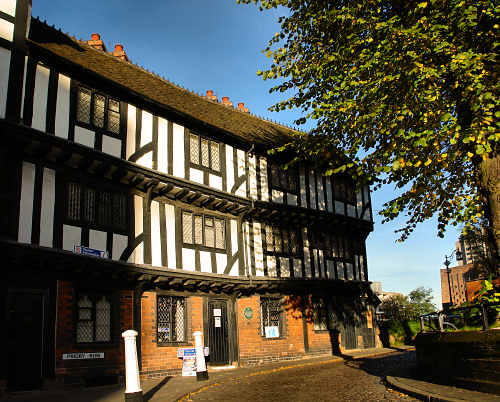 |
3,4 & 5
Priory Row Coventry CV1 5EX |
|
| MEAD GALLERY The Mead Gallery is one of the centrepieces of the campus at the University of Warwick. The gallery houses a great many fantastic exhibitions throughout the year that work across a range of themes. The collections are sometimes focussed around students and the work of young and emerging talents. However, there are also frequent exhibitions of travelling shows and established artists work. |
 |
The
University of Warwick, Coventry, West Midlands CV4
7AL MEAD GALLERY CLICK |
Phone:
+44 (0)24 7652 4524 - Fax: +44 (0)2476
524525 |
| MIDLAND AIR
MUSEUM Located at Coventry Airport, this museum offers an extensive collection of over thirty full-sized aircraft that are both military and civil. This includes an Avro Vulcan Bomber, which is a rare piece. The exhibitions inside the museum are dedicated to the history of the aircraft and one in particular focuses on the work of Sir Frank Whittle, the inventor of the jet engine. |
 |
Baginton,
Warwickshire CV8 3AZ MIDLAND AIR MUSEUM CLICK |
Phone:
+44 (0)1203 301 033 - Fax: +44 (0)1203
301 033 |
| MILLENIUM
PLACE Millennium Place is a key part of the city’s refurbishment, the Phoenix Initiative, and the huge undertaking known as the Millennium Project. Located in the center of the city, Millennium Place boasts a large space open to the public and filled with unique and interesting works of art to enjoy. Visitors will want to make sure to see Schein’s twenty four hour Time Zone Clock as well as the grandly constructed forty ton Whittle Arches. Near the grounds of Lady Herbert’s Garden, a large obelisk made of glass has been erected and is known as the Future Monument. All around the monument are plaques which show the names of people that once were enemies of Coventry, but now are united in friendship. The spiral Glass Bridge is a tricky design and a recent development that connects this location with the Garden of International Friendship. There are also walkways connecting to the Coventry Transport Museum and the Cathedral. All of these connections are beneficial to guests that are trying to see multiple locations in a single day because it makes it easy to get back and forth from one site to another.This location is open twenty four hours daily and has no admission charge for guests. Millennium Place can be especially alluring at night, when the dark sky lends a perfect backdrop for the modern designs of the area and lighting effects, particularly along the seemingly delicate but sturdy glass bridge. As well, there are times when the location is the host to various events such as concerts. |
 |
Hales Street, Coventry, West Midlands, CV1 1PN |
|
| NAULS MILL
PARK
Originally the
site of a watermill built in the 12th century,
this park is tucked away at the end of Coundon
Street, alongside the beautiful Bablake School.This
Edwardian park was opened in 1909. The original
boating lake is used today by model boating
enthusiasts. Visitors can enjoy pleasant walks
among the formal flower beds around the lake.
There is also a children's play area.The park
has areas of tranquillity, laid out with
flowerbeds and a large ornamental pool
surrounded by mature trees creating a peaceful
haven in this built up area of the city.
|
 |
Middlebrough
Road, Radford, Coventry, West Midlands, CV14AP NAULS MILL PARK CLICK |
Tel: 024 7683 2441 |
| ODEON CINEMA The Odeon Cinema in Coventry in situated in the Skydome, an entertainment complex housing numerous bars and restaurants. |
 |
Skydome, Coventry. CV1 3AZ ODEON CINEMA CLICK |
Filmline: 0871 22 44 007 |
| OLD
BLUE COAT SCHOOL (exterior viewing only) The Old Blue Coat School is a unique and historic building nestling between Priory Row and the new Phoenix Initiative in Coventry city centre. The current building dates from 1856, the actual school having been founded as the first Charity School for girls in Coventry in 1714. Having not been in use for many years, it was completely re-furbished as part of the Phoenix Initiative development in celebration of 2000 years since Christ’s birth. Now run by Holy Trinity, the Old Blue Coat School has been transformed and plays an important role in the rejuvenation of this historic part of the City Centre. The building itself was constructed over one corner of the original St Mary’s Cathedral. The evidence of this can be seen today in the cellars of the building which are actually inside one of the original pillars of the Cathedral, dating from around 1150AD. |
 |
5a
Priory Row, Coventry, West Midlands, CV1 5EX OLD BLUE COAT SCHOOL CLICK |
Tel:
024 7622 0418 |
| PEACE GARDEN In the center of the city, next to University Square and the Herbert Art Gallery, the Peace Gardens were established and are maintained as a living memorial to the devastation that faced the city during the blitz bombings of the second world war. As the home of various manufacturers, Coventry was the site of air raids during the war. The site of the Peace Garden once belonged to the Coventry Cathedral which was destroyed during an air raid bombing in 1940. These gardens not only mark that emotion filled era, but also house a plaque that visitors can view to see the names and distances of the many twin cities to Coventry. Each twin city also maintains a peace park of their own as a statement for the desire for world peace. The setup of the landscaping and displays is meant to draw the visitors back to the time of devastation and fear during the traumatic air raids of the war. The setting offers a chance to reflect and remember the trials faced as the world was in the turmoil of growth with various nations fighting for power and also a place to pray and wish for a peaceful future. The second world war took a large toll on many places throughout the world, not just in Coventry, but here in the city the Peace Garden serves as a chance for reflection on those tumultuous days gone by. Guests may come and go from the park, free of charge, from dawn until dusk each day. |
 |
Bayley Lane, Coventry, West Midlands, CV1 5RN |
|
| PLANET ICE
ARENA The Coventry Ice Rink is located at The Planet Ice Arena in Croft Road, Coventry. Apart from Public ice skating sessions, the Coventry Ice Rink is also home to the Coventry Chaos Ice Hockey Team, the Coventry Phoenix Ladies Ice Hockey Team and the Coventry Junior Ice Hockey Team. In addition to public ice skating sessions, private Birthday Parties are catered for while the Galaxy Gliders provide one of the most enjoyable learn to skate programmes in the UK today. Each week you will receive expert tuition which starts you off from your very first tentative steps onto the ice up to completing the whole course with your first single jump! Galaxy Gliders is suitable for all the family no matter what your age or ability. Come and have some good family fun and learn to glide across the ice with confidence. |
 |
Croft Road Coventry CV1 3AZ PLANET ICE CLICK See Our Winter Sports Website |
Tel:
02476 630 693 Fax: 02476 630 674 |
| PRIORY GARDENS
Visitors to the
city centre have already voted with their feet
and decided that the new Priory Gardens are the
ideal place to while away a few moments, right
in the heart of the city centre. The Priory
Gardens is part of the Phoenix Initiative, is a
haven of peace and tranquility on the site of
Coventry's first cathedral, St Mary's,
surrounded by the newly restored Blue Coat
School and Holy Trinity Church. Ramp entrance.
Toilet suitable for most wheelchair users.
|
 |
Priory Row, Coventry, West Midlands, CV1 5EX PRIORY GARDENS CLICK |
Tel: 024 7655 2242 |
| PRIORY
VISITORS CENTRE/PRIORY UNDERCROFT Centrally located along Priory Row, Coventry's Priory Visitors Centre is full of information about the city's original cathedral, which was founded in the 1200s and demolished some years later. On display are a number of archaeological games found when the site was being excavated. Underneath the complex, the Undercroft is a series of cellars and hidden, underground passageways, and guided tours of these ancient remains are available. Open: Monday to Saturday - 10:00 to 17:30, Sunday - 12:00 to 16:00 Admission: free, small charge for guided tours of the Undercroft |
 |
Priory
Row, Coventry, West Midlands, CV1 5EX PRIORY VISITORS CENTRE CLICK |
Tel: +44 (0)24 7655 2242 |
| PURPLE PLANET Purple Planet is a great place for children to have fun and exercise in a clean, safe and friendly environment. Purple Planet's indoor soft play area, combined with the maze of tunnels and climbing tubes, rope swings, ball pools and slides is packed with adventure. Parents can watch their children burn off all that excess energy while enjoying a relaxing drink and snack in the café. The equipment at Purple Planet has been specially designed to ensure children with disabilities and special needs have good access and do not miss out. Kids birthday parties are also catered for - contact Purple Planet directly for more info. |
 |
Whitefriars
Lane,
Coventry, Warwickshire, CV1 2DT PURPLE PLANET CLICK |
tel: 02476 228254 |
| QUEENS ROAD
BAPTIST CHURCH
Queen's Road
Baptist Church Centre aims to serve and link
with the wider community of Coventry as well as
the church community. The buildings are
centrally situated on the edge of the City
Centre, providing an ideal venue for local,
citywide and national organisations.
|
Queen's Road, Coventry, CV1 3EG QUEENS ROAD BAPTIST CHURCH CLICK |
Tel : 024 7652 0621 |
|
| RYTON
ORGANIC GARDENS Ryton Gardens is set in the heart of England and combines 10 acres of organic gardens buzzing with wildlife, brimming with plants, bursting with flowers and abundant in fruit and vegetables. It has been home to the UK’s leading organic charity, Garden Organic, for over 25 years. There is so much to see and do including inspiring demonstration gardens, the only public biodynamic garden in the UK, fruit gardens and an orchard. There are also events throughout the year and free guided tours (weekends, May to Sept). |
 |
Wolston
Lane, Ryton on Dunsmore, Coventry, CV8 3LG RYTON ORGANIC GARDENS CLICK |
Phone:
+44 (0)2476 303517 - Fax: +44 (0)2476
639229 |
| RYTON POOLS
COUNTRY PARK Set in over 100 acres of countryside close to the village of Bubbenhall, Ryton Pools Country Park is home to a variety of birds and other wildlife. The paths and trails that weave their way through the park are perfect for walkers, dog walkers, cyclists and joggers, while for the children there is a miniature steam-engine railway and adventure playground. There is also direct access to the nearby Ryton Wood and a permanent orienteering course. On site there is a café, visitor centre and gift shop. |
 |
Ryton
Road, Bubbenhall, Coventry, Warwickshire, CV8 3BH |
|
| ST JOHN THE
DIVINE CHURCH One of the three Basil Spence designed churches in Coventry, built before the Cathedral was completed and celebrating their 50th birthday in 2007. The money needed to build the church was given by the local community. The church comissioned a millenium screen which hangs behind the alter and was designed by Warwickshire artist Christine Browne. Opening Times Monday, Wednesday and Thursday mornings. Opening outside these hours, please contact Rev. Katrina Scott 02476303266 |
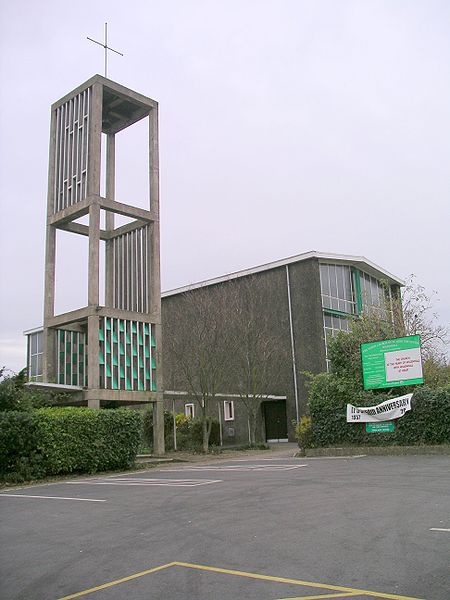 |
Robin
Hood Road, Willenhall, Coventry, West Midlands,
CV3 3AY ST JOHN THE DIVINE CHURCH CLICK |
Tel:
024 7630 3266 |
| ST.MARY'S
GUILDHALL St. Mary’s Guildhall is without a doubt one of the most impressive surviving medieval guildhalls in the country. The original structure was built in the early 1340s for the merchant guild of St Mary’s. It was enlarged and extended on several occasions in the next few hundred years. It was until the mid 20th Century the headquarters for administration for the city council, and still hosts a variety of important civic events. |
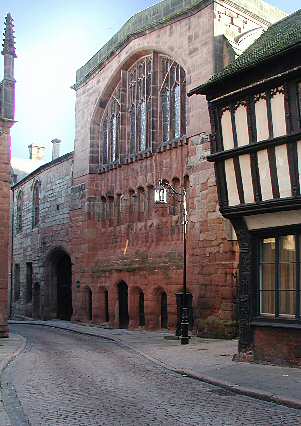 |
Bayley
Lane, Coventry, West Midlands CV1 5QP ST.MARY'S GUILDHALL CLICK |
Phone:
+44 (0)24 7683 3328 - Fax: +44 (0)24
7683 3329 |
|
Shopping in
Coventry City Centre
|
|||
| ARENA PARK
SHOPPING CENTRE The centre is split into two distinct areas, firstly the shopping park containing the larger units, and secondly the mall along the front of the Tesco Extra store containing smaller units. The tenants in the Shopping Park section are Marks and Spencer, Boots, next, New Look and Starbucks. The mall contains the centre's Tesco Extra store, Game, Johnsons Dry Cleaners, Phones 4U, Elliot Reeve, The Carphone Warehouse, Clinton Cards, Shoezone, Coventry Building Society and Thomson Holidays.[6] It is also home to the Arena Park Library It formerly contained a Borders bookstore with a Starbucks, this was from the opening of the centre until the chain went into administration and all stores were closed on 23 December 2009. In July 2010, it was announced that New Look were to move into the former Borders store. Their store opened on 9th September 2010 ] including a Starbucks Coffee. Fast food outlets located on the periphery of the car park include, Pizza Hut and Burger King. The Tesco petrol station is also located adjacent to these outlets. |
 |
Classic
Drive, Rowleys Green, Coventry, CV6 6AS ARENA SHOPPING CENTRE CLICK |
|
| BELGRADE
PLAZA if your looking for an ideal place to eat, drink and take a break from the retail dash, Belgrade Plaza has everything you need. Bella Italia, Pizza Express, Belgrade Theatre and Premier Inn all help contribute to one of Coventry's most prestigous areas, combining history with the new. The Belgrade Plaza is being built by construction firm, Oakmoor Deeley. The development has two phases. The first – a 1,100 space car park – opened in 2007. The second phase will bring two hotels, a casino, restaurants, bars and apartments to the area between the Belgrade Theatre and the ring road. Gala Casino, Radisson Edwardian, and Metro Bar& Grill have units at the development planned. |
 |
Belgrade Square Coventry CV1 1GS www.belgradeplaza.co.uk |
|
| THE BURGES
& TRINITY STREET The Burges is an old city street with the River Sherbourne running under it. Now it is host to well known fast food outlets, pubs and recruitment agencies. Cross Cheaping was originally the city's market area. Holy Trinity Church gives Trinity Street its name, which is home to the city centre's only major supermarket retailer, Sainsbury's, and a variety of small independent retailers. |
 |
The
Burges, Coventry CV1 1HL .... Trinity Street, Coventry, CV1 1FJ |
|
| CATHERDAL
LANES & BROADGATE Broadgate & Cathedral Lanes - a great area to shop for life's necessities ... from household items in Wilkinson's to high street fashion in the UK's flagship Primark store, Coventry provides something for everyone. With a multi-million pound re-development of the new Broadgate square currently in progress, 2012 will be an exciting year for this groundbreaking new tree-lined public space. |
 |
www.cathedrallanes.net |
|
| COVENTRY
MARKET Coventry Market is the only Shopping Centre in Coventry providing so much choice under one roof! With over 170 Market Stalls and Shops, Coventry Market is providing a unique shopping experience in Coventry. Shopping Centres come and go, Coventry Market has been providing Shoppers in Coventry with Choice and Value for over 50 year’s and still continues today! For shopping in Coventry visit one of the original Shopping Centres in Coventry. Coventry Market Britain's Favourite Market 2010Monday to Wednesday - 8.00am to 5.00pm Thursday - 8.00am to 2.30pm Friday & Saturday - 8.00am to 5.30pm |
 |
Queen Victoria Road Coventry West Midlands CV1 3HT www.coventrymarket.co.uk |
Tel:
024 7622 4927 |
| GREYFRIARS
WALK, CITY ARCADE, BULL YARD & SHELTON
SQUARE The retailers of City Arcade, Market Square, Bull Yard and Shelton Square have come together to create Greyfriars Walk. Greyfriars Walk is host to a diverse range of independant retailers, from Silver Glade Jewellery, Garb, GladRags and Skud Clothing to Tomlinson's, Arcade Fancy Dress and Beryl Houghton's photography. A collection of Independent retailers on the Southside of Coventry City Centre offering an extensive range of independently run shops offering a unique choice of unusual and exciting goods along with the personal touch from retailers that care about their customers. Make sure you experience the difference at Greyfriars Walk. |
 |
 www.greyfriarswalk.com |
|
| HIGH STREET
SHOPPING Coventry's High Street is home to most of the main banks, building societies and bureau de change services, as well as the Precinct shopping areas featuring a superb selection of retailers including HMV, Marks and Spencers, Jack & Jones, Orange, BHS, HSamuel, River Island, Monsoon and Clintons. |
 |
||
| IKEA
COVENTRY IKEA's first ever city centre store in the UK, the Coventry super centre is spread over seven floors, built using environmentally sustainable building materials, providing shoppers with iconic IKEA products in a unique urban setting. Easily accessible from both the city centre and surrounding areas, this huge multi-floor store has everything from home furnishings, kitchenware, bathroom suites and bedroom displays. |
 |
2 Croft Road Coventry CV1 3AZ www.IKEA.co.uk/coventry |
Tel
:0845 355 2150 |
| LOWER
PRECINCT SHOPPING CENTRE The Lower Precinct and Market at Coventry were built as part of the redevelopment of the city after extensive wartime bombing. Together with the other parts of the shopping precinct they form one of the most famous pedestrianised shopping schemes of their period. When newly built they were cited, along with Basil Spence's Coventry Cathedral, as symbols of the heroic spirit of post-war Britain .Home to some of the City's most exciting retailers, cafés and restaurants, offering something that will appeal to everyone, you can be sure to find that perfect item with big name fashion outlets such as New Look, Next, Quiz and H&M to other quality stores such as Sony Centre, Jacques Vert, HSamuel and the Co-Op. Centrally located, it is easily accessible by bus, train or car, with its own quality car parking. |
 |
Management Suite Lower Precinct Coventry CV1 1NQ www.lowerprecinct.com |
Tel:
02476 634 710 Mobile: 07891 025458 Fax: 02476 633 046 |
| MEDIEVAL
SPON STREET SHOPPING Spon Street Shopping in Coventry is home to more than 24 shops and businesses occupying a range of historic renovated medieval buildings.Better known as Mediaeval Spon Street, this street contains a unique selection of quality and niche shops including hair and beauty salons, boutiques eateries and nightclubs. It's a great spot to visit night or day. Navigate from the list on the left to view details of the individual traders within Spon Street and you might well find the hidden treasure you’ve been looking for. |
 |
Spon Street Coventry West Midlands CV1 3BA www.sponstreetcoventry.co.uk |
|
| SMITHFORD
WAY SHOPPING On Smithford Way there are many well known retailers such as Waterstones, Millets and the Body Shop as well as smaller independents. The Central Library is also located here. Smithford Way leads to Corporation Street and on your way you'll find a great delicatessen, second hand jewellery, and body lotions and potions. Corporation Street is home to Coventry's Belgrade Theatre. |
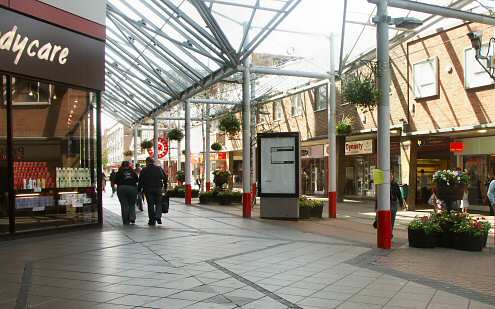 |
||
| WEST
ORCHARDS
SHOPPING CENTRE If you are looking for fashion fresh
off the cat walk, quality furnishings to
complete that designer look or a distinctive
gift for someone special, then this is the
place to start. Here you will find not only
top store names but also exclusive retailers
all gathered under one roof and for a welcome
break The Terrace food court offers a world of
flavours for you to try.
|
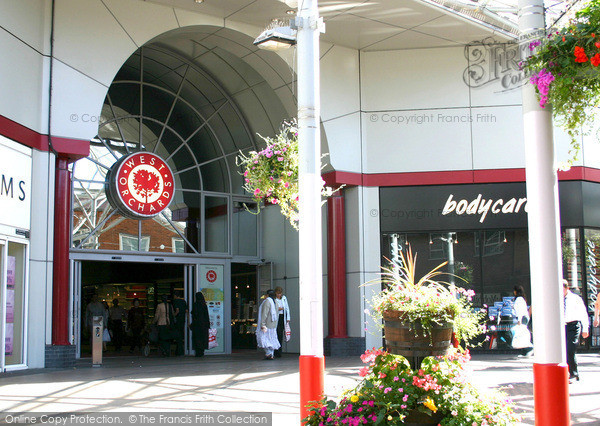 |
Tel: 024 7623 1133 |
|
| SHOWCASE
CINEMA Go to our website to see whats on |
 |
Gielgud Way, Walsgrave Coventry, CV2 2SZ SHOWCASE CINEMA CLICK |
Tel: 0871 220 1000 |
| TENPIN BOWLING Whether you are looking to go tenpin bowling with your family, friends or even if you are looking to arrange a night out with your work colleagues - Tenpin will have a bowling deal to suit you. Tenpin bowling offer fantastic bowling deals that can be booked through our online booking system. Are you looking to celebrate a special occasion? Tenpin bowling is a perfect opportunity to get together and celebrate. We offer far more than just bowling for your get together, at Tenpin you can enjoy the late licensed bar, pool, arcade games or even our brand new lazer arenas! You might be planning a birthday celebration for yourself or are you looking for the perfect kids birthday party? Tenpin has a selection of bowling party packages to suit everyone. |
 |
Crosspoint
Business Park, Olivier Way, Coventry CV2 2SH TENPIN BOWLING CLICK |
Tel: 0871 873 2450 |
| THEATRE
ABSOLUTE One of the UK's most original theatre companies, founded in 1992, and based in Coventry, West Midlands, Theatre Absolute is supported by Arts Council England, as a regularly funded organisation.The company produces and tours new plays for the theatre that are bold, urban, uncompromising, and contemporary. Telling stories of ordinary people caught in extraordinary situations, the company places an emphasis on character, text, and narrative to create richly imagined worlds. Integral to the company are its highly regarded participatory performance and literacy development activities for young people. The company has a particular focus towards young people who are at risk, and not in mainstream education. |
 |
38 City
Arcade, Coventry, West Midlands, CV1 3HX THEATRE ABSOLUTE CLICK See Our Theatre Website |
Tel: 00
44 (0)24 7615 8340 |
| TOY MUSEUM Housed in a building that was originally a portion of the gatehouse for a former monastery from the 14th century, the Toy Museum is a delightful spot to visit for guests both young old. The museum is home to a very large collection of toys dating all the way back to the 1700’s up through the 1950’s. Such a collection and the upkeep are a huge work in progress for the Coventry couple, Ron and Sonya Morgan, that maintain this museum of toys in spectacular and even working condition. Children will enjoy seeing some of the things that former generations played with. Just imagine learning about and explaining the more simplistic toys of yesteryear to the young minds of today’s modern society! The Toy Museum is open every day and free to the public to enter and explore. The collection of various toys including pretty dolls, unique train sets, and even cute cuddly teddy bears is still growing today with new pieces being added all the time. It is known as one of England’s biggest and best collections of this type, which attracts visitors from all over the world. There will always be something new and interesting to check out when visiting this fun filled site that offers a rare chance to explore the history of entertaining children throughout the ages. The museum even accepts donations or may be interested in the purchase of old, unusual toys. Is there something in your attic that you’d like to see on display at the Toy Museum? Open: daily - 10:30 to 17:30 Admission: free |
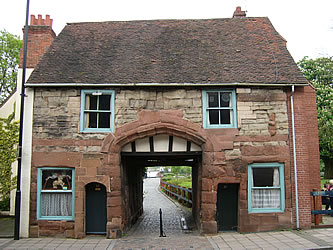 |
Whitefriars
Gate, Much Park Street, Coventry, West Midlands, CV1 2LT TOY MUSEUM CLICK |
Tel: +44 (0)24 7622 7560 |
| UNIVERSITY
SQUARE
Location for
City centre events.
|
 |
1 Castle Yard, Hay Lane, Coventry, West Midlands, CV1 5RF NEWS FROM UNIVERSITY SQUARE |
Tel: 024 7660 7000 |
| WAR MEMORIAL
PARK
The War Memorial
Park is Coventry's premier park and attracts
visitors from all over. Many come to enjoy a
casual visit, while others come to take part in
some of the many special events. June has the
Race for Life and Coventry Fun Run, Coventry's
biggest charity run. July sees the Godiva
Festival, one of the country's largest free
music Festivals, August brings the Caribbean
Festival and the Donkey Derby. September brings
the Festival of Motoring. Approximately 48.5
hectares in size, the park consists of two
distinct areas, the formal garden dominated by
stately Copper Beach trees, which were planted
in memory of the military servicemen who died
during the war. Secondly the large-scale
ornamental flower borders, rockeries and water
gardens which make the park extremely popular to
all visitors. The sports facilities available
include: pitch & putt golf course, 10 hard
tennis courts, 12 football pitches, Splash 'n'
Play Park (closed for the winter) and play
areas. There is also a 1.6 mile circular
footpath around the park.
|
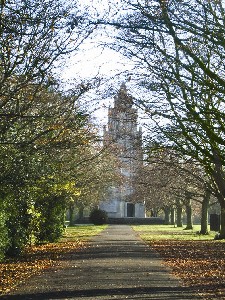 |
Kenilworth Road,
Coventry, West Midlands, CV3 6PT WAR MEMORIAL PARK CLICK |
Tel: 024 7667 5415 |
| WARWICK ARTS
CENTRE Warwick Arts Centre in Coventry is the largest arts centre in the Midlands, attracting around 280,000 visitors a year to over 2,000 individual events embracing music, drama, dance, comedy, literature, films and visual art. Warwick Arts Centre is situated at the heart of The University of Warwick in Coventry and is much more than a single venue. With six outstanding spaces on the same site, it makes it rather unique - a concert hall, two theatres, a cinema, gallery, conference room as well as hospitality suites, restaurant, bookshop, gift shop and two bars. |
 |
Gibbet Hill Road
Coventry CV4 7AL WARWICK ARTS CENTRE CLICK See Our Theatre Website |
Tel
:02476 524524 |
| WARWICK
ARTS MUSIC CENTRE The Warwick Arts Centre, located in Coventry is the largest venue of its kind in the UK outside the Barbican Centre in London. The Music Centre’s large ensembles regularly perform to in its 1500-seat Butterworth Hall, capturing audiences both locally and nationally to the centre each term. The musicians also perform in offsite concerts within the local Warwickshire community. The Music Centre is one of the most active, student-oriented music centres in the country, achieving stunning results in various areas of musical performance. We manage to achieve this high standard of commitment and performance despite (or maybe because of) not having a full time music degree here. For this reason, the stigma that non-music degree students might feel when taking part in music activities at other universities has no place here. Opportunities exist for everybody, at all standards. Numerous performances are carried out each season to cater for all tastes of music. These concerts sometimes incorporate professional musicians as guests, or local Warwickshire school children choirs. The Music Centre strives to enchance the leisure experiences of all its guests, whilst promoting the talents of our local musicians. |
 |
University
Of Warwick Coventry CV4 7AL WARWICK ARTS MUSIC CENTRE CLICK See Our Theatre Website |
Tel :024 7652 3799 |
| XCEL LEISURE
CENTRE Situated in the south west of the city, the Xcel Leisure Centre opened in June 2008 to replace the Midland Sports Centre. The Xcel Leisure Centre serves as the head office for Coventry Sports Foundation. Hailed as the flagship project for the Canley Regeneration Scheme, the Xcel Leisure Centre has been designed with the needs of the local community in mind. The modern and vibrant centre works in close partnership with the neighbouring Westwood School and offers state-of-the-art facilities to local residents and employees of the near-by Westwood Business Park. The Xcel Leisure Centre boasts some of the most modern access adaptations for people with a range of disabilities including innovations such as a moveable floor and independent access lift into the swimming pool for participants with mobility difficulties. |
 |
Mitchell
Avenue, Coventry, CV4 8DY XCEL LEISURE CENTRE CLICK |
Tel: 024 7685 6956 |
| DUNCHURCH The earliest historical reference to Dunchurch was in the Domesday Book in the 11th century which mentioned a settlement called Doncerce.The core of the village has been declared a conservation area because it has many buildings of historical interest. Some of the buildings date from as far back as the 15th century[citation needed] are timber framed and still have traditional thatch roofs. For centuries Dunchurch was an important staging post and (now the on the coaching roads between LondonHolyhead (now the A45 road) (classified as B4429 through the village) and Oxford and LeicesterA426 road). At one point 40 stagecoaches plus the regular mail coach every day would stop at Dunchurch. Coaching inns developed in Dunchurch to accommodate these visitors (the "Dun Cow", the "Bell" and "the Star"). Other inns were the "Mother Red Cap", "Crown" and "Red Lion". The "Bell" and "Red Lion" premises were destroyed by a German parachute mine in 1940. All other properties can still be seen today.Many famous people throughout history stayed at Dunchurch. Most notably in 1605, the Gunpowder Plotters stayed at the Red Lion Inn (reputed to be the private residence now called 'Guy Fawkes House') in Dunchurch awaiting news of Guy Fawkes's attempt to blow up the Houses of Parliament. If he had been successful they planned to kidnap the King's daughter Elizabeth of Bohemia from nearby Coombe Abbey.Other famous people having stayed in the village include a young Queen Victoria (before she became Queen) and the Duke of Wellington. Robert Stephenson stayed in Dunchurch whilst supervising the construction of the Kilsby Tunnel during the building of the London and Birmingham Railway.Dunchurch is the birthplace of the 18th century hymnwriter William Tans'ur, and in more recent times of the athlete Katharine Merry. For many years it was the home of England cricketer Ian Bell.The coming of the railways in the 1840s led to a dramatic decline in the coaching trade, and with the development of a major junction at nearby Rugby the importance of Dunchurch rapidly declined. From 1871 until 1964 the village was served by its own railway station on the Rugby to Leamington Spa line. |
 |
Lord of the
Manor of Dunchurch Dunchurch Festival Group notices, etc. Dunchurch Parish Council Dunchurch Parish Council Papers Dunchurch Village Hall Dunchurch St. Peter's Church - C. of E. Dunchurch Baptist Church Dunchurch Silver Band District of Dunchurch Brass Dunchurch and Bilton Cricket Club Dunchurch Photographic Society Dunchurch 1700-1950 Dunchurch Boughton CofE (VA) Junior School website Bilton Grange Preparatory School Photos of Dunchurch and surrounding area on geograph |
|
| TOFT
ALPACAS We have a herd of over 150 alpacas in a stunning location overlooking Draycote Water. There are public footpaths running through the fields where visitors can come and meet the herd. We also have an on-farm shop where we sell luxury knitwear and accessories made locally from the fibre of the herd.The Toft Alpaca Shop creates alpaca yarn, alpaca knitwear and knitted accessories and is based at the Toft Alpacas Stud in Warwickshire. Here you can purchase our natural British alpaca yarn, knitting kits and alpaca knitwear. Please enjoy browsing through our range of luxury knitwear, both items knitted by us and yarns to be knitted by you- not forgetting our giant wooden buttons and wood toggles. We also offer pages packed with information on British alpaca wool processing; alpaca knitting, yarn weaving and fleece felting and knitwear creation. Toft produces luxury exclusive British knitting yarns and knits from alpaca yarns ranging from scarves, snoods and socks to hats, headbands and handbags. Our home-grown natural British alpaca yarn boasts a tiny carbon footprint, and our easy knitting kits are a great introduction to knitting with alpaca and gift for a knitter. We also now host alpaca knitting workshops and felting courses working with our alpaca wools, yarns and fleece. |
 |
Toft
Manor, Dunchurch Rugby, CV22 6NR TOFT ALPACAS CLICK |
Tel : 01788 810 626 |
| STATUE In the centre of Dunchurch is a statue of Lord John Douglas Montague Scott (1809–1860) a 19th century landlord, Scottish M.P. and younger brother of the Duke of Buccleuch. At Christmas it has been an annual tradition for more than thirty years in Dunchurch to dress up the statue in the garb of a cartoon or TV character. |
 |
||
| GAYDON Gaydon is close to Leamington Spa. In the 2001 census, the parish had a population of 376 The village is at the junction of the B4100 (former A41) and B4451 roads, a mile from Junction 12 of the M40 motorway, and is two miles north-east of Kineton.Close by, on the site of former RAF V bomber base of RAF Gaydon, is the Jaguar Land Rover Gaydon Centre, one of the Jaguar Land Rover engineering centres (another being at the Whitley plant in Coventry) and the headquarters of Land Rover. Alongside is the Heritage Motor Centre, home to the largest collection of historic British cars in the world, charting the history of the British car industry from the turn of the 20th century to the present day. Adjacent to the site is the headquarters of Aston Martin.A disused military base near Gaydon is also home to special vaults housing the highly flammable nitrate film elements of the British Film Institute's BFI National Archive, the world's largest archive of film and television. |
 |
Gaydon Village Store Gaydon Village Allotments
|
|
|
HERITAGE MOTOR CENTRE Heritage Motor Centre is home to the largest collection of historic British cars in the world, with 200 vehicles on display, charting the history of the British car industry from the turn of the century to the present day. The centre is also a premier conference venue and has an award winning Education Department running course for all ages.Set in 65 acres of grounds the centre has activities to appeal to the whole family, a stroll through the nature reserve, the thrill of the Land Rover Experience off road demonstration course and, at weekends and school holidays, the children's electric cars (ages 3 - 7).With a licensed café and gift shop, the Heritage Motor Centre offers an entertaining and educational day out for the whole family.Situated minutes from junction 12 M40. |
 |
Banbury Road Gaydon Warwickshire CV35 0BJ HERITAGE MOTOR CENTRE CLICK |
Tel: 01926 641188 |
| HENLEY-IN-ARDEN Henley-in-Arden is also known as simply Henley The name is a reference to the former Forest of Arden. In the 2001 census the town had a population of 2,011. Henley is known for its variety of historic buildings, some of which date back to medieval times and wide variety of preserved architectural styles. The one mile long (1.6 km) High Street of Henley is a conservation area. Henley-in-Arden is not listed in the Domesday Book and may not have existed until the 12th century. The first record of the town is in a legal instrument drawn during the reign of Henry II. It was originally a hamlet of Wootton Wawen, on Feldon Street, the original route out of the Forest of Arden. In the 11th century, a Thurstan de Montfort constructed Beaudesert Castle, a motte and bailey granted the right to hold a castle, on the hill above Beaudesert. In 1140, the Empress Matildamarket at the castle and Henley soon became a prosperous market town, conveniently located on the busy Birmingham-to-Stratford road. In 1220 in the reign of Henry III, the lord of the manor, Peter de Montfort, procured the grant of a weekly Monday market and an annual fair to last two days, for the town .Henley has had several private lunatic asylums Modern Henley-in-Arden is a good place to visit for both its designer shopping and refreshments in one of its coffee shops or gastro bars along its mile long High Street. Conveniently situated mid-way along the old Stratford Road from Birmingham, it has been the obligatory stopping off point for decades for families to sample the famous Henley Ice Cream.More recently a large number of designer shops have moved in and today Henley attracts the young rich executives and their wives escaping from the conurbations of Solihull and the West Midlands to one of Warwickshire's most attractive towns. |
  |
Henley-in-Arden
Joint Parish Council Henley-in-Arden.org History of the town's churches Henley-in-Arden Drama Society (HADS) Photos of Henley-in-Arden and surrounding area on geograph.org.uk |
|
| GUILD HALL The Guild Hall,is a timber-framed building standing to the north of St. John's Church. It has been extensively restored though many of the original timbers remain. The Guild Hall is where the Court Leet, an ancient manorial court, meets every November to elect its officers and report on the work of the year. |
 |
||
| HIGH
STREET Wander the High Street – there are more than 170 listed buildings – to Perpendicular-style St John the Baptist Church and the 15th-century Guild Hall where the historic Court Leet gathers (officers include an ale taster). Ancient inns, restaurants and pubs give lots of excuses to pause along the way. Norman St Nicholas Church stands just over the river and there’s a walk up to The Mount that rewards with exhilarating views. Summer Sunday Shakespeare Express steam trains running between Stratford-upon-Avon and Birmingham also call at Henley – hop aboard. |
 |
||
| HERITAGE
CENTRE The Heritage Centre at Henley-in-Arden, near Stratford-upon-Avon, England is a unique facility made possible by the generosity of a former Lord of the Manor of Henley-in-Arden, Joseph Alexander Hardy of Pennsylvania and inaugurated by his daughter, Robin Hardy Freed, the present Lord, in November 1996. Located in the main High Street of this historic market town, the Heritage Centre is a museum of the town’s history from the Norman Conquest to the present day. Please take a look round our site: we look forward to welcoming you on a visit to the Centre very soon.Joseph Hardy House, home of the Heritage Centre, is in itself a rare architectural gem. The oldest parts of the house have been dated, using dendrochronological technology, to 1345. Features of interest include a “Crown Post”, an unusual construction in a Warwickshire house. Displays and documents include an account of the development of the building over six centuries.The Heritage Centre maintains a stock of leaflets and guides covering visitor attractions, accommodation in the town and its surrounding area. |
 |
Joseph Hardy
House 150 High Street Henley-in-Arden B95 5BS HERITAGE CENTRE CLICK |
Tel: 01564 795919 |
| OLD MARKET
PLACE In the
centre of the town is the old Market Place,
where stands the remains of the 15th century
Market Cross, one of the few still existing in
Warwickshire. The Cross is built of local
stone, but only the raised base of three steps
and the lower part of the shaft remain.
Originally the cross had a four-sided
head with niches, each with a carved relief: the
Rood, the Trinity, St. Peter with the key and
possibly the Virgin and Child. Proclamations
have been made from the Cross for more than five
centuries, including the proclamation of the
accession of Queen Elizabeth II in 1952. |
 |
||
| THE SAXON
SANCTUARY Warwickshire's oldest church is a storybook in stone. Its tower saw in the last millennium and the drama of English history has swept through it ever since. Every age has left its own story, so a visit to St Peter's Church is a real adventure. Group and educational visits by arrangement. |
 |
The Old
Vicarage, Wootton Wawen, Henley-in-Arden, B95 6BD THE SAXON SANCTUARY CLICK |
Tel:
01564 792659 |
| YEW TREE
FARM Yew Tree Farm is a stylish and contemporary shopping village set in beautiful barns around a courtyard. A wide range of unique products from around the world aer available. |
 |
Stratford Road Wootton Wawen Nr Henley In Arden B95 6BY YEW TREE FARM CLICK |
Tel: 01564 792 701 |
| KENILWORTH A settlement existed at Kenilworth by the time of the Domesday Book of 1086, which records it as Chinewrde. Geoffrey de Clinton (d. 1134) initiated the building of an Augustinian priory in 1122,[2] at the same time as he initiated the building of Kenilworth Castle. and suppressed in the Dissolution of the Monasteries in the 1530s. Thereafter the abbey grounds next to the castle, were made common land in exchange for common land that Robert Dudley, 1st Earl of Leicester used to enlarge the castle. Only a few walls and a storage barn of the original abbey survive.The priory was raised to the rank of abbey in 1450. Just off Coventry Road in Kenilworth is a field called The Parliament Piece. It is traditionally said[ to be the site where Henry III held a Parliament in August 1266, while his troops besieged Kenilworth Castle, where the late Simon de Montfort's followers, led by Henry de Hastings, were still holding out against the King's forces. This Parliament led to the Dictum of Kenilworth: a settlement that offered the rebels a way of recovering the lands that the Crown had seized from them. One copy of the Dictum is endorsed in castris apud Kenilworth — "in the camp (or castle) at Kenilworth". Members of the public have free access to Parliament Piece, which is owned by the Open Spaces Society and leased to Warwick District Council. Legend has it that the very first potato brought back from America was cooked at Kenilworth Castle and tasted by Queen Elizabeth. She thought it was so disgusting, she threw the remainder out of the window! What most people don't know is that this potato was found by a magic old wizard who turned the potato into pure gold and buried it somewhere in the town. You must follow in the footsteps of the wizard to find the buried treasure! |
 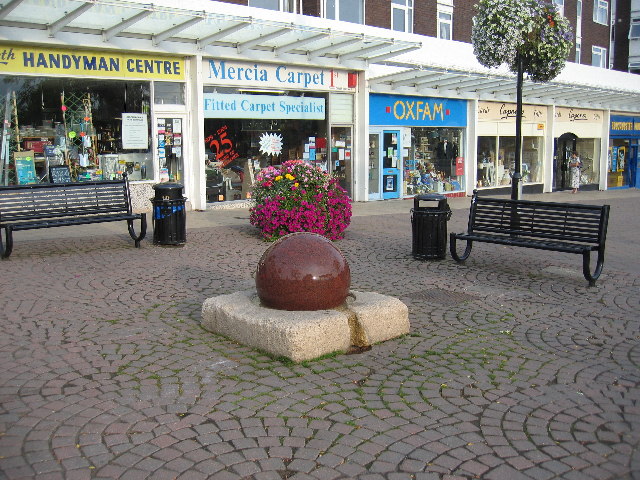 |
The Library Smalley Place Kenilworth CV8 1QG Email: kenilworthlibrary@warwickshire.gov.uk Kenilworth The Best Kept Secret in Warwickshire — official Kenilworth town centre website Kenilworth Chamber of Trade Geograph photos of Kenilworth and surrounding area Kenilworth local history articles and books Kenilworth in the Second World War |
Tel: 01926 852595 Fax: 01926 864503 |
| ABBEY FIELDS The Abbey Fields are an extensive public open space which forms the green heart of Kenilworth. It is used by both residents and visitors for recreation from kite flying to playing tennis. The 68 acres of the Abbey Fields includes a swimming pool (both indoors and outdoors), a lake, children’s play area and heritage trails & interpretation. As well as being an amazing space, The Abbey Fields are also rich in history with the remains of an historic Abbey.Close to the Parish Church of St Nicholas lie the ruins of the Abbey of St Mary the Virgin. It was first founded by Geoffrey de Clinton in 1119 as an Augustine priory. In 1447, the Priory had the unusual distinction of being raised to Abbey status by Henry VI. Henry VII attended mass at Whitsuntide in 1487 & 1488. At its height the Abbey had the second highest income in the County. However, all that remains now are small parts of the Nave and Chapter House, the ruined gatehouse and another building of unknown origin known today as the ‘Barn’. Under Henry VIII, the Monasteries Dissolution Bill was passed in 1538, and it was the beginning of the end for the Abbey. Within a few years the Abbey was dismantled, and it later passed into the hands of Robert Dudley, Earl of Leicester (Elizabeth I’s favourite), who removed much of the stone for repairs and extensions to Kenilworth Castle. |
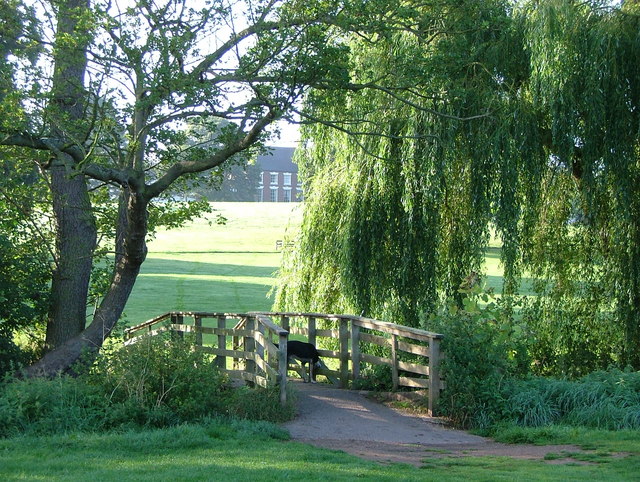 |
Abbey Fields, Kenilworth CV8 KENILWORTH ABBEY CLICK |
|
| CLOCK TOWER The clock stands at the head of Warwick Road by Abbey End, and was presented to Kenilworth in 1906 by G.M. Turner as a memorial to his late wife. The upper part of the clock was damaged by a landmine in 1940 which also destroyed the Globe Hotel next to the site (now Abbey End). The inscription for the plaque at Abbey End reads: “Near this
spot stood the Globe Hotel,
destroyed by enemy action on the night of 21 November 1940 killing 28 people. Their known names are recorded On a tablet in the cemetery chapel” |
 |
Warwick
Road, Kenilworth CV8 |
|
| CRACKLEY WOOD Ancient woodland with a mixture of woodland types, glassy glades, ponds, ditches and boundary hedges. This wood is within easy walk of the town centre and has a hard surface path which allows for disabled use. Mature chestnuts on entering the wood create a impressive site. The wood is traditionally managed with a coppice with standards regime and hedge laying can be seen on the perimeter. The wood also links to the Kenilworth to Berkeswell Green that opens up a 4 mile walk into the countryside. |
 |
CRACKLEY WOOD CLICK |
Tel : 07788 722043. |
| KENILWORTH
CASTLE Kenilworth Castle is one of the most breathtaking castle ruins in England. During its 900 year history it has been owned by numerous Kings, used as a prison and been the setting for the longest siege in British history. Elizabeth I gave Kenilworth Castle to Robert Dudley in 1563 and today, visitors can view an exhibition on the story of their relationship which includes items on loan from museums and private collections. Kenilworth Castle is an English Heritage site and has recently undergone a multi million pound investment project. The gatehouse, originally built for Elizabeth 1, has been renovated and is now dressed and furnished as it might have appeared in the 1930's. The Elizabethan garden has also been painstakingly restored replicate its original glory from 1575, complete with fountains and ornate borders. Visitors can take wander through the ruins at their own pace, take an hour long audio tour and enjoy a picnic in the grounds. There is a visitor centre, tea shop and gift shop. |
 |
Castle Green,
Off Castle Road, Kenilworth, CV8 1NE KENILWORTH CASTLE CLICK |
Phone: +44 (0)1926 852078 |
| KENILWORTH
COMMON Wooded common within the town of Kenilworth. Open with some heathland this is being re-established in small pockets to retain species. Glow worms, slow worms and common lizard are just a few of the species that will benefit. A pleasant place to be just minutes from the town centre and an easy walk along the Finham Brooke from Abbeyfields. |
 |
Forge Road, Kenilworth. CV8 2HR KENILWORTH COMMON CLICK |
Tel: 01926 85837 |
| KENILWORTH
GENERAL RETAIL MARKET Every Thursday 9am until 4pm Kenilworth Market takes place at the front of Abbey End each Thursday throughout the year – come rain or shine. The market continues a long long tradition of markets in the area – in fact, the outdoor markets stem from a time when they were the original supermarkets! The market is well served with parking at the rear of the shops in Abbey End car park which is literally only 100 yards from most of the stalls! The town’s bus stops are also by the market. The Market has over 30 stalls each week with something for everyone with stallholders a wide range of goods including: Fruit and Veg, Fishmonger, Jewellery, Cheeses & meat, Olives, dried fruit, nuts, herbs and spices, Bread, Plant Flowers, China & Kitchenware, Fashions & fabrics, Books, Cards, Petfood supplies, Eggs, Footwear & As well as a catering wagon, managed by the ever smiling Will. |
 |
Abbey
End Kenilworth. CV8 |
|
| KENILWORTH
WAR MEMORIAL The Kenilworth War Memorial at the top of Abbey Fields looking down the main road to Warwick was dedicated on Sunday, February 26th, 1922. There are 138 men and one woman who died as a result of World War I. 130 names were carved on the original memorial in 1922; 9 others were added later. In 1951 the sides were covered by newly cast bronze plaques with updated lists for World War I and an additional plaque on the back with names of 68 Kenilworth men and women who died in World War II. One more name from the Korean war was added in 1952.There were others who died in the wars with links to Kenilworth through birth, family or burial who were not recorded on the memorial. Those known to us are listed on pages relating to World War I and World War II (including civilians who died when a German bomb due for the Coventry Blitz fell on Kenilworth Square in 1940). |
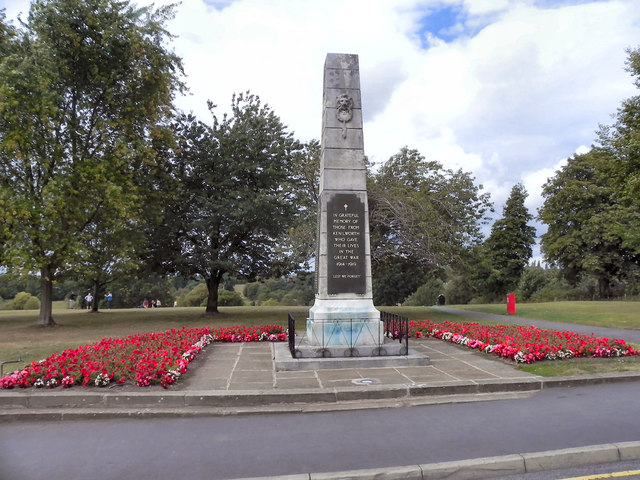 |
Abbey
Hill Kenilworth CV8 KENILWORTH WAR MEMORIAL CLICK |
|
| KNOWLE HILL A diverse area of grassland, scrub and woodland which is particularly important for butterflies. There are recorded 25 species on the reserve managed with butterfly conversation to help conserve and increase the species. This area is a remnant of heath land in the centre of residential housing. It is an enjoyable stroll and has wonderful views of the surrounding areas |
 |
Kenilworth. CV8 2SG KNOWLE HILL CLICK |
Tel : 024 7640 3218 |
| LITTLE
VIRGINA The old hamlet of Little Virginia sits close to the Castle. It originally consisted of fifteen cottages, which date from the 17th Century, housing the masons & builders employed by Robert Dudley for works on the Castle. The claim to fame of these picturesque thatched cottages is the tradition that the first potatoes brought to England were planted in Little Virginia by Sir Walter Raleigh. |
 |
Kenilworth,
CV8 1NE |
|
| OLD SCHOOL
HOUSE The Old School House was originally built in 1724 as a Free School for the children of the parish. The benefactor was Dr Edwards, a surgeon, who died in 1723. He also bequeathed amounts to charities for the education of boys in other villages. Dr Edwards made much of his wealth in a number of deals ranging from timber sales and estate investments. The old school is a two storey brick and tile building on a sandstone plinth. The school was closed in 1882, and converted into cottages. After the charity sold the property in 1906, it was converted into a single private residence. |
 |
16, Frythe
Close, Kenilworth, , CV8 |
|
| OLD HIGH
STREET High Street is in what most in Kenilworth would refer to as the Old Town, whilst Warwick Road (which most visitors would recognise as the High Street) runs through the heart of the newer part of Kenilworth. Bridge Street and High Street, form the east and north sides of Abbey Fields. Numerous examples of fine listed buildings can be found here all in excellent condition. Parts of Milsoms Hotel (formerly, The Clarendon House Hotel) date back to 1430 when the original timber-framed Castle Tavern sat on the site. The old oak tree around which it was built still supports the newer building. The High street is positioned on the old droving road from Balsall Common to Southam and the road that links Kenilworth Castle to Coventry in the North.High Street’s key attributes are amazing buildings and architecture, it’s proximity to the Castle it’s excellent shops, services and places to eat and drink -including the Warwickshire Pub of the Year. The street features some lovely little shops ranging from galleries, to butchers, from bridal shops to specialist bike shops and hairdressers. |
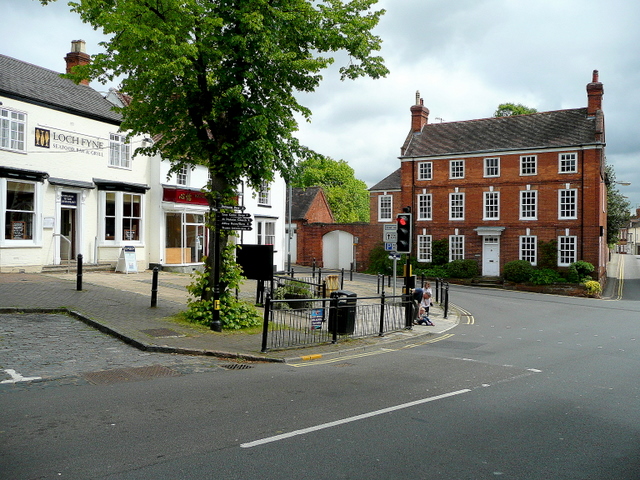 |
High
Street, Kenilworth CV8 |
|
| PARLIAMENT
PIECE Parliament Piece is a 14 acre parkland field managed in a traditional way taking a hay crop and then aftermath grazing by cattle. This is a unique place to see unchanged scenery in the heart of the town just 5 minutes walk from Abbeyfields. A wonderful piece of peace and quiet for all to enjoy. Its name originates from the belief that Henry III’s parliament met there in 1266. |
 |
Kenilworth CV8 2JR. PARLIAMENT PIECE CLICK |
Tel : 07821 602 898 |
| PRIORY
THEATRE The Priory Theatre is a self-funding theatre run by our members for the benefit of the local community. We produce around 9 productions a year including a broad mix of entertainment: comedy, drama and pantomime. We are a member of the Little Theatre Guild and are very proud of our standard of productions and our friendly atmosphere. We have a thriving Youth Theatre, and the theatre has an extensive range of costumes and props available to hire. We work closely with many charitable organisations in the area that regularly book performances at special rates to raise funds for their organisation. Booking Tickets: Our Box Office is open for telephone bookings from 2.00pm-8.00pm seven days a week, and can be contacted on 01926 863334. |
 |
Rosemary
Hill, Kenilworth, CV8 1BN PRIORY THEATRE CLICK See Our Theatre Website |
Box Office: 01926 863334 (2.00- 8.00pm) |
| ST.AUGUSTUS
CATHOLIC CHURCH The dissolution of the monasteries in the sixteenth century caused the destruction of the site of Catholic worship in Kenilworth. The faith was handed on by local Catholic families in the places of worship served courageously by Priests, known and unknown, many of whom witnessed to the faith by the sacrifice of their own lives. At the beginning of the 19th century the Catholic community of Kenilworth had no church and had to travel to Wappenbury for Mass. At that time the Amherst family moved to Fieldgate House and set aside a room within their home for worship, and invited local Catholics to join them. In 1841 the family commissioned the famous architect Augustus Welby Pugin to construct St Augustine's church close to their home. It was opened for worship in 1842, extended in 1852 and consecrated in 1904. Thereafter the Catholics of Kenilworth had the benefit of this compact and beautiful church. |
 |
110 Warwick Road, Kenilworth, CV8 1HL ST.AUGUSTUS CATHOLIC CHURCH CLICK |
Tel: 01926 855 224 |
| ST.BARNABAS
CHURCH St Barnabas Church began in 1886 in the community of Albion Street. |
 |
Albion Street CV8 2FY ST.BARNABAS CHURCH CLICK |
Tel : 01926 857509 |
| ST.NICHOLAS'
CHURCH We do not know when the first Church was built on this site but in 1291 the Church was described as being in the patronage of the Prior of Kenilworth Priory.The Priory was founded in 1122 and raised to Abbey status around 1450 and stood to the south of the Church until its dissolution in 1538 by King Henry VIII.The Church has had several Royal worshippers over the centuries most notably Queen Elizabeth I who, in July 1575, is said to have heard a 'most fruitful sermon' during her stay at Kenilworth Castle then held by Robert Dudley, the Queen's favourite.n common with many others the Church suffered during the Civil War. There are bullet marks on the north wall and, in 1646, the interior had to be cleaned and repaired after Cromwell's troops had used it as a billet. The Church had to be cleaned again in 1649 after similar abuse by Scottish troops. Parish records indicate the work cost 5/- (25p) on each occasion - a considerable sum at the time.The building has been altered and expanded over the years. The tower was added between 1320 and 1400 and the main structure of the nave dates from this period. In 1580 the Earl of Leicester carried out repairs and altered the roof of the chancel.The columns you can see mark the original positions of the North and South walls.The Church took it present appearance, both inside and out, during the 19th century when the transepts were added, the chancel enlarged, and the interior refitted. The Lady Chapel was completed in 1932. Queen Elizabeth I is reputed to have visited the church on at least two occasions. |
 |
Bridge Street : CV8 1BP ST.NICHOLAS' CHURCH CLICK |
Tel : 01926 857509 |
| STONELEIGH
ABBEY Welcome to Stoneleigh Abbey, a true gem hidden away in the Warwickshire countryside, yet only a ten minute drive from the M40 motorway and a short drive from the nearby towns of Coventry, Warwick, Stratford, Kenilworth and Leamington. Sitting in 690 acres of parkland and overlooking the River Avon, Stoneleigh Abbey is a beautiful place to visit for pleasure, an impressive venue to hold your corporate event and a really special place to celebrate your wedding or special occasion. Established in 1154 Stoneleigh Abbey has seen many changes, Jane Austen found the house and its family intriging, Prince Charles marked the completion of its restoration by making a special visit. There is much to tell about the people who have lived here, about the lovely grounds and the stunning architecture – please come and experience Stoneleigh for yourself. |
 |
Stoneleigh Abbey, Kenilworth CV8 2LF STONELEIGH ABBEY CLICK |
Tel : 01926 858 585 |
| STONELEIGH
PARK Stoneleigh Park offers an unparalleled range of facilities aimed at the conference and event professional, with a variety of conference rooms with capacities up to 1200 delegates, over 7500sqm of exhibition space, nearly 12,000sqm of additional low cost covered display space and, for that something different, over 250 acres of serviced outdoor event space. Stoneleigh Park was been the home of the Royal Agricultural Society of England since 1963 when the site was developed as a venue for the Royal Show, other exhibitions and several centres of technical excellence - the demonstration units. However as agriculture has changed so has Stoneleigh Park so the demonstration units no longer exist and the practical farming on site has been replaced by a concentration on the business of farming and rural enterprise. The 250 acres that make up Stoneleigh Park have been developed over the years to include woodlands, a 4×4 track, fishing pools, equine arenas, accommodation as well as a full range of exhibition, conference and banqueting rooms. Stoneleigh Park really is the nation’s most versatile venue. The Royal Agricultural Society of England (RASE), the owners of Stoneleigh Park, have unveiled large scale plans for the redevelopment of the site which will secure the future of Stoneleigh Park as one of the UK’s top agricultural venues and turn it into a rural centre of excellence. For more information click here: |
 |
Royal
Agricultural Society of England Stoneleigh Park Nr Coventry Warwickshire CV8 2LZ STONELEIGH PARK CLICK |
Tel: 024
7669 6969 Fax: 024 7669 6900 |
| TALISMAN
THEATRE The Talisman Theatre is a member theatre of the Little Theatre Guild and is justly proud of the highest standards in all departments. We aim to stage ten main house productions every year, in addition to occasional 'Studio Saturday Night' productions in our Studio. We also have a thriving Youth Theatre Group which stages productions in the Main House. Fund-raising one-off shows are also produced and we host shows produced by other groups, whenever they can be squeezed in. The Company was founded in 1942. In 1969 we moved from what is now Talisman Square to our present theatre in Barrow Road, which seats 156 people, as well as accommodating a bar/foyer with regular art exhibitions, and a studio for rehearsal and small-scale productions. We are a registered charity and are completely run by volunteers. We receive no grants or sponsorship, and so all income is generated from ticket sales, membership and donations. The company includes and welcomes actors, designers, technicians, backstage and front of house assistants. |
 |
Barrow
Road, Kenilworth, CV8 1EG TALISMAN THEATRE CLICK See Our Theatre Website |
Box
office: 01926 856548 |
| THE WATER
TOWER This residential building started life as a Windmill, built in 1778, which was converted to steam power in 1854. 30 years later the machinery was removed, and the building was converted into a water tower. In the early 1960's it ceased to be the main source of supply, and it fell out of use and became derelict. The present use as a private dwelling, is a result of the urban District Council, inviting suggestions for a suitable use for the building. |
 |
Tainter's
Hill, next to Coventry Road (A429). |
|
| KINETON The first recorded reference to Kineton was in 969, when Saxon King Edgar granted some land here to a trusted counsellor.The village is mentioned in the Domesday Book as Kington. On the outskirts of the village, at the foot of Pittern Hill, are the remains of the earthworks of a motte-and-bailey castle, known as King John's Castle, so called because it is believed that King John held a court leet there. Kineton gave its name to the area of south-east Warwickshire known as Kineton Hundred. Early in the 13th century, Stephen de Segrave had a Tuesday market in his manor of Kineton, and a fair on the eve and day of St Peter and St Paul. The market died out by 1840, when the market house was pulled down and a school built on its site, but the fair on 5 February continued until recently. For a period of the English Civil War, Kineton was looted by Prince Rupert with part of the Royalist army. This was after he had defeated Sir James Ramsay, from the Parliamentarians, and by doing this he failed to aid the rest of his army, thus leading to a neutral ending to the Battle of Edgehill on 23 October 1642. A year later, in July 1643, King Charles met with Queen Henrietta Maria at Kineton. It is believed that John Newton wrote the hymn Amazing Grace around Christmas 1772 in Kineton after converting to Christianity. |
 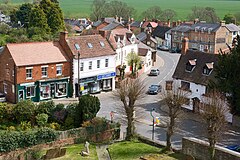 |
Kineton
Community site Kineton High School site Kineton Primary School site Kineton Playgroup site Kineton village appraisal and plan 2003 Defence Storage Distribution Agency at Villagebuzz Kineton photo galleries BBC Domesday Project - Kineton D-block GB-432000-249000 Kineton & District Local History Group |
|
|
BATTLE OF EDGEHILL 23rd
OCTOBER 1642
The Battle of Edgehill, on Sunday 23rd October 1642, saw the army of the Earl of Essex, the parliamentarian Lord General, and the King’s army clash in the first major action of the Civil War in England. It was fought in the open fields between the villages of Radway and Kineton in Warwickshire. The battle of Edgehill, or Kineton Fight as it was sometimes known, was intended to be the one great battle to decide the war. Although often viewed as an indecisive battle, in effect a bloody draw, the king actually gained an important advantage. Essex failed to break through and had to retreat northward, to the security of the parliamentarian garrison at Warwick. This left the royalists in command of the road to London, and control of the capital was the key to the war. The battlefield is largely agricultural land and appears at first sight to be well preserved. In reality it has been extensively disturbed and several key rights of way closed by the construction, in the late 1940s, of a military depot. Many of the silos and rail lines have been removed, but a great deal of damage has been done to the archaeology of the battle. In places even the underlying form of the land has been altered. Most of the battlefield still remains in Ministry of Defence ownership and is inaccessible, so it is difficult for a visitor to fully appreciate the terrain of the battlefield. However the M.O.D. are cooperating closely with the Trust to facilitate our major new survey of the battlefield. We hope that, in the future, it may also prove possible to improve public access to and interpretation of the battlefield. In the 1940s Bill Priest, a local school master, claimed that ghostly phenomenon was a common occurrence in the area surrounding the field. |
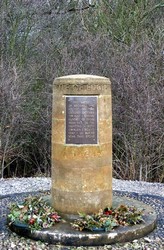 |
Grid Reference:
SP359493 (435900 249300) OS Landranger map: 151 OS Explorer map: 206 BATTLE OF EDGEHILL CLICK |
|
| BATTLEFIELD
TRUST TRAIL Long distance footpath, running for 20 miles through beautiful countryside in the heart of England. Beginning at Chipping Warden in Northamptonshire and ending at Kineton in Warwickshire, it links three of England’s most important battlefields - Edgehill, Cropredy Bridge and Edgcote. A plaque at the entrance to the church indicates the route. |
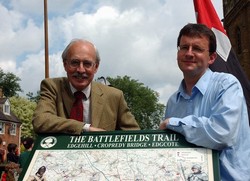 |
BATTLEFIELDS
TRUST
TRAIL CLICK |
|
| COMPTON
VERNEY Until the early twentieth century Compton Verney was home to the Verney or Willoughby de Broke family for almost 500 years. It has now been transformed from a derelict eighteenth-century mansion into a gallery of international standing, offering a combination of high quality attractions and facilities. The project took ten years to complete and over twenty gallery spaces have been created. Compton Verney is unique in that it is a place where art, architecture, landscape and learning fuse, to offer the visitor an experience that is completely integrated and accessible. |
 |
Compton Verney Warwickshire CV35 9HZ COMPTON VERNEY CLICK |
Tel
+44 (0)1926 645500 Fax +44 (0)1926 645501 |
| KING JOHN'S
CASTLE King John's Castle is a Medieval motte and bailey Castle. It survives as an earthwork, although the bailey is no longer clearly marked. earthworks of ditches and ramparts are also visible. It is situated 600m south west of St Peter's church at Kineton. |
 |
CV35 0HN |
|
| PITTERN HILL MILL Pittern Hill Mill, north-west of the village, is a stone windmill of the 18th century. |
 |
CV35 0HN |
|
| ST.PETER'S
CHURCH St Peter's Church stand near the centre of the village. It is a friendly, and welcoming church with a great deal of activity for such a small community. The original building was consecrated in 1315 but has been extensively rebuilt over the centuries. The fine tower has eight bells, rung for the first time on 5 November 2008, and is home to the Harry Windsor Ringing Centre (www.harry-windsor-ringing-centre.co.uk) |
 |
Warwick Road Kineton CV35 0HN ST.PETER'S CHURCH CLICK |
Tel:01926 640248 |
| SWAN HOTEL The Swan Hotel has been an inn since 1682 and there is a stone carved with the date 1668 above its door. It was a coaching inn and during the 19th century the Court of Petty Sessions regularly sat here |
 |
Banbury
Street, Kineton, CV35 0JS SWAN HOTELCLICK |
Tel: 01926 640664 |
| UPTON HOUSE Join the guests of Lord and Lady Bearsted and experience the weekend house party of a 1930s millionaire. Surrounded by the internationally important art and porcelain collections, hear and discover more about family life and join in the atmosphere of the party. See the red and silver art deco bathroom and get close to art works by El Greco, Stubbs and Bosch. The stunning gardens – being returned to their 1930s heyday – consist of a sweeping lawn, giving way to a series of terraces and herbaceous borders leading to a kitchen garden, tranquil water garden and the National Collection of Asters. Note: some areas of the gardens may be closed during bad weather |
 |
Edgehill OX15 6HT UPTON HOUSE CLICK |
Tel : 01295 670266 |
| LAPWORTH Lapworth is a village , with a population of 2,100 according to the 2001 census. It lies lies six miles (10 km) south of Solihull and ten miles (16 km) northwest of Warwick. Lapworth boasts an historic church and two National Trust sites: Baddesley Clinton, a medieval moated manor house and garden; and Packwood House, a Tudor manor house and yew garden with over 100 trees. The village is a popular area for cuisine, with three pubs "The Boot", "The Navigation" and "The Punch Bowl". At Kingswood Junction, the Grand Union Canal joins the Stratford-upon-Avon Canal, which has a major flight of locks. Catesby Lane in Lapworth is named after William Catesby (the father of Robert Catesby of Gunpowder Plot fame), whose family had been settled at Bushwood Hall in the parish since about 1480. The manor house was probably at Lapworth Hall, today Ireland's Farm, and in the 17th and 18th centuries the house of the Mander family of Wolverhampton. More recent Lapworth notables include Bob Davis aka Jasper Carrott, Andy Townsend ex-footballer and TV pundit and Tony Iommi, the guitarist and founding member of Black Sabbath, who currently resides near the village. The furniture designer and maker Hugh Birkett worked from the late 1940s until 1966 in the garage at his parents' home in Lapworth. Examples of his work can be seen at Cheltenham Museum. |
  |
Lapworth
website Solihull and Leamington |
|
| BADDESLEY
CLINTON Baddesley Clinton is a romantic and atmospheric moated manor house, dating from the 15th Century and little changed since 1634. The interiors reflect the house’s heyday in the Elizabethan era, when it was a haven for persecuted Catholics - there are no fewer than three priest-holes. There is a delightful garden with stewponds, a lake and nature walk. |
 |
Rising Lane, Baddesley Clinton Village, B93 0DG BADDESLEY CLINTON CLICK |
Phone: +44 (0)1564 783294 |
HATTON FARM VILLAGE Hatton Farm Village has acres of fun for everyone with all your farmyard favourites, daily events and activities and adventure playground. Hatton Shopping Village is home to 25 craft and gift shops, antiques centre, factory outlet and two restaurants.We’re open all year and just five minutes from Junction 15 of the M40 on the Solihull to Warwick road |
 |
Dark Lane, Hatton, CV35 7LD HATTON FARM VILLAGE CLICK |
Phone: +44 (0)1926 843411 - Fax: +44 (0)1926 842023 |
| KINGSWOOD
JUNCTION Lapworth lies on the junction of two canals, the Stratford, and the Grand Union which has been returned to its originalconfiguration in recent years.The towpath of the Grand Union Canal is popular with fishermen and walkers, The canal passes through Lapworth on its way from Birmingham to Leamington Spa via Shrewley,Hatton and Warwick and eventually on to London. The Stratford Canal passes through Lapworth on its way from Kings Norton Junction in the suburbs of Birmingham to Stratford, where it joins the River Avon. An unusual feature of the Stratford on Avon Canal is its split bridges, designed in the days of horse drawn boats to let the horse cross over the canal without being unhitched from the narrowboat.The junction consists of a 250 metre linking arm with two branches at the (western) Stratford Canal end and a simple junction with the Grand Union at the eastern end. One of the branches descends through a lock to the connecting arm. The other branch is taken from the Stratford canal below another lock. |
 |
(grid referenceSP185709) KINGSWOOD JUNCTION CLICK |
|
| PACKWOOD
HOUSE Packwood House, originally 16th Century, is a fascinating 20th century evocation of domestic Tudor architecture. Created by Graham Baron Ash, its interiors reflect the period between the world wars and contain a fine collection of 16th Century textiles and furniture. The gardens have renowned herbaceous borders and a famous collection of yews. |
 |
Lapworth, B94 6AT PACKWOOD HOUSE CLICK |
Phone: +44 (0)1564 783294 |
|
WROXALL
ABBEY ESTATE Once the country seat of Sir Christopher Wren, Wroxall boasts a magnificent collection of listed buildings and private grounds, which make it an idyllic setting for Weddings and other Special Occasions. Following the recent programme of sympathetic restoration, Wroxall now offers today's discerning guest a country house estate with unrivalled leisure, business and function facilities |
 |
Birmingham Road
Wroxall CV35 7NB WROXALL ABBEY ESTATE CLICK |
Phone : +44 (0)
1926 484 470 Fax : +44 (0) 1926 485 206 |
| ROYAL LEAMINGTON SPA Formerly known as Leamington Priors, Leamington began to develop as a town at the start of the 19th century. It was first mentioned in the Domesday Book of 1086 as Lamintone. For 400 years, the settlement was under the control of Kenilworth Priory, from which the older suffix derived.[4] Its name came from Anglo-SaxonLeman-tūn or Lemen-tūn = "farm on the River Leam" The healing properties of the spa waters had been known in Roman times and their rediscovery in 1784 by William Abbotts and Benjamin Satchwell, led to their commercialisation Early development of the old town centre was on the southern bank of the River Leam. Later builders began concentrating the town's expansion on the land north of the river, resulting in the Georgian centre of New Town with the Leam flowing between the two.[ In 1767 Parliament passed an Act, proposed by Edward Willes, a local landowner, for dividing and enclosing the open and common land on the south and west of the River Leam.[6] Following a survey of the area by John Tomlinson in 1768, the land was estimated to be 990 acres (4.0 km2) and was subsequently divided, and new public roads were laid out.[6] After the division on the south of the river most of the land east of the village was owned by the Willes family and to the west by Matthew Wise. To the north of the river most of the land was owned by the Willes family, the Earl of Warwick, and Bertie Greatheed.[6] The main landholders of the village and adjacent land were the Earl of Aylesford, and a number of smaller landowners. In the following decades some of the land was sold. By 1901, the population of Leamington had grown from a few hundred to nearly 27,000. Leamington is closely associated with the founding of lawn tennis. The first tennis club in the world was formed in 1872 by Major Henry Gem and Augurio Pereira who had started playing tennis in the garden of Pereira It was located just behind the former Manor House Hotel and the modern rules of lawn tennis were drawn up in 1874 in Leamington Tennis Club. During the Second World War, Leamington was home to the Free Czechoslovak Army; a memorial in the Jephson Gardens commemorates the bravery of Czechoslovak parachutists from Warwickshire |
  |
The TIC in Royal Leamington Spa is located in the elegant Royal Pump Rooms: a cultural complex worthy of the 21st century. Royal Pump Rooms The Parade Royal Leamington Spa CV32 4AA vic@warwickdc.gov.uk Leamington Spa Tourist Information Centre Leamington Spa Town Council |
Tel: 01926 742762 |
| APOLLO CINEMA If you are looking for a cinema in the Warwick area then look no further than Apollo Cinema in Leamington Spa, near Warwick. Enjoy the full cinema experience with all the latest movies in a 6 screen cinema with Dolby Digital Surround Sound, all in easy reach of Warwick and other areas of Warwickshire. Apollo Cinema nr Warwick even boasts a fully licensed bar area and dedicated self service sweets and confectionary area. |
 |
Portland Place,
Leamington Spa, CV32 5ET APOLLO CINEMA CLICK |
Tel: 0871 220 6000 |
| BURTON DASSETT
HILLS COUNTRY PARK Unspoilt, rolling hills – that’s what you will discover at Burton Dassett Hills. Whether you are walking, flying a kite or just sitting in your car, the magnificent views from these hills are breathtaking. The site comprises a series of rugged hilltops affording spectacular views in all directions and Fox Covert, a small woodland with a surfaced footpath. Opened as a country park in 1971, the 100 acres contain a wealth of historical interest such as the prominent beacon, quarry remains and the nearby 12th Century All Saints Church. |
 |
Burton Dassett Southam Warwickshire CV47 2AB BURTON DASSETT HILLS COUNTRY PARK CLICK |
Tel : 02476 305592 Fax: 01827 875 161 |
| CHESTERTON
WINDMILL Chesterton Windmill is a famous feature of the Warwickshire landscape and can be seen from several miles away. It stands on a hilltop overlooking the Roman Fosse Way about five miles south-east of Warwick. The mill was built in the years 1632-1633 and remained in use until about 1910 when its machinery ceased to work. It was restored from 1965- 1971 by Warwickshire County Council in collaboration with the Society for the Preservation of Ancient Buildings and the Ministry of Public Building and Works. Chesterton Windmill was probably built for Sir Edward Peyto, owner of Chesterton Manor. It may have been designed by John Stone, a pupil of Inigo Jones; or possibly by Sir Edward Peyto himself. It isn't certain whether it was originally designed as a windmill, or originally intended as a viewing point. Chesterton Windmilll is occasionally opened to the public (usually one weekend in September each year), and the machinery operated. Visitors can climb up steep wooden stairs into the building. There are two floors inside the windmill. On the lower floor are the mill wheels which grind the corn into flour. |
 |
Leamington Spa CV33 9 CHESTERTON WINDMILL CLICK |
Tel: 01926 410
410 Fax: 01926 412 377 |
| JEPHSON
GARDENS & MILL GARDENS First laid out in 1831 as informal riverside walks, the original Newbold Gardens were developed as more formal pleasure grounds after 1846 in honour of Dr Henry Jephson, who had promoted the town as a spa. The Jephson Gardens gained renown for their entertainments, military bands, promenading, croquet and tennis, fountains, illuminations, trees and flowers. They are listed as Grade II on the English Heritage register of historic parks and gardens. Improvements to the river through the Victorian era culminated in the construction of Mill Bridge, Mill Gardens and boathouse, 1901-03, creating one riverside landscape. Like many parks they fell into slow decline after World War II but since 1999 have been restored and renewed by Warwick District Council thanks to a grant of over £3 million from the Heritage Lottery Fund. This delightful Victorian oasis is now complemented by a stunning subtropical glasshouse, restaurant and teaching studio – the jewel in the crown of Leamington's wealth of parks and gardens. |
 |
Newbold Terrace
East Leamington Spa CV32 4AA JEPHSON GARDENS & MILL GARDENS CLICK |
Tel: 01926 410 410 |
| LEAMINGTON
TENNIS COURT CLUB REAL TENNIS IS
PLAYED IN LEAMINGTON AT THE
For racquet-game enthusiasts, Real Tennis is
as good as it gets. It is a game for
conoisseurs. It demands the full range
of ball striking skills as strokes can be played
off the back and side walls of the court.
The game is full of subtleties and requires
strokes of length and accuracy. It does not
demand excessive fitness, except at the highest
level, and nor is it totally dominated by power
and pace. It is a game for all ages.
Leamington Tennis Court Club is the oldest Tennis
club in the world and has been for some
considerable time. It was opened in 1846 at
a time when other games such as Cricket, Football
and Rugby were either in their infancy or even not
yet invented.OLDEST TENNIS CLUB IN THE WORLD |
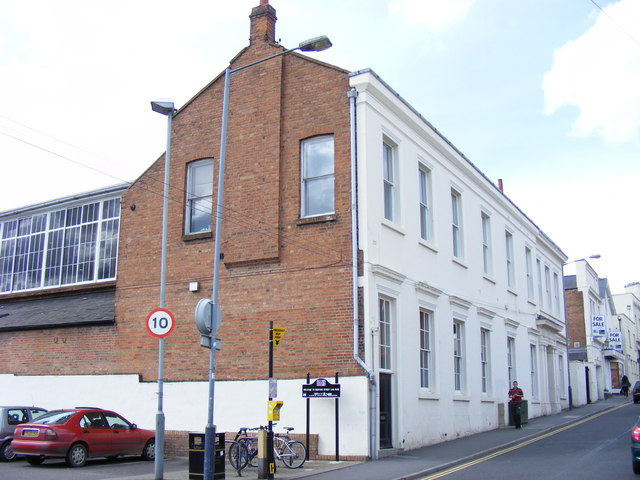 |
50 Bedford
Street Leamington Spa CV32 5DT LEAMINGTON TENNIS COURT CLUB See our Real Tennis Website |
Tel: 01926 424977 |
| LOFT THEATRE COMPANY The Loft Theatre Company has been producing live theatre in Leamington Spa since 1922. Professional standards are our goal as we work to bring variety and the very best in community-based theatre to Leamington Spa, to Warwickshire and to our wider audience beyond. The company has earned a strong reputation nationally for the professional quality of productions. It is run almost entirely by volunteers, many of whom have theatrical or academic drama qualifications and experience, who devote their talent, time and energy to the theatre simply because they find it fulfilling. Each year we produce around nine shows in the main 200 seat auditorium and a smaller number in the 50 seat Douglas Ford studio theatre. Our work covers the range of theatrical styles from classical to modern, tragedy to comedy, farce and musical theatre. Whether you like to be shocked, enlightened or simply entertained, you will find something for you here. The company is a member of the Little Theatre Guild of Great Britain and a registered charity, receiving no regular funding from any external source and supporting itself through subscriptions and ticket sales. The theatre has been at its current site since 1944, although the building dates from the 1960s when an earlier building was destroyed by fire. |
 |
Victoria Colonnade,
Leamington Spa,
CV31 3AA LOFT THEATRE CLICK See Our Theatre Website |
Tel: 01926 426341 |
| ROYAL SPA
CENTRE The Royal Spa Centre is a first class entertainments venue ideally located in the centre of Royal Leamington Spa, one of Britain’s finest Spa towns. The centre was opened on 15th June 1972 by the Earl of Avon. Concerts, dance, comedy, musicals, jazz, classical music, big bands, ice shows, wrestling, snooker, variety shows, cinema and ballet are just a few of the types of event held at the Royal Spa Centre. |
 |
Newbold Terrace
Leamington Spa CV32 4HN ROYAL SPA CENTRE CLICK See Our Theatre Website |
Tel: 01926 334418 |
| THE ROYAL
PUMP ROOMS The Royal Pump Rooms - This award winning Leamington Spa Art Gallery & Museum, has a fine art collection, an exhibition on the history of Royal Leamington Spa, cabinets of curiosities, gallery of interactive exhibits, Hammam (restored Turkish bath), history and local interest exhibitions. The fine art collection includes 16th and 17th century Dutch and Flemish, 18th and 21st century British artists, local artists, sculpture, ceramics and glassware. Recent acquisitions include works of art by Mark Quinn, Damien Hirst and Catherine Yass. Other key artists in the collection include Stanley Spencer, L S Lowry, Gillian Wearing, Vanessa Bell, Patrick Caulfield, Sir Terry Frost, Walter Sickert and Graham Sutherland. |
 |
The Parade,
Royal Leamington Spa, CV32 4AA THE ROYAL PUMP ROOMS CLICK |
Tel: 01926 742
700 Fax: 01926 742 705 |
| UFTON FIELDS
NATURE RESERVE This 100 acre site, managed in partnership with Warwickshire Wildlife Trust, is a wildlife haven with all weather footpaths providing access to varied habitats in every season. The site is noted for its abundance of butterflies, dragonflies, wild flowers and birds. |
 |
Ufton Leamington Spa CV33 9PU UFTON FIELDS NATURE RESERVE CLICK |
Tel: 01827 872
660 Fax: 01827 875 161 |
| LONG
ITCHINGTON Long Itchington is a large village and civil parish in the Stratford-on-Avon district of Warwickshire d. In the 2001 census it had a population of 2,161. The village is named after the River Itchen which flows to the south and west of the village. Long Itchington is located around two miles north of Southam upon the A423 road. Just south of the village is the Grand Union Canal. Long Itchington is mostly made up of 20th century developments, but includes several historic buildings, including the half-timbered "Tudor House" on the main road. Queen Elizabeth I is said to have stayed there in 1572 and 1575. The old "Manor House" in the Square dates from the 15th century. St Wulfstan, said to have been born in Long Itchington around 1012, became Bishop of Worcester in 1062. Other notables born in the village include the journalist Tom Hilditch. The village was once served by the former Weedon to Leamington Spa railway line. The village station was on the outskirts on the road towards Southam, and was therefore known as Southam and Long Itchington railway station, but this closed to passengers in the late 1950s. Part of the old railway line has been converted into a cycleway as part of the National Cycle Network. South of the village is a former cement works which runs all the way from the outskirts of the village to very near the entrance to Southam, it closed in the late '90s but still remains in place. Quarrying at the site however still continues. Opposite the old cement works is a small Model Village which was built to house the workers. |
 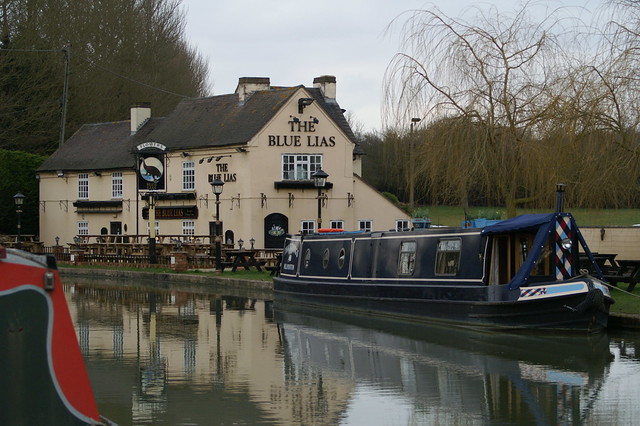 |
www.longitchington.org.uk/ Official LongItchington ParishCouncilWebsite |
|
| HOLY TRINITY
CHURCH Welcome to Holy Trinity Church, Long Itchington! Our church is at the heart of the village, and we aim to provide a warm welcome to all. We have a variety of worship services and activities (see below, and the diary), followed by refreshments and time to chat. (There are also people there who are very happy to pray with you if you have something particularly on your mind.) The church is open during the day, and all are welcome to come in for quiet prayer or reflection, or simply to look around. The building has a long history, which means that it is in constant need of repair. We do have a very active group of Friends for the Renovation of Long Itchington Church (FROLIC) who are doing a marvellous job in raising funds for the necessary repairs - see their website here. |
 |
Long Itchington
CV47 9PN |
Tel : 01926 812518 |
| MANCETTER During the Roman occupation of Britain a posting station was built athwart Watling Street close to the river crossing, and a rectangular earthwork of this station is still extant.[ Around the station grew the settlement of Manduessedum.[ It is thought that Mancetter is the most likely location of the Battle of Watling Street, between an alliance of indigenous British peoples led by Boudica and a Roman army led by Gaius Suetonius Paulinus, although the exact location is unknown.Mancetter does not appear in the Domesday Book of 1086 but in 1196 a Walter de Mancetter granted land to endow the parish church. The chancel walls of the Church of England parish church of Saint Peter still include 12th century masonry.[The chancel and nave were remodelled early in the 13th century and the north aisle was added later in the 13th century The bell tower, the south aisle and the clerestorey of the nave all seem to have been added in the 15th century. The south porch was added early in the 17th century.Restoration work was carried out in 1876, 1911 and 1930 and the Gothic Revival architect C.C. Rolfe may have undertaken restoration work in 1899 The tower has a peal of five bells, of which the oldest was cast about 1350, another early in the 16th century and the treble, tenor and third bell in the middle of the 17th century.The advowson of St. Peter's was impropriated by the Cistercian Abbey of Merevale in 1449 Mancetter Manor House is a timber-framed building dating from about 1330. An intermediate floor was inserted in the great hall in about 1480 and the south wing was added in about 1580.The central chinmeystack was probably inserted in the 17th century and small extensions to the house were made in the 18th and 19th centuries. |
  |
Atherstone-forum
Mancetter and Athersone online forums Mancetter History |
|
DOBBIES GARDEN WORLD At Dobbies Garden World you’ll find all the inspiration you need for your home and garden with a fantastic range of plants, gardening essentials, gifts, pets and aquatics, farm food hall, fashion, outdoor wear and more. Customers can relax in the Greenapple Café which serves health-choice delicious fresh meals, snacks and home baking. |
Nuneaton Road Mancetter, CV9 1RF DOBBIES GARDEN WORLD CLICK |
Tel: 01827 715511 | |
| PLANTASIA
& MAZE WORLD For a fun-filled day out for all the family, or simply to enjoy the peace and quiet of acres of natural surroundings, take a fascinating journey of discovery through the living world of Plantasia & Mazeworld. Bring the world of plants to life with a tour of our interactive exhibition centre; explore the UK’s largest collection of permanent mazes – with a maze for every continent and a reward stamp if you find your way to the centre. Take a walk on the wild side with acres of natural trails, a lakeside walk and even a tree top walk. Plantasia is truly alive with the opportunity to visit the deer park, the pigs, the sheep and spot all kinds of birds, insects and other wildlife. So make tracks today to Plantasia and enjoy the wonder of nature! |
 |
Nuneaton Road Mancetter CV9 1RF PLANTASIA CLICK |
Tel: 01827 713
438 Fax: 01827 715 985 |
NUNEATON Nuneaton is most
famous for its associations with the 19th century
author George Eliot, who was born on a farm on the
Arbury Estate just outside Nuneaton in 1819 and
lived in the town for much of her early life. In
her novel Scenes of Clerical Life (1858),
"Milby" is the thinly disguised market town of
Nuneaton Nuneaton's name
came from a 12th century Benedictine nunnery (parts of
which still survive) around which much of the town
grew. Prior to this it was a settlement known as
'Etone', which translates literally as
'water-town'. Nuneaton was listed in the Domesday
Book as a small hamlet.[ A market
was established in 1233 (and is still held today).
The first recorded use of the modern name was in
1247 when a document recorded it as 'Nonne Eton'.
The Nunnery fell into disrepair after 1539 (with
Henry VIII's Dissolution of the Monasteries). King
Edward VI School was established by a royal
charter in 1552.[6]
From 1944 it became a grammar school for boys and,
although it was locally known as KEGS, it never
included the word "grammar" in its name.
In 1974 it became a sixth form college. Other
grammar schools in Nuneaton during the 1944 to
1974 period were Nuneaton High School for Girls
and Manor Park. Additionally Nicholas Chamberlaine
School in Bedworth was an early comprehensive
school that had a grammar school stream. Nuneaton
grew gradually from the 17th century onwards, due
to its position at the centre of the Warwickshire
coalfields. At the time of the first national
census in 1801 Nuneaton was already one of the
largest towns in Warwickshire, with a population
of 5,000. During the Industrial Revolution
in the 19th century, Nuneaton developed a large
textile industry. Other industries which developed
in the town included brick and tile making and
brewing. By 1901 the population of Nuneaton had
grown to 25,000. Nuneaton became an urban district
in 1894, and was upgraded to the status of a
municipal borough in 1907 Due largely to munitions factories
located in Nuneaton, the town suffered heavy
bombing damage during World War II. The heaviest
bombing raid on Nuneaton took place on 17 May
1941, when 100 people were killed, 380 houses were
destroyed, and over 10,000 damaged,
a few smaller raids took place on the town, most
notably on 25 June 1942. As a result of the
bombing, much of the town centre was rebuilt in
the post-war years.Mary Whitehouse- The Campaigner
came from Nuneaton. Nuneaton is most
famous for its associations with the 19th century
author George Eliot, who was born on a farm on the
Arbury Estate just outside Nuneaton in 1819 and
lived in the town for much of her early life. In
her novel Scenes of Clerical Life (1858),
"Milby" is the thinly disguised market town of
Nuneaton Nuneaton's name
came from a 12th century Benedictine nunnery (parts of
which still survive) around which much of the town
grew. Prior to this it was a settlement known as
'Etone', which translates literally as
'water-town'. Nuneaton was listed in the Domesday
Book as a small hamlet.[ A market
was established in 1233 (and is still held today).
The first recorded use of the modern name was in
1247 when a document recorded it as 'Nonne Eton'.
The Nunnery fell into disrepair after 1539 (with
Henry VIII's Dissolution of the Monasteries). King
Edward VI School was established by a royal
charter in 1552.[6]
From 1944 it became a grammar school for boys and,
although it was locally known as KEGS, it never
included the word "grammar" in its name.
In 1974 it became a sixth form college. Other
grammar schools in Nuneaton during the 1944 to
1974 period were Nuneaton High School for Girls
and Manor Park. Additionally Nicholas Chamberlaine
School in Bedworth was an early comprehensive
school that had a grammar school stream. Nuneaton
grew gradually from the 17th century onwards, due
to its position at the centre of the Warwickshire
coalfields. At the time of the first national
census in 1801 Nuneaton was already one of the
largest towns in Warwickshire, with a population
of 5,000. During the Industrial Revolution
in the 19th century, Nuneaton developed a large
textile industry. Other industries which developed
in the town included brick and tile making and
brewing. By 1901 the population of Nuneaton had
grown to 25,000. Nuneaton became an urban district
in 1894, and was upgraded to the status of a
municipal borough in 1907 Due largely to munitions factories
located in Nuneaton, the town suffered heavy
bombing damage during World War II. The heaviest
bombing raid on Nuneaton took place on 17 May
1941, when 100 people were killed, 380 houses were
destroyed, and over 10,000 damaged,
a few smaller raids took place on the town, most
notably on 25 June 1942. As a result of the
bombing, much of the town centre was rebuilt in
the post-war years.Mary Whitehouse- The Campaigner
came from Nuneaton. |
  |
Nuneaton Library, Church Street, Nuneaton CV11 4DR Email: nuneatonlibrary@ warwickshire.gov.uk Nuneaton Library and Information Centre The Nuneaton Local History Group A historical website chronicling the Castle which formerly stood in Weddington until its demolition in 1928. Nuneaton and Bedworth borough council The Ropewalk Shopping Centre – Nuneaton's premier shopping centre The Abbeygate Shopping Centre – shopping centre located in the heart of Nuneaton Nuneaton's Carnival Information on links to the area in George Eliot's works |
Tel: 024 7638 4027 Fax: 024 7635 0125 |
| ANKER MORRIS
MEN Anker MM were formed by a group of folk enthusiasts in Nuneaton in 1975, so last year we celebrated 25 years of dancing and enjoyment of the Morris. We take our name from the River Anker which runs through Nuneaton; 'anker' being an ancient word meaning meander - possibly apt for Morris Men! Each Morris side has its own distinctive kit. Our kit consists of black breeches, white shirt and knee length socks with black shoes. We have blue and silver crossed baldrics, blue and silver ribbons on our bell pads and blue and silver ribbons on our hats. The hats are a three quarter stove-pipe hat, made in the local town of Atherstone. Sadly the company has now gone out of business. The dances that we perform come mainly from the Cotswolds. The traditions currently danced are Ascot under Wychwood, Oddington, Badby and Adderbury. We dance some Welsh Border dances and have previously danced Bampton, Bledington, Lichfield and Bucknell. Our visits promise fine weather as it never rains when we dance (or is it that we never dance when it is raining?) The dances are traditionally said to bring good luck, long life and fertility to those who put money into the Morris Man's hat; by watching the dance you take part in one of the oldest social traditions, and we hope you will enjoy the performance we offer. We practice at Chilver's Coton Centre Avenue Road Nuneaton on Wednesday evening from 8pm and always welcome new recruits. |
 |
125,
Hinckley Road Nuneaton CV11 6LJ ANKER MORRIS MEN CLICK |
Tel:
024 7637 2276 |
| ARBURY HALL Arbury Hall, originally built on the ruins of a 12th century Augustinian Priory, now stands in the midst of beautiful 18th century landscaped gardens and surrounded by over 100 acres of lakes and parkland, and has been the home of the Newdegate family for over 400 years. This beautiful Elizabethan mansion house was transformed into the Gothic style by Sir Roger Newdigate during the second half of the 18th century. The exterior is entirely encased with stone and each aspect of the building presents a separate design of stunning architecture. The elegant interior rooms feature spectacular displays of soaring fan vaulted ceilings with plunging pendants and filigree tracery, a breathtaking and complete example of early Gothic Revival architecture. |
 |
Arbury Park Nuneaton CV10 7PT ARBURY HALL CLICK |
Tel: 02476 382
804 Fax: 02476 641 147 |
| ASTLEY
CASTLE Astley Castle, a Grade II* listed building, is the last of three castles built on the same site and using the same moat. The castle was held by the Newdigate family in the 19th century, latterly being the home of Lieut-Gen. Edward Newdigate Newdegate. It was later a hotel, but is now a ruin following the fire in 1978.Astley Castle was originally a 12th century fortified manor house, founded by Philip de Asteley. In 1266, Wacin de Bassingburn founded the stone castle, when he was granted a license to crenellate. The oval platform encased by a moat, supported a hall and a solar block, a gatehouse and a curtain wall. In the 15th to 17th century, the Grey family altered the castle, which was then remodelled into a 19th century country house. Sadly the one time home of three Queens of England, was destroyed by fire in 1978, when in use as a hotel. The house is now a complex, roughly rectangular range of ruined two storey buildings, with an embattled parapet. |
 |
SP
312-895 Astley Castle is located in the village centre, off Post Office Row. 8 miles north of Coventry, on the B4098-B4102. ASTLEY CASTLE CLICK |
Tel:
01628 825925 |
BOSWORTH BATTLEFIELD A murdering crookback or a noble warrior? King Richard III lost his life and crown when he was defeated by Henry Tudor at the Battle of Bosworth in 1485 and thus ending the 30 year conflict known as the War of the Roses. Come and walk the trails, follow the battle, see where history was changed forever – two kings, one day.Bosworth Battlefield Heritage Centre and Country Park is a unique day out for all the family. Re-live this famous turning point in British history. The death of a King and the birth of the all powerful Tudor dynasty. |
 |
Ambion Lane Sutton Cheney CV13 0AD BOSWORTH BATTLEFIELD CLICK |
Tel: 01455
290429 Fax: 01455 292841 |
| BOSWORTH WATER
TRUST Bosworth Water Trust is a 50 acre water leisure park with 20 acres of water, located just out side of the picturesque village of Market Bosworth on the Leicestershire and Warwickshire borders.The park offers a great place for the family for day out. Pack yourself a picnic or even bring along your BBQ. You will find that there are lots of picnic areas and bbq areas around the site. Your dogs are also welcome as long as they are kept on a lead. A very nice feature is the man made golden beach and the adjacent paddling area which are very popular with children and adults alike. You will also find a pirate adventure playground, this can keep the children amused for hours upon hours.Bosworth Water Trust is becoming a very popular venue for serious and recreational fisherman alike, the site has 2 well stocked lakes with species such as Carp, Tench, Roach, Bream, Perch, Chubb and the very occasional Trout. |
 |
Market Bosworth Nuneaton CV13 6PD BOSWORTH WATER TRUST CLICK |
Tel: 01455 291
876 Fax: 01455 291 878 |
| CHILVERS
COTON HERITAGE CENTRE The Heritage Centre is a grade II listed building that started its life being a free school founded by Lady Elizabeth Newdigate in 1735. The building was further extended by Sir Roger Newdigate in 1766. With a Victorian schoolroom and a designated 1880's parlour, the Centre is full of local history with various exhibitions run throughout the year. |
 |
Avenue Road Nuneaton CV11 4LU CHILVERS COTON HERITAGE CENTRE CLICK |
Tel: 024 7632 5822 |
| HARTSHILL
CASTLE Hartshill Castle is a 12th century earthwork motte and bailey fortress, founded by Hugh de Hardreshull. In 1330, John de Hardreshull founded the stone castle when enclosing the bailey, with an irregular polygonal curtain wall, pierced by cross-shaped loopholes. To the north-west, stands the circular motte, encased by a wide ditch and in the bailey are the remains of a contemporary stone-built chapel. In the 16th century, Michael and Edmund Parker founded a castellated, four-gabled timber-framed manor house, in the north east angle of the bailey but sadly the greater part of the house has collapsed. |
 |
SP
325-943 Hartshill Castle is located in the village centre, off Castle Road. 12 miles north of Coventry, on the A444-B4114. The site is on the east side of Hartshill Hayes Country Park and is strictly private, with no public access. The walls are visible from a public footpath, which passes the castle from the road. Car parking is by the side of the road HARTSHILL CASTLE CLICK |
|
| HARTSHILL
HAYES COUNTRY PARK The country park, covering 137 acres of woodland and open hilltop has magnificent views across the Anker Valley. Opened by Warwickshire County Council with assistance from the Countryside Agency in 1978, the species rich woodlands have been traditionally managed which has led to the site receiving the Forestry Authority's 'centre of excellence' award. |
 |
Oldbury Road Hartshill Nuneaton CV10 0TE HARTSHILL HAYES COUNTRY PARK CLICK |
Tel: 01827 872
660 Fax: 01827 875 161 |
| HOAR PARK
CHILDREN'S FARM Welcome to Hoar Park Children’s Farm. Not only can you see a wide variety of Children’s Pets such as Rabbits and Guinea Pigs, there is also a large selection of various breeds of Poultry, Pygmy Goats, Ducks and Geese, Deer, Sheep and a Kuné Kuné Pig. The Pygmy Goat kids are a hit with the children, as are the newly hatched chickens and ducklings.The Children’s Farm also has a gift shop and supplies animals and all pet requisites. The latest addition to the shop is everything for the horse/pony keeper with a wide range of foods and sundries now in stock. There is an admission charge to the Children’s Farm. To check out what livestock and animal/pet foods and sundries are available, please Tel: 02476 398334 or check out our web-site. |
 |
Nuneaton
Road, Ansley Nuneaton CV10 0QU HOAR PARK CHILDREN'S FARM CLICK |
Tel: 024 7639 4433 |
| HOAR PARK
SHOPPING & LEISURE VILLAGE Hoar Park Leisure & Shopping Village is set in the beautiful North Warwickshire countryside. After spending time shopping in the shopping area you can take a break in our Licensed Restaurant. Our Licensed restaurant provides fantastic food and amazing views of the countryside. Hoar Park Leisure & Shopping Village is set in the beautiful North Warwickshire countryside. Hoar Park dates back to the 1430's with existing house and buildings dating back to 1730. These traditional farm buildings form the centre of the park and have been converted to contain the village. Hoar Park offers family fun throughout the year. Open all year is The Children’s Farm and Arty Party who both run children’s parties with a difference. Hoar Park Shopping & Leisure Village is well worth a look if you are shopping for something not found in the High Street. Retail and craft shops are housed in 17th century converted farm buildings around a courtyard to include an antique centre, restaurant, garden centre, dolls house miniatures, dog & cat accessories, quirky giftware, pottery parties for children, soaps and bath accessories, dried silk flower arrangements, hand-bags, jewellery, scarves, hats for all occasions, pine and painted furniture, hand-made chocolates, celebration hampers, knitwear and yarns for sale, not forgetting the saddlery & horse feed, and children’s gift shop within the Children’s Farm. |
 |
Nuneaton
Road Church End Nr Ansley/Over Whitacre CV10 0QU HOAR PARK SHOPPING & LEISURE VILLAGE CLICK |
Tel: 024 76 394433 |
| LAKESIDE
SUPERBOWL Tenpin Bowling Centre with 24 lanes of automatic scoring. Fully licensed bar till 1am Thurs–Sat. Diner with good range of food. Arcade area, American pool tables. Prices available on request. Group packages available. |
 |
St David’s Way,
Bermuda Park Nuneaton CV10 7SD LAKESIDE SUPERBOWL CLICK |
Tel: 024 7637
0555 Fax: 024 7637 0333 |
| MUSEUM &
ART GALLERY The Museum and Art Gallery is set in the beautiful surroundings of Riversley Park. It contains a reconstruction of George Eliot's London drawing room of 1870 and many of her personal items as well as local history exhibitions. The museum holds collections related to the borough of Nuneaton and Bedworth. New on display are items which belonged to local comedian Larry Grayson. |
Clinic Drive Nuneaton CV11 5TU MUSEUM & ART GALLERY CLICK |
Tel: 024 7635
0720 Fax: 024 7634 3559 |
|
| THE ODEON
CINEMA ODEON Nuneaton is the ideal venue for your corporate event, conference or private screening. With state-of-the-art facilities and a dedicated team of conferencing and events professionals on hand to make your event one to remember. |
St David’s Way,
Bermuda Park Nuneaton CV10 7SD THE ODEON CINEMA CLICK |
Box Office: 024
7635 6256 Tel: 0870 5050007 24hr film line Fax:024 7638 4806 |
|
| RIVERSLEY
PARK Award-winning park housing the Museum and Art Gallery. Free entry Open all the time Open daily. |
 |
Coton
Road, Nuneaton, CV11 5TY RIVERSLEY PARK CLICK |
|
| WHITEMOORS
ANTIQUE CENTRE & COUNTRY TEA ROOMS Within spear throwing distance of Bosworth Battle Field in the mediaeval village of Shenton. Surrounding the gravelled courtyard car park is a carefully restored collection of buildings, some Grade 2 listed, and dating back several centuries.You can browse at your leisure through various galleries briming with a selection of antiques and random bric-a-brac of the last two centuries. Refresh yourselves in the relaxing ambience of our licensed tearooms which are wheelchair friendly. Winter Mon-Fri 11.00am to 4.00pm Sat & Sun 11.00am to 5.00pm. Summer – 11.00am to 5.00pm (7 days). |
 |
Mill
Lane Shenton Shenton near Nuneaton Warwickshire CV13 6BZ WHITEMOORS ANTIQUE CENTRE & COUNTRY TEA ROOMS CLICK |
Tel:
01455 212 981/01455 212250 |
| OFFCHURCH The origin of the name "Offa's Church" suggests a connection to Offa, who was King of Mercia from 757 to 796 and the proximity to the manor house of Offchurch Bury lead Dugdale to infer there was a fortification of Offa's here deriving from the Saxon word burh or fortified place.[1] Camden went further and quoted the legend that Offa's son, Fremund, 'a man of great renown', being murdered and 'buried at his Father's Palace, now called Offchurch' the church being built to commemorate his death. priory in 1043 or in The village is not mentioned by name in Leofric's foundation charter of CoventryDomesday Book, but the wording of the confirmation of the charter by Henry III in 1267 implies that the place was in possession of this priory from its foundation.[3] At the time of the dissolution of the monasteries by Henry VIII the estate was purchased by the Knightley family who possesed it until the First World War. The estate was then purchased together with other estates by Joseph Watson, a soap manufacturer from Leeds, created 1st Baron Manton in 1922. He died in March of the same year, aged only 49, from a heart-attack, whilst out hunting beside two of his sons with the Warwickshire Foxhounds, at Upper Quinton, close to his new mansion. He had held his title for less than two months and was buried at Offchurch, in his hunting apparel. At this time some development took place in the building of a series of cottages for estate workers during the 1920s (New Cottages, Bridge Cottages, Ford Cottages, Ham Barn Cottages, etc.) to similar designs. After the death of Baron Manton his widow resided at Offchurch Bury manor house, 1 mile (1.6 km) northwest of the village, until her death in 1936. The manor was then purchased by Harry Johnson, a textile manufacturer from Coventry and Macclesfield, whose descendants today retain much of the estate in 2011 and reside at Offchurch Bury. |
 |
Photos
of Offchurch and surrounding area on
geograph.org.uk Offchurch Village Website |
|
| POLESWORTH The name Polesworth is derived from "pole" meaning a "depth of water" (as in rod) and "worth" meaning "a dwelling" or enclosure in the Old English language. Polesworth was once the site of an abbey. Polesworth Abbey was founded in 827 by King Egbert with his daughter Editha (later Saint Editha) as Abbess. It prospered for 700 years but was disbanded as part of the Dissolution of the Monasteries. In 1544 the lands of the Abbey were granted by the Crown to Francis Goodere, who used the stones of the Abbey to build a manor house; Polesworth Hall. Henry Goodere, son of Francis, was a patron of the arts and Polesworth Hall was a centre of culture during Elizabethan times. The poet Michael Drayton was in the service of the Goodere family around 1580, and his works contain allusions to Polesworth and the River Anker (Brink, 1990). It is rumoured that William Shakespeare also spent some time as a fellow page boy here and they remained companions in adult life. Polesworth Hall no longer exists, as it was demolished in the 1860s. In around 1509 Thomas Cockayne constructed Pooley Hall, which today includes some of the oldest brickwork in the country. The hall still exists and overlooks Pooley View. That part of the hall known as Pooley Farm was once owned by Edwin Starr, famous for the song War. During the English Civil War, Polesworth and Wilnecote are listed among the towns paying arrears to the Parliamentary garrison at Tamworth. In an account drawn up by a Captain Thomas Layfield for the period from 1 November 1645 to 1 May 1646, Polesworth (being rated at £8 a week) was assessed at and paid £196.16.0 while Wilnecote (at £2 a week) paid £50.7.0. (SP 28/136/31) When the Coventry Canal was built through Polesworth in the 1770s, the village developed a coal-mining and clay industry and the population underwent rapid growth. A lime kiln became a focal point along the canal; however was demolished in the 1980's. During the Second World War, opencast coal-mining devastated the surrounding countryside, and caused the river Anker to be diverted. The former opencast site is now a public park and the river now flows on its original course. Industry is now gone and Polesworth serves mainly as a small commuter town for nearby towns and cities |
  |
Polesworth
Parish - Local Website Polesworth Abbey Polesworth International Language College Photos of Polesworth and surrounding area on geograph British History Online on Polesworth Polesworth Poets Trail |
|
| ALVECOTE POOLS
NATURE TRAIL Nature trail along old miners path beside pools and marshes. Good list of birds to be seen, including waders on adjacent subsidence pools. Return route of trail along canal towpath. |
 |
Robey's Lane Polesworth B78 1AS ALVECOTE POOLS NATURE TRAIL CLICK |
Tel: 01827 897 509 |
| POLESWORTH
ABBEY Holidaymakers on the Coventry/Fazeley canal see the tower of the Abbey Church from either direction, and hundreds stop and visit each year. The remaining features of old Polesworth centre around the Abbey Church, the Twelfth Century ruins, the mediaeval gateway and the and once within the court of the Abbey which contains the buried ruins of buildings from long before the Norman invasion.The Abbey Church in the centre of the village is open every day (including Saturday and Sunday)Fairtrade Church Logo for morning prayer at 8.30am and Evening prayer at 6.00pm. These services are mainstay of our parish life and are open to everyone. |
|
High Street Polesworth B78 1DU POLESWORTH ABBEY CLICK |
Tel:
01827 892340 |
| POOLEY
COUNTRY PARK There are so many things to see and do at Pooley Country Park. The 62.5 hectare site, one third of which is a designated Site of Special Scientific Interest, contains several pools caused by mining subsidence, woodland habitats and is situated on the Coventry Canal. See for yourself environmental sustainability in practice, and the mining memorabilia donated to the Centre by North Warwickshire miners. |
 |
Pooley Lane Polesworth B78 1JA POOLEY COUNTRY PARK CLICK |
Tel: 01827 872
660 Fax: 01827 875 161 |
| SECKINGTON
CASTLE Seckington Castle is an 11th century earthwork motte and bailey fortress, founded by the Earl of Meulan or his son, Robert, earl of Leicester. The large conical motte, is encased by a wide ditch and to the south, its crescent shaped bailey, is also defended by a rampart, with a wet ditch. The south-east bailey entrance, of this well preserved earth and timber castle, is probably the original |
 |
SK
258-075 Seckington Castle is located in the village centre, off the B5493. 19 miles north-east of Birmingham, on the M6-M42. SECKINGTON CASTLE CLICK |
|
| RUGBY Early Iron age settlement existed in the Rugby area, and a few miles outside what is now Rugby, existed a Roman settlement known as Tripontium. Rugby was originally a small Anglo-Saxon farming settlement, and was mentioned in the Domesday Book of 1086 as Rocheberie. Rugby obtained a charter to hold a market in 1255, and soon developed into a small country market town. The name's likeliest origin is Anglo-Saxon Hrōca burh or similar = "Rook fort", where Rook may be the bird or may be a man's name. Another theory is that the name is originally derived from an old Celtic name Droche-brig meaning "wild hilltop". The change to -by is because of Viking influence: there are other place names ending in -by in the area ('By' meaning town in Norwegian, Swedish and Danish even today). Rugby School was founded in 1567 by money left in the will of Lawrence Sheriff, a locally born grocer, who moved to London and earned his fortune. Rugby School was originally intended as a school for local boys, but over time became a mostly fee-paying private school. The Lawrence Sheriff School was eventually founded in the late 19th century to carry on Sheriff's original intentions. Rugby remained a sleepy country market town until the 19th century and the coming of the railways. In 1838 the London and Birmingham Railway was constructed around the town, and in 1840 the Midland Counties Railway made a junction with the London and Birmingham at Rugby. Rugby became an important railway junction, and the proliferation of rail yards and workshops attracted workers to the town. Rugby's population grew from just 2,500 in 1835, to over 10,000 by the 1880s. In the 1890s and 1900s heavy engineering industries began to set up in the town, and Rugby rapidly grew into a major industrial centre. Rugby expanded rapidly in the early decades of the 20th century as workers moved into the town. By the 1940s, the population of Rugby had grown to over 40,000. In the postwar years, Rugby became well served by the motorway network, with the M1 and M6 merging close to the town. |
 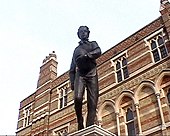  |
/www.rugby-local-history.org.uk/ Rugby Local History Group Chronology of Rugby from 1086 to 1992 The Industrial History of Rugby The Rugby Observer The Local Newspaper Yourhomepagein Rugby Local Community Website Visit Rugby Rugby Tourism Rugby Borough Council Rugby's Clock Towers Shopping Centre Subterranea Britannica on Rugby Radio Station Rugby Welsh RFC The RFU |
|
BRINKLOW CASTLE Brinklow Castle is a Norman earthwork motte and bailey fortress, founded by Robert de Mowbray. The large and impressive 11th century motte, is encased by a wide ditch, with a counterscarp bank. A high rampart, with a wide ditch surrounds the large bailey, which is separated into two wards, by an inner rampart and ditch. This well preserved earth and timber castle, was probably abandoned by the 13th century. |
 |
SP 438-796 Brinklow Castle is located in the village centre, off the B1345. 7 miles east of Coventry, on the A428-B4027.The site is freely accessible in daylight hours.Car parking is by the side of the road. BRINKLOW CASTLE CLICK |
|
| CHURCHOVER
CASTLE Churchover Castle is an 11th century earthwork motte, founded by the Waure family. The low damaged motte, has the remains of its wet ditch but the position of the bailey has been lost. |
 |
SP
519-788 Churchover Castle is located south of Churchover, off the B426. 3 miles north of Rugby, on the A426. The site is visible from the road Car parking is by the side of the road. CHURCHOVER CASTLE CLICK |
|
RUGBY VISITOR CENTRE Rugby Visitor Centre, located in the foyer of Rugby Art Gallery Museum and Library, offers a comprehensive range of visitor information services. Friendly and knowledgeable staff area always happy to answer your questions about Rugby and the surrounding area.As well as being a one-stop source of information on attractions, accommodation, events and travel, the Visitor Centre is a great place to pick up that special reminder of your visit. Our range of quality giftware includes confectionery, rugby souvenirs, greeting cards, books, postcards and maps.The Visitor Centre is also the starting point for the Pathway of Fame, a unique way to explore the town combining the heritage of rugby football with local place of interest. Visitor Centre Opening Hours Rugby Visitor Centre opening hours are: Monday to Saturday: 10am to 4pm Bank Holidays: 12noon to 4pm |
 |
Rugby Visitor Centre Rugby Art Gallery & Museum Little Elborrow St Rugby CV21 3BZ Email: visitor.centre@rugby.gov.uk Rugby Visitor Centre |
Tel: 01788 533217 Fax: 01788 533212 |
| COCK ROBIN
WOOD Cock Robin Wood is a nature reserve situated in Bilton on the edge of Rugby close to the village of Dunchurch. The woodland was given to Rugby Borough Council in 1993 as part of a development of houses and a supermarket and is now maintained by Warwickshire Wildlife Trust. The wood has a circular walk which is ideal for walkers, joggers and dog walkers as well as a pond and sculpture trail. |
 |
Dunchurch
Road, Bilton, Rugby, CV22 6PP COCK ROBIN WOOD CLICK |
Phone: +44(0)24 7630 2912 |
| DRAYCOTE
WATER & COUNTRY PARK - Severn Trent Water The park covers 21 acres on the southern side of Draycote Water. Unwind and have fun at this popular spot. Try watersports, including sailing. We are home to anglers, walkers and birdwatchers. Enjoy a family picnic at the water's edge. Its flat surface means excellent access for the less able. New Visitor Centre opened in Spring 2005 |
 |
Ranger's Office, Draycote Water, Kites Hardwick, Rugby, CV23 8AB DRAYCOTE WATER & COUNTRY PARK CLICK |
Tel:
01788 811 153 |
| KEN MARRIOTT
LEISURE CENTRE Facilities and activities include :
|
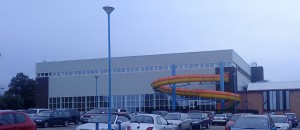 |
Bruce
Williams Way, Rugby, CV22 5LJ KEN MARRIOTT LEISURE CENTRE CLICK |
Telephone: 01788 535851 Fax: 01788 550204 |
| THE LEWIS
GALLERY The Lewis Gallery was opened in February 2006, named after Sir Edward Lewis who left Rugby School in the 1920s and turned Decca into one of the world's biggest record labels. It hosts special art exhibitions throughout the year and is open from 2.00 p.m. to 4.00 p.m. from Mondays to Fridays and at other times for groups by special arrangement. Free admission. Enter The Close by the gate in Barby Road opposite Horton Crescent and take the path round The Close to the left |
 |
Rugby
School, Rugby, CV22 5DP THE LEWIS GALLERY CLICK |
01788
556 245 |
| ROSE
NARROWBOATS The beauty of a narrowboat holiday is its freedom. You can enjoy the great outdoors with something new around each bend - a different pub for lunch perhaps, or a pretty village to explore. Canal cruising is a relaxing way of visiting major towns or waterside developments, and just sitting back and watching the world float by.Our range of differently sized boats means there’s one that’s right for you and your crew. To ensure your comfort and enjoyment our boats are fully equipped with quality furnishings, equipment and utensils. All our boats have galleys with good sized cookers and fridges, bathrooms with fresh water flush toilets, central heating and hot showers, plus much more. |
 |
Fosse Way, Stretton-under-Fosse, Rugby, CV23 0PU ROSE NARROWBOATS CLICK |
Tel:
01788 832 449 |
| RUGBY ART
GALLERY & MUSEUM Opened in spring of 2000, the Rugby Art Gallery and Museum is a purpose-built structure that offers an important cultural hub for the community. The art gallery is home to a variety of temporary exhibitions throughout the year, many of which attempt to find a link with the town and the local area. The museum holds a number of Roman artefacts that have been excavated locally, as well as pieces relating to commerce, trade and industry. |
 |
Little
Elborow Street, Rugby, CV21 3BZ RUGBY ART GALLERY & MUSEUM CLICK |
Phone:
+44 (0)1788 533201 - Fax: +44 (0)1788
533204 |
| RUGBY SCHOOL
MUSEUM & TOUR Rugby School is one of the best known and most prestigious private education institutions in the world, and of course is famous for its invention of one of the most popular ball games. The small museum holds a collection of historical artefacts relating to the history of the school and its pupils. The one-and-a-half-hour tour of the buildings takes visitors to the original classroom, Temple Speech Room, the Chapel and many other interesting locations. |
 |
Rugby
School, Rugby, CV22 5EH RUGBY SCHOOL MUSEUM & TOUR CLICK |
Phone:
+44 (0)1788 556216 |
| SHOPPING
IN RUGBY Rugby Borough Council has listed details about the Shops in Rugby |
SHOPPING
IN
RUGBY CLICK |
||
| ST ANDREWS
CHURCH St Andrew's Church, in the town centre, is Rugby's original parish church. A church has stood on the site since the 13th century. The church was extensively re-built and expanded in the 19th century, designed by William Butterfield. The expanded church included a new east tower, which has a spire 182 feet (55 m) high. However some parts of the older medieval church were retained, most notably the 22 metre high west tower which bears strong resemblance to a castle turret. The west tower was probably built during the reign of Henry III (1216–1272) to serve a defensive as well as religious role, and is Rugby's oldest building. The church has other artefacts of medieval Rugby including the 13th-century parish chest, and a medieval fon |
 |
Church
Street, Rugby CV21 3PT ST ANDREWS CHURCH CLICK |
Tel 01788 565609 |
| ST GEORGES
CHURCH St George's church is situated in the Paddox area of Hillmorton, Rugby, about 1 mile to the East of the town centre. We seek to be a community church serving the needs of the locality. |
 |
John's
Avenue, Hillmorton, Rugby, CV2 25HR ST GEORGES CHURCH CLICK |
Tel:
01788 565609 |
| ST.MARIES
CHURCH Rugby's main Roman Catholic church is St. Maries on Dunchurch Road. It is one of the town's most well-known landmarks as it is quite dominant on the skyline. Its spire is the tallest in Warwickshire[citation needed]. The church was built in 1872, designed by Pugin in the Early English style |
 |
Oak
Street, Rugby, CV22 5EL ST.MARIES CHURCH CLICK |
Tel: 01788 542 703 |
| SWIFT VALLEY
COUNTRY PARK The Country Park land, obtained as part of planning permission for a nearby commercial development, now enables Rugby's residents to visit the countryside without travelling far from the town centre. The site was opened to the public in late August 2003 by Sir David Bellamy, and contains a large wetland area made by diverting the adjacent river. Hard surfaced paths which are compliant with the Disabled Discrimination Act 2004, informal grass paths, extensive areas of new planting, a canal towpath, cycle routes, a bridleway and a car park provide accessibility, whilst offering users a chance to become 'one with nature'. One route allows direct access from the canal network through the site onto the footpath network to the north of the town. The Country Park also provides a 'dog exercise area', which is the only area in the town where dogs can be let off their leads. A very dense bird population exists especially around the pools. Birds include lapwing, snipe and song thrush. Dragonflies and damselflies are abundant and in 2004 the small red-eyed damselfly was recorded here for the first time in Warwickshire. The first moth recording night produced over 60 species along with a healthy bat population. |
 |
Old
Brownsover Lane, Rugby, CV21 1XX SWIFT VALLEY COUNTRY PARK CLICK |
Tel:
01788 337926 |
| WILLOW WREN
CRUISING HOLIDAYS WE ARE A FAMILY OWNED canal boat hire company offering self-drive narrowboat holidays. Our main base at Rugby Wharf and our historic sister base at Hilmorton Locks, are ideally suited to cruise the Shire counties across the English Midlands. Our narrowboats are available to hire all year round. OUR NARROWBOATS are available for holidays all year round. All are well insulated and heated so are suitable for winter cruising. Often length of hire period and start days can be varied off season - let us know what you want to do and we'll try to accommodate your wishes. |
 |
Rugby
Wharf, Consul Road, Rugby, CV21 1PB WILLOW WREN CRUISING HOLIDAYS CLICK |
Tel: 01788 562 183 |
| SHIPSTON ON STOUR Shipston-on-Stour is a town and civil parish on the River Stour about 10 miles (16 km) south of Stratford-upon-Avon in Warwickshire. It is in the northern part of the Cotswolds, close to the boundaries with Oxfordshire and Gloucestershire. In the 8th century the Toponym was Scepwaeisctune, Old English for Sheep-wash-Town, as it was once an important sheep market.[citation needed] The name evolved through Scepwestun in the 11th century, Sipestone, Sepwestun and Schipton in the 13th century and Sepestonon-Sture in the 14th century. Shipston is on the A3400 road (formerly the A34) between Stratford-upon-Avon and Oxford and was once an important staging place for stagecoaches. Many former coaching inns, such as the Coach and Horses . remain in the area of the High Street. Following a fall in the demand for local wool, the local economy was in part sustained[citation needed] by the opening in 1836 of a branch line running from the horse-drawn Stratford and Moreton Tramway, built ten years before and linking Moreton-in-Marsh with Stratford. In 1889 the line was upgraded to allow the operation of steam trains from Moreton to Shipston. Passenger services to the town were withdrawn in 1929 and the line closed completely in 1960. Shipston was in an exclave of Worcestershire, in which it was part of the Oswaldslow Hundred. In 1931 it was transferred to Warwickshire. Until the 1974 local government reorganisation it was the seat of the Shipston-on-Stour Rural District. Notable people born in Shipston include the actor Richard Morant and the 19th century archaeologist Francis Haverfield. The town was commemorated by Robin Gibb of the Bee Gees in the song Cold be my Days on his 1970 solo album Sing Slowly Sisters. To wit "Cold be my days in Shipston-on-Stour". He stated in a BBC Radio 4 interview in May 2007 that this relates to his youthful experiences, riding horses with his brother Barry |
 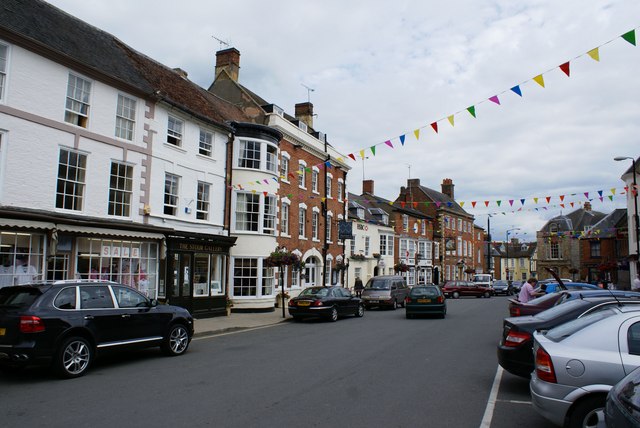 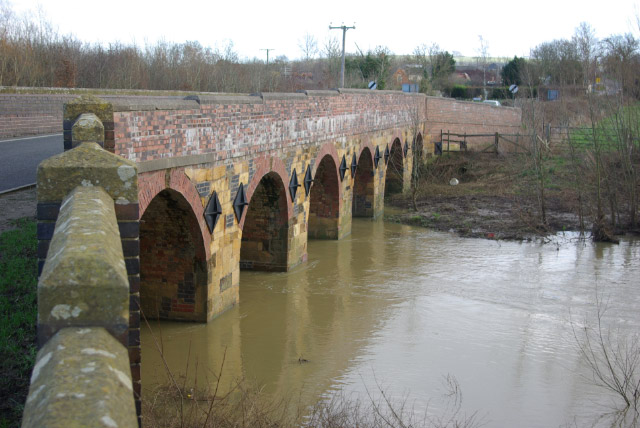 |
www.shipstononstour.com/ community.html www.shipstononline.org Download PDF of Town Map www.townpages .com/warwickshire/shipston-on-stour www.oldstratforduponavon.com/ shipston.html |
|
| HONINGTON
HALL Grand Hall in the heart of Warwickshire countryside. This is now a private house but can be visited by appointment, Fine Caroline manor house built in the early 1680's in mellow red brick with stone quoins decorated with carved busts and with tall chimneys: the perfect model for a dolls' house. The interior was lavishly remodelled in 1740's and includes good plasterwork and an octagonal salon. Honington also opens up its gardens under the National Gardens Scheme every last sunday in June - please just turn up. |
 |
Honington Shipston-on-Stour CV36 5AA HONINGTON HALL CLICK |
Tel: 01608 661 434 |
| LIBRARY |
 |
12
Church Street Shipston-on-Stour CV36 4AP SHIPSTON ON STOUR LIBRARY CLICK |
Tel: 01608 661255 |
| ROLLRIGHT
STONES The Rollright Stones, erected mainly between 2500-2000 BC, are situated on the Warwickshire-Oxfordshire border, on a hilltop at a sacred site above the Warwickshire village of Long Compton. Parts of the stones are as old as 4000 - 3500 BC.- There are three main structures - a huge circle of stones known as the King’s Men, a smaller group of stones leaning together called the Whispering Knights and a solitary rock standing nearby, the King Stone. All have an interesting legend behind them involving a witch offering to the knights what seemed a simple challenge... The name “Rollright” is believed to derive from “Hrolla-landriht”, the land of Hrolla. According to local folklore the stones are the petrified remains of a king and his knights. |
 |
Long
Compton CV36 5JS ROLLRIGHT STONES CLICK |
|
| ST.EDMUND
CHURCH The Church of England parish church of Saint Edmund has a 15th century tower. The Gothic Revival architect G.E. Street rebuilt the rest of the church in 1855. The tower had a ring of five bells until 1695 when they were recast and rehung as a ring of six. Since then all the bells have been recast and rehung from time to time, notably in 1754 and by John Taylor & Co. in 1979. |
 |
Church
Road, Shipston-On-Stour, CV36 4AP ST.EDMUND CHURCH CLICK |
Tel:
(01608) 661724 |
| TAKING THE
WALK IN SHIPSTON ON STOUR Shipston on Stour is one of my favourite walks in the series and takes us through the narrow streets of one of the most unspoilt market towns in England. Part of its charm is the mix of small shops and businesses there are butchers and haberdashers, bakers and antique shops and a wine vault of longstanding - with hardly a chain store in sight! Our guides are Mike Ashley and Dick Burge who have lived in Shipston for more than 80 years - between them! And in that time they have gathered a pack of stories and artifacts for the museum which they run between them with an enthusiasm which is quite captivating. |
 |
The
Shipston on Stour Talking the Walk podcast is
supported by Stratford on Avon District Council TAKING THE WALK IN SHIPSTON ON STOUR CLICK |
|
| WAR MEMORIAL The Shipston on Stour memorial stands outside St Edmund's Parish Church in Church Street. It takes the form of a gable headed stone mounment rising from a low brisk wall affixed to which are bronze name panels. The memorial is incised with cross and tracery (roses and foilage) with bronze wreaths in the upper corners. There are 32 names for World War 1 listed by year died, surname, initial, rank and Regiment (listed here in alphabetical order for each of reading) and 12 for World War 2 by surname, initial, rank and Regiment. The memorial was first unveiled by Commander B Eyres Monsell on 13th August 1920, dedicated by the Bishop of Coventry, and re-dedicated 12th November 1950 by local clergy and dignitaries. The memorial originally cost £333 17s 1d, the architect was Mr Edward Adams, sculptors were Messrs E M and H Nuttall and the builder Mr G E Adams. |
Church Road, Shipston-On-Stour, CV36 4AP WAR MEMORIAL CLICK |
||
| SOUTHAM Southam can trace its history back to Anglo-Saxon times; a charter exists from 998 granted by King Ethelred the Unready. Southam was mentioned in the Domesday Book as "Sucham".[2] A market was established in 1227. In the 1540s the town was visited by John Leland, who described it as 'a modest market town of a single street'. Southam is also mentioned in Henry VI, part 3 by William Shakespeare in Act V, Scene I (Lines 10–16). King Charles I passed through Southam just prior to the outbreak of the Civil War, and apparently was not made welcome by the townsfolk, who refused to ring the church bells. On 23 August 1642, a skirmish took place outside of the town between Parliamentary forces led by Lord Brooke and Royalist forces commanded by the Earl of Northampton. Later in 1642, Charles stayed in Southam before the Battle of Edgehill, and in 1645, Oliver Cromwell stayed in the town along with 7,000 Roundhead troops In the days of the stagecoach Southam became an important stop[citation needed] on the coaching road from Coventry to Oxford and many old coaching inns remain in the town. Few buildings in Southam date from before 1741, for in that year a large fire devastated the town. A historical curiosity about Southam is that in mediaeval times, the town minted its own local currency . This was done because local people found ordinary coins too high in value for everyday use. The old mint house is now a pub called the Old Mint. During the Civil War King Charles used the mint to make new coins to pay his soldiers.Between 1894 and 1974 Southam was the administrative centre of the Southam Rural District; since then it has been in the Stratford-on-Avon District of Warwickshire. Southam was in the parliamentary constituency of Stratford-on-Avon until the boundary changes approved by Parliament in June 2007 when it became part of the new constituency of Kenilworth and Southam. The constituency was first contested in the United Kingdom general election, 2010. |
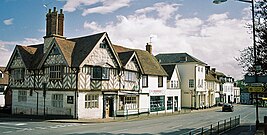 |
||
| CROP
CIRCLE New crop circle was found at Ufton near Southam in Warwickshire, England on Friday, 25th June 2010.This formation appeared in a rather convenient village called Ufton - Im sure you have spotted the UFO in Ufton |
 |
||
|
HOLY WELL Southam and it's "Halliwell" (now The Holy Well) were first mentioned 998 when it was granted to the Priory of Coventry by King Ethelred, but there were probably Anglo-Saxon and Roman settlements even earlier. The water from the Holy Well was said to cure eye ailments. Mentioned as 'Suham' in the Domesday Book, Southam was granted a charter in the 13th Century when St. James' church was built. In 1227 the Prior obtained a statute allowing Southam a weekly market (weekly markets are still held today along with a monthly Farmers market). The Holy well was restored after a Heritage Lottery Fund a grant of £102,500 was awarded in 2004.The water that flowed from the ancient Holy Well was said to have healing properties, with the well considered to be of such importance to the people of the town that it was excluded from the Enclosure Act of 1761. There is also an accessible trail leading to the historic Holy Well in the outstanding beauty of the Stowe valley. The path starts at the end of Wattons Lane (bottom corner of the Recreation Ground by the bridge and runs parallel to the Stowe river). |
 |
||
| ST.JAMES
CHURCH St James Church is the Church of England parish church of the town of Southam, situated east of Leamington Spa in Warwickshire. This friendly church has three Sunday services and various weekday meetings and groups. Get in touch with the Office on the Contact Us page to find out more about these groups and activities. You are very welcome to come and join us. |
 |
Park
Lane Southam ST.JAMES CHURCH CLICK |
Tel :
01926 812413 |
| SOUTHAM
WORKHOUSE A parliamentary report of 1777 recorded that Southam had a parish workhouse able to accommodate up to 20 inmates. In 1797, there were 10 paupers in the workhouse. The poor were partly "farmed" by a contractor who received a weekly payment of 2s.9d for each pauper's board and lodging.The new workhouse, erected in 1837, was a plain red-brick building building. Its plan followed the popular cruciform or "square" design with accommodation wings emanating from a central hub dividing the site into separate yards for the different classes of inmate (old/young, male/female).After 1912, the workhouse became officially known as the Southam Poor Law Institution. In 1923, the Rural District Council accepted a tender of £1,240 from FG Watson of Southam for converting the building into dwellings. Southam Primary School now stands on the site. |
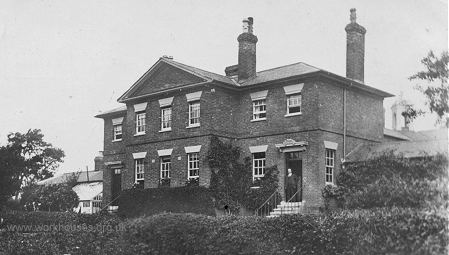 |
SOUTHAM WORKHOUSE CLICK |
|
| STRATFORD ON AVON Stratford has Anglo-Saxon origins, and grew up as a market town in medieval times. The original charters of the town were granted in 1196, making Stratford officially over 800 years old. The name is a fusion of the Old English strǣt, meaning "street", and ford, meaning that a Roman road forded the River Avon at the site of the town. In 1769 the actor David Garrick staged a major Shakespeare Jubilee which saw the construction of a large rotunda and the influx of many visitors for the three day event. This contributed to the growing phenomenon of Bardolatry which made Stratford a tourist destination. |
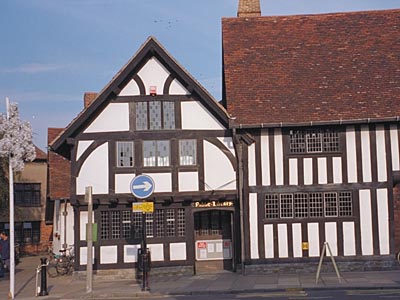  |
62 Henley Street, Stratford-upon-Avon, CV37 6PT Stratford Tourist Information Centre Stratford upon Avon Railway Station Stratford upon Avon Town Council Stratford-on-Avon District Council Discover Stratford Official Stratford-on-Avon Tourism Site Stratford-upon-Avon at the Open Directory Project Stratford upon Avon Herald Stratford Newspaper Stratford Observer Local Stratford Newspaper Bishopton Primary School Local Primary School Shakespeare's School – Stratford-upon-Avon The history of King Edward VI School, Stratford-upon-Avon |
Tel: 01789 264293 |
| ANNE
HATHAWAY'S COTTAGE This world famous picturesque thatched cottage, childhood home of Shakespeare’s wife, continued to be owned by Anne Hathaway’s descendants until the late 19th Century. It still contains the Hathaway bed. Outside lies a beautiful cottage garden and a tree and sculpture garden including a maze. There are many pleasant walks leading from the cottage. Open daily all year round except 23-26 December. |
 |
Cottage
Lane, Shottery, Stratford-upon-Avon, CV37 9HH ANNE HATHAWAY'S COTTAGE CLICK |
Phone:
+44 (0)1789 292100 - Fax: +44 (0)1789
205014 |
| AVON CRUISES Half-hour cruises on the River Avon in a fleet of traditional passenger boats. Regular departures from the Bancroft Gardens adjacent to the theatre. Private charter and extended cruises, buffets, high teas, river picnics and corporate events. Bar services provided on board. 1898 coal-fired steam launch for hire.Rowing boats, punts and self-drive electric motor-boats for hire by the hour from our boathouse.Help available in boarding and disembarkation. Life jackets available on request. |
 |
Swans
Nest Boathouse, Swans Nest Lane, Stratford-upon-Avon, CV37 7LS AVON CRUISES CLICK |
Tel:
01789 267073 |
| BANCROFT
CRUISERS Bancroft Cruisers offers 45 minute sightseeing cruises along the River Avon on our traditional passenger boats, with a crew member on board to point out places of interest along the way, such as Clopton Bridge, the riverside Gardens, the hand operated chain ferry, Royal Shakespeare Theatre and Holy Trinity Church. Not to mention the considerable wildlife along the banks of the River Avon. Both of our boats are licensed for the sale of alcohol and we also offer buffet and bar cruises for corporate events, weddings, private parties as well as cream teas and jazz barbecues. Schools parties are always welcome with a drop off point close to our landing stage at the rear of the Holiday Inn Hotel. |
 |
Holiday
Inn Stratford, Bridgefoot, Stratford-upon-Avon, CV37 6Y BANCROFT CRUISERS CLICK |
Tel:
01789 269 669 Mobile: 0777 1560 906 |
CIVIC HALL Situated in the heart of Stratford upon Avon, the Civic Hall is ideally placed as the premier hire venue serving the local community.With a large, flexible auditorium that is equipped to high professional standards we are home to a number of local organisations producing Drama, Music and Exhibitions. As part of Stratford Town Trust a major part of our work is focused on the local area, providing a comfortable air conditioned space that may be hired for a variety of purposes by charitable and educational organisations, commercial business and individuals. Everyone is welcome at Civic Hall and we will do whatever we can to ensure you have an enjoyable visit. Staff are available to help, so please ask us if you need any assistance. |
 |
14
Rother Street, Stratford-upon-Avon, CV37 6LU CIVIC HALL CLICK See Our Theatre Website |
Box
Office: 01789 207100 Office: 01789 207101 |
| CREAKY
CAULDRON - WYRD MUSEUM & HENLEY STREET THEATRE - Established as England’s creepiest and most haunted museum and visitor experience, the Creaky Cauldron has undergone a scary transformation into Bombay Manor, home to “The Wyrd Museum” and the extremely creepy Bombay family ~ with animatronic exhibits, theatrical and scary room settings and cobwebs to rival any haunted experience or haunted house anywhere in the world! Alternatively, if you are brave enough to visit the Creaky Cauldron at night when it becomes The Henley Street Theatre then you will be greeted by Canon Ezekiel Bombay who will be your host for a visit of unnerving theatricality in a genuinely haunted building! You will also enjoy the company of the family’s black sheep ~ Thaddeus Bombay and his sister Valeria. But just what is their secret? Dare you find out? As your visit unfolds you will need to keep your wits about you as you begin to question your senses and even your sanity. You will learn of Stratford’s secrets and the truth behind the sinister history of your hosts’ family. All this within the disorientating walls of one of Stratford's oldest and most infamous buildings….A truly unique experience over three floors in this unique and historical venue and which combines theatrical performance, storytelling, whodunit and scare attraction. At the Creaky Cauldron you don’t just watch the experience…. You’re part of it! Ghost Hunts and Overnight Vigils run every Saturday from 9pm - places must be prebooked! |
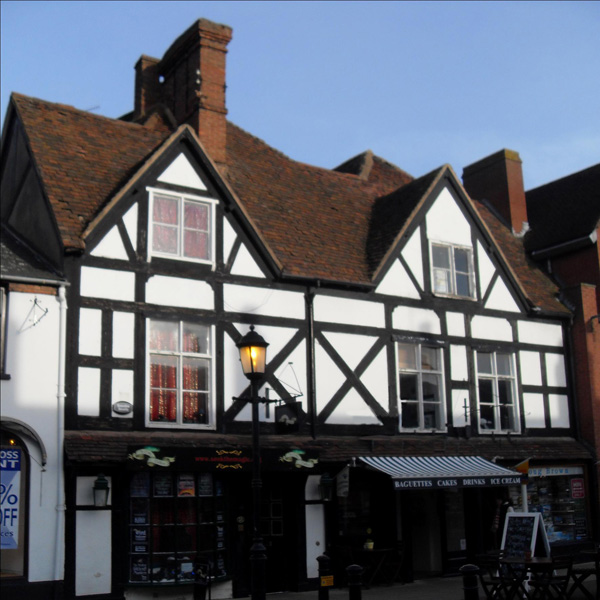 |
21
Henley Street Stratford upon Avon CV37 6QW CREAKY CAULDRON CLICK |
Tel 01789 29096 |
| FALSTAFF'S
EXPERIENCE Set within one of Stratford's most historic buildings, the museum is educational and fun for all the family. The real life home of Shakespeare's famous comic character John Falstaff, Terry Deary dedicated his book Stratford upon Avon to the building. Within the labyrinth of rooms, visitors can experience the sights, sounds and smells of 16th century England & Stratford. |
 |
40 Sheep Street Stratford-Upon-Avon CV37 6EE FALSTAFF'S EXPERIENCE CLICK |
TEL: 01789 298070 |
| HALLS
CROFT Hall’s Croft is named after Dr. John Hall, who married Shakespeare’s daughter Susanna. This impressive 16th Century house, with Jacobean additions, includes outstanding furniture and paintings. See the exhibition of medicine in Shakespeare’s time with references to remedies and potions mentioned in the plays. The large peaceful garden is home to an ancient mulberry tree and a herbal bed. Open daily all year round except 23-26 December. |
 |
Old
Town, Stratford-upon-Avon, CV37 6BG HALLS CROFT CLICK |
Phone:
+44 (0)1789 292107 - Fax: +44 (0)1789
266209 |
| HARVARD HOUSE
& THE MUSEUM OF BRITISH PEWTER An architectural gem, boasting an ornately carved timber framed frontage, Harvard House is a fine example of an Elizabethan town house, rebuilt in 1596 by master butcher Thomas Rogers. His daughter Katherine was the mother of John Harvard, who gave his name to the USA's Harvard University. The house is also the home of the Museum of British Pewter, and the complete pewter experience gives fun for all the family: there are videos, interactive computers and a children's activity area, as well as metal-working benches for making a unique souvenir to take away. A small shop sells beautifully-crafted gifts |
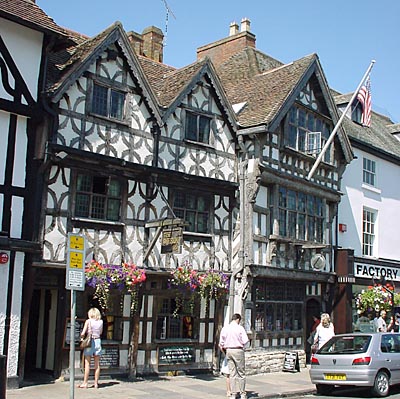 |
26 High
Street Stratford-upon-Avon CV37 6AU HARVARD HOUSE CLICK |
Telephone 01789 204507 |
| HOLY TRINITY
CHURCH Holy Trinity Church is situated on the banks of the River Avon, in Stratford-upon- Avon. It is probably England’s most-visited parish church, being where both William Shakespeare and Anne Hathaway are buried. This ancient church provides a moment of calm away from the bustle of the town. Both the courtyard and the churchyard itself are breathtakingly beautiful. |
 |
Old
Town, Stratford upon Avon, Warwickshire, CV37 6BG HOLY TRINITY CHURCH CLICK |
Tel/Fax:
01789 266316. |
| MECHANICAL
ART & DESIGN MUSEUM Go MAD in 2012 for Stratford’s newest, most exciting Attraction! The MAD (Mechanical Art and Design) Museum is gearing up to open to the public on 23rd March 2012. Based on Sheep Street in Stratford-upon-Avon, this museum houses an intriguing collection of weird and wonderful Kinetic Art, Automata and Steampunk machines, from selected artists all over the world. Perfect for the whole family, The MAD Museum contains something to suit all ages and interests. Come and immerse yourself in a wacky world full of quirky creations, intelligent design and interactive entertainment! As well as loads of crazy machines consisting of clever movement and smart lighting technologies, The MAD Museum also features awe-inspiring contraptions built up from heavily intricate systems of cogs, nuts and bolts. The MAD Museum showcases more then 20 large exhibits and loads of smaller pieces over the space of two floors, there is also a MAD garden full of quirky wind and water sculptures. This museum is set to be the only permanent exhibition of its kind in the UK. Come and see internationally celebrated artists like Willi Reiche, Pascal Bettex, Jennifer Townley and Patrice Hubert, to name but a few! The project is the fruition of a lifelong ambition by founder Richard Simmons who has a passion and fascination for the intricacies of movement within structures and machines to create art. The team includes his son Iain and nephew Mike Abbotts; they believe this attraction will be a welcome change from the norm for parents, teachers and young people alike. Richard commented: “Not only does The MAD Museum provide loads of interactive fun, it will interest those who are fascinated by incredible mind-boggling designs and intricate workings!” Come and visit this museum today for a MAD experience! |
 |
Sheep Street, Stratford-upon-Avon, CV37 6EF MECHANICAL ART & DESIGN MUSEUM CLICK |
Tel:
+44 (0)1926 865 839 |
| MARY
ARDEN'S HOUSE & THE SHAKESPEARE COUNTRYSIDE MUSEUM Great for a family day out, the site includes the home of Shakespeare’s mother before she married John Shakespeare. The site today, with its many farm buildings, activities and rare breeds of farm animals, brings to life for visitors and families the work and traditions of the countryside around Stratford-upon-Avon from Shakespeare’s time to the early 20th Century. The grounds also feature rare livestock and a falconry with displays throughout the day. |
 |
Station
Road, Wilmcote, Stratford-upon-Avon, CV37 9UN MARY ARDEN'S HOUSE & THE SHAKESPEARE COUNTRYSIDE MUSEUM CLICK |
Phone:
+44 (0)1789 293455 - Fax: +44 (0)1789
415404 |
| NASH HOUSE
& NEW PLACE This property was once owned by Thomas Nash, who married Shakespeare’s granddaughter, Elizabeth. In addition to exceptional furnishings of Shakespeare’s time, the house also contains displays on the history of Stratford. Outside lies the site of Shakespeare’s final Stratford home – discover why it was demolished. Stroll in the Elizabethan style Knott Garden and rest a while in Shakespeare’s Great Garden. Open daily all year round except 23-26 December. |
 |
Chapel
Street, Stratford-upon-Avon, CV37 6EP NASH HOUSE & NEW PLACE CLICK |
Phone:
+44 (0)1789 292325 - Fax: +44 (0)1789
266228 |
| RIVER AVON The River Avon at Stratford is a wonderful river to cruise along in a narrowboat or walk besides leisurely as there are many sights and activities to enjoy along its banks. Why not moor alongside the Royal Shakespeare Theatre in the busy Bancroft Basin and catch a performance, wander through the beautiful Bancroft Gardens and enjoy the live entertainers, go on one of the river cruises, or even hire your own boat to explore this lovely river? |
 |
Stratford-upon-Avon,
CV37 |
Phone:
+44 (0)870 160 7930 |
| ROYAL
SHAKESPEARE THEATRE The Royal Shakespeare Theatre is the largest theatre in Stratford-Upon-Avon, the town of William Shakespeare’s birth, and offers audiences a wide selection of plays, not only written by Shakespeare himself, but also those written by more contemporary playwrights. The theatre has seen a great number of talented actors play on its impressive stage such as John Gielgud, Laurence Olivier and Judi Dench. Theatre-goers can enjoy a meal at the theatre’s restaurant overlooking the river Avon before the performance if they choose or a drink in the theatre’s bar. The Royal Shakespeare Theatre and Swan Theatre are open daily from 10am (9.30am on Saturdays) and you are welcome to explore our new home. There are lots of things to see and do. You can enjoy a meal in the Rooftop Restaurant, take a Theatre Tour, book a ticket to go up the Tower for stunning views of Shakespeare's home town or visit our free exhibition spaces. |
 |
Waterside,
Stratford-Upon-Avon, CV37 6BB ROYAL SHAKESPEARE THEATRE CLICK See Our Theatre Website |
Tel :
0844 800 1110 |
| SHAKESPEARE'S
BIRTHPLACE The half-timbered house where William Shakespeare was born in 1564 continued as the family home until the 19th Century and has welcomed visitors for well over 250 years. The house offers a fascinating insight into life, as it was when Shakespeare was a child. It includes a Shakespeare exhibition – an introduction to his life, work and times, and a beautiful traditional English garden. Open daily all year round except 23-26 December. |
 |
Henley
Street, Stratford-upon-Avon, CV36 6QW SHAKESPEARE'S BIRTHPLACE CLICK |
Phone:
+44 (0)1789 201823 - Fax: +44 (0)1789
263138 |
| SHAKESPEARE
CENTRAL LIBRARY (Incorporating the library of the Royal Shakespeare Theatre) The libraries were founded in the last half of the 19th century and were amalgamated in 1964 when they were housed in the purpose-built Shakespeare Centre.They hold collections covering all aspects of Will Shakespeare's life, works and times and include original editions of his plays dating from 1623. |
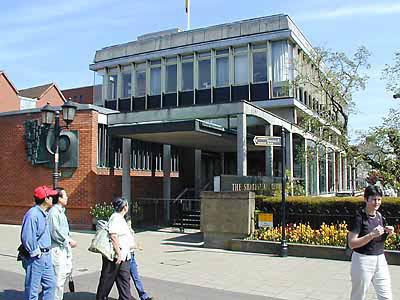 |
The
Shakespeare Centre Henley Street Stratford-upon-Avon CV37 6QW SHAKESPEARE CENTRAL LIBRARY CLICK |
Telephone:
+44 (0)1789 204016 Fax: +44 (0)1789 296083 |
| STRATFORD
ARMOURIES James Wigington is the founder and curator of the Stratford Armouries Museum which is situated on the former site of RAF Snitterfield, 2 miles north of Stratford-Upon-Avon. The Wigington family can be traced back to 1748 where in Shipston on Stour records show the family were cabinet makers and artists. In the 19th Century the family were gunmakers in Birmingham - Thomas Mabbutt and Co at Bath & Chadwell Street. The father of James Wigington, the late John Wigington, moved from Shipston on Stour to Stratford-Upon-Avon in 1927 where he specialised in arms and armour from his shop. Sadly when James was just fifteen his father passed away. It was at this point Robin Wigington, James' half brother took James under his wing as an apprentice at his arms and armour business at Poets Arbour in Sheep Street, Stratford-Upon-Avon. Robin Wigington - as well as being a great teacher and scholar, wrote the book on the firearms of Tipu Sultan and amassed the fabulous Tipu Sultan collection. |
 |
Gospel
Oak Lane, Pathlow, Warwickshire, CV37 0JA STRATFORD ARMOURIES CLICK |
Tel: 01789 262 468 |
| STRATFORD
BRASS RUBBING CENTRE Summer 10.00-18:00, Winter 11:00-16:00 daily -Brass Rubbing is easy and rewarding. England's unique heritage of Medieval and Tudor brasses illustrate the knights and ladies, the scholars, the merchants and the priests of the past. Even the complete novice can produce a beautiful brass rubbing suitable for home decoration or as a gift in less than an hour. |
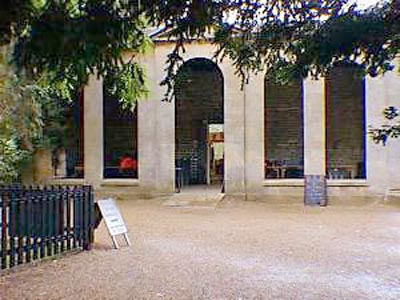 |
Royal
Shakespeare Theatre Summer House Avonbank Gardens Southern Lane Stratford-upon-Avon CV37 6XP STRATFORD BRASS RUBBING CENTRE |
Tel:
01789 297 671 |
| STRATFORD ON
AVON BUTTERFLY FARM Enjoy the unique pleasure of watching hundreds of the world's most spectacular and colourful butterflies flying all around. You can see them feeding and flying in a wonderful tropical environment. See their amazing lifecycles in the Caterpillar Room. Observe the fascinating and strange in Insect City, where Stick Insects, Beetles, Leaf-cutting ants and many more remarkable creatures are to be found. For the bolder, get close to the deadly and dangerous in perfect safety in Arachnoland; home of the worlds largest spider, a scorpion colony and other spinners of webs and dealers of death. Afterwards take a look at the many gifts available in the Papillon Gift shop |
 |
Swan's
Nest Lane, Stratford-upon-Avon, Warwickshire, CV37 7LS, STRATFORD ON AVON BUTTERFLY FARM CLICK |
Tel :
+44 (0)1789 299 288 |
| STRATFORD
UPON AVON FARMERS MARKET Held between 9am and 2pm on the first and third Saturday of each month, Stratford Farmers Market can be found at Rother Street marketplace. Offering an exciting range of fresh food and local specialties direct from local farmers, growers and producers, the market is a wonderful place to shop, meet people, and learn more about the area. The markets are full of good food -some organic- and are great fun for all the family. As well as an array of fresh seasonal fruit and vegetables, you will also find a whole host of other delights such as fresh meat, fish, eggs, pickles, chutneys, cheese and sausages. freshly baked breads, biscuits, cakes, pies and pastries and a selection of wines and ciders. The market also showcases a variety of plants, shrubs and herbs.The producers and growers are happy to tell you how and where the food was grown (usually within 30 miles of the market) and how to prepare and cook it when you get home. You'll also find unusual vegetables and tasty potatoes, many of which not usually available in supermarkets. |
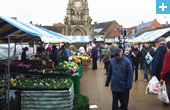 |
Rother
Street, Stratford-upon-Avon, CV37 6LU STRATFORD UPON AVON FARMERS MARKET CLICK |
Tel: 01789 267 000 |
| STRATFORD ON
AVON LEISURE CENTRE Ideally situated in the heart of the town at Bridgefoot, facilities include a 33m six-lane swimming pool (for adult and junior use), a teaching pool, a fitness studio with some 70 pieces of equipment, two dance studios, a Health Suite and sun beds, eight badminton courts in the main hall, a crèche and nursery, four all-weather pitches and even an art gallery! Facilities: * A 33m six lane indoor pool (adult use and junior use) * A teaching pool * A Fitness studio with up to 70 pieces of equipment! * Two dance studios * A health suite with sun beds * Eight badminton courts in the main hall * A crèche and nursery for the children * Four all weather pitches * An art gallery |
 |
Bridgefoot, Stratford-upon-Avon, CV37 6YY STRATFORD ON AVON LEISURE CENTRE CLICK |
Telephone 01789 268826 |
| STRATFORD
PICTUREHOUSE Stratford Picturehouse opened in May 1997 and was built on the site of a former garage with support from the National Lottery and the local Council.The Stratford upon Avon Picturehouse provides a host of entertainment ranging from big block-buster features, to smaller more specialised Art-house movies and children’s features over Summer and Seasonal holidays, we strive to make sure there is always something for everyone, whether you’re six or over sixty! The Picturehouse experience also includes the newly refurbished Terrace Bar with weekly live music, resident Dj’s, art exhibitions, Quiz nights and more! Now with a Picturehouse membership you can enjoy free tickets, no booking fees and discounts in-house as well as in a range of local shops and services. |
 |
Windsor
Street Stratford-upon-Avon CV37 6NL STRATFORD PICTUREHOUSE CLICK |
Tel: 08707 55 12 29 |
| STRATFORD
RACECOURSE STEEPLECHASING has taken place at Stratford Racecourse since 1755. Nowadays, we have fifteen meetings a year, most of which take place within the summer months. Equipped with a new glass-fronted Grandstand (opened in 1997) and having won a major award for the care of the racetrack, we are proud to be in the top flight of Britain's smaller courses. |
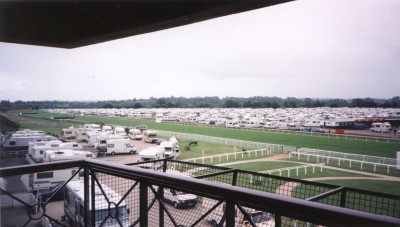 |
Stratford-on-Avon
Racecourse Co. Ltd Luddington Road Stratford-upon-Avon Warwickshire CV37 9SE. FAX 01789 415850 info@stratfordracecourse.net STRATFORD RACECOURSE CLICK See our Horse Racing Website |
TEL 01789 267949 |
| WORLD
SHAKESPEARE FESTIVAL 2012 The World Shakespeare Festival is a celebration of Shakespeare as the world’s playwright, produced by the Royal Shakespeare Company in an unprecedented collaboration with leading UK and international arts organisations and with Globe to Globe, a major international programme produced by Shakespeare’s Globe. From Shakespeare’s birthday, April 23rd 2012, The RSC has invited some of the world’s leading artists and theatre-makers to create new productions and responses to Shakespeare, which will play until Autumn in the Royal Shakespeare Company’s three theatres in Stratford-upon-Avon, across London in partnership with ten major theatres, LIFT and the British Museum and in Newcastle, Gateshead, Wales, Birmingham, at the Edinburgh International Festival, Brighton Festival and on the BBC. The RSC is contributing a dozen new productions of its own. Some reflect the rich mix of cultures within British society; some are co-productions with international companies and some explore non-theatre spaces and new journeys for our audiences. |
 |
Click here to see the
PDF of more of The World Shakespeare Festival in
Stratford and other venues across the UK. See Our Theatre Website |
|
| STUDLEY The manor of Studley is recorded twice in the Domesday Book mostly as part of the lands of William son of Courbucion; who was appointed Sherrif of Warwick soon after 1086; where it reads, "In Ferncombe Hundred in Stodlei (Studley) 4 hides. Land for 11 ploughs. In lordship 2; 3 slaves. 19 villagers with a priest and 12 smallholders have 9 ploughs. A mill at 5s; meadow, 24 acres; a salt house which pays 19 packloads of salt; woodland 1 league long and 1/2 league wide. The value was and is 100s. Swein held it freely." A further holding is listed as part of the land of William Bonavallet "William holds 1 hide in Stodlei from William. Land for 2 ploughs. In lordship 1 plough. Meadow 4 acres; woodland 3 furlongs long and 2 furlongs wide. Value 10s. Godric held it freely." It is the site of both a castle, not the 19th century house called Studley Castle, and the remains of a medieval priory. The Augustinian priory was founded in the 12th century by Peter Corbizun but was closed at the dissolution under Henry VIII and was used as a source of stone for other local buildings. Nothing remains today apart from the use of the name priory in a few local building names such as Priory Farm, which now much modernized, embodies a few fragmentary portions of a conventual building. A gabled west wall of stone rubble contains the remains of a large 14th-century window. A few medieval sculptured fragments are built on to the walls. Studley is also known for being the site of a sewing needle and surgical needle making industry and was once a leading area, gaining a European and even worldwide reputation. From the 19th century precision made surgical needles were in demand and with advances in manufacturing technology such was the demand that over 3,000 workers were employed. In the late 1970's the old factory where needles were made was burnt down, and the production of "Aero" needles moved to a nearby site. The original factory site now contains a supermarket, other retail outlets, and housing. One of the streets in the village is named "Crooks Lane", ostensibly because the crooked needles from the original factory were dumped at the end of this lane, but the road was there before the village had a needle factory. |
 |
Studley
Parish Council Website Studley Village website Photos of Studley and surrounding area on geograph.org.uk Studley on a Vision of Britain Old Francis Frith photos of Studley Studley Cricket Club |
|
| CHURCH OF
THE NATIVITY OF THE BLESSED VIRGIN The parish church of The Nativity of the Blessed Virgin consists of a chancel, nave, south aisle, and west tower It features a 12th century north wall and window of Norman date, fine surviving examples of opus spicatum or herringbone masonry, a medieval rood screen, Elizabethan era table and dug out chest, Jacobean era pulpit and brasses and other points of interest The survey of the clergy by the puritans in 1586 described the then vicar, Thomas Penford as; "dumbe & vnlearned, a verie aged man, he can scarce reade, yet he hath learning enough for 2 benefices ; for he reapeth the fruite of Studley & Coughton both, he hath of late gotten him a certaine hireling to serue his turne at both places, one Robt. Cathell a seelie Welshman that can scarce reade English distinctlie. The valew of both is better then xx by the yeare". |
 |
Studley
Church: B80 7AB CHURCH OF THE NATIVITY OF THE BLESSED VIRGIN CLICK |
|
| ST.MARY'S
ROMAN CATHOLIC CHURCH St Mary's was built in 1853 on land donated by the Throckmorton family of Coughton, and with funds raised by the Throckmortons and other Catholic families in the area. The first parish priest was from the Benedictine community of Douai Abbey in Berkshire. It is still served by the monks of Douai Abbey and our present parish priest is Father Benedict Thompson OSB. |
 |
103
Alcester Road Studley B80 7NW ST.MARY'S ROMAN CATHOLIC CHURCH CLICK |
Tel: 01527 852524 |
STUDLEY CASTLE (Hotel) Thought to have been a 17th century building it was ruinous when Francis Lyttleton-Holyoake purchased the adjoining land in 1833 and built the present Castle, at a cost of £120,000. At the time he enclosed some common land where, upon a villager uttered the curse that, 'whoever owned Studley Castle' should die, without owning one acre of land. Unfortunately the new owner did in fact die in penury and so did the subsequent owner from 1863, Thomas Walker, who had also been made bankrupt in 1890.The land changed hands several times until 1903 when it became a ladies agricultural college owned by The Countess of Warwick, where it later became known as Studley College. During the First World War the Castle was a horticultural college where 3 year diploma courses were introduced in 1924 and ran until 1947 for poultry and dairy work, bee keeping, fruit preservation and carpentry. In 1969 the college was closed due to lack of funds for the expansion program. The Castle was then purchased by Leyland and subsequently owned by The Phoenix Four of MG Rover for its training and conference purposes. During the week it housed the corporate business for Rover and . With the demise of Rover Group, Studley Castle was then sold in 2004 to self made millionaire, Mr Firoz Kassam, who owns a number of hotel and conference venues in the UK. Still owned by Mr Kassam the Castle later joined Best Western in 2008 as a 3 star hotel . With the doors open to the public the Castle is fast becoming a popular location for either conferences, weddings or just a quite weekend away. |
 |
Castle
Road Studley B80 7AJ STUDLEY CASTLE (Hotel) CLICK |
Telephone:
01527 853 111 |
| STUDLEY
PUBS Studley is often noted as having many pubs (17 within one square mile, plus numerous restaurants which also serve alcohol) and it has been suggested that the village has the second-highest number of pubs per head of population (second only to Blackpool). Here are the full details of the Pubs in Studley. |
 |
STUDLEY PUBS CLICK |
|
| TANWORTH
IN
ARDEN The suffix to the name Tanworth refers to the Forest of Arden in which the village lay. Notable historical buildings still standing in the village include The Bell Inn public house and the 14th-century Church of St. Mary Magdalene.Tanworth was the childhood home of folk musician Nick Drake and his sister the actress Gabrielle Drake. Nick Drake now lies buried in the churchyard. The song "Life in a Northern Town" by The Dream Academy is a reference to Tanworth - despite its midlands, and not northern situation - and a tribute to Drake. The grave of nine-times world motorcycle champion Mike Hailwood MBE, GM, and his daughter Michelle, who were both killed in a car accident at Portway in 1981, are also to be found here. An annual memorial motorcycle run is held every March from the former Norton motorcycle factory to Tanworth. The boxer "Gentleman" Jack Hood was the licensee of the Bell public house in Tanworth, displaying above the bar the Lonsdale belt that he won on 31 May 1926. (The belt was sold by his daughters in 2011.) The village was also the filming location for the fictional village of Kings Oak from the British television series Crossroads between 1970 and 1988. The parish includes Umberslade Hall, for six hundred years the home of the Archer family and later the industrialist George Frederic Muntz. |
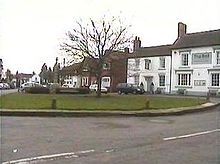  |
Warwickshire
County
Council Towns of Warwickshire —
Tanworth-in-Arden Tanworth-in-Arden Parish Council, Tanworth-in-Arden & Earlswood Annual Mike Hailwood Memorial Run to Tanworth |
|
| THE
BELL PUBLIC HOUSE |
 |
The
Green, Tanworth in Arden, Nr Solihull. |
Tel:01564
742212 |
| ST.MARY
MAGDALENE The 14th century Parish Church of Tanworth In Arden. |
 |
Tanworth
Green, East side, Tanworth-in-Arden, West Midlands, B94 5AL ST.MARY MAGDALENE CLICK |
|
| UMBERSLADE
HALL Umberslade Hall is a 17th century mansion converted into residential apartments situated near Tanworth in Arden, Warwickshire. It is a Grade II* listed building. The Archer family were granted the manor of Umberslade by Henry II in the 12th century and retained possession for some 600 years. The old manor house was replaced between 1695 and 1700 when Smith of Warwick built the new mansion for Andrew Archer, Member of Parliament for Warwickshire. The estate was sold in 1826 and from 1850 was leased by George Frederic Muntz, Member of Parliament for Birmingham. After his death in 1857 his son Sir Philip Albert Muntz (see Muntz Baronets) bought the estate and much enlarged and improved the Hall. In 1881 the household comprised thirty including thirteen resident servants. Frederick Ernest Muntz who succeeded to the estate in 1898 served as High Sheriff of Warwickshire in 1902 and as Deputy Lieutenant. The estate, much reduced, remains in the ownership of the Muntz family.From the 1960s the Hall was leased out to commercial tenants including from 1967-1972 BSA-Triumph Motorcycles (for their research & development department) and in 1978 it was converted into twelve apartments and two mews cottages.The Hall is home to a 1702 marble statue The Crouching Venus by John Van Nost the Elder. |
 |
Umberslade
Hall, Pound House Lane, Tanworth In Arden, UMBERSLADE HALL CLICK |
|
| THURLASTON The village is located a few miles south-west of Rugby and south of the M45 motorway. The village is in a cul-de-sac location; there is only one road into the village, connecting it with the B4429. Thurlaston overlooks the Draycote Water reservoir. The parish church is St. Edmund's. The most famous building, however, is probably the old windmill which is now used as a private house.Today it seems very much that the village and countryside are at one, the countryside trying to reclaim the village, the only way by road into the village is from the Coventry Road – just the one signposted turn off taking you to the heart of the village. |
 |
Thurlaston
Village website LIST OF THURLASTON BUSINESSES |
|
| ST EDMUND'S
CHURCH Thurlaston's church of St Edmund is a small, very domestic looking brick affair built in 1849 (by Carpenter) with a short tower capped by an odd truncated pyramid and open belfry. It was concived as a dual purpose church and school and looks it, the tower being intended as the headmaster's house (it still appears to be lived in, the first case I've found of a functioning church's tower used this way!) Only the east window is obviously ecclesiastical, and contains new glass (1990s) by Melanie Pope, but I couldn't see this as the place was padlocked shut (despite having heard this one was generally open). An attractive (sail-less) windmill stands in a plot just over the road. |
 |
Church
Lane, Thurlaston, CV23 9JY |
|
| STOCKS
IN THURLASTON Stocks at the end of Stocks Lane |
|||
| THURLASTON
WINDMILL Dating back to 1794 it was a working windmill until 1924 and converted into a house in the 1970’s.Sailess |
 |
SP469710 |
|
| WARWICK Human activity on the site of the town dates back to the Neolithic, when a settlement may have been established. From the 6th century onwards, Warwick has been continuously inhabited. According to the Anglo Saxon Chronicle, in the year 914 Anglo Saxon Ethelfleda Lady of the Mercians, daughter of king Alfred the Great and sister of king Edward the Elder of Wessex, built a burh or fortified dwelling at Warwick. It was one of ten burhs built to defend the kingdom of Mercia against the Danes. Warwick was chosen as the site for one of these fortifications because of its proximity to the important transport routes of the Fosse Way and the Avon. In the early 10th century a new shire was founded with Warwick as its administrative centre, giving the settlement new importance. The name 'Warwick' means "dwellings by the weir". In 1050 the Danes invaded Mercia and burned down much of Warwick including the nunnery (which stood on the site of the present day St Nicholas Church) William the Conqueror founded Warwick Castle in 1068 on his way to Yorkshire to deal with rebellion in the north. Building a castle within a pre-existing settlement could require demolishing properties on the site, and in the case of Warwick four houses were pulled down.[5] The castle was within the larger Anglo-Saxon burh and a new town wall was created close to the rampart of the burh. In the medieval period Warwick remained under the control of various Earls of Warwick, mostly of the Beauchamp family, becoming a walled town. Today the only remains of the town walls are the east and west gatehouses. The eastern gatehouse now serves as part of the King's High School, a sister institution to Warwick School. Warwick was not incorporated as a borough until 1545. The town's Priory was founded in 1142 on the site of the current Priory Park. During the English Civil War the town and castle were garrisoned for Parliament. The garrison, under Sir Edward Peyto, withstood a two week siege by the Royalists. Later musters from 1644 to 1646 record a garrison of up to 350 men under the command of Colonel William Purefoy and Major John Bridges. The middle of the 17th century also saw the founding of Castle Hill Baptist Church, one of the oldest Baptist churches in the world. |
  |
The Court House Jury Street Warwick CV34 4EW Email: touristinfo@warwick-uk.co.uk Warwick Tourist Information Centre Building History entry for Warwick Warwickshire's Railways – the history of the county's railways from 1838 to 1968 Saltisford Canal Trust: Warwick's local waterway charity Photos of Warwick and surrounding area on geograph |
Tel:
01926 492212 |
| ALL SAINTS
CHURCH Victorian Gothic Grade II* parish church Built by Miss Louisa Ann Ryland 1862/4 and designed by Sir George Gilbert Scott. Stained glass by Clayton and Bell and tabletomb by A W N Pugin. |
 |
Church
Road, Sherbourne, Warwick, CV35 8AR |
|
| BRIDGEHOUSE
THEATRE The Bridge House Theatre was opened by Dame Judi Dench in 2000, and since then it has grown into one of the area’s most popular venues. A mid-scale venue of 304 seats – it’s beautiful interior of wood and brick creates an attractive and intimate space for music and drama. Our audiences enjoy a wide-ranging repertoire of professional productions, presented alongside local community events and stunning performances from Warwick School Drama and Music students. |
 |
The
Bridge House Theatre, Warwick School, Myton Road, Warwick CV34 6PP BRIDGEHOUSE THEATRE CLICK See Our Theatre Website |
Tel: 01926 776 438 |
| CHARLECOTE
PARK Picturesque watermill on the river Avon, from about 1800. Now restored and producing stone ground flour by water power using two waterwheels. This is a particularly fine example of a fairly large watermill of lowland England, virtually unchanged since it was built in the heyday of watermills. |
 |
Hampton
Lucy, Warwick, CV35 8BB CHARLECOTE PARK CLICK |
Tel:
01789 842072 |
| CHARLECOTE
PARK Charlecote Park is one of the most beautiful areas of parkland anywhere in this region. Surrounded by good looking mature trees, the park has been landscaped in order to provide a charming and sweet smelling environment that is always blooming with colour. A fine place to spend a day with the family, the park is managed by the National Trust and has been open to the public for many years. |
 |
Warwick,
CV35 9ER CHARLECOTE PARK CLICK |
Phone:
+44 (0)1789 470277 - Fax: +44 (0)1789
470544 |
| THE COURT
HOUSE The Court House in Jury Street is an impressive 18th Century building that was both designed and built by Francis Smith between 1724 and 1731. The court house has a ballroom above it and a figure of Justice that was made by Thomas Stayner above the main doorway. The town council chamber still has original court room fittings including ironwork by Benjamin King and Thomas Paris. The court used to be the centre of the town’s elite social life with winter dancing assemblies and lectures being held there. |
 |
Jury
Street, Warwick, CV34 Warwick Tourist Information Centre |
Phone:
+44 (0)1926 411694 |
| FUSILIER
MUSEUM Visit the Royal Regiment of Fusiliers Museum (Royal Warwickshire) which tells the story of over 300 years of history of the County Regiment, from its raising in 1674 to the Fusiliers of today. The museum is situated in a 17th century Grade I listed house, which is regarded as one of the most important buildings in Warwick. The mediaeval Hospital of Saint John the Baptist was founded by the Earl of Warwick on the site around the year 1154. On the Dissolution of the Monasteries the land was passed to the Stoughton family. Between 1666 and 1670 Nathaniel Stoughton rebuilt the house very much as it is today. The two-storey house with attics for the servants has five distinctive bays; three ‘Dutch’ and two triangular gables. It is made from ‘Warwick stone’, the local sandstone. When it was new the house, with its grounds and gates, would have been very imposing, reflecting the importance of Nathaniel Stoughton. In 1791 it became a private school and later, during the 20th century, was taken into use as a military record office; it has been a museum since 1961. |
 |
St
John's House, Warwick, CV34 4NF FUSILIER MUSEUM CLICK |
Phone:
+44 (0)1926 491653 |
| HILL CLOSE
GARDENS This delightful network of individual Victorian gardens, separated by high hedges, has recently been restored using Heritage Lottery funding. Delightful summerhouses, gnarled old fruit trees, and heritage flowers and vegetables welcome the visitor to this tranquil spot. Buy plants and historic varieties of fruit and vegetables in season. Enjoy tea, coffee and cake in the new "sustainable" visitor centre. View the changing displays. Gifts for sale. Saturdays and Bank Holidays, 11-5; Fridays and Sundays 2-5. (Open- from April 6th ---- -Oct 14th 2012 ) |
 |
Bread
& Meat Close, Warwick CV34 6HF HILL CLOSE GARDENS CLICK |
Tel:
01926 493339 |
| LORD
LEYCESTER HOSPITAL The Lord Leycester Hospital (often known simply as the Lord Leycester) is a retirement home for ex-Servicemen in Warwick, England, that is located next to the West Gate, on High Street.The Chantry Chapel of St James was built in 1126 by Roger de Newburgh, 2nd Norman Earl of Warwick. In the late 14th century it was rebuilt by the 12th Earl of Warwick. He granted the benefice of the Chapel to the Guild of St George, a guild created on 20 April 1383 under licence from King Richard II. The Guild of St George was later joined there by the Guild of the Blessed Virgin, which had been based at the Collegiate Church of St Mary, forming the United Guilds of Warwick. Living quarters and reception, meeting, and dining halls were added to the chapel as a consequence. The Guildhall was built in 1450 by the 16th Earl of Warwick.The United Guilds were dispersed by King Henry VIII in 1546. However, their property had already been transferred to the Burgesses of Warwick by Thomas Oken, Master of the Guilds. The 1st Earl of Leicester acquired the buildings in 1571, founding therein a hospital for aged or injured soldiers and their wives, under royal charter from Queen Elizabeth I, run by 12 resident "Brethren" (originally soldiers) under the charge of a "Master", and funded from the income of various estates. This lasted until 1950.In 1956 the Corporation of the Master and Brethren of the Hospital was abolished by Act of Parliament, having operated under the original charter for nearly 400 years, and replaced with a board of Governors. On 3 November 1966 a restored Hospital with modernised quarters was opened by Queen Elizabeth The Queen Mother and today the Hospital is run by the Master, a retired officer of the Armed Forces. Eight ex-servicemen and their wives are provided with flats in return for their services. The Hospital is funded by visitor income, the original estates having been sold over the years. |
 |
60 High
Street Warwick CV34 4BH LORD LEYCESTER HOSPITAL CLICK |
Tel:
+44 (0) 1926 - 491422 |
| MACHADO
GALLERY The Machado Gallery is an early 18th century builders yard and cottage within the heart of the historic working village of Barford, near Warwick. Stunningly beautifully, it has been lovingly renovated over the last decade by its owner, sculptor-designer Sue Machado, who has used original and period materials and features to retain the character of the building. A two storey former joiners workshop, Sue’s former sculpture studio and the main house have been turned into gallery space showing showing a variety of one person and group exhibitions throughout the year. Enjoy this peaceful setting as an overnight guest in the B&B, or as a casual visitor and savour the chance of a really good cup of espresso Free Trade Coffee or freshly home made Cream Tea in the orangery kitchen overlooking the moat and the walled garden. 1 mile from junction 15 on M40. |
 |
9
Wellesbourne Road, Barford, Warwick, CV35 8EL MACHADO GALLERY CLICK |
Tel:
01926 624061 Mobile: 07715 109 609 |
| THE MILL
GARDEN The Mill Garden is a private garden adjacent to Warwick Castle measuring half an acre open to the public and situated on the bank of the River Avon in Warwick, It is owned by Julia Measures, whose family has owned the gardens since 1938 and whose father Arthur worked on it for 60 years. Its informal planting to highlight picturesque river views (and views of Warwick Castle in who's shadow it stands) has made this garden renowned among the United Kingdom's garden enthusiasts. The garden once stood by the bridge carried most of the traffic to Warwick over the River Avon but the bridge now lies in ruins. Also when the castle was being constructed the garden was often used as a stonemasons yard. It is not uncommon to see swans nesting near the garden |
 |
Mill
Street Warwick CV34 4HB THE MILL GARDEN CLICK |
Tel:
01926 492877 |
| OKEN'S HOUSE Oken’s House is so named because it was the home of Thomas Oken who was, as the plaque on the wall testifies, “a great benefactor to Warwick” who died in the house in 1573. The house used to also be the town’s doll museum which unfortunately closed in 2004. However, the house is worth visiting as it is a fine example of a timber-framed building. Thomas Oken is remembered for his charitable actions including the provision of almshouses for Warwick’s poorest people in the 16th Century. |
 |
Castle
Street , Warwick, CV34 OKEN'S HOUSE TEAROOMS CLICK |
Phone:
+44 (0)1926 495546 |
| PILLAR BOXES There are two unusual pillar boxes in Warwick that stand at the East and West gates of the city. They were cast in the mid 1800s in the shape of Doric columns by the Eagle Foundry in Birmingham. They date from a time when the design of pillar boxes was not standardised giving rise to experimental designs that included vertical instead of horizontal slits and strange shaped boxes. These pillar boxes have an attractive fluted design that is rare today. |
 |
East
Gate, Warwick, CV34 |
|
| PLAYBOX
THEATRE For 25 years Playbox Theatre has developed theatre for and with young people, placing at its heart young people as both artists and audience.Based at our custom designed complex ‘The Dream Factory’ in Warwick, we develop the skills, talent and confidence of young people through exciting and innovative methods including theatre, movement, circus, multimedia and extraordinary live events.Playbox reaches all ages, demographics and community through a very special programme of training, performance, enrichment through the arts and partnerships.Young artists push boundaries; creating original work which reflects our age, our values, our debates, our concerns, our humour and most importantly our dreams. We state what we think theatre should be, not what others think or expect, we break taboos and challenge labels that young people just don’t want. Our aspiration is to make new work, evoke a wild spirit and tackle new themes in original and moving ways. |
 |
The
Dream Factory, S helley Avenue, Warwick, CV34 6LE PLAYBOX THEATRE CLICK See Our Theatre Website |
Phone:
+44 (0)1926 419555 - Fax: +44 (0)1926
411429 |
| QUEENS OWN
HUSSARS MUSEUM Located within the medieval Lord Leycester Hospital, close to the town centre, this museum offers a comprehensive insight into the history of the regiment and the people that have served within it. Starting with its foundations in the late 17th Century, the museum uses a series of artefacts and documents to illustrate the progressions. Key exhibits include real weapon, uniforms, medals and a range of photographs and personal accounts of warfare. |
 |
60 High
Street, Warwick, CV34 4BH QUEENS OWN HUSSARS MUSEUM CLICK |
Phone:
+44 (0)1926 492035 - Fax: +44 (0)1926
492035 |
| SALTISFORD
CANAL TRUST The Saltisford Canal Trust would like to give you a warm welcome to the Saltisford Arm of the Grand Union Canal, in heart of the historic market town of Warwick. We are a small canal charity set up over 25 years ago to restore the canal arm which dates back to 1799, and is originally the terminus of the Warwick and Birmingham Canal. The Saltisford Canal Centre has been transformed by volunteers from a site of dereliction into a peaceful moorings, set in a series of gardens and orchards. The arm is home to a number of residential narrowboats, and also provides permanent, winter and visitor moorings within 10 minutes walk of the heart of Warwick. We have a range of facilities, which we hope you will use and enjoy, whether you are just mooring overnight, visiting on foot or staying longer. |
 |
The
Saltisford Warwick CV34 5RJ. SALTISFORD CANAL TRUST CLICK |
Tel:
+44 (0)1926 490006 Fax: 01926 490006 |
| ST.MARY'S
CHURCH St Mary’s Church is situated in the centre of Warwick and is famous for its beautiful Beauchamp Chapel where the medieval tomb of Richard Beauchamp can be found. Many of the Earls of Warwick are also buried in the church. Visitors can go inside the crypt which dates back to the 12th Century and see an original ducking stool which used to be a punishment in the medieval era. It was particularly used for so-called scolding women. Visitors can also climb the church tower which is worth it for the views over Warwick. |
 |
Old
Square, Warwick, CV34 4AB ST.MARY'S CHURCH CLICK |
Phone:
+44 (0)1926 400771 |
| ST JOHN'S
HOUSE MUSEUM St John’s House Museum contains a vast array of diverse displays and exhibitions that make the centre appeal to all ages. The Victorian Laundry allows you to try and identify the difference between a poser and a dolly, and get involved in hands on washes. The schoolroom takes visitors back in time to a strict and solemn classroom filled with books and instruments from the age. Other exhibits include an extensive Victorian artefacts library. |
 |
St
John's, Warwick, CV34 4NF ST JOHN'S HOUSE MUSEUM CLICK |
Phone:
+44 (0)1926 412021 - Fax: +44 (0)1926
419 840 |
| ST NICHOLAS
CHURCH Built in 1780 as a place of common worship, the Church is an active family Christian and social centre for an inclusive congregation of people of all ages, backgrounds and ethnic origins who enjoy sharing their beliefs wirth others of similar mind. The church has modern catering and toilet facilities, and lends itself to local parish social functions, including dinners and parties, and music concerts. It is an extraordinarily light and airy building, in which all the seating is easily cleared away for those purposes. |
 |
Church
Street Warwick CV34 4JD ST NICHOLAS CHURCH CLICK |
Tel:
01926 403940 |
| ST.NICHOLAS
PARK Includes a crazy golf course, amusement rides, children's play area, pony rides, outdoor paddling pool and boats for hire (summer only), tennis, football courts, recreation ground, indoor swimming pool and leisure centre, sports facilities, cafe, BMX track and Boules rink. |
 |
Banbury
Road Warwick CV34 4QY ST.NICHOLAS PARK CLICK |
Tel:
01926 495353 |
| WARWICK
CASTLE Britain’s Greatest Mediaeval Experience. Prepare for battle in the award winning “Kingmaker”, then descend into the darkness of the Dungeon or brave the Torture Chamber. Feel the weight of a sword in the Armoury and explore the impressive Towers and Ramparts. Visit the elegant State Rooms and “Royal Weekend Party 1898” and take a walk in the 60 acres of landscaped grounds and gardens. Fantastic special events take place throughout the year including jousting tournaments. |
 |
Warwick,
CV34 4QU WARWICK CASTLE CLICK |
Phone:
+44 (0)870 442 2000 - Fax: +44 (0)870
442 2394 |
| WARWICK
RACECOURSE Lying a few hundred yards from Warwick Castle, Warwick Racecourse retains its historic charm and character, offering a range of elegant hospitality suites and private boxes catering for parties from 10 to 100 guests - all with closed circuit television and Tote facilities and all with balconies overlooking the racecourse. Warwick enjoys a full racing calendar all year round with meetings taking place on weekdays and weekends, afternoons and evenings. The racecourse can offer both corporate clients and group organisers a wide range of options from hospitality and sponsorship on race day's to conference and event facilties throughout the year. The facilities at the course are renowned for comfort and luxury and are constantly being upgraded to meet the needs of our clients. We look forward to welcoming you to Warwick Racecourse. |
 |
Hampton
Street Warwick CV34 6HN Fax: 01926 403 223 Email :Warwick Racecourse WARWICK RACECOURSE CLICK See our Horse Racing Website |
Tel:
01926 491 553 |
| WARWICKSHIRE
MUSEUM A 17th century Market Hall housing traditional displays of Warwickshire geology, archeaology and natural history, including giant fossils, live bees and the famous Sheldon Tapestry Map. A huge brown bear will be the first to greet you in the Museum entrance, and there are wilder beasts to follow! Track the early history of Warwickshire and find the places you know on the Sheldon tapestry map. Also look out for ancient jewellery, fantastic fossils, bees and bugs. The ground floor exhibition gallery offers an exciting and varied programme of art and craft together with special seasonal exhibitions. Our knowledgable staff will be happy to answer any questions you may have and are there to ensure that you enjoy a quality experience during your visit. Before leaving, please visit our well stocked shop where you can purchase souvenirs, cards & gifts and educational items. You may also bring in items for identification by our Keepers of Collections. |
 |
Market
Hall Market Place Warwick CV34 4SA WARWICKSHIRE MUSEUM CLICK |
Tel: 01926 412 500 |
| WARWICKSHIRE
YEOMANRY MUSEUM This museum covers the history of the Warwickshire Yeomanry, one of the most historic parts of the British Army, from its formation in 1794 to 1954. There is an impressive collection of uniforms, weapons, memorabilia and a famous painting of the regiment by Lady Butler. There is a small library that holds the official records of the regiment open to the public also. |
 |
Jury
Street, Warwick, CV34 4EW WARWICKSHIRE YEOMANRY MUSEUM CLICK |
Phone:
+44 (0)1926 494837 - Mobile: +44
(0)1926 494837 |
| WELLESBOURNE Wellesbourne is a large village located around five miles from Stratford-upon-Avon. The name was first recorded in 862 as Wallesburam. It was later referred to as Walebourne in the Domesday Book. Wellesbourne was once two villages - Wellesbourne Mountford and Wellesbourne Hastings, the two villages being divided by the River Dene. In 1947 the two parishes were merged, and are now considered to be a single village. For these historical reasons Wellesbourne lacks a proper village centre. Perhaps the most significant event in Wellesbourne's history was the founding in 1872 of the first trade union for agricultural workers by Joseph Arch - an event which is still celebrated by an annual parade. There is a somewhat unusual memorial in the form of a plaque in the village bus shelter. Wellesbourne Market is very popular and is held on the airfield site every Saturday and bank holiday Monday. Wellesbourne gained recent publicity when Chedham's Yard, a historic agricultural building featuring a blacksmith's and wainwright's workshops, won BBC TV's Restoration Village series in 2006. Chedham's Yard is still being re-furbished using the funding awarded and should be open during 2012. |
 |
BBC
News
Article Chedhams Yard website Dene Valley U3A Ettington Road, Wellesbourne: CEG's proposals for housing History of the National Vegetable Research Station Photos of Wellesbourne and surrounding area on geograph.org.uk St Peter's Church website Wellesbourne Action Group website Wellesbourne Airfield website Wellesbourne CofE Primary School website Wellesbourne Parish Council website Wellesbourne Village website Wellesbourne Wanderers FC website Wellesbourne Cricket Club website Wellesbourne RFC website |
|
| AVON AIR
CENTRE Join us for a SCENIC PLEASURE FLIGHT in our Cessna light aircraft from Wellesbourne Airfield. Fly over Stratford upon Avon and over the picturesque Cotswold hills, with views of many pretty villages, castles and stately homes. Individuals or groups are welcome, children 6 years old and over are also welcome to fly with us, when accompanied by an adult. A scenic flight with Avon Air Centre Limited is sure to provide an exciting experience and a lasting memory of this beautiful part of England.Avon Air Centre Limited are approved to operate passenger flights by the UK Civil Aviation Authority, under Air Operator's Certificate Number GB2308. |
 |
Loxley
Lane, Wellesbourne Airfield, Wellesbourne, CV35 9EU AVON AIR CENTRE LTD CLICK |
Tel: 01926 678093 |
| WELLESBOURNE
AIRFIELD MARKET Wellesbourne market is one of the UK’s largest outdoor markets. Open every Saturday and Summer Bank Holiday Monday’s from 9am to 4pm. There is a vibrant atmosphere where you can wander around 500 stalls and find some real bargains. Quality is really important to us and we have a market office in the centre just for your feedback and comments. There is a vast variety of goods on sale for everyone, from clothes, gardening, toys, books, mobiles and food. A real family day out where you can pick up some bargains and enjoy some delicious food and drinks. We even have a blown up slide for the kids. We have plenty of free parking as we have up to 15,000 people attending every opening. Come to Wellesbourne market where there is something for everyone and be part of the banter with the traders and find a real bargain or two. Browse through our photo gallery and we look forward to seeing you at the market soon! 5 miles from Stratford upon Avon, Warwick or Leamington Spa. On the A429 and B4086. |
 |
Airfield
Estate Loxley Rd, Wellesbourne, Warwick CV35 9EU, UK WELLESBOURNE AIRFIELD MARKET CLICK |
Tel : 0788 325 8325 or 020 8950 9509 |
| WELLESBOURNE
WARTIME MUSEUM The museum is located in an underground emergency wartime command and control bunker, and houses a collection of aviation artefacts. Displays cover the history of Wellesbourne Mountford airfield, together with various aircraft components and memorabilia. There is a small aircraft park, including the nose of Vulcan XA903. This aircraft was used to test the Olympus engines of Concorde in the 1960s, and a small dedicated group of enthusiasts is trying to restore some of the additional test equipment used in this aircraft. Elsewhere on the airfield, Vulcan XM655 undertakes taxi runs on occasions. |
 |
Wellesbourne
Airfield, Control Tower Entrance, Loxley Lane, Wellesbourne, CV35 9EU WELLESBOURNE WARTIME MUSEUM CLICK |
Tel: 0121 777 3518 |
| WELLESBOURNE
WATERMILL One of the last remaining working flour mills in the country. The secluded and picturesque watermill has a daily demonstration of the mill, grinding the corn to flour. Sample the flour in the homemade cakes and scones, and enjoy a light lunch in the 200 year old barn. Parking for disabled. Wheelchair access to tearooms and around mil site but limited within mill. |
 |
Kineton
Road, Wellesbourne, Warwick, CV35 9HG WELLESBOURNE WATERMILL CLICK |


RADIO STATIONS IN WARWICKSHIRE
 Absolute Classic Rock Absolute Classic Rock classic rock
tracks classic rock
tracks available
on local DAB digital radio, in the
Coventry area available
on local DAB digital radio, in the
Coventry area listen
live on our audio pages listen
live on our audio pages |
Absolute Radio
60smusic covering
the decade of the sixtiesavailable
on local DAB digital radio,
in the Coventry arealisten live on our
audio pages |
BBC
Coventry and
Warwickshiretalk;
news and sport;
contemporary and
oldies 94.8
(Coventry)103.7
(Stratford-upon-Avon,
Warwickshire)104.0
(Atherstone
and Nuneaton)also
available on
local DAB
digital radio,
in the
Coventry arealisten live to
BBC Coventry
and
Warwickshire
on our audio
pages 94.8
(Coventry)103.7
(Stratford-upon-Avon,
Warwickshire)104.0
(Atherstone
and Nuneaton)also
available on
local DAB
digital radio,
in the
Coventry arealisten live to
BBC Coventry
and
Warwickshire
on our audio
pages |
Goldoldies
and classic
hits 1359
(Coventry and
Warwickshire)also
available on
local DAB
digital radio,
in the
Coventry arealisten live on our
audio pages 1359
(Coventry and
Warwickshire)also
available on
local DAB
digital radio,
in the
Coventry arealisten live on our
audio pages |
The Hillz FMcommunity
station 98.6
(Coventry)Kissr&b,
pop and
contemporary
danceavailable
on local DAB
digital radio,
in the
Coventry arealisten live on
our audio
pages |
Merciatop
40 chart music97.0
(Coventry)102.9
(Warwick and
Leamington
Spa,
Warwickshire)also
available on
local DAB
digital radio,
in the
Coventry arealisten live on our audio
pages Mercia on
facebook Mercia on
facebook This
station will
relaunch as
Free Radio in
April 2012 This
station will
relaunch as
Free Radio in
April 2012 |
Oak FMcontemporary
and classic
hits107.9
(Nuneaton,
Warwickshire
and Hinckley,
Leicestershire) |
Radio Pluscommunity
station 101.5
(Coventry) |
Punjabi Radioradio
for the
Punjabi
communityavailable
on local DAB
digital radio,
in the
Coventry area |
Rugby FMclassic
and current
chart music;
news and
information107.1
(Rugby,
Warwickshire) |
| Sunrise Radiomusic
and news for
the asian
communityavailable
on local DAB
digital radio,
in the
Coventry area |
Touch Radio 102.0contemporary
and classic
hits102.0
(Stratford-Upon-Avon,
Warwickshire) |
Touch Radio 96.2contemporary
hits96.2
(Coventry)also
available on
local DAB
digital radio,
in the
Coventry area |
Touch Radio 107.3contemporary
and classic
hits107.3
(Warwick &
Leamington
Spa,Warwickshire) |
Xfmmodern
rock music
from the last
ten yearsavailable
on local DAB
digital radio,
in the
Coventry arealisten live on our
audio pages |
FISHING
 If you are looking for a bit of Free Fishing in the UK Click on Picture to left |
 |
 |


 |
Buy a National County Card Here
Benefits for Golfers * Play over 1,000 courses at the members' guest rate or similar. * Get discounts at some of the top clubs - discounts that are often not available via any other scheme. * Support your Club - when you join, your golf club also receives £5* which can go towards either keeping membership fees lower or club development. * No more outlay on discount vouchers. * Full year card member benefits for only £24.95. * Our portfolio of clubs from all over the world is increasing daily. * Help golf clubs get more quality visitors and members and entice 'nomad' golfers to become full golf club members. CLICK ON CARD
TO THE LEFT FOR FULL DETAILS & TO BUY
|
Alcester Golf Centre, Stratford Road, Alcester, B49 6LN Ansty, Brinklow Road, Ansty, Coventry, CV7 9JL Atherstone, The Outwoods, Coleshill Road, Atherstone, CV9 2RL The Belfry, Wishaw, B76 9PR GREENFREE Bidford Grange, Stratford Road, Bidford-on-Avon, B50 4LY Boldmere, Monmouth Drive, Sutton Coldfield, Birmingham, BJ3 6JR Bramcote Waters, Bazzard Road, Bramcote, Nuneaton, CV11 6QJ City of Coventry (Brandon Wood), Brandon Lane, Coventry, CV8 3GQ Copt Heath, 1220 Warwick Road, Knowle, Solihull, B93 9LN Coventry, St Martin's Road, Finham Park, Coventry, CV3 6RJ Coventry Hearsall, Beechwood Avenue, Coventry, CV5 6DF Draycote Hotel & Whitefields, Coventry Road, Thurlaston, Rugby, CV23 9JR Edgbaston, Church Road, Edgbaston, Birmingham, B15 3TB Harborne, 40 Tennal Road, Harborne, Birmingham, B32 2JE Harborne Church Farm, Vicarage Road, Harborne, Birmingham, B17 0SN Hatchford Brook, Coventry Road, Sheldon, Birmingham, B26 3PY Haven Pastures Golf Club, Stratford Road, Henley-in-Arden, Warwickshire, B95 5QS Henley G&CC, Birmingham Road, Henley-in-Arden, B95 5QA GREENFREE |
Hilltop, Park Lane, Handsworth, Birmingham, B21 8LJ Ingon Manor, Ingon Lane, Snitterfield, Stratford-on-Avon, CV37 0QE GREENFREE Kenilworth, Crewe Lane, Kenilworth, CV8 2EA Ladbrook Park, Poolhead Lane, Tanworth-in-Arden, Solihull, B94 5ED Leamington & County, Golf Lane, Whitnash, Leamington Spa, CV31 2QA GREENFREE Marconi (Grange GC), Copsewood, Coventry, CV3 1HS Marriott Forest of Arden Hotel G&CC, Maxstoke Lane, Meriden, Coventry, CV7 7HR GREENFREE Maxstoke Park, Castle Lane, Coleshill, Birmingham, B46 2RD Menzies Welcombe Hotel, Warwick Road, Stratford-on-Avon, CV37 0NR Moor Hall, Moor Hall Drive, Four Oaks, Sutton Coldfield, B75 6LN Newbold Comyn, Newbold Terrace East, Leamington Spa, CV32 4EW North Warwickshire, Hampton Lane, Meriden, Coventry, CV7 7LL Nuneaton, Golf Drive, Whitestone, Nuneaton, CV11 6QF Oakridge, Arley Lane, Ansley Village, Nuneaton, CV10 9PH Olton, Mirfield Road, Solihull, B91 1JH Purley Chase, Pipers Lane, Ridge Lane, Nuneaton, CV10 0RB Pype Hayes, Eachelhurst Road, Walmley, Sutton Coldfield, B76 8EP Robin Hood, St Bernards Road, Solihull, B92 7DJ |
Rugby, Clifton Road, Rugby, CV21 3RD Shirley, Stratford Road, Monkspath, Shirley, Solihull, B90 4EW Sphinx, Sphinx Drive, Coventry, CV3 1WA Stonebridge Golf Centre, Somers Road, Meriden, CV7 7PL GREENFREE Stoneleigh Deer Park, The Old Deer Park, Coventry Road, Stoneleigh, CV8 3DR Stratford Oaks, Bearley Road, Snitterfield, Stratford-on-Avon, CV37 0EZ Stratford-on-Avon, Tiddington Road, Stratford-on-Avon, CV37 7BA Sutton Coldfield, 110 Thornhill Road, Sutton Coldfield, B74 3ER Tidbury Green, Tilehouse Lane, Shirley, Solihull, B90 1PT Walmley, Brooks Road, Wylde Green, Sutton Coldfield, B72 1HR Warwick, Warwick Racecourse, Warwick, CV34 6HW The Warwickshire, Leek Wootton, Warwick, CV35 7QT Welford On Avon Golf Course, Long Marston Rd, Welford on Avon, Stratford-upon-Avon, CV37 8EG West Midlands, Marsh House Farm Lane, Barston, Solihull, B92 0LB Widney, Saintbury Drive, Widney Manor, Solihull, B91 3SZ Windmill Village, Birmingham Road, Allesley, Coventry, CV5 9AL Wishaw, Bulls Lane, Wishaw, Sutton Coldfield, B76 9QW |
HORSE RIDING IN WARWICKSHIRE

 |
 |
|
| Atherstone | Holly Riding School Address: Holly Cottage, Hurley Common, Hurley, CV9 2LR More Information - Click This Link |
|||
| Coventry | Bubbenhall Bridge
Equestrian Centre Address: Bubbenhall Road, Bagington, CV8 3BB More Information - Click This Link |
|||
| Coventry | Castle Hill Riding School Address: Brandon, CV8 3HQ More Information - Click This Link |
|||
| Ettington | Rookery Team Pony Club Address: Rookery Farm, Rookery Lane, CV37 7TN More Information - Click This Link |
|||
| Kineton | Pittern Hill Stables Address: Pittern Hill House, CV35 0JF More Information - Click This Link |
|||
| Leamington Spa | Red House Farm Riding
School Address: Top Yard Red House Farm, Black Lane, CV32 7UA More Information - Click This Link |
|||
| Nr Coventry | Moor Farm Stables Address: Wall Hill Road, Corley Moor, CV7 8AP More Information - Click This Link |
|||
| Nr Rugby | Woodbine Stables Address: Woodbine Farm, Grandborough Fields, CV23 8BA More Information - Click This Link |
|||
| Nuneaton | Caldecote Riding School Address: Anker Cottage, Farm Caldecote, CV10 0TN More Information - Click This Link |
|||
| Radway | Radway Riding School Address: Great Grounds Farm, CV35 0UQ More Information - Click This Link |
|||
TENNIS IN WARWICKSHIRE
|
|
||||
| Alcester | Aston Cantlow | Atherstone Grove | Bidford-on-Avon | Clifton-upon-Dunsmore |
| Coleshill |
Curdworth | Harbury | Ilmington | Kenilworth |
| Leamington | Leamington Community Tennis
Partnership |
LMRCA (Rugby) | Napton Napton on the Hill | Newton Regis |
| Nuneaton | Priors Sports Club Southam | Rugby | Shipston on Stour |
Snitterfield Tennis |
| Stratford-on-Avon | Studley | Warwick | Warwick Boat Club | |

|
|||||
 |


|
 |
| www.merciatouristboard.org.uk
|
www.wessextouristboard.org.uk |
| A
|
C
|
View My Stats
www.tubeshine.com | www.triorbit.com | Add Your Link