 THE FA CUP THE FA CUP
The
oldest domestic football competition in the
world
("I used to be chairman of fa. Now I'm
Chairman of the F.A" - Joe Mears)
The
present
FA
Cup trophy is the fourth. The first, the
'little tin idol', was used from the inception
of the Cup in 1871–2 until it was stolen from
a Birmingham shoe shop window belonging to
William Shillcock while held by Aston Villa on
11 September 1895. It was never seen again.
The FA fined Villa £25 to pay for a
replacement. Almost 60 years later, the thief
admitted that the cup had been melted down to
make counterfeit half-crowns.
The second trophy was a
replica of the first, and was last used in
1910 before being presented to the FA's
long-serving president Lord Kinnaird. It was
sold at Christie's on 19 May 2005 for £420,000
(£478,400 including auction fees and taxes) to
David Gold, the chairman of West Ham United.
David Gold has loaned this trophy to the
National Football Museum which is housed in
Preston North End's Deepdale Stadium and it is
on permanent display to the public. A new,
larger, trophy was bought by the FA in 1911
designed and manufactured by Fattorini's of
Bradford and won by Bradford City in its first
outing, the only time a team from Bradford has
reached the final. This trophy still exists
but is now too fragile to be used, so an exact
replica was made by Toye, Kenning and
Spencer and has been in use since the
1992 final. A "backup" trophy was made
alongside the existing trophy in 1992, but it
has not been used so far, and will only be
used if the current trophy is lost, damaged or
destroyed. (An otherwise identical, smaller
replica was also made by Fattorini, the North
Wales Coast F A Cup trophy, contested annually
by members of that regional Association.)
The present F.A.Cup
|
|
The second FA Cup trophy, used
between 1896 and 1910.
|
 |
A
Brief History Of The English FA
Cup. The
Greatest Club Cup Tournament in The
World
At a
meeting held in the offices of The
Sportsman in London on 20th July 1871, a
proposal by FA Honorary Secretary Charles
Alcock "that it is desirable that a
Challenge Cup should be established in
connection with the Association, for which
all clubs belonging to the Association
should be invited to compete" met with
favour and was finally approved three
months later.
|
 |
The first FA Cup competition in season
1871-72 had fifteen entries. (This season
more than 600 took part.) Wanderers, a team
formed by ex-public school and university
players, won the first final 1-0 against
Royal Engineers at Kennington Oval. A crowd
of 2,000 attended the match and they each
paid one shilling for the privilege.
The original trophy, much smaller than the
present one, was made by Messrs Martin, Hall
& Co. and cost £20. In 1895, after Aston
Villa had won the competition, the cup was
stolen from the window of a firm of football
outfitters in Birmingham where it had been
placed on display. It was never recovered.
The present trophy, played for since 1992,
is the competition's fourth and an exact
replica of the third.
The FA Cup has become established as
one of the country's great sporting
institutions and is watched throughout
the world. It is now 132 years old and yet,
season by season, it generates tremendous
interest not only in the country of its
birth but all over the world. The history
and tradition of the competition, and the
pageantry of the Cup Final, is familiar to
millions.
All clubs in the Premier League and Football
League are automatically eligible, and clubs
in the next six levels of the English
football league system are also eligible
provided they have played in either the FA
Cup, FA Trophy or FA Vase competitions in
the previous season. Newly formed clubs that
start playing in a high league, such as AFC
Wimbledon or FC United of Manchester, may
not therefore play in the FA Cup in their
first season. All clubs entering the
competition must also have a suitable
stadium. It is very rare for top clubs to
miss the competition, although it can happen
in exceptional circumstances. Manchester
United withdrew from the 1999–2000
competition due to their participation in
the FIFA Club World Championship, although
this was highly controversial at the time.
Welsh sides that play in English
leagues are eligible, although since the
creation of the League of Wales there are
only six such clubs remaining: Cardiff City
(the only non-English team to win the
tournament, in 1927), Swansea City, Wrexham,
Merthyr Tydfil, Newport County and Colwyn
Bay. In the early years other teams from
Wales, Ireland and Scotland also took part
in the competition, with Glasgow side
Queen's Park reaching the final in 1884 and
1885 before being barred from entering by
the Scottish Football Association.
|
 The number of entrants has
increased greatly in recent years. In the
2004–05 season, 660 clubs entered the
competition, beating the long-standing
record of 656 from the 1921–22 season. In
2005–06 this increased to 674 entrants, in
2006–07 to 687, in 2007–08 to 731 clubs,
and for the 2008–09 and 2009–10
competitions it reached 762. By
comparison, the other major English
domestic cup, the League Cup, involves
only the 92 members of the Premier League
and Football League. The number of entrants has
increased greatly in recent years. In the
2004–05 season, 660 clubs entered the
competition, beating the long-standing
record of 656 from the 1921–22 season. In
2005–06 this increased to 674 entrants, in
2006–07 to 687, in 2007–08 to 731 clubs,
and for the 2008–09 and 2009–10
competitions it reached 762. By
comparison, the other major English
domestic cup, the League Cup, involves
only the 92 members of the Premier League
and Football League.
The number of entrants has increased
greatly in recent years. In the 2004–05
season, 660 clubs entered the competition,
beating the long-standing record of 656 from
the 1921–22 season. In 2005–06 this
increased to 674 entrants, in 2006–07 to
687, in 2007–08 to 731 clubs, and for the
2008–09 and 2009–10 competitions it reached
762. By comparison, the other major
English domestic cup, the League Cup,
involves only the 92 members of the Premier
League and Football League.
Three clubs have won consecutive FA Cups on
more than one occasion: Wanderers (1872,
1873 and 1876, 1877, 1878), Blackburn Rovers
(1884, 1885, 1886 and 1890, 1891), and
Tottenham Hotspur (1961, 1962 and 1981,
1982). Six clubs have won the FA Cup
as part of a League and Cup double, namely
Preston North End (1889), Aston Villa
(1897), Tottenham Hotspur F.C. (1961),
Arsenal (1971, 1998, 2002), Liverpool (1986)
and Manchester United (1994, 1996, 1999).
Arsenal and Manchester United share the
record of three doubles. Arsenal has won a
double in each of three separate decades
(70s, 90s, 00s). Manchester United's three
doubles in the 1990s highlights their
dominance of English football at the time.
 In 1993,
Arsenal became the first side to win both
the FA Cup and League Cup in the same
season, beating Sheffield Wednesday 2–1, in
both finals. Liverpool repeated this feat in
2001, as did Chelsea in 2007. In 1998–99,
Manchester United added the 1999 Champions
League crown to their double, an
accomplishment known as the European treble.
Two years later, in 2000–01, Liverpool won
the FA Cup, League Cup and UEFA Cup to
complete a cup treble. In 1993,
Arsenal became the first side to win both
the FA Cup and League Cup in the same
season, beating Sheffield Wednesday 2–1, in
both finals. Liverpool repeated this feat in
2001, as did Chelsea in 2007. In 1998–99,
Manchester United added the 1999 Champions
League crown to their double, an
accomplishment known as the European treble.
Two years later, in 2000–01, Liverpool won
the FA Cup, League Cup and UEFA Cup to
complete a cup treble.
|
Portsmouth have
the unusual accolade of holding the FA Cup
for the longest unbroken period of time;
having won the Cup in 1939, the next final
was not contested until 1946, due to the
outbreak of the Second World War. The FA
Cup has only been won by a non-English
team once in its history. Cardiff City
were the club to achieve this in 1927 when
they beat Arsenal in the final at Wembley.
They had previously made it to the final
only to lose to Sheffield United in 1925,
and lost another final to Portsmouth in
2008.
Since the
foundation of the Football League,
Tottenham Hotspur in 1901 have been the
only non-league winners of the FA Cup.
They were then playing in the Southern
League and were only elected to the
Football League in 1908. At that time the
Football League consisted of only two
18-team divisions; Tottenham's victory
would be comparable to a team playing at
the third level of the English football
pyramid (currently League One) winning
today. In the history of the FA Cup, only
eight teams who were playing outside of
the top level of English football have
gone on to win the whole competition, the
most recent being West Ham United, who
beat Arsenal in 1980. Excluding Tottenham
in 1901, these clubs were all playing in
the old Second Division, no other Third
Division or lower side having so far
reached the final.
Arguably,
one of the most famous of these 'upsets'
was when Sunderland A.F.C. beat Leeds
United 1–0 in 1973. Leeds were third in
the First Division and Sunderland were in
the Second. Three years later Second
Division Southampton also achieved the
same feat as Sunderland against First
Division Manchester United by the same 1–0
scoreline. The other non-top flight
winners of the FA Cup were Notts County in
1894, the first non-top flight team to win
the FA Cup since the inception of the
league; Wolverhampton Wanderers in 1908;
Barnsley in 1912; and West Bromwich Albion
in 1931. West Bromwich Albion remain the
only team to have won the FA Cup and
promotion from the second flight in the
same season.
Thus far
the FA Cup final has never been contested
by two teams from outside the top flight.
Uniquely, in 2007–08, three of the four
semi-finalists (Barnsley, Cardiff City and
West Bromwich Albion), were from outside
the top flight, although Portsmouth F.C.
went on to win it.
|
TV Soccer Watch Live
Football -
Watch
free live football streams online without a
satellite or cable subscription.
Click on
the F.A. Cup Final by Year
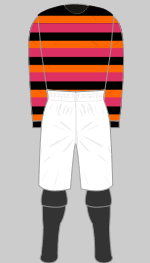 |
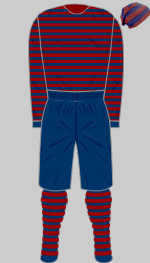
The
First FA Cup was won by the
Wanderers against the Royal
Engineers. Based in Battersea,
Wanderers won five FA Cup finals in
seven years including the first in
1872. Players were selected from the
various former public school clubs
but as these began to enter the FA
Cup, Wanderers were wound up in
1883. The Royal Engineers were
formed in 1862 under the captaincy
of Major F Marindin, the army club
were beaten FA Cup finalists in
1872, 1874 and 1878, winners in
1875. They were the first to adopt a
team approach to the game. |
 |
| Wanderers |
|
Royal
Engineers |
 The F.A.
Amateur Cup The F.A.
Amateur Cup
The FA Amateur Cup was an English football
competition for amateur clubs. It commenced
in 1893 and ended in 1974 when The Football
Association abolished official amateur
status.
Following the legalisation of
professionalism within football,
professional teams quickly came to dominate
the sport's main national knock-out
tournament, the FA Cup. In response to this,
the committee of the country's oldest club,
Sheffield F.C., suggested in 1892 the
organisation of a separate national cup
solely for amateur teams, and even offered
to pay for the trophy itself. The
Football Association (the FA) declined the
club's offer, but a year later decided to
organise just such a competition. N.L.
Jackson of Corinthian F.C. was appointed
chairman of the Amateur Cup sub-committee
and arranged for the purchase of a trophy
valued at £30.00, and the first tournament
took place during the 1893–94 season.
The entrants included 12 clubs representing
the old boys of leading public schools, and
Old Carthusians, the team for former pupils
of Charterhouse School, won the first final,
defeating Casuals. The old boy teams
competed in the Amateur Cup until 1902, when
disputes with the FA led to the formation of
the Arthur Dunn Cup, a dedicated competition
for such teams.
The Amateur Cup ended in 1974 when the FA
abolished the distinction between
professional and amateur clubs. The
strongest amateur teams instead entered the
FA Trophy, which had been set up five years
earlier to cater for those teams outside The
Football League which were professional
rather than amateur. A new competition, the
FA Vase, was set up to cater for the
remaining amateur clubs, and was generally
regarded as a direct replacement for the old
competition.
Bill Regan (Romford 1948-49) is believed to
have been the first ever American-born
individual to play in the FA Amateur Cup
final which was itself the first to have
been played at Wembley Stadium.
The first tournament attracted 81 entrants,
with three qualifying rounds used to reduce
the number down to 32 for the first round
proper. For the following season, the
previous season's semi-finalists joined at
the first round proper along with other
leading clubs chosen by the FA, with the
numbers made up by teams progressing through
the qualfying rounds. This remained
the standard format until 1907, when the
number of entrants to the first round was
doubled to 64 and the number of rounds prior
to the semi-finals increased to four. The
competition continued under this format
until it was discontinued in 1974.
Wembley Stadium was the venue for the final
between 1949 and 1974.
Matches in the Amateur Cup were played at
the home ground of one of the two teams, as
decided when the matches are drawn.
Occasionally games were moved to other
grounds. In the event of a draw, the replay
was played at the ground of the team who
originally played away from home. The second
replay, and any further replays, were
usually played at neutral grounds.
The final was held at various different
grounds in the early years of the
competition, with a venue located somewhere
in between the home towns of the two
participating clubs usually chosen. After
the Second World War the final moved to
Wembley Stadium, and was played there every
year until the competition ended. In the
1950s attendances for the final reached
100,000, comparable to the FA Cup final
itself.
Almost all of the winners over the years
were from either the Isthmian League, based
in London and the Home Counties, or the
Northern League, based in North East
England, with Bishop Auckland the most
successful club with 10 wins. Amateur Cup
winners who later turned professional and
gained entry to The Football League include
Wimbledon, Wycombe Wanderers and Barnet.
 |
 |
 |
 |
Bishop
Auckland
|
Wycombe
Wanderers 1930-31
|
Hendon
1964-65
|
Crook
Town 1900-01
|
 |
 |
|
|
| Kingstonian
1932-33 |
Barnet
1959
|
Woking
1957
|
Pegasus
1951
|
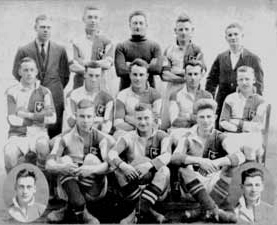
THE
PEGASUS
PHENOMENON
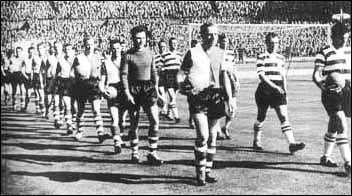
Pegasus
FC were unique and their like will never
be seen again.
Giants of the
amateur game in the 1950s Pegasus titanic
Amateur Cup Final clash with the mighty
Bishop Auckland provided the highlight of
the decade yet the club itself existed for
only 15 years.
But the
Pegasus FC story is one of great
achievement on the field of play and their
decline due more to a changing university
culture rather than inadequacy on the
pitch. The brainchild of
Harold ‘Tommy’ Thompson, who later become
chairman of the Football Association,
Pegasus FC were a team made up of players
from both Oxford and Cambridge
universities.
Their ethos was to rekindle the Corinthian
spirit within football and their brief was
to compete in the FA Amateur Cup – two
objectives that they managed to achieve
very successfully. The club would
take part in no league competitions but
would prepare for their cup matches by
playing friendly matches although the
players would still turn out for their own
universities and club sides.
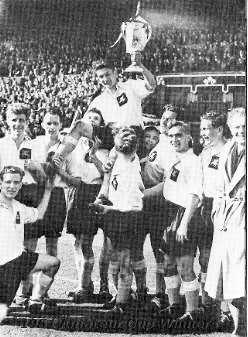
The 1951 Cup
Final was eagerly awaited as it pitted the
new ‘glamour’ boys Pegasus against the
granite-hard northern giants of Bishop
Auckland. A
record crowd of 100,000 packed into
Wembley Stadium and witnessed a thrilling
match with Pegasus holding on for a 2-1
victory.
Wembley again hosted
Pegasus FC in 1953 and another capacity
crowd saw the university men hammer
Harwich and Parkestone 6-0, the match
being over as a contest inside 15 minutes
with Pegasus already two goals to the
good.
Unbelievably, Pegasus FC
had won the Amateur Cup twice within five
years of being formed with the explicit
intent of doing just that.
Included in their Cup
winning line-ups were John Tanner
(Charterhouse), Tony Pawson
(Winchester), Donald
Carr
(Repton) and Ken Shearwood
(Shrewsbury),
all of whom played in
both Finals. They were
joined in the 1953 Final
by Reg Vowells
(Brentwood) and G.H
McKinna
(Manchester GS). Tanner
and Pawson were both
England Amateur
Internationals, while
Shearwood subsequently
became Master in charge
of Football at Lancing
College. Another England
amateur international
and Pegasus player of
the late 1950s, Robin
Trimby (Forest),
ran football at
Shrewsbury School for 21
years.
Dennis
Saunders,
the
captain became a Master at
Malvern College & Head of
Lillishaw Academy .Vic Buckingham, became
Manager of West Bromwich Albion and
Fulham . Doug Insole was an England
Cricketer and President of the
MCC. Gerry
Alexander, the West Indies
wicketkeeper.
Jonathan Clegg, Harry Potts.
Gorden
McKinna .
|
| F.A.
Amateur
Cup Winners and Runner-up, 1893 to 1974 |
| Season |
Winner |
Runner-up |
Result |
Ground |
| 1893-94 |
Old Carthusians |
Casuals |
2-1 |
Athletic Ground,
Richmond |
| 1894-95 |
Middlesbrough |
Old Carthusians |
2-1 |
Headingley Stadium |
| 1895-96 |
Bishop Auckland |
R A (Portsmouth) |
1-0 |
Walnut Street, Leicester |
| 1896-97 |
Old Carthusians |
Stockton |
1-1, 4-1 |
Tufnell Park &
Feethams |
| 1897-98 |
Middlesbrough |
Uxbridge |
2-1 |
Crystal Palace |
| 1898-99 |
Stockton |
Harwich & Parkeston |
1-0 |
Linthorpe Road,
Middlesbrough |
| 1899-1900 |
Bishop Auckland |
Lowestoft Town |
5-1 |
Leicester |
| 1900-01 |
Crook Town |
King's Lynn |
1-1, 3-0 |
Dovercourt &
Ipswich
|
| 1901-02 |
Old Malvernians |
Bishop Auckland |
5-1 |
Headingley Stadium |
| 1902-03 |
Stockton |
Oxford City |
0-0, 1-0 |
Reading
& Feethams
|
| 1903-04 |
Sheffield |
Ealing |
3-1 |
Bradford |
| 1904-05 |
West Hartlepool |
Clapton |
3-2 |
Shepherd's Bush |
| 1905-06 |
Oxford City |
Bishop Auckland |
3-0 |
Stockton-on-Tees |
| 1906-07 |
Clapton |
Stockton |
2-1 |
Stamford Bridge |
| 1907-08 |
Depot Battallion, R E |
Stockton |
2-1 |
Bishop Auckland |
| 1908-09 |
Clapton |
Eston United |
6-0 |
Ilford |
| 1909-10 |
R M L I Gosport |
South Bank |
2-1 |
Bishop Auckland |
| 1910-11 |
Bromley |
Bishop Auckland |
1-0 |
Herne Hill |
| 1911-12 |
Stockton |
Eston United |
0-0, 1-0 |
Ayresome Park |
| 1912-13 |
South Bank |
Oxford City |
1-1, 1-0 |
Reading & Bishop
Auckland |
| 1913-14 |
Bishop Auckland |
Northern Nomads |
1-0 |
Leeds |
| 1914-15 |
Clapton |
Bishop Auckland |
1-0 |
New Cross |
| 1915-19
- Competition not held due to World War I |
| 1919-20 |
Dulwich Hamlet |
Tufnell Park |
1-0 |
The Den |
| 1920-21 |
Bishop Auckland |
Swindon Victoria |
4-2 |
Ayresome Park |
| 1921-22 |
Bishop Auckland |
South Bank |
5-2 |
Ayresome Park |
| 1922-23 |
London Caledonians |
Evesham Town |
2-1 |
Crystal Palace |
| 1923-24 |
Clapton |
Erith & Belvedere |
3-0 |
The Den |
| 1924-25 |
Clapton |
Southall |
2-1 |
The Den |
| 1925-26 |
Northern Nomads |
Stockton |
7-1 |
Roker Park |
| 1926-27 |
Leyton |
Barking Town |
3-1 |
The Den |
| 1927-28 |
Leyton |
Cockfield |
3-2 |
Ayresome Park |
| 1928-29 |
Ilford |
Leyton |
3-1 |
Arsenal Stadium |
| 1929-30 |
Ilford |
Bournemouth Gasworks
Athletic |
5-1 |
Boleyn Ground |
| 1930-31 |
Wycombe Wanderers |
Hayes |
1-0 |
Arsenal Stadium |
| 1931-32 |
Dulwich Hamlet |
Marine |
7-1 |
Boleyn Ground |
| 1932-33 |
Kingstonian |
Stockton |
1-1, 4-1 |
Champion Hill
& Feethams |
| 1933-34 |
Dulwich Hamlet |
Leyton |
2-1 |
Boleyn Ground |
| 1934-35 |
Bishop Auckland |
Wimbledon |
0-0, 2-1 |
Middlesbrough &
Stamford Bridge |
| 1935-36 |
Casuals |
Ilford |
1-1, 2-0 |
Selhurst Park &
Boleyn Ground |
| 1936-37 |
Dulwich Hamlet |
Leyton |
2-0 |
Boleyn Ground |
| 1937-38 |
Bromley |
Erith & Belvedere |
1-0 |
The Den |
| 1938-39 |
Bishop Auckland |
Willington |
3-0 |
Roker Park |
| 1939-45
- Competition not held due to World War II |
| 1945-46 |
Barnet |
Bishop Auckland |
3-2 |
Stamford Bridge |
| 1946-47 |
Leytonstone |
Wimbledon |
2-1 |
Arsenal Stadium |
| 1947-48 |
Leytonstone |
Barnet |
1-0 |
Stamford Bridge |
| 1948-49 |
Bromley |
Romford |
1-0 |
Wembley Stadium |
| 1949-50 |
Willington |
Bishop Auckland |
4-0 |
Wembley Stadium |
| 1950-51 |
Pegasus |
Bishop Auckland |
2-1 |
Wembley Stadium |
| 1951-52 |
Walthamstow Avenue |
Leyton |
2-1 |
Wembley Stadium |
| 1952-53 |
Pegasus |
Harwich & Parkeston |
6-0 |
Wembley Stadium |
| 1953-54 |
Crook Town |
Bishop Auckland |
2-2,2-2,1-0 |
Wembley Stadium & St
James' Park & Ayresome Park |
| 1954-55 |
Bishop Auckland |
Hendon |
2-0 |
Wembley Stadium |
| 1955-56 |
Bishop Auckland |
Corinthian-Casuals |
1-1, 4-1 |
Wembley Stadium &
Ayresome Park |
| 1956-57 |
Bishop Auckland |
Wycombe Wanderers |
3-1 |
Wembley Stadium |
| 1957-58 |
Woking |
Ilford |
3-0 |
Wembley Stadium |
| 1958-59 |
Crook Town |
Barnet |
3-2 |
Wembley Stadium |
| 1959-60 |
Hendon |
Kingstonian |
2-1 |
Wembley Stadium |
| 1960-61 |
Walthamstow Avenue |
West Auckland Town |
2-1 |
Wembley Stadium |
| 1961-62 |
Crook Town |
Hounslow Town |
1-1, 4-0 |
Wembley Stadium &
Ayresome Park |
| 1962-63 |
Wimbledon |
Sutton United |
4-2 |
Wembley Stadium |
| 1963-64 |
Crook Town |
Enfield |
2-1 |
Wembley Stadium |
| 1964-65 |
Hendon |
Whitby Town |
3-1 |
Wembley Stadium |
| 1965-66 |
Wealdstone |
Hendon |
3-1 |
Wembley Stadium |
| 1966-67 |
Enfield |
Skelmersdale United |
0-0, 3-0 |
Wembley Stadium &
Maine Road |
| 1967-68 |
Leytonstone |
Chesham United |
1-0 |
Wembley Stadium |
| 1968-69 |
North Shields |
Sutton United |
2-1 |
Wembley Stadium |
| 1969-70 |
Enfield |
Dagenham |
5-1 |
Wembley Stadium |
| 1970-71 |
Skelmersdale United |
Dagenham |
4-1 |
Wembley Stadium |
| 1971-72 |
Hendon |
Enfield |
2-0 |
Wembley Stadium |
| 1972-73 |
Walton & Hersham |
Slough Town |
1-0 |
Wembley Stadium |
| 1973-74 |
Bishop's Stortford |
Ilford |
4-1 |
Wembley Stadium |
Summary of winners
| Barnet |
Bishop Auckland |
Bishop's
Stortford |
Bromley |
Clapton |
Crook Town |
| Depot Bn., Royal Engineers |
Dulwich Hamlet |
Enfield |
Hendon |
Ilford |
Kingstonian |
| Leyton |
Leytonstone |
London
Caledonians |
Middlesbrough |
North Shields |
Northern Nomads |
| Old Carthusians |
Old Malvernians |
Oxford City |
Pegasus |
RMLI Gosport |
Sheffield |
| Skelmersdale
United |
South Bank |
Stockton |
Walthamstow
Avenue |
Walton
& Hersham |
Wealdstone |
| West Hartlepool |
Willington |
Wimbledon |
Woking |
Wycombe
Wanderers |
Casuals |
10. Bishop Auckland, 5. Clapton, Crook Town, 4. Dulwich Hamlet, 3. Bromley, Hendon, Leytonstone,
Stockton 2.
Enfield, Ilford, Leyton, Middlesbrough, Old
Carthusians, Pegasus, Walthamstow Avenue
1. Barnet, Bishop's
Stortford, Casuals, Depot Bn. Royal Eng.,
Kingstonian, London Caledonians, North
Shields, Northern Nomads, Old Malvernians,
Oxford City, RMLI Gosport, Sheffeld,
Skelmersdale United, South Bank,
Walton & Hersham, Wealdstone, West
Hartlepool, Willington, Wimbledon, Woking,
Wycombe Wanderers |
TV Soccer Watch Live
Football
-
Watch free
live football streams online without a satellite or
cable subscription.
CEO E-mail
addresses for UK Football Clubs
| Football Clubs |
Contact Name and E-mail
Address
(Click on the blue text) |
Website (www) | Tel  | Twitter
  | Facebook
  | YouTube | YouTube  | Google Map
  | Customer Services (CS) | Customer Services (CS) |
Notes |
| Arsenal FC |
Ivan Gazidis, Chief
Executive
|
www
CS
 CS CS |
Majority owned by KSE UK
(Stan Kroenke)
|
| Aston Villa FC |
Paul Faulkner, Chief Executive
|
www
CS |
|
| Barnsley FC |
Patrick Cryne, Owner
|
|
|
| Chelsea FC |
Ron Gourlay, Chief Executive
|
www |
|
| Doncaster Rovers FC |
|
|
|
| Eastleigh FC |
Stewart Donald, Chairman
(Bio) |
www |
|
| Everton FC |
Robert Elstone, Chief
Executive
|
www |
|
| Fulham FC |
Alistair Mackintosh,
Chief Executive
(Bio) |
www
CS |
|
| Glasgow Celtic FC |
Tony Hamilton, Digital
Director
|
www |
|
| Glasgow Rangers FC |
Charles Green, Chief Executive
|
www |
|
| Leeds United FC |
Ken Bates, Chairman
|
www |
|
| Liverpool FC |
John Henry, Owner
|
www |
|
| Liverpool FC |
Ian Ayre, Managing Director
|
www |
|
| Maidenhead Revolution FC |
Kieran Smith, Chairman and
Secretary
|
www
CS |
|
| Manchester City FC |
Ferran Soriano, Chief
Executive
|
www
CS |
|
| Manchester United FC (Man
Utd) |
Joel Glazer, Chairman
|
www |
|
| Manchester United FC (Man
Utd) |
Amy Thomas, Customer Care
Manager
|
www |
|
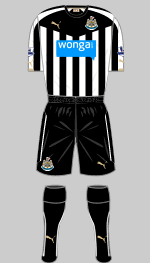
| Newcastle United FC |
Mike Ashley, Owner
|
www |
|
| Norwich City FC |
David McNally, Chief
Executive
@davidmcnally62
|
www |
|
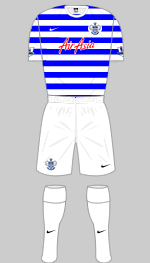
| Queens Park Rangers (QPR)
FC |
Philip Beard, CEO
@philipb1
|
www |
|
| Reading FC |
Nigel Howe
|
www
CS |
|
| Sheffield United FC |
|
|
|
| Sheffield Wednesday FC |
|
|
|
| Southampton FC |
Nicola Cortese, Executive
Chairman
|
www |
|
| Stoke City FC |
Tony Scholes, Chief
Executive
|
www |
|
| Sunderland AFC |
Margaret Byrne, Chief
Executive
|
www |
|
| Swansea City AFC |
|
www |
|
| Swindon Town FC |
Nicholas Watkins, Chief
Executive
|
www |
|
| Tottenham Hotspur FC
(Spurs) |
Daniel Levy, Chairman
|
www |
|
| Truro City FC |
|
|
|
| West Bromwich Albion FC |
|
|
|
| West Ham United FC |
|
www |
|
| Wigan Athletic FC |
|
www |
|
| 16 e-mail addresses found |
|
|
|










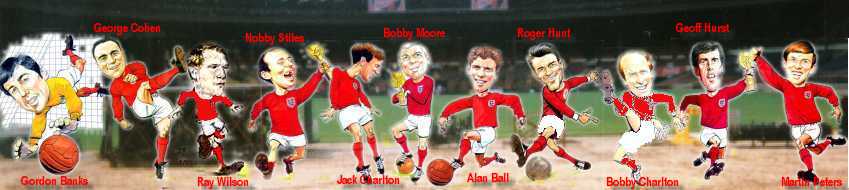
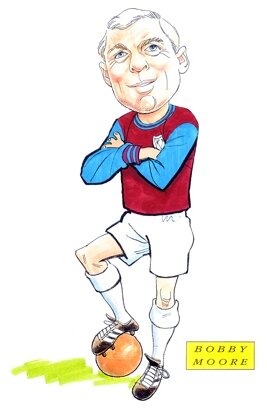
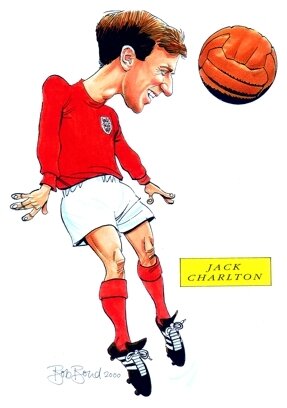
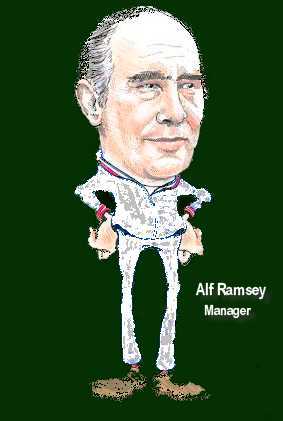 1966: Football glory for
England
1966: Football glory for
England
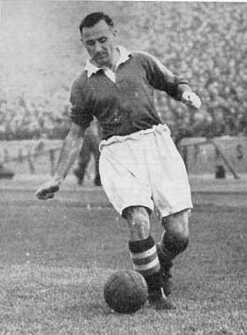
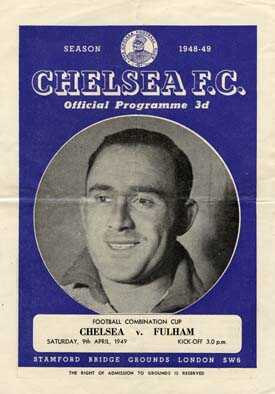





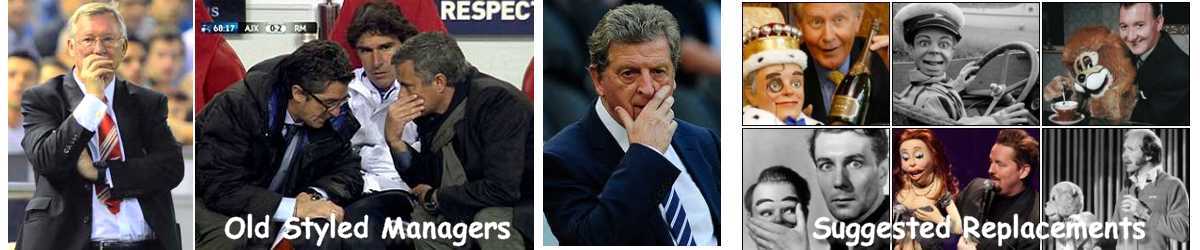

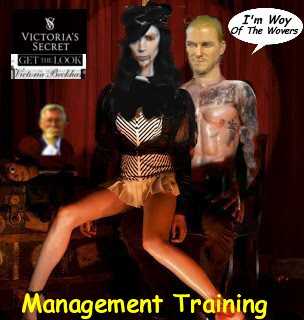 Have you noticed the Managers on
television? Hands over their mouths hiding
what they are saying from the gaze of TV
cameras. The intrusion is ruining the game
with the cameras everywhere. So a canny
Chairman should beat them at their own game.
Instead of apointing a New Manager he can employ a
ventriloquist! or Ventriloquism can become
part of the certificate for prospective
managers. He might even be able to speak
English. Do you remember when it was the
Spanish who employed Ron Atkinson , John Toshack
and Howard Kendall as Managers? These days
few of the Premier managers are British. Even Sky
have just employed James Carragher and no one
outside Liverpool understanda a word he
says. Commercialism has taken over so much
that Sky run a suble advertising campaign... In
each play-off they advertise a car manufacturer.
We mean Brad-
Have you noticed the Managers on
television? Hands over their mouths hiding
what they are saying from the gaze of TV
cameras. The intrusion is ruining the game
with the cameras everywhere. So a canny
Chairman should beat them at their own game.
Instead of apointing a New Manager he can employ a
ventriloquist! or Ventriloquism can become
part of the certificate for prospective
managers. He might even be able to speak
English. Do you remember when it was the
Spanish who employed Ron Atkinson , John Toshack
and Howard Kendall as Managers? These days
few of the Premier managers are British. Even Sky
have just employed James Carragher and no one
outside Liverpool understanda a word he
says. Commercialism has taken over so much
that Sky run a suble advertising campaign... In
each play-off they advertise a car manufacturer.
We mean Brad-















![[ image: Warren Mitchell as Alf Garnett:
Now he lives in Australia]](http://news.bbc.co.uk/olmedia/190000/images/_192615_alf_garnett_correct_portrait_150.jpg)




























































![[ image: Ken Richardson:
Faces jail sentence]](http://news.bbc.co.uk/olmedia/260000/images/_264166_richardson150.jpg)
























































 Burton
Albion
Burton
Albion


 Torquay United


 Football
League Clubs
Football
League Clubs










 The
Informed Investor
The
Informed Investor 
 THE BATTLE
OF STAMFORD BRIDGE
THE BATTLE
OF STAMFORD BRIDGE