 THE
BIG BRUM - BIRMINGHAM THE
BIG BRUM - BIRMINGHAM
Mercia Tourist Board
Official Guide
Big
Brum
is the local name for the clock tower on
the Council House .The
clock tower is sufficiently important in the
public consciousness of Birmingham people
that it has a name. Brum is the local term
for the town, the people and the dialect.
The name refers to the clock and tower, not
only the bell. The bell rings with Westminster Chimes
similar to Big Ben in London. |
|
website:
www.merciatouristboard.org.uk
24 hour
Hotline Tel: +44(0) 845 868
2810
Fax :
+44(0) 845 862 1954
Click
here to contact us
Over
380 Million Views to the Mercia Tourist
Board and The Wessex Tourist Board
WE DO NOT CHARGE FOR ANY OF
OUR SERVICES- ANY PROCEEDS ARE
GIVEN TO LOCAL CHARITIES

I'm
Sammy, Your Webmistress.
|
 THE
MERCIA TOURIST BOARD
THE
MERCIA TOURIST BOARD
 Our
Group
has
generated
over
380 million visits to our sites
since 1999, and this is your
opportunity to participate in
the success. Join up
with these leading UK advertising
sites to maximise your website's
viewing in Britain.
Click on the appropriate banners or
Links below.
Our
Group
has
generated
over
380 million visits to our sites
since 1999, and this is your
opportunity to participate in
the success. Join up
with these leading UK advertising
sites to maximise your website's
viewing in Britain.
Click on the appropriate banners or
Links below. |
|
|
he Comprehensive Website for the Ancient
English Kingdom of Mercia
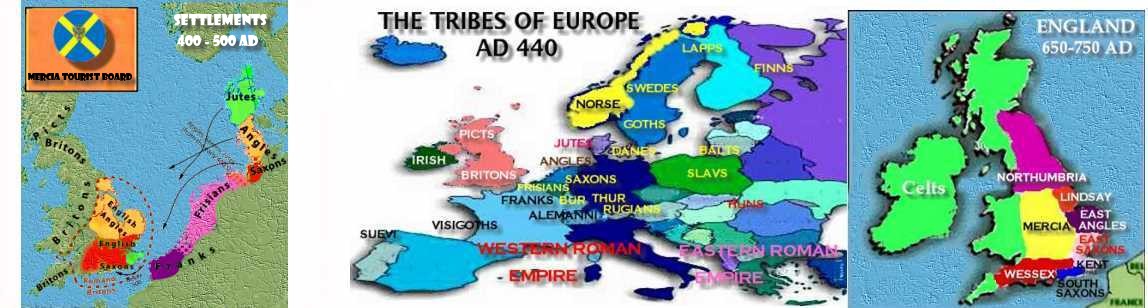
Mercia, sometimes spelled Mierce , was
one of the kingdoms of the Anglo-Saxon
heptarchy, in what is now the Midlands region of
England, with its heart in the Trent valley and
its tributary streams. This site shows
places of Interest & Events in
Birmingham
Click on Your search
THE
ANGLES HAVE LANDED
The
Angles came here for a visit 1515
years ago and liked it so much they
have stayed.
According
to
sources such as the History of Bede, after
the invasion of Britannia, the Angles
split up and founded the kingdoms of the
Nord Angelnen (Northumbria), Ost Angelnen
(East Anglia), and the Mittlere Angelnen
(Mercia). Confirmation is afforded
by English and Danish traditions relating
to two kings named Wermund and Offa of
Angel, from whom the Mercian royal family
claimed descent and whose exploits are
connected with Angeln, Schleswig, and
Rendsburg. Danish tradition has preserved
record of two governors of Schleswig,
father and son, in their service, Frowinus
(Freawine) and Wigo (Wig), from whom the
royal family of Wessex claimed descent.
During the 5th century, the Anglii invaded
Great Britain, after which time their name
does not recur on the continent except in
the title of Suevi Angili.
Our Group has generated over 380 million
visits to our sites since 1999, and this
is your opportunity to participate in the
success. Join up with these leading UK
advertising sites to maximise your website's
viewing in Britain.

The History
of Birmingham.
|
 Birmingham's
past undoubtably goes back as far as the Bronze
age and beyond. However, very little remains
from this era except the scattered flint stones
and bronze artifacts that can be found in the
city museum. Early Roman military roads have
passed through the region. Anglo-Saxon tribes
started to settle in the region around 700 A.D.
Tribes such as the Hwicce and Anglian Mercians
started to make the area their permanent home. Birmingham's
past undoubtably goes back as far as the Bronze
age and beyond. However, very little remains
from this era except the scattered flint stones
and bronze artifacts that can be found in the
city museum. Early Roman military roads have
passed through the region. Anglo-Saxon tribes
started to settle in the region around 700 A.D.
Tribes such as the Hwicce and Anglian Mercians
started to make the area their permanent home.
Evidence of Saxon settlement is apparent from
the name endings of some of Birmingham's well
known localities. The suffix -ley means clearing
in a forest. Therefore Selly, Yardley, Moseley
and Warley are likely to have been Saxon
clearings. Other place names also carry the
names of their founders. The town of Birmingham
was a hamlet hence ending in ham. The followers
of the ingas of Birm or Beorma completes the
equation and demonstrates how many town names
carry the names we have today. Medieval and
subsequent Norman occupation also added to the
variety of interesting place names, the origin
of which is often buried in a murky past. An
example of medieval remains can be found at
Weoley Castle.
The
Domesday Survey of 1086 (Domesday Book)
Leading up to the time of the Domesday
Book, the independence of the scattered
communities had started to fall under the
control of the large landowners. Dudley Castle
under the Norman William Fitz Ansculf was a
prominent influence over the region. The
Domesday book of 1086 values Birmingham manor at
£1. Peter de Birmingham, holder of a manor worth
considerably less than neighbouring areas such
as Yardley and Handsworth, was the first
recorded Birmingham. At the time there were five
villagers and four smallholders with two
ploughs. The most populous area at Aston records
43 adults.
Aston
Parish History
The next recorded entry of
significance comes in 1166 when Peter de
Birmingham bought the right to hold a weekly
market in his castle. The market prospered and
Peter laid the foundations of the town of
Birmingham. In 1232 a group of citizens
formalised an agreement with William de
Birmingham which freed them from the compulsory
haymaking duties. The tradesmen and merchants
were almost undoubtedly involved in the new and
lucrative cloth industry. Birmingham had started
its long and winding road to manufacturing.
Birmingham
on
the Map
Birmingham continued to expand and
by mid 1300's the town was listed as third town
in size in the county of Warwickshire. Coventry
and Warwick were larger. Aston, once the larger
settlement now became Aston beside
Birmingham.
|
The Birmingham market grew from
strength to strength with traders selling their
cloth ware and metal goods.
The castle of Birmingham, a focal point and
power base for the town was influential in
providing assistance for new chapel's, the Guild
of the Holy Cross in 1392 and a chapel of St.
John the Baptist at Deritend for the
parishioners of Deritend and Bordesley. Between
1400 and 1450 a new Guildhall and a school were
added. Birmingham had its first eductational
facility. The castle's dominance was not to
last. After a period of decline the castle lost
its importance and influence.
At the time of Edward de Birmingham in the
1530's the manor was lost after Edward made
enemies at court who confiscated his property.
He spent 4 years in the tower of London and by
1538 he had died. The end of a family line, his
wife Elizabeth continued to live in the town for
some time after Edward's unfortunate downfall.
The manor, a possession of the crown, later
passed to Lord Lisle of Dudley in 1545. Lord
Lisle later became the Duke of Northumberland
and the most powerful man in England during the
years of Edward VI.
Birmingham was becoming more of a town in its
own right. No longer under such heavy influence
of the whims of the current landlord the
officials of the town could plan its destiny
with little interference. Trade and
manufacturing industry was starting to take
hold. Birmingham was already known for its
metalworking. In 1511 the Clerk of Ordanance
placed an order for horseshoes and weaponry for
the Royal Army. Trade links were being forged
with East Anglia and Bristol. The tanning
industry was also thriving.
Birmingham
Expands
In the early 1500's the population of the town
of Birmingham was reaching a 1000 inhabitants.
The thriving local industry was already setting
the scene for greater things to come. Enter the
1600's. Things were starting to change. A
prominant and wealth landowner by the name of
Holte commissioned the building of a large
country house in the 1620's. Completed in 1634
it stood magnificient as it does today, standing
in its own grounds, a testimony to the wealth
and status of the Holte family. Sir Thomas
Holte, Lord of Aston manor had made a tidy sum
from the breaking up of the churches and was
well in with the the crown. Sir Thomas was not
the nicest of gentry having taken a cleaver to
one unfortunate cook, killing him in the
process. Aston Hall is one of the great Jacobean
country houses of England.
|
The civil war came and went. Birmingham
surpassed Coventry in size and status making it
the largest town in Warwickshire. In the mid
1600's, with a population of some 7000
inhabitants, William Westley by 1700 drew up a
town plan and calculated the population of
Birmingham as 15,000. In fifty years the
doubling of the towns population was caused by
immigration from the surrounding towns and
villages. Birmingham was gaining a reputation as
a town where things were progressing. A trading
and manufacturing town of status. Nails,
metalwork, and anything in iron was being
exported to London and Europe. Birmingham had a
monopoly. The change to industrialisation had
taken hold. Mills sprang up all around the town.
Corn mills were being converted to the
production of metal rolling and ironwork. An
example of this which survives to this day can
be found at Sarehole Mill . Birmingham was about
to test its new found industrial might. |
  MERCIAN DECLARATION OF
INDEPENDENCE
MERCIAN DECLARATION OF
INDEPENDENCE
VICTORIA SQUARE,
BIRMINGHAM, 29 MAY 2003
We, representatives of the
Mercian Constitutional
Convention, have assembled here
today in the heartland of Mercia
to reaffirm and declare the
legal independence of the region
under The Constitution Of
Mercia, which we have now
published and which is available
to all the people of the region
upon request. We have spent over
two years in careful
deliberation and embrace this
Constitution in order to
re-create Mercia as an
autonomous region, constructed
as an organic democracy, based
on holistic principles.
Mercia
developed in the valleys of
the upper Trent and its
tributaries in the sixth
century and gradually
expanded to its natural
boundaries to form the
middle lands of England.
In 1066, Mercia was one
of six earldoms which
comprised the
non-expansionist
confederation of England and
operated as an organic
democracy. Most Mercians
lived as freemen in stable
subsistence farming
communities, which were
bonded by common customs and
traditions, kinship and
co-operative effort on the
land. They also held a great
respect for the environment
and Mercia was an extremely
wealthy region, both in
terms of its soil fertility
and agricultural production
and of its creation of
magnificent jewellery,
tapestries, manuscripts and
literature.
However,
historic
Mercia was annihilated by the
Norman invaders after the
Conquest in 1066 and its
territory, along with that of
the other English regions, was
forcibly added to the Norman
Empire. The Conquest also
destroyed the region’s ancient
organic democracy and imposed an
hereditary absolute monarchy in
its stead, under which the
people were reduced in status
from freemen to ‘subjects of the
crown’. New hierarchical
political and social systems
ensured the suppression of the
indigenous people and the
imposition of the Norman feudal
system marked the origins of the
iniquitous modern class system.
English community law was
replaced by a centralised system
of courts, where arbitrary
punishments were decreed, and,
following the Conquest, vast
numbers of English people were
murdered by their alien masters.
The conquerors regarded England
as a source of plunder and
therefore decisively altered the
human relationship with the land
thenceforth into one of
exploitation.
Today, little has changed,
despite the persistent efforts
of the radical political
movement extant in England for
almost a millennium which has
campaigned to free its historic
and natural regions from the
illegal and suffocating control
of the authoritarian forces of
the United Kingdom. Therefore,
Mercia remains locked inside a
crumbling empire, which shows
little inclination to release
the English regions from its
weakening grip. The
anachronistic hereditary
monarchy continues to thrive and
symbolise the impotence of the
millions of Mercian ‘subjects of
the crown’, who are obliged to
fund it , whilst only small
concessions to real democracy
have yet resulted from the
determined efforts of countless
English radicals over the
centuries. The class system
remains essentially intact so
that the rich live in luxury
whilst homeless people beg on
the streets and the environment
is currently being abused at an
even faster rate than it was
during the last millennium.
Consequently, destructive
individualism, centralisation
and generalised economic growth
are leading the region and its
people further down a blind
alley into disaster. This can
only be averted by the formation
of the new holistic society
outlined in The
Constitution Of Mercia,
based on organic democracy,
co-operative community and
ecological balance, the selfsame
principles that formed the
bedrock of the sustainable
society of historic Mercia.
Although
almost
a millennium has passed since
Mercia existed as an autonomous
entity, recognition of the
historic region has remained
remarkably strong. Mercia
gradually became better known as
the Midlands, but remains a rich
farming area and therefore still
constitutes a highly sustainable
region. Mercia also forms a
viable region culturally and
Midlanders generally see
themselves as belonging neither
to the north of England nor the
south.
 Despite
its natural unity, Mercia was
unlawfully dismantled by
foreign conquerors and The
Constitution Of Mercia
consequently reaffirms its
legal independence.
Furthermore, the production of
the Constitution and this
declaration of independence
are part of a programme of
positive action aimed at the
de facto re-creation of Mercia
as an autonomous and
sustainable bioregion within
an English confederation.
It was hoped that this
might be achieved through a
process of negotiation with
the relevant representatives
of the UK, especially
following the election in 1997
of a government committed by
its manifesto to ‘the
democratic renewal of our
country through
decentralisation’ and to
‘decentralise power throughout
the United Kingdom’. This
was put to the test in January
2000 when the Mercia Movement
sent letters to the key agents
of political control in the
UK, requesting joint meetings
to discuss fully the future of
the region. However, none was
willing to enter into any such
discussions and their refusal
thereby revealed the hypocrisy
of the government’s professed
commitment to democratic
regionalism. Therefore, a
draft Constitution was
produced without their
assistance in January 2001 and
circulated as widely as
possible across the region.
This led to the formation of
the Mercian Constitutional
Convention on 17 March 2001,
which amended the draft to
enable the production of The
Constitution
Of
Mercia.
Despite
its natural unity, Mercia was
unlawfully dismantled by
foreign conquerors and The
Constitution Of Mercia
consequently reaffirms its
legal independence.
Furthermore, the production of
the Constitution and this
declaration of independence
are part of a programme of
positive action aimed at the
de facto re-creation of Mercia
as an autonomous and
sustainable bioregion within
an English confederation.
It was hoped that this
might be achieved through a
process of negotiation with
the relevant representatives
of the UK, especially
following the election in 1997
of a government committed by
its manifesto to ‘the
democratic renewal of our
country through
decentralisation’ and to
‘decentralise power throughout
the United Kingdom’. This
was put to the test in January
2000 when the Mercia Movement
sent letters to the key agents
of political control in the
UK, requesting joint meetings
to discuss fully the future of
the region. However, none was
willing to enter into any such
discussions and their refusal
thereby revealed the hypocrisy
of the government’s professed
commitment to democratic
regionalism. Therefore, a
draft Constitution was
produced without their
assistance in January 2001 and
circulated as widely as
possible across the region.
This led to the formation of
the Mercian Constitutional
Convention on 17 March 2001,
which amended the draft to
enable the production of The
Constitution
Of
Mercia.
We hereby declare that this
Constitution is now the ultimate
legal authority in Mercia, but
that it remains subject to
amendment by the people of the
region. Furthermore, we reaffirm
and declare the legal
independence of Mercia, which
will comprise its historic
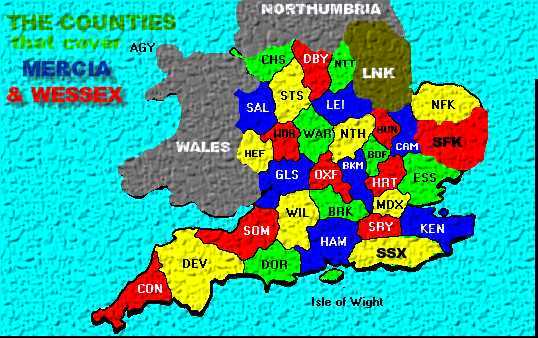
twenty shires (Bedfordshire,
Buckinghamshire, Cambridgeshire,
Cheshire, Derbyshire,
Gloucestershire, Herefordshire,
Hertfordshire, Huntingdonshire,
Leicestershire, Lincolnshire,
Middlesex, Northamptonshire,
Nottinghamshire, Oxfordshire,
Rutland, Shropshire,
Staffordshire, Warwickshire and
Worcestershire) or such of these
that find a common Mercian
identity and wish to be included
in the region. Finally,
we hereby proclaim that the
Constitutional Convention has
now become the Acting Witan of
Mercia, to spearhead the full
democratisation of the region
and the re-establishment of its
de facto independence under The
Constitution Of Mercia.
Long live free Mercia!
Contact
Details
Jeff
Kent, Convener of the Acting
Witan of Mercia, Cherry Tree
House, 8 Nelson Crescent,
Cotes Heath, via Stafford,
ST21 6ST, Mercia. Tel. 01782
791673
email: witan@mail.com
Website
:
www.independentmercia.org
For
general enquiries:
info@acting-witan-of-mercia.org
INFORMATION
 |
|
Birmingham
received its Charter
of Incorporation as
a Borough on 1st
November 1838. The
package containing
the Charter was
opened by William
Scholefield, the
High Bailiff at the
office of the
Birmingham Journal
and was read to the
public at the Town
Hall on 5th
November. The first
town council, made
up of the mayor,
sixteen aldermen and
forty-eight
councillors elected
from thirteen wards,
met on 27th December
1838, the day after
they were elected.
One of the first
decisions made by
Birmingham’s very
first Council was to
adopt the town’s new
motto, ‘Forward’.
One of the
alternative
suggestions rejected
was ‘Fortitudo et
Rectum’. It is
suggested that the
‘Forward’ motto was
influenced by
Birmingham’s leading
position at that
time in the modern
spheres of science
and industry, the
motto demonstrating
that Birmingham was
proudly looking to
the future and not
back to past glories
in which it had
little share.
The City’s coat of
arms was adopted by
Birmingham
Corporation on 3rd
April 1889,
following the
earlier receipt of
‘letters patent’
granting a Royal
Charter Conferring
the title of “city”
on 14th January
1889. However, the
original coat of
arms was modified
and enhanced,
becoming the City
Council’s official
emblem on 10th May
1977. The modern-day
coat of arms shows a
shield divided by a
cross into patterned
quarters with a
crown at the centre.
Beneath the shield
is the City’s motto
“Forward” and above
it is a crest made
up of a knight’s
visor helmet bearing
a mural crown with a
rose gules. From
this crest emerges
the arm of a smith,
holding a hammer.
The most striking
features of the coat
of arms are a man
and woman standing
either side of the
ornate central
shield clearly
representing
Birmingham’s
cultural and
industrial heritage.
On the left of the
shield is a woman
with a laurel
wreathe, holding in
her left hand a book
and in her right
hand a painter’s
palette. She is said
to represent the
artistic and
learning tradition
of the city. The
figure on the right
hand side is a man
in the clothes of a
smith, holding a
cupel and in his
left hand a hammer.
He is stood next to
an anvil and is said
to represent the
industrial heritage
of Birmingham.
The patterns on the
shield tell an
interesting story
and date back to the
medieval Lords who
gave not only their
family arms to the
town but also their
name. The de
Bermingham family
(or Bermyngham) were
Lords of the Manor
of Birmingham for
over 400 years. The
family probably
acquired the manor
shortly after the
Norman Conquest and
it was Peter de
Bermingham who was
first granted a
market near the
river Rea in 1166.
In 1536 it was
Edward de Bermingham
who was finally
deprived of the
Manor by the Crown,
having been unjustly
framed by John
Dudley.
The toothed pattern,
known as an indent,
which occurs in the
top right quarter
and bottom left
quarter of the
shield is from the
de Bermingham’s coat
of arms. The pattern
known as ‘lozenges’
in the top left and
bottom right
quarters of the
shield in the City’s
coat of arms
originally came from
the shield of the
noble Fitz-Ansculf
family, who were
Lords of Dudley.
When an heiress of
the Fitz-Ansculf
family married a son
of the de Bermingham
family, the lozenges
from her family
shield were
incorporated into
her husband’s
shield. This only
happened because she
was marrying beneath
her, normally the
male line would
dominate and his
shield would be
passed to his sons
unaltered.
Both of these
patterns occur on
three sculptured
effigies of knights
which lie inside St
Martin’s church and
also in the tiles of
the chancel floor.
These three knights
are said to include
William Bermyngham
who fought under
Edward the First and
Sir John Bermygham
who represented the
county in the
Parliament of
Richard the Second.
There are however a
number of anomalies
in the modern day
coat of arms.
Firstly, the
position of the four
patterned quarters
does not correspond
to ancient heraldic
rules in that the
lozenges of the
Fitz-Ansculf heiress
should occupy the
second and third
quarters whilst her
husband’s indent
should occupy the
first and fourth
quarters of the
shield. The correct
shield is
represented in the
old tiles of the
chancel floor of St
Martins, whereas the
shield used in the
coat of arms since
1889, is in fact,
wrong.
The second anomaly
lies in the fact
that the two figures
in the coat of arms,
the male smith and
female artist have
swapped sides since
they were originally
designed in 1889.
The coat of arms
used since 1977
shows the female
figure on the left
of the shield and
the male figure on
the right, whereas
in the original coat
of arms he was on
the left and she was
on the right.
|

www.birmingham.gov.uk/arms

|
|
THE BRUMMIE TRANSLATOR
TALK
LIKE A BRUMMIE
Brummie
(sometimes
Brummy) is a
colloquial
term for the
inhabitants,
accent and
dialect of
Birmingham,
UK, as well as
being a
general
adjective used
to denote a
connection
with the city,
locally called
Brum. The
terms are all
derived from
Brummagem or
Bromwichham,
historical
variants or
alternatives
to
'Birmingham'.
|
|
Trouble
understanding the Brummie
dialect maybe a thing of
the past thanks to a new
free mobile phone app
which has just been
launched. Developed by
Manchester based IT
company, Athernet Web
Solutions, the app allows
a user to listen to common
Brummie phrases and
translate them into the
Queen’s English. It
follows the stunning
success of the firm’s
iWiganese App which came
about after Athernet took
on a Digital Marketing
Manager from Wigan who no
one could understand. Now
phrases such as “go
and wash yer donnies”(go
and wash your hands)
“come up the wuddenill”
(come upstairs) and “put
yer
fizzog straight” (stop
sulking) will make sense
to everyone outside
Birmingham. Rather than
get a celebrity “Brummie”
voice such as Ozzy
Osbourne or Frank Skinner,
the company decided to run
a competition to find
local talent. The search
resulted in Alan Dugmore,
65, whose family moved to
Birmingham in 1767, being
chosen as the voice of the
city.
 The
retired paramedic, who
lives in Quinton was
chosen after a series of
test recordings and
interviews. He has lived
in Birmingham since he was
born and has traced his
roots back to 1746 in
Abbots Bromley in
Staffordshire before his
family moved to Birmingham
in 1767. The
retired paramedic, who
lives in Quinton was
chosen after a series of
test recordings and
interviews. He has lived
in Birmingham since he was
born and has traced his
roots back to 1746 in
Abbots Bromley in
Staffordshire before his
family moved to Birmingham
in 1767.
Director of
Athernet
Web Solutions, Ajay
Kapadia says that Alan’s
voice was chosen as it was
rich and natural. “We had
a number of applicants and
it was a very close
thing,” explained Ajay.
“Some people we listened
to seemed to be trying too
hard and in the end we
felt that Alan’s is a
genuine dialect that has
been developed over many
years. Other applicants
auditioned by sending
computer files, but Alan’s
first test was done over
the telephone. We knew it
was something special
straight
away.” Alan,
who is married and has two
children and three
grandchildren, was
delighted when he was
chosen. “It’s bostin!” he
exclaimed. He was keen to
get involved in the
project and provided a
number of extra phrases
that he has used over the
years and corrected some
errors. “Some of the
phrases were more Yamyam
than Brummie so I soon put
them right on that,” he
said. “It’s great being
involved in the iBrummie
App as I’m keen on local
history and something like
this really brings it to
life.” The iBrummie
App is available for free
download on iPhones and
Android phones and the
phrases are also available
at a special website,
iBrummie.com. The
company is also looking at
the possibility of doing
other regional dialects.
|
 Tourism
Centre and Ticket Shop ,
The Rotunda 150 New
Street Birmingham
West Midlands England B2
4PA Tel: 0844 888
3883 Fax: 0121 616
1038 Email: visit@marketingbirmingham.com
Web: http://www.beinbirmingham.com
Map
The place to go for
friendly faces, bags of
advice and local
information. Opening
Times: Monday
- Saturday 9.00 -
17.00 Sundays and
Bank Holidays 10.00 -
16.00 (Open 30th May, Open
29th August.)
Tourism
Centre and Ticket Shop ,
The Rotunda 150 New
Street Birmingham
West Midlands England B2
4PA Tel: 0844 888
3883 Fax: 0121 616
1038 Email: visit@marketingbirmingham.com
Web: http://www.beinbirmingham.com
Map
The place to go for
friendly faces, bags of
advice and local
information. Opening
Times: Monday
- Saturday 9.00 -
17.00 Sundays and
Bank Holidays 10.00 -
16.00 (Open 30th May, Open
29th August.)
Christmas Opening
Hours:24 Dec -
9.00- 17.00 25 Dec -
CLOSED 26 Dec -
CLOSED 27 Dec- 10.00
- 16.00 28 Dec -
9.00 - 17.00
29 Dec - 9.00 -
17.00 30 Dec - 9.00
- 17.00 31 Dec -
9.00 - 17.00 1 Jan -
CLOSED 2 Jan - 10.00
- 16.00 3 Jan -
10.00 - 16.00
See
location on map
Located at:
Birmingham Central
Library,
Chamberlain Square,
Birmingham B3 3HQ
Services
Professional friendly staff
Tourist information, maps
and guides
Accommodation booking
service
National Express information
and tickets
Wide range of quality gifts
and souvenirs
Discounted tickets for local
attractions
Use of multi-linguistic
services
Free internet access
Access to library service
and resources
Disabled parking available
nearby
Opening Times:
Monday - Friday 9.00 -
20.00
Saturday 09.00 - 17.00
Closed Sundays and Bank
Holidays
From 12 December
2011
Monday - Friday 10.00
- 18.00
Saturday 09.00 - 17.00
Closed Sundays and Bank
Holidays
Email: CentralLibraryTIC@birmingham.gov.uk
Telephone:
+44 (0) 844 888 3883
See
location on map
|
Other
Birmingham
Information
Websites
Birmingham
Sparkling at
Christmas. www.visitbirmingham.com
is the official
tourist information
visitor web site
for the city of Birmingham.
LATEST NEWS AND ...
|
The
Tourist Information
section of the Birmingham
UK Com website
featuring
attractions,
places to visit,
art and museum
galleries and a
host of
other
interesting ...
|
Birmingham's
Sea Live Centre
Planning a flight
to or from Birmingham?
Click above for
loads of helpful information:
The Birmingham
Hippodrome Theatre
hosts ...
|
Updated
around the clock
with Birmingham
news, information,
what's on,
comment and
in-depth coverage
of Aston ...
Go to
LocalMole.co.uk
... Mail
mobile
site ...
|
|
Solihull
Council
For
the
official view on
Solihull
including news,
information and
local authority
job vacancies.
Adding more
information
every day and
now list
all events
at the Arts
Complex and have
a very
comprehensive
list of local
Organisations
and planning
applications.
www.solihull.gov.uk |
Birmingham
101
For all your
information and
news about
Birmingham UK
its people ,
businesses and
attractions
www.birmingham101.com |
Birmingham
Plus
details
restaurants in
and around the
city.
www.birminghamplus.com |
BBC
Birmingham
Online
is
a great new site
with local news,
information and
entertainment
news. Without
doubt its one to
watch.
http://www.bbc.co.uk/birmingham |
 |

|
 |
|
NEWSPAPERS
Birmingham now
has two local daily
newspapers—the
Birmingham Post and
the Birmingham Mail—as
well as the Sunday
Mercury, all owned by
the Trinity Mirror.
The publisher also
produces The
Birmingham News, a
weekly freesheet
distributed to homes
in the suburbs along
with Forward (formerly
Birmingham Voice), the
Birmingham City
Council's free
newspaper distributed
to homes and via
community centres and
public buildings.
Several local
newspapers serve
Birmingham, including
the Birmingham
Advertiser and the
Sutton Coldfield
Observer and Sutton
Coldfield News for the
area of Sutton
Coldfield.
Birmingham is
also the hub for
various national
ethnic media,
including The Voice,
The Sikh Times, Desi
Xpress, The Asian
Today and Raj TV
(based in The Mailbox
). National showbiz
magazine Ikonz is
based in Birmingham,
one of the few outside
London. The music
magazine Bearded and
culture magazine Fused
Magazine are produced
in the city.
|
|
|

Widget by Frixo Travel
| M11
Traffic
|
Find local
news, sport and entertainment near you with
your local BBC Where I Live website. Choose your
nearest location in Mercia:
|
LOCAL RADIO STATIONS

 96.4
(Birmingham) 96.4
(Birmingham)
 also
available on
local DAB
digital radio,
in the
Birmingham
area also
available on
local DAB
digital radio,
in the
Birmingham
area
 listen live on our
audio pages listen live on our
audio pages |
95.6
(Birmingham
and Wolverhampton)
also
available on
local DAB
digital radio,
in the
Birmingham,
 Wolverhampton,
Telford
and Shrewsbury
areas Wolverhampton,
Telford
and Shrewsbury
areas
listen live to
BBC WM on our
audio pages |
97.0
(Coventry)
102.9
(Warwick and
Leamington
Spa, Warwickshire)
also
available on
local DAB
digital radio,
in the
Coventry area
listen
live on our audio pages |
|
89.1
(Aston, Birmingham) |
music,
news and information for the
asian community
 828
(Wolverhampton) 828
(Wolverhampton)
1458
(Birmingham)
listen live on
our audio pages
 BBC
Asian Network is also
broadcasting on the BBC National DAB
multiplex BBC
Asian Network is also
broadcasting on the BBC National DAB
multiplex |
97.2
(Wolverhampton)
also
available on
local DAB
digital radio,
in the
Wolverhampton
area
listen live on our
audio pages |
 Chill
relaxing
chillout
music Chill
relaxing
chillout
music
Wolverhampton
areas
listen live on our
audio pages |
Punjabi
Radio
radio
for the
Punjabi
community
available
on local DAB
digital radio,
in the
Wolverhampton,Telford
and Shrewsbury
areas |
102.5
(Stourbridge,
West Midlands) |
102.2
(Birmingham)
also
broadcasting
on digital
radio, in the
West Midlands
region
listen live on
our audio
pages
This
station was
formerly known
as Galaxy
102.2 |
Gold
oldies
and classic
hits
1152
(Birmingham)
also
available on
local DAB
digital radio,
in the
Birmingham
area
listen live on our
audio pages |
Gold
oldies
and classic
hits
990
(Wolverhampton)
also
available on
local DAB
digital radio,
in the
Wolverhampton,
Telford
and Shrewsbury
areas
listen live on our
audio pages |
Heart
100.7
See
the regional
listing for
further
information
and links |
Heat Radio
music
from the
eighties to
today; old
skool tracks;
celebrity news
available
on local DAB
digital radio,
in the
Birmingham
area
listen live on our
audio pages |
Kiss
r&b,
pop and
contemporary
dance
available
on local DAB
digital radio,
in the
Birmingham
area
listen live on
our audio
pages |
|
98.7
(Winson Green,
Birmingham) |
91.3
(Sandwell,
Birmingham) |
Smooth
Radio
See
the regional
listing for
further
information
and links |
|
106.9
(Sandwell,
Birmingham) |
107.5
(Castle
Vale,
Birmingham) |
Radio XL
programmes
for the asian
community
1296
(Birmingham)
also
available on
local DAB
digital radio,
in the
Birmingham are |
|
93.5
(Small Heath,
Birmingham) |
available
on local DAB
digital radio,
in the
Wolverhampton,
Telford
and Shrewsbury
and Birmingham
areas |
Xfm
new
rock,
alternative
and indie
available
on local DAB
digital radio,
in the
Birmingham,Wolverhampton,
Telford and
Shrewsbury
areas
listen live on our
audio pages |
CLICK ON YOUR INTEREST

|
For
a full list of theatres in the UK.
Click on to Showtime
|
EVERYTHING
EQUINE

Please Click On To
the Relevant Stable door
|
|
Details
|
|
Birmingham Tourist
Information Centre
|
Tourism Centre and Ticket Shop , The
Rotunda 150 New Street Birmingham
West Midlands England B2 4PA
Tel: 0844 888 3883 Fax: 0121 616
1038 Email: visit@marketingbirmingham.com
Web: http://www.beinbirmingham.com
Map |
Birmingham Central Library
Visitor Centre
|
Birmingham
Central Library, Chamberlain Square,
Birmingham B3 3HQ
Telephone: +44
(0) 844 888 3883 Email:
CentralLibraryTIC@birmingham.gov.uk
|
Birmingham
Airport
Visitor Centre |
Between Terminal 1 and 2 , Birmingham
International Airport , Birmingham West
Midlands England B26 3QJ
Tel: 0844 888 3883 visitor information and
accommodation Alternate Tel: 0844
888 4415 ticket hotline
Email: visit@marketingbirmingham.com
Web: http://www.visitbirmingham.com/
Map
|
Birmingham
Tourist Information Centre
|
TBirmingham
, National Exhibition Centre , Convention &
Visitor Bureau , National Exhibition Centre ,
Birmingham West Midlands
T: 0121 780 4321 F: 0121 780 4260 E:
piazza@bmp.org.uk
|
Brierley Hill
Tourist Information Centre
|
Merry
Hill
, Merry Hill Centre , Brierley Hill West
Midlands Map
T: 01384 487 911 F: 01384
487 910 |
Bromsgrove
Tourist Information Centre
|
The
Museum, 26 Birmingham Rd, Bromsgrove,
Worcestershire, B61 0DD Tel: 01527
831809 Fax: 01527 577983 |
Dudley
Tourist Information
Centre |
Dudley , 39 Churchill
Centre , Dudley West Midlands
T: 01384 812 830 F: 01384 815 580 |
Solihull
Tourist Information Centre
|
Solihull , Central Library Homer
Road Solihull West Midlands
T: 0121 704 6130 F: 0121 704 8224
E: ckelly@solihull.gov.uk
|
Walsall
Visitor Enquiries
|
Walsall
Central Reference Library, Lichfield St,
Walsall, WS1 1TR
Tel 01922 653110 Fax 01922 654013 Textphone
0845 1112910
Email reference@walsall.gov.uk
WALSALL
CLICK
|
Wolverhampton
Visitor Information Point
|
18 Queen
Square, Wolverhampton West Midlands
WV1 1TQ
Phone: 01902 556110 or 556112 Fax: 01902
556111
E-mail: wolverhampton.tic@dial.pipex.com
Website: http://www.wolverhampton.tic.dial.pipex.com
|

If we have missed you
please contact us 0845 868 2810 or contact us by writing
Birmingham
Attractions
|
PICTURE |
Address &
Website
|
Tel/Fax
|
Alexandra
Theatre
The Alexandra Theatre was built in 1901 by
William Coutts at a cost of £10,000 and was
originally called the Lyceum. Its opening
production was a play entitled The Workman,
which ran from 27th May 1901, with tickets
ranging in price from two shillings to four
(old) pence. Unfortunately, insufficient public
support resulted in the theatre being offered
for sale just over a year later. The sale
attracted no great interest, and the Lyceum was
bought by Lester Collingwood for just £4,450.
Collingwood was a flamboyant personality who
sported a magnificent moustache. He had
extensive theatre experience and was
particularly associated with the melodrama When
London Sleeps, in which he toured for some time,
playing the role of the villain. Many theatres
at the time had a royal connection, and
Collingwood bowed to tradition by renaming the
theatre to honour Queen Alexandra. The Alexandra
Theatre opened in 1902 with a melodrama called
The Fatal Wedding. Public taste greatly favoured
this genre of entertainment, and the new manager
quickly established his personality within
Birmingham, such that the venue was soon tagged
‘The People’s Theatre’. Collingwood also
initiated the Alexandra’s panto tradition,
beginning with Aladdin, which ran for eight
weeks. It is rumoured that Charlie Chaplin was
one of the actors to have starred in these
pantomimes. Today the Alex is
owned and managed by The Ambassador Theatre
Group (ATG) who are the largest theatre operator
in the world combining international stature
with core local venues. As a successful and
respected theatre provider, ATG has years of
experience helping millions of customers enjoy
the very best theatre and live entertainment.
|
 |
Alexandra
Theatre ,
Station Street,
BIRMINGHAM, B5 4D
ALEXANDRA THEATRE CLICK
|
Telephone
Booking:
0844 871 3011 |
Alpha
Tower
The Alpha Tower is Birmingham's
second tallest building at 99.9m high. It was
built between 1972 and 1974. The Alpha
Tower has 28 floors and stands at 328 feet. A
prominent landmark it resembles the Pirelli
Building in Milan. This particular building is a
smaller version by architect Richard Seiffert.
Now
looking somewhat outdated and on its own
amongst the more modern and tasteful
architecture of Brindleyplace it nevertheless
is an impressive building. Alpha Tower is
situated in Suffolk Street, near Broad Street
and not far from the Mailbox. |
 |
Suffolk
Street
Queensway,
Birmingham, , B1 1TT
|
|
Artifex
The 3000 square foot gallery specialises
in designer/craftsman made furniture, glass,
ceramics, jewellery, metalwork, woodwork,
mirrors, clocks, sculpture & original
painting. The emphasis is on originality and
quality. The atmosphere is welcoming and
our staff are friendly and knowledgeable. The
first floor gallery is devoted to paintings, all
original, featuring the work of around 18
artists at any one time. We also run an
exhibition programme of more substantial one
person shows. Our furniture gallery specialises
in 'one-off' contemporary pieces made by
Britain's leading makers. You can buy from the
large selection on display, seek inspiration
from an extensive portfolio of makers' work, or
turn your dreams into reality through our
personal commissioning service. Open 7 days -
10.00am - 5.00pm
|
 |
The Mitchell Centre
Weeford Road
Sutton Coldfield
B75 6NA
Email: sutton@artifex.co.uk
ARTIFEX
CLICK
|
Tel: 0121 323 3776
Fax: 0121 323 2380
|
Aston Hall
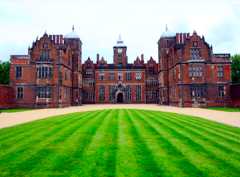
Aston Hall was built by Sir Thomas Holte in
1618. One of England's great country houses.
Aston Hall is one of Birmingham's most treasured
buildings. Redisplayed as part of the
development project, Aston Hall boasts sumptuous
interiors from the 17th, 18th and 19th
centuries, including the magnificent Long
Gallery.Display rooms illustrate the part Aston
Hall and its residents played in key moments in
history, including the English Civil War, and
how it prepared to receive royalty on more than
one occasion.he acclaimed Astonish Gallery in
the newly restored Stables Range take visitors
on a journey through the Aston area. Astonish
describes the history of Aston, its industries,
sporting achievements and community changes
through historic objects and hands on
interactives.
|
 |
Trinity Road, Aston,
Birmingham, B6 6JD
ASTON
HALL CLICK
|
Tel: +44 (0)121 675 4722
|
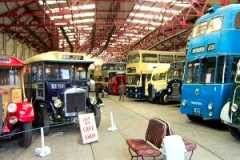
Aston Transport Museum
A wide range of commercial vehicles on show so
if you are interested in transport, particularly
buses, then this is the place to come. Set
up in 1978 the Aston Manor Transport Museum can
be found on Witton Lane just down from the Aston
Villa Football Ground. It's only open on
Saturdays, Sundays and Bank Holidays from 11am -
5pm but if you are interested in transport,
particularly buses, then this is the place to
come. A wide range of commercial vehicles are on
show and clicking on our photographs section
will show you more of what is on offer. The
Museum closed its doors at Witton for the final
time on Sunday October 30th 2011. We were
unable to convince Birmingham City Council of
the value of the Museum to the City and,
crucially, to be given a reasonable period in
which to raise what would have been a quite
significant sum of money to secure the premises
and therefore the Museum for future
generations.Ongoing discussions are presently
taking place with a view to reopening on another
site, outside of Birmingham. Cataloguing
of all artefacts and preparing for their removal
is now taking place and sites have been located
where all these items and the vehicles can be
stored safely, if these discussions do not come
to fruition. This all has to take place
before the end of 2011. If the Museum is
able to relocate then we would expect to reopen
on the new site around Easter / early Spring.
|
 |
|
|
Aston
Villa Football Club
Aston Villa Football Club ( /ˈæstən
ˈvɪlə/;
also known as Villa, The
Villa, The Villans
and The Lions) ] is an
English professional association football club
based in Witton, Birmingham. The club was
founded in 1874 and have played at their
current home ground, Villa Park, since 1897.
Aston Villa were founder members of The
Football League in 1888. They were also
founder members of the Premier League in 1992,
and have remained there ever since. The
club was floated by the previous owner and
chairman Doug Ellis, but in 2006 full control
of the club was acquired by Randy Lerner. They
are one of the oldest and most successful
football clubs in England, having won the
First Division Championship seven times and
the FA Cup seven times.
Villa also won the 1981–82 European Cup, one
of only four English clubs to win what is now
the UEFA Champions League.
Aston Villa has the fourth highest total of
major honours won by an English club.They
have a fierce local rivalry with Birmingham
City. The Second City derby between Aston
Villa and Birmingham City has been played
since 1879. The
club's traditional kit colours are claret
shirts with sky blue sleeves, white shorts and
sky blue socks. Their traditional crest is of
a rampant
gold lion on a light blue background with the
club's motto "Prepared" underneath; a modified
version of this was adopted in 2007. /ˈæstən
ˈvɪlə/;
also known as Villa, The
Villa, The Villans
and The Lions) ] is an
English professional association football club
based in Witton, Birmingham. The club was
founded in 1874 and have played at their
current home ground, Villa Park, since 1897.
Aston Villa were founder members of The
Football League in 1888. They were also
founder members of the Premier League in 1992,
and have remained there ever since. The
club was floated by the previous owner and
chairman Doug Ellis, but in 2006 full control
of the club was acquired by Randy Lerner. They
are one of the oldest and most successful
football clubs in England, having won the
First Division Championship seven times and
the FA Cup seven times.
Villa also won the 1981–82 European Cup, one
of only four English clubs to win what is now
the UEFA Champions League.
Aston Villa has the fourth highest total of
major honours won by an English club.They
have a fierce local rivalry with Birmingham
City. The Second City derby between Aston
Villa and Birmingham City has been played
since 1879. The
club's traditional kit colours are claret
shirts with sky blue sleeves, white shorts and
sky blue socks. Their traditional crest is of
a rampant
gold lion on a light blue background with the
club's motto "Prepared" underneath; a modified
version of this was adopted in 2007.
|
 |
Aston
Villa
-
Villa Park
Trinity Road Birmingham. B6 6HE
ASTON
VILLA
CLICK
SEE
OUR SOCCER SITE
Fixtures
List
Get
An Aston Villa Email Address
|
Main
Telephone No: 0121 327 2299
Main Fax No: 0121 322 2107
Ticket Office: 0800 612 0970
Ticket Office Fax: 0800 612 0977
Stadium Tours: 0800 612 0970
|
Avoncroft Museum
Avoncroft Museum is home to over
27 different structures which have been rescued
and re-built in rural Worcestershire. The Museum
is spread over 19 acres and includes a
wildflower meadow, period gardens, a traditional
cider and perry orchard as well as the
collection of buildings. In 1967 Avoncroft
Museum was opened to the public following the
rescue and reconstruction of a medieval
merchant’s house from Bromsgrove. Then, as now,
our priority was to retain historic buildings in
their original location. Over five decades,
Avoncroft Museum has continued to rescue
structures where this had not been achievable
and the museum now displays and cares for twenty
five historic buildings that range in date from
Worcester Cathedral’s fourteenth century Guesten
Hall roof to a post second world war prefab from
Birmingham. Visitors will be able to enjoy the
peaceful countryside as well as explore the
historic buildings, enjoy the Edwardian Tea Room
and discover the past.
|
 |
Avoncroft
Museum, Stoke Heath, Bromsgrove, B60 4JR
AVONCROFT
CLICK
|
Tel:
01527 831363/831886
|
Birmingham
City Football Club
Birmingham City Football Club
( /ˈbɜrmɪŋɡəm
ˈsɪti/)
is a professional association football club
based in the city of Birmingham, England. Formed
in 1875 as Small Heath Alliance, they
became Small Heath in 1888, then Birmingham
in 1905, finally becoming Birmingham City in
1943.
They
were relegated at the end of the 2010–11 Premier
League season and will play the 2011–12 season
in the Football League Championship. As
Small Heath, they were founder members and first
ever champions of the Football League Second
Division. The most successful period in their
history was in the 1950s and early 1960s. They
achieved their highest finishing position of
sixth in the First Division in the 1955–56
season and reached the 1956 FA Cup Final,
progressed to the final of the Inter-Cities
Fairs Cup in 1960
and 1961, and
won their first major trophy, the League Cup, in
1963, beating Aston Villa 3–1 on aggregate. They
won the latter competition for the second time
in 2011. They have played in the top tier of
English football for the majority of their
history.
Their longest period spent outside the top
division, between 1986 and 2002, included two
brief spells in the third tier of the English
League, during which time they twice won the
Football League Trophy. St Andrew's has been
their home ground since 1906. They have a
long-standing and fierce rivalry with Aston
Villa, their nearest neighbours, with whom they
play the Second City derby. The club's nickname
is Blues, due to the colour of their
kit, and their fans are known as Bluenoses.
|
 |
Birmingham
City - St Andrew's Stadium
St. Andrew's Stadium, St
Andrew's Road, Birmingham, West Midlands,
B9 4NH
Email: reception@bcfc.com
St Andrew's stadium was built in 1906 to replace
the Muntz Street ground.
Fixtures
List
BIRMINGHAM CITY
CLICK
SEE
OUR SOCCER SITE
Get
A Birmingham Email Address
|
Telephone
: 0844 557 1875
|
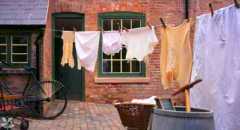
Birmingham
Back to Backs
An atmospheric glimpse into the lives of the
ordinary people who helped make Birmingham an
extraordinary city. On a fascinating guided
tour, step back in time at Birmingham's last
surviving court of back to backs; houses built
literally back-to-back around a communal
courtyard. Moving from the 1840s through to the
1970s, discover the lives of some of the former
residents who crammed into these small houses to
live and work. With fires alight in the grates,
and sounds and smells from the past, experience
an evocative and intimate insight into life at
the Back to Backs. Note: visits by guided tour
only (advance booking advised).
|
 |
50-54
Inge Street, 55-63 Hurst Street, Birmingham,
West Midlands, , B5 4TE
BACK
TO
BACKS CLICK
|
Phone:
0121 666 7671
|
Baddesley
Clinton Knowle
This atmospheric house dates from
the 15th century and was the home of the Ferrers
family for 500 years. The house and interiors
reflect its heyday in the Elizabethan era, when
it was a haven for persecuted Catholics – there
are three priest's holes. There is a delightful
garden with stewponds and a romantic lake and
nature walk.
|
 |
Rising Lane,
Baddesley Clinton,
Warwickshire B93 0DQ
BADDERSLEY
CLICK
|
Telephone:
01564 783294
|
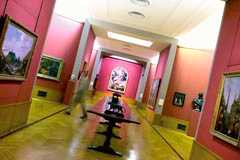
Barber Institute
Monet, Manet, and Magritte; Renoir, Rubens,
Rossetti and Rodin; Degas, Delacroix and van
Dyck — not to mention Botticelli, Poussin,
Turner, Gainsborough, Gauguin, van Gogh,
Picasso, Hodgkin… The Red GalleryYou can see
major works by all these great artists in the
Barber Institute of Fine Arts, at the University
of Birmingham. There’s also a stunning coin
gallery and an exciting programme of
exhibitions, concerts, lectures, gallery talks,
workshops and family activities. The Barber is
also home to the University of Birmingham's
departments of History of Art and Music, as well
as the Barber Fine Art and Music libraries..
|
 |
The Barber Institute of Fine Arts
University of Birmingham
Edgbaston
Birmingham
B15 2TS
BARBER
INSTITUTE CLICK
|
Telephone: +44 (0) 121 414 7333
Fax: + 44 (0) 121 414 3370
|
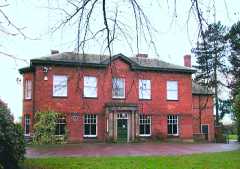
Bantock House
Bantock House was originally completed in 1788
and inherited from his father by Baldwin Bantock
in 1896. From what we know of Bantock he would
appear to have been a keen gardener. The
original name of the house was Merridale Farm
hence the farm courtyard and outbuildings which
now provide space for the tea rooms and
conveniences. Bantock House received funding
from the Heritage Lottery fund and extensive
work was carried out to restore it to its former
glory in 1999. The house holds some fine
examples of art and devotes a section to the
history of Wolverhampton.Bantock House also
houses a collection of dolls and japanned and
enamel ware. The gardens around the house are
now small but the surrounding parkland which
used to belong to the house is a wonderful
example of open space and a haven of tranquility
in a busy city.
|
 |
Finchfield Road
Wolverhampton
West Midlands
WV3 9LQ
Email:
bantockhouse@
wolverhampton.gov.uk
BANTOCK
HOUSE
CLICK
|
Telephone: 01902 552195
|
Birmingham Central Library
The city library
and central archives is one of the most
dominant and well recognised buildings at the
heart of the great city. The library carries a
massive collection of texts that relate to the
development of Birmingham, along with a great
many other types of media that are available
for loan. The city archives are connected and
carry a massive collection of documents from
the cities past.
|
 |
Chamberlain
Square,
Birmingham, B3 3HQ
|
Phone: +44
(0)121 303 4511 - Fax: +44
(0)121 303 4511 |
Birmingham
Central Mosque
Birmingham Central Mosque
is the second purpose built mosque in the United
Kingdom, which was built in 1969 and opened to
the public in 1975. It is one of the most
recognised religious buildings in the city of
Birmingham and a result, a vast number of people
visit the mosque every year. The mosque has a
special Guest Book which visitors have been
signing since 1984; all visitors are encouraged
to leave their messages about the mosque's visit
in the Visitors' book. The
Birmingham Central Mosque is open to visitors
throughout the year. We receive a large number
of visitors from schools, colleges, universities
and other institutions wishing to find out more
about a mosque and the Islamic faith for
projects and studies. |
 |
180 Belgrave
Middleway,
Highgate,
Birmingham,
B12 0XS
BIRMINGHAM
CENTRAL
MOSQUE CLICK
|
Tel: 0121 440
5355
Fax: 0121 446 6140 |
|
Birmingham Central Synagogue
An
informal, warm and welcoming provincial
community atmosphere exists at Birmingham
Central Synagogue, just a short distance from
the city centre. The Birmingham Jewish
Ashkenazi Orthodox community was established
in a private house in Belgrave Road in 1883
before moving to Wrottesley Street in 1900 and
then to Bristol Street in 1928, taking over a
former Methodist Hall. In 1961 a small group
of dedicated, hard working individuals
acquired the large plot of land upon which the
current Synagogue, hall and classrooms now
stand at 133 Pershore Road. Whilst the
formal services are a perfect mix of tradition
yet modern, Birmingham Central Synagogue is so
much more than just a place for Jewish people
to pray. The membership spans a great range of
ages and aims to cater for them all, from the
very young Toddlers' service to the teenage
youth activities to the retired ladies' and
gentlemen's programmes. Daily and
weekly learning sessions for a variety of
ages and abilities are offered including a
Gemara shiur, Chumash Rashi, talks on
topical subjects as part of our monthly
"Central Forum" after kiddush on Shabbat
and, of course, a short daily dose of
Halachah (law) at the end of all services.
|
 |
133 Pershore
Road
Birmingham
B5 7PA
BIRMINGHAM
CENTRAL
SYNAGOGUE
CLICK
|
Tel :0121 440
4044 |
Birmingham Conservatoire
The Birmingham
Conservatoire is one of UCE’s faculties and,
as such, regularly hosts performances by its
students. In addition to student concerts the
venue also puts on performances by regional
and national musicians which, in turn, makes
it an important concert venue for Birmingham
and the Midlands. If you are interested in
listening about music as well as listening to
it, many lectures take place throughout the
year on a variety of subjects. Rooms can also
be hired for meetings, conferences and
concerts.
|
 |
Paradise
Place,
Birmingham B3 3HG
|
Phone: +44
(0)121 331 5901 - Fax: +44
(0)121 331 5906 |
Birmingham
Hebrew Congregation
Singers Hill Synagogue was built in
1856 and has played an important part of the
life of Birmingham Jewry. Even when movements of
Jewish population in Birmingham resulted in the
provision of synagogues elsewhere in the City,
Singers Hill has remained an important hub of
Jewish worship and communal life over the last
150 years, and is termed the "Cathedral"
Synagogue of Birmingham. Today, Singers Hill
Synagogue holds weekly Shabbat (Sabbath)
services, daily morning and mincha services
during the week. Shabbat Services, under the
auspices of the Birmingham Hebrew Congregation,
are also held at the King David Jewish Primary
School in Alcester Road, Moseley, to accommodate
the local Jewish population. Educational visits
from schools, universities, teachers training
colleges and other educational organisations are
welcomed throughout the year by prior booking.
|
 |
Ellis Street,
Birmingham B1 1HL
BIRMINGHAM
HEBREW
CONGREGATION
CLICK
|
Tel:
+44(0)121-643 0884 |
Birmingham Hippodrome
Birmingham
Hippodrome is in Birmingham city centre in the
heart of the gay village and is therefore
ideally situated close to the city’s many
pubs, clubs and restaurants. The venue hosts a
wide variety of shows for an equally diverse
audience. These include ballet, opera,
musicals, drama, pantomime, comedy and
children’s shows. The theatre also has its own
restaurant with set menus at reasonable
prices. The Hippodrome also has an educational
programme for young people which offers
performance arts training by professionals in
the business.
|
 |
Hurst Street,
Birmingham B5 4TB
|
Phone: +44
(0)870 730 1234 - Fax: +44
(0)870 730 5030 |
Birmingham
Progressive
Synagogue
During 2011, we have been
celebrating 75 years of Liberal Judaism in
Birmingham and we are as committed now, as our
founders were then, to providing a complete
range of religious, social and educational
activities.
Being a part of the Liberal Jewish movement we
value tradition and all that is good within
Judaism and combine it with innovation and
forward thinking to provide a secure future for
our community and our neighbours. Birmingham
Progressive Synagogue is an integral part of the
Jewish community in Birmingham but is also at
the forefront of interfaith work in Birmingham.
Our new synagogue building, on the corner
of Bishopsgate Street and Roseland Way was
formally consecrated on September 6th 2009. We
are delighted to be able to accommodate our many
and varied activities including services, study
groups, cheder and the synagogue office.
Everyone can attend our services or social
events and whatever your interests or background
you will always be welcome in our synagogue.
|
 |
Roseland
Way,
Bishopgate Street,
Birmingham, B15 1HD
BIRMINGHAM
PROGRESSIVE
SYNAGOGUE CLICK
|
Tel:
+44(0)121 446 5273/643 5640 |
Birmingham Repertory Theatre
Birmingham
Repertory Theatre, or the Rep as it is more
commonly known, was established in 1913 and is
acclaimed for launching the careers of new
playwrights by offering them a stage on which
to showcase their work. The Door hosts new
plays in the Rep’s old studio space and often
plays go on to London or other UK cities. In
addition to a wide selection of performances
throughout the year, the theatre also runs
programmes to encourage young writers and new
talent.
|
 |
Centenary
Square,
Broad Street,
Birmingham B1 2EP
BIRMINGHAM REP CLICK
|
Phone: +44
(0)121 236 4455 |
Birmingham Wheel
The Wheel of
Birmingham or Birmingham Wheel was a series
of transportable Ferris wheel installations
at Centenary Square in Birmingham, England.
These have been landmarks in central
Birmingham, visible from many parts of the
City. The first opened on 6 November 2003,
and its replacement opened on 21 October
2004 , both being 60 metres (197 ft) tall. A
third wheel, the Birmingham Mail Wheel,
operated from 18 January 2010 until 22
February 2010, and was also 60 m tall.
|
 |
|
|
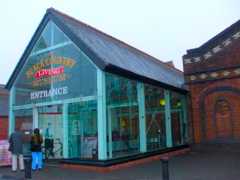
Black Country Museum
Discover a fascinating world when you visit this
urban heritage park in the shadow of Dudley
Castle at the heart of the Black
Country.Historic buildings from all around the
Black Country have been moved and authentically
rebuilt at the Museum, to create a tribute to
the traditional skills and enterprise of the
people that once lived in the heart of
industrial Britain. Visitors are transported
back in time from the modern exhibition halls to
the canal-side village, where costumed
demonstrators and working craftsmen bring the
buildings to life with their local knowledge,
practical skills and unique Black Country
humour.
|
 |
Black Country Living Museum Trust.
Tipton Road, Dudley, West Midlands, DY1 4SQ.
BLACK
COUNTRY MUSEUM CLICK
|
Tel : 0121 557 9643
|
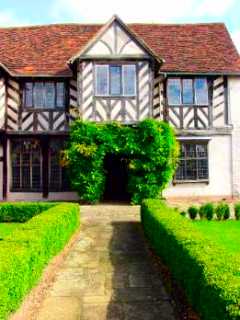
Blakesley Hall
The timber-framed house was built in 1590 by
Richard Smalbroke, a member of one of
Birmingham’s leading merchant families. More
than 400 years later, beautiful Blakesley is
still a haven; secluded from the avenues of
modern houses that lie beyond its gates.
Admission charges apply to the Hall only.
Gardens, grounds and visitor facilities are free
to all vistors. There is free admission to the
entire site on the first Sunday in every month
during the open season.
|
 |
Blakesley Road, Yardley,
Birmingham, B25 8RN
Website:
BLAKESLEY
HALL
CLICK
|
Tel: +44 (0)121 464 2193
|
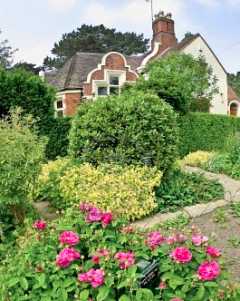
Botanical Gardens
The Birmingham Botanical Gardens &
Glasshouses, situated in Edgbaston, Birmingham,
UK, are a 15 acre oasis of delight. Designed by
J. C. Loudon, a leading garden planner,
horticultural journalist and publisher, they
opened to subscribers in 1832.Today, you will
find beauty, peace and also tranquillity
combined with excellent visitor facilities for
all the family. We really look forward to
welcoming you into our gardens and glasshouses
where you can enjoy nature at its best and
discover the importance of plants to people. Our
Mission: We aim to bring enjoyment and to use
the plant collection to spread the message that
plants are essential. We need plants, yet our
actions determine whether they survive or become
extinct. As an educational charity we aim to
encourage our visitors to respect their
environment by maintaining and developing our
plant collection, sharing stories, organising
events and offering educational programmes.
|
 |
Westbourne Road
Edgbaston
Birmingham
B15 3TR
BOTANICAL
GARDENS
CLICK
|
Tel : 0121-454-1860
|
Brindleyplace
Brindleyplace is a 17 acre mixed use
redevelopment site on a grand scale. With more
canals than Venice, why not explore and dine in
Brindley Place on Broad Street. The architecture
is spacious, pleasing and modern and blends in
with its surroundings in style. Definately a
fine asset to any city, Brindleyplace backs up
to the old canal with its stylish bars and
restaurants and the nearby National Indoor Arena
and the Sea Life Centre.
|
 |
Brindleyplace
Estate Management Office
2 Brunswick Street
Brindleyplace
Birmingham B1 2JF
BRINDLEY
PLACE CLICK
|
|
Birmingham
& Midland Museum of Transport
The Birmingham &
Midland Museum of Transport has been on its
present site for around 25 years. All facets of the museum are staffed
by volunteers. We are open to casual visitors
between 11a.m. and 4.30p.m. each Saturday and
Sunday between March and the end of October, and
Wednesday afternoons 1pm to 4:30pm between June
and August, when you are able to see volunteers
restoring and maintaining the collection.
Throughout the year we have themed Event Days
when museum buses offer rides, a delightful
ride-on miniature steam railway operates, and
the cafeteria and shop are open, the latter
selling transport models, books, magazines and
DVDs.
There are now three halls which
accommodate one of the most significant
collections of preserved buses in the country.
It has the largest collection of preserved
Midland Red buses and can probably make the same
claim for Birmingham City Transport. Midland Red is particularly important
because it built its own buses for half a
century and, whilst the term 'home made' may
imply primitive, in fact its products were
regularly at the leading edge of bus design.
Designers and engineers, however, were tempted
away by better pay and conditions in car
factories so production ceased in 1970. Midland
Red served many thinly populated rural areas
which led to severe financial difficulties and
it was broken up into smaller companies in 1981.
These were privatised in the 1980s and passed
into separate ownerships. |
 |
Birmingham
& Midland Museum of Transport
Chapel Lane
Wythall
Birmingham
B47
6JX
email
TRANSPORT
MUSEUM CLICK
|
Tel: +44 (0) 1564 -
826471 |
|
Broadfield
House Glass Museum
Situated in the historic Glass Quarter,
Broadfield House celebrates the magical art of
glassmaking. Our world-famous collections
feature the very best of British glass, much
of which was made in the Stourbridge area. The
collections range from the elegance of the
18th century to exciting contemporary work by
Britain's leading glass artists. See
glassmakers at work in the studio and visit
the gift shop, selling contemporary studio
glass.
|
 |
Broadfield
House
Glass
Museum, Compton Drive, Kingswinford, West
Midlands DY6 9NS
BROADFIELD
HOUSE
MUSEUM CLICK |
Tel:
01384 812745 |
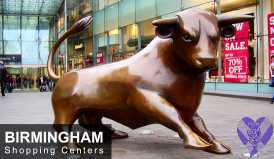
Bull Ring
In
September 2003, the Bullring Shopping Centre
reopened its doors after a £500 million revamp
of the original building. Widely recognised by
the Selfridges building, the Bullring houses
over 140 shops, covering the size of 26
football fields, making it the largest
shopping complex in Europe. Just outside the
main building, the famous “Bronze Bull”,
designed by Laurence Broderick, stands at 2.2m
tall and weighs 5 tonnes. Just a two-minute
walk from the Bullring is Moor Street railway
station.
|
 |
Birmingham,
B5 4BU
|
Phone: +44
(0)121 632 1500 |
Cadbury World
Cadbury World is an adventure into the
world of chocolate. From humble beginnings in a
shop in Birmingham the Cadbury brothers created
a chocolate empire that has factories around the
world.The Cadbury factory at Bournville has a
visitor centre that is dedicated to the history
of chocolate. Both educational and excitingly
portrayed, the visitor can learn about how cocoa
beans are grown, how they came to be imported to
Europe and made into the chocolate that we know
today. How has chocolate changed over the
years?, and what made Cadbury's so successful.
It's all here. There is also an excellent
factory shop where visitors can purchase a wide
range of Cadbury products at factory prices. The
tour is optional and not necessary for access to
the shop for those that just want to purchase
chocolate. A restaurant/cafeteria can be found
on site and there is a play area for children.
Special features include a 3D video story and an
interactive theatre which deals not only with
chocolate, its manufacture and its advertising
but also provides an insight into the Cadbury
family who created the UK's favourite chocolate
produce. This is one of the main West Midlands
attractions and draws visitors from all over the
UK and beyond. More than 500,000 people per year
visit Cadbury World.
|
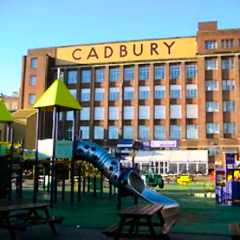 |
Linden Rd
Bournville
Birmingham B30 2LU
CADBURY
WORLD
CLICK
|
Tel: 0844 880 7667
|
Cannon
Hill Park
This is the pride of Birmingham Parks.
Birmingham claims to have over 200 parks, more
than any other European city in fact. This is
the flagship and the most varied and attractive.
The park has two lakes, rowing boat facilities,
tennis, fishing and a host of activities
particularly during the summer months. This park
is very much used as a retreat from the hustle
and bustle of the city. It is popular and busy
and yet takes it all in its stride. The
Midlands Arts Centre is also based here and
provides refreshments and regular exhibitions as
well as cinema and theatre productions. The
Nature Centre is also close by and there are two
childrens play areas. A striking war memorial
has the following inscription 'To the glorious
memory of the SONS OF BIRMINGHAM who fell in
South Africa 1890-1902 and to perpetuate the
example of all who served in the war. This
memorial is erected by their fellow citizens'
|
 |
2 Russell Road
Moseley, Birmingham
B13 8RD
Buses from City Centre: No.1 (to
Edgbaston Road), 45 & 47 (to Pershore Road)
There is a large car park off Edgbaston Road,
opposite the Warwickshire Cricket Ground, near
the Mac entrance. A small car park is located
off the Russell Road entrance.
CANNON
HILL
PARK CLICK
|
|
Carling Academy Birmingham
Opened in 2000,
Carling Academy Birmingham is a medium-sized
concert venue that follows in the footsteps of
the successful Carling Academy Brixton. The
complex consists of three sites: the
250-capacity Bar Academy - a 600-capacity in
Academy 2 as well as the main 2,700-capacity
venue - and can therefore accommodate gigs of
a variety of sizes. Since the relatively
recent opening, the venue has already hosted
the likes of Prodigy, Primal Scream, Blondie
and Black Sabbath.
|
 |
52-54 Dale
End,
Birmingham B4 7LS
|
Phone: +44
(0)121 262 3000 - Fax: +44
(0)121 236 2241 |
Castle
Bromwich Hall & Gardens
Castle Bromwich Hall was built in
1599 and was the property of Sir Edward
Devereux. The estate changed hands in 1657
when Sir John Bridgeman purchased the hall
and gardens. Many changes have taken place
since with the tower and kitchen block being
added in 1838. The
Bridgeman family inherited Weston Park in
1762 and Castle Bromwich Hall went through a
period of being let to tenants before the
family moved back to the hall in 1820. The
last member of the family lived in the hall
until 1936.
|
 |
Castle Bromwich Hall
and Gardens Trust
Chester Road, Castle Bromwich,
Birmingham, B36 9BT.
CASTLE
BROMWICH
HALL
& GARDENS CLICK
|
Tel & Fax 0121
749 4100 |
Centenary
Square
Centenary Square is one of Birmingham's newest
public squares. It is a popular meeting place
and walkway between Broad Street and the canal
area and those passing on foot to the city
centre. Many live concerts and events take place
in the square including the now popular New
Years Celebrations. The paving stones and
railings were designed by Tess Jaray. |
 |
|
|
|
The
Clent Hills
Clent Hills have a
special place in the hearts of Stourbridge
people. Before mass transport it was the
nearest thing working people had to a
holiday, along with Kinver Edge. Just about
1,000 feet high, there are fantastic views
from Clent Hills to the West over the
Worcestershire plain and Severn Valley,
across to the hills of Shropshire and even
the Welsh borders.
To the North and East is the West Midlands
conurbation, encompassing the UK's second
city, Birmingham, and the Black Country
region, a major manufacturing region of the
UK. The photos below show the extraordinary
diversity of the region, beautiful scenery
close to major residential and commercial
areas
|
 |
CLENT HILLS CLICK |
|
Coughton
Court
Coughton Court has been the home of
the Throckmorton family since 1409. It
holds a unique place in English history with its
close connections to the Gunpowder Plot of
1605. Behind the Tudor gatehouse house you
will find the courtyard with its fine
Elizabethan half-timbering, where a knot garden
leads to lawns and fine vistas of the
Warwickshire countryside. The house stands in 25
acres of grounds containing some of the most
breathtaking gardens in the country. It
was Clare McLaren-Throckmorton's intention to
create a garden that complements the beautiful
house, and to give it the setting it
deserves. She also wanted to create a wide
variety of gardens: formal and informal,
traditional and innovative. Created over
the last 15 years, the gardens are now mature
and varied and are solely managed by the
Throckmorton family.
|
 |
Throckmorton
Estates
Coughton Court
Alcester
Warwickshire B49 5JA
COUGHTON
COURT
CLICK
|
Visitor
information: +44 (0)1789 762435 |
Coventry
Cathedral
Glorious 20th century Cathedral,
with stunning 1950's art & architecture,
rising above the stark ruins of the medieval
Cathedral destroyed by German air raids in 1940.
The Visitor Information Centre housed in St
Michael's Tower.
|
 |
Coventry Cathedral
1 Hill Top
Coventry
CV1 5AB
COVENTRY
CATHEDRAL
CLICK
|
Tel: +44 (0)24
7652 1200
Fax: +44 (0)24 7652 1220 |
Crooked
House
The Crooked
House or ‘Siden House’ has been a Midlands
tourist attraction for well over a hundred
years. The building is a typical Black Country
pub, however, one side is four foot lower than
the other as a result of subsidence from 19th
Century coal mining. Originally built as a
farmhouse in 1765, it was then known as The
Glynne Arms on becoming a public house.
Visitors can now experience a variety of
optical illusions, including marbles rolling
uphill and drinks sliding up the table, before
even touching a drop!
|
 |
Crooked House
Lane,
Himley,
Near Dudley, DY3 4DA |
|
Council House
Built between 1874 and 1879
on what was once Ann Street, and designed by Yeoville
Thomason, the Council House is now a
Grade II listed building, used for all Council
and most Committee meetings. The front, facing
Victoria Square, has a pediment showing
Britannia receiving the manufacturers of
Birmingham. Before it was built the town
council met at such places as the Public Offices
in Moor Street, and even at a public
house. The town argued long and hard
whether the finished building should be called
The Municipal Hall, Council House, or Guildhall.
The total cost was £63,805. Big Brum is the local name for
the clock tower on the Council House. The clock
tower is sufficiently important in the public
consciousness of Birmingham people that it has a
name. Brum is the local term for the town, the
people and the dialect. The name refers to the
clock and tower, not only the bell. The bell
rings with Westminster
Chimes similar to Big Ben in London.
The clock tower (1885) is part of the first
extension to the original Council House of 1879
and stands above the Museum
& Art Gallery.
Behind it stands the Museum and Art Gallery,
built by the same architect in 1881-5.
Tours of the Council House can be arranged, for
availability please contact Democratic.Services@birmingham.gov.uk
or telephone (0121) 303 2438.
Virtual
Tour
of the Council House.
|
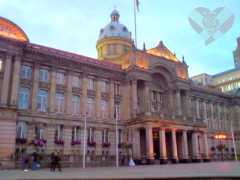 |
Victoria
Square,
Birmingham B1 1BB
Council House Web site
|
Phone:
+44
(0)121 303 9944 |
Curzon
Street Station
Curzon Street railway station (formerly
Birmingham station) was a railway station in
Birmingham that was used briefly for regular
scheduled passenger services between 1838 and
1854 when it acted as the terminus for both the
London and Birmingham Railway and the Grand
Junction Railway, with lines connecting
Birmingham to London and to Manchester and
Liverpool respectively. It was then used for
excursions until 1893 and goods traffic until
1966 when it closed. More recently, the
surviving Grade I listed, entrance building has
been used for occasional art events. In 2010, a
new Curzon Street station, partly on the site of
the historical station was proposed as the
Birmingham terminus for High Speed 2.
Contents
|
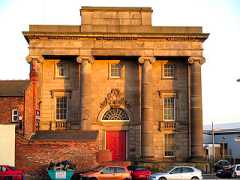 |
|
|
Custard
Factory
The
Custard Factory is a buzzing quarter in
Birmingham which is home to a hive of
young creative companies, galleries, fine
artists, independent shops and terrific
restaurants. We have
office space, studio offices and
exhibition space available so if you
fancy working amongst our thriving
creative community, get in touch now.
|
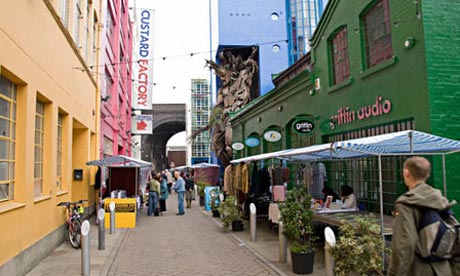 |
Gibb Street
Birmingham
B9 4AA
CUSTARD
FACTORY
CLICK
|
Tel:
0121 224 7777 |
|
Dhamma Talaka
Pagoda
The pagoda in
Edgbaston is provided so that western people
are able to learn about Buddhism. The main
financial support however comes from
generous donations by the Myanmar community
around the country.
This
significant landmark and temple of Buddhism
serves as a shrine to local Buddhists for
traditional ceremonies and a focal point
where non Buddhists can explore Buddhism in
a tranquil and peaceful environment within
the beautiful surrounding of this pagoda.
|
 |
Buddhist
Vihara
Osler Street
Ladywood
Birmingham
B16 9EU
DHAMMA
TALAKA
PAGODA CLICK
|
Tel:
0121 454 6591 |
Digbeth
Digbeth was almost certainly the site of
Birmingham's birth when Berma's tribe chose to
settle in the River Rea valley during the 7th
Century A.D. The town which grew from this small
settlement came to be famous as a place of
opportunity where people with a wide assortment
of skills, and from many regions of both Britain
and the rest of the world, could make a
successful living. The "city of a thousand
trades" was no idle boast - and for centuries
those who wanted to be part of Birmingham life
were most likely to find a home in Digbeth. It
was Digbeth's plentiful water supply which acted
as a magnet - not only the River Rea, but also
the area's natural springs. In fact the name
Digbeth is believed to have originally been
'Duck's bath' - a quaint description of one of
these springs. The coming to Digbeth of the
canals in the 18th Century and the railways in
the 19th Century ensured that a large community
was in permanent residence. Until, that is, the
turn of the 20th Century, when Digbeth had
become full to bursting point and people began
to move out. Today, Digbeth is a successful
industrial centre and the vibrant community life
of Digbeth's past will no doubt help to point
the way to an equally lively future. Meanwhile
memories of by gone Digbeth are revealed in a
surprising number of its buildings, and 2
discovery trails have been devised to guide you
around this important area of Birmingham
heritage.
|
 |
Heritage:
Digbeth Tuck Trail
Heritage:
Digbeth
Slice of Life Trail
|
|
Discovery Centre (Jewellery
Quarter)
When the proprietors of the Smith & Pepper
jewellery manufacturing firm decided to retire
in 1981 they ceased trading and locked the door,
unaware they would be leaving a time capsule for
future generations. Tools were left strewn on
benches; grubby overalls were hung on the coat
hooks; and dirty teacups were abandoned
alongside jars of marmite and jam on the shelf.
In the eighty years before its closure little
changed with the working practices or equipment
used within the family-owned business. Even the
décor had more in common with early 20th century
trends than a thriving business in the early
1980s. Today the factory is a remarkable museum,
which tells the story of the Jewellery Quarter
and Birmingham’s renowned jewellery and
metalworking heritage.
|
 |
75-79 Vyse Street, Hockley,
Birmingham, B18 6HA
Website:
MUSEUM
OF
JEWELLERY
CLICK
|
Tel: +44 (0)121 554 3598
|
Discovery - Millenium Centre
Thinktank, Birmingham’s award-winning science
museum offers an extraordinary, fun-packed day
out for all visitors. From steam engines to
intestines, Thinktank has over 200 hands-on
displays on science and technology from the
past, present and future. This includes the
state-of-the-art Planetarium, where you can tour
the night sky and fly through the galaxy without
stepping a foot outside! With an
ever-changing programme of workshops, classes,
laboratory sessions and interactive science
shows, there’s always something new to
discover.Thinktank is open seven days a week,
except 24, 25 & 26 Dec. Opening hours are
10.00am-5.00pm with last admission at 4pm.
|
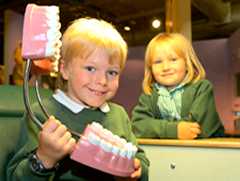 |
Millennium Point, Curzon Street, Birmingham B4
7XG
MILLENIUM
CENTRE
CLICK
|
Tel : 0121 202 2222
|
Dudley Zoo
There’s something for everyone at Dudley Zoo
& Castle . . .animals aplenty, an ancient
monument – and we’re big on conservation too!
DZG is unique . . . a zoo with hundreds of
animals set around an 11th century castle
incorporating the world’s largest single
collection of Tecton buildings all sited
on a 40-acre wooded hillside with a rich
geological history. |
 |
2 The Broadway
Dudley DY1 4QB
DUDLEY
ZOO CLICK
|
Tel:
0844
474 2272 Fax: 01384 456 048 |
|
Dormston Mill
Theater
|
 |
Dormston
Mill Theater ,
The Dormston Centre
Mill Bank
Sedgley DY3 1SN
|
|
Edgbaston
Reservoir
Situated close to the city
centre, Edgbaston Reservoir is a Site of
Importance for Nature Conservation. It was built
in 1827 by Thomas Telford as a op upfor
Birmingham canal system and is still used for
that purpose today. The 70 acres site is mainly
open water and supports a variety of birdlife;
it is also a valuable city site for animals such
as newts and bats. A belt of woodland and
grassland encircles the reservoir providing an
oasis of natural beauty in an urban setting.
There are currently no public toilets on site.
|
 |
Reservoir
Road, Ladywood,
Birmingham, B16 9EE.
The main entrance and car park is at the
end of Reservoir Road. The car park opens at 8am
and is locked at dusk. There are three other
pedestrian entrances, Rotton Park Road, Ickneild
Port Road and Gillott Road. It should be noted
that the Gillott road entrance is a flight of
steps.
EDGBASTON
RESERVOIR
CLICK
|
|
Gas Basin
Birmingham’s
canals were once essential to the industrial
success of this thriving Midlands city and the
city centre’s Gas Street Basin was its pivotal
point. Today, the canal has been restored and
instead of the industrial canal that it once
was, it is now a waterside city centre
development that locals and tourists alike can
enjoy. There are pubs and restaurants lining
the canal at the Gas Street Basin and canal
boats to admire. The city is only a few short
steps away from the Basin which shouldn’t be
missed when visiting Birmingham.
|
 |
Near Broad
Street, Birmingham B15 |
|
The Grand
Theatre Wolverhampton
The
Grand Theatre first opened its doors in 1894.
Designed by prestigious theatre architect Charles
J. Phipps and Wolverhampton native
builder Henry Gough, the ten
thousand pound construction began June 28th 1894
when Mayoress C.T. Mander unveiled foundation
stone. Even today, the
Grand remains held in high regard as one of
Phipps’ crowning achievements, so much so that
the facade of the building has remained
virtually unchanged during both of its major
refurbishments. Many would agree that it is one
of the finest examples of Victorian architecture
in the city of Wolverhampton today. Unlike Repertory Theatres, venues
like the Grand Theatre do not produce their own
shows but stage the productions of touring
companies.
|
 |
The Grand
Theatre Wolverhampton,
Lichfield Street,
Wolverhampton WV1 1DE
GRAND
THEATRE
CLICK
|
Box Office:
01902 42 92 12
|
Gun Barrel
Proof House
The growth of gun making in London led in 1637
to the incorporation by Royal Charter of the
London Company of Gunmakers. This Charter marked
the introduction of “proof” into England.
Similarly in Birmingham, with a population at
this time of only 4000, there was a flourishing
trade of guns. Indeed, by 1767 Birmingham could
boast of having 35 gun and pistol makers, 8 gun
barrel makers and filers, 5 gun barrel polishers
and finishers, 11 gunlock makers, forgers and
finishers, and 3 gun swivel and stock makers,
supplying all of the kingdom. The reputable
gunmakers of Birmingham had set themselves a
high standard for material and workmanship and
were eager to submit their products to an
independent. compulsory proof test as available
to the London Trade. Private Proof Houses were
in use in Birmingham, sited on the premises of
reputable gunmakers and available for use by
others, but as proof was not compulsory they
were not used by the less reputable members of
the trade. As a result, the Birmingham Proof
House was established in 1813, by Act of
Parliament, it was requested and obtained by the
Birmingham Trade at its own expense.Almost 200
years later the purpose of the Birmingham Gun
Barrel Proof House remains essentially unchanged
and is able to offer many additional services to
that of proof. Inside this historical &
unique institute are assembled a store of
documents and artefacts of real interest
|
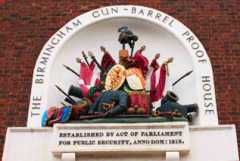 |
Gun
Barrel Proof House,
Banbury Street
Birmingham
B5 5RH
GUN
BARREL PROOF HOUSE CLICK
|
Tel.
0121 643 3860, Fax 0121 643 7872
|
|
Hagley
Hall
The last of the Grand Palladian houses,
designed by Sanderson Miller and completed in
1760. The house contains the finest example of
Rococo plasterwork by Francesco Vassali and a
unique collection of 18th century furniture
and family portraits, including works by Van
Dyck, Reynolds and Lely. Location: just off
A456 Birmingham to Kidderminster. Exit 3 or 4
from M5. Is within easy reach of M6, M42, M40.
Specialists in Corporate Entertaining,
Conferences and Weddings. Open to the public
for guided tours
|
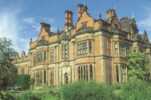 |
Hagley
Worcestershire
DY9 9LG
January and February and Bank Holidays
from 2pm - 5pm 2pm - 5pm 18 - 22 April
25 May - 28 May
24 - 27 Aug
HAGLEY
HALL CLICK |
Tel: 01562 882 408 |
Hall of
Memory
Birmingham's Hall of Memory was erected in the
1920s (before Baskerville House, in front of
which it now stands) to commemorate the 12,320
Birmingham citizens who died in the "Great War",
which we now know as the First World War (a
further 35,000 Birmingham men came home from
that war with a disability). The Hall, made from
Portland Stone, from Portland Bill near
Weymouth, was opened by Prince Arthur of
Connaught on July 4, 1925. It cost £60,000,
which was raised by public subscription.
Further memorials were added after the Second
World War, and for subsequent campaigns,
including Korea, Vietnam and the Falklands.
Around the exterior are four allegorical bronze
figures, by local artist Albert Toft,
representing the Army, Navy, Air Force and
Women's Services.Inside the Hall are three Art
Deco panels, "Call", "Front Line" and "Return",
by William Bloye, another local artist. Opposite
the Hall of Memory, outside what is now the Rep
Theatre, stood a colonnade of Portland Stone.
When Centenary Square was created, this was
moved to the Peace Gardens (formerly St Thomas'
church) in Bath Row. The Hall of Memory is open
to the public every Mon - Sat (except for
Christmas Day), from 10 am to 4pm. For further
information, please contact the curator, Paul
Ellis, on (0121) 303 2822.
|
 |
|
Tel:
0121 303 2822. |
Handsworth
Old Town Hall
A rare medieval survival at the
junction of Slack Lane and Oxhill Road is
Handsworth Old Town Hall which dates from before
1500. It is a timber-framed building of three
bays each divided by a cruck truss. Few examples
survive in the Birmingham area of cruck-frames.
The technique involved sawing a tree, usually
oak, lengthways and leaning the two halves
against each other to form an arch. This
building served variously as a community meeting
place, a village jail and a workhouse. In a poor
state of repair and due for demolition, it was
bought by the Birmingham Archaeological Society
who modernised it to form two dwellings and who
gave it to the City in 1947.
|
 |
20 Slack Lane,
Handsworth,
Birmingham
B20 2JL. |
|
Himley
Hall
In early days, it was a moated manor house,
standing beside the medieval church. For over
four centuries it served as a secondary home to
the Lords of Dudley and their knights. Its
occupants included Dud Dudley, whose
seventeenth-century experiments in smelting iron
ore with coal were carried out nearby. In 1645,
King Charles I encamped in the grounds on his
way to defeat at the Battle of Naseby during the
English Civil War. In 1628, the
Ward family inherited the title Lords of Dudley
through the marriage of Humble Ward to the
heiress to the Dudley estates, Frances Sutton.
Humble Ward was the son of the jeweller and
goldsmith to the court of King Charles I.
Following damage to Dudley Castle during the
Civil War, Himley Hall became the principal
family home. Today's hall dates
from the 18th century when John Ward demolished
the medieval manor to make way for a great Palladian mansion.
The village of Himley was relocated at this
time, and its church rebuilt on its present site
in 1764. In 1774 John Ward died and was
succeeded by his son John junior. He brought in
Lancelot 'Capability' Brown to re-design the
parkland. The 180 acres (728,000
m²) of grounds were designed by Capability Brown to
include a great lake, fed by a series of
waterfalls from a higher chain of smaller pools.
|
 |
Himley Hall,
Himley Park,
Himley, Dudley, DY34DF |
01902 895 207 |
Hatton
Country World
Set in the beautiful Warwickshire
countryside, Hatton Farm Village offers a
wonderful family day out with a fun packed
programme of farmyard animals adventure play,
fun fair rides, children’s shows, falconry
displays and tractor rides. With a seasonally
changing programme there is always something new
to see and do from new born lambs at our
February Frolics event, Easter Egg and Bunny
Hunts, an A-maize-ing Maze in the summer, free
pumpkins during our Pumpkin Week and Santa’s
Grotto at Christmas. We’re open all year and
just five minutes from Junction 15 of the M40 on
the Solihull to Warwick road.
|
 |
Dark Lane,
Hatton,
Warwick,
Warwickshire CV35 8XA
HATTON
COUNTRY WORLD CLICK
|
Tel : 0192684
3411 |
Indoor
Market
Under a complete new redevelopment of the Bull
Ring shopping centre, a brand new indoor market
has been built
|
|
|
|
Ghosts and Graveyard Walks
Would you like to hear about the dark side of
Birmingham's history, to hear about the ghosts
of Birmingham's past - or should that be
'passed-on'.
|
|
|
|
Ikon Gallery
The Ikon Gallery is a well known art gallery for
new art. Exhibitions from the UK and further
afield. From its beginnings in a small
kiosk in Birmingham’s Bullring, Ikon’s
reputation for innovation, internationalism and
excellence has developed over 40 years. Now
housed in the neo-gothic Oozells Street School,
Ikon has an artistic programme consisting of
four interdependent strands.
|
 |
Ikon
Gallery,
1 Oozells Square,
Brindleyplace,
Birmingham b1 2hs
email. art@ikon-gallery.co.uk
/
website
IKON
GALLERY CLICK
Ikon Gallery is a registered charity no.
528892 |
tel.
+44
(0) 121 248 0708 / fax. +44 (0) 121 248 0709 |
International Convention Centre
The key to a successful event is a
successful, accessible venue. A venue that fits
your budget, supports your efforts and
understands your requirements. A venue that
promotes your values and enhances your
reputation with superb surroundings and high
quality presentations. That venue is The ICC
Birmingham. At The ICC we offer all of the
elements key to delivering a superb conference,
seminar, banquet or meeting. These include
professional customer service, advice and
support in event management, catering, technical
equipment and other services.Our ten halls and
ten executive meeting rooms, with dedicated
registration and foyer areas, mean we can offer
one of the UK's largest selections of facilities
under one roof. We offer the support of a
dedicated team of event managers and
presentation specialists to ensure everything
runs smoothly from start to finish. From your
first welcome handshake to your final farewell
wave, you’ll experience total dedication to
detail and commitment to quality delivery. And
we hope that you’ll leave making a promise to
yourself: to come back very soon.
|
 |
Broad Street,
Birmingham,
B1 2EA
THE ICC
CLICK
|
Tel
:
0121 644 5025 |
The
Iron Bridge
Ironbridge is a
settlement on the River Severn, at the heart
of the Ironbridge Gorge in Telford,
Shropshire, England. It lies in the parish
of The Gorge, in the borough of Telford and
Wrekin. The village developed beside, and
takes its name from the famous Iron Bridge,
a 30 metre (100 ft) cast iron bridge that
was built across the river there in 1779.The
area around Ironbridge is described as the
"Birthplace of the Industrial Revolution"
because it is near a the place where Abraham
Darby I perfected the technique of smelting
iron with coke, allowing much cheaper
production of iron. The grandson of the
first Abraham Darby, Abraham Darby III,
built the famous bridge - originally
designed by Thomas Farnolls Pritchard - to
link the two areas. Construction began in
1779 and the bridge opened on New Year's Day
1781. Soon afterwards the ancient Madeley
market was relocated to the new purpose
built square and Georgian Butter Cross and
the former dispersed settlement of Madeley
Wood gained a planned urban focus as
Ironbridge, the commercial and
administrative centre of the Coalbrookdale
coalfield. The Iron Bridge proprietors also
built the Tontine Hotel to accommodate
visitors to the new Bridge and the
industrial sights of the Severn Gorge. On
the hillside above the river are situated
the stone-built 16th century hunting Lodge
at Lincoln Hill, many 17th and 18th century
workers cottages, some imposing Georgian
houses built by ironmasters and mine and
canal barge owners, and many early Victorian
villas built from the various coloured
bricks and tiles of the locality.
|
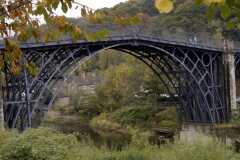 |

The Wharfage, Ironbridge Telford,
TF8 7AW
Tel: 01952 432166 Fax:
01952 432204
E-mail:
tic@ironbridge.org.uk
Adjacent to A4169, Ironbridge,
Shropshire TF8 7JU
|
Tel: 01952
432166 Fax:
01952 432204
|
Ironbridge
Gorge
Museums
Ironbridge is a World Heritage
Site, chosen for its outstanding character and
the historic importance its monuments. The ten
Ironbridge Gorge Museums tell this revolutionary
story. Most famous is the Iron Bridge built by
Abraham Darby in 1779. The Museums catalogue the
remarkable innovation and invention which
followed. The social history of the managers and
men of the Industrial Revolution is brought to
life through the illustration and demonstration
of their labours - most vividly at Blists Hill
Victorian Town, set in a 50 acre woodland site,
where you can step back in time. The 19th
Century ceramic industry also flourished, and
original bottle ovens are the backdrop to the
China Museum, where the premier collection of
Coalport China is exhibited. The original
factory at Jackfield houses a kaleidoscopic
collection of tiles and art pottery. Both
Museums offer 'hands on' workshops. A Museum of
Iron, the Broseley Pipeworks and the Tar Tunnel
complete your visit to the 'most extraordinary
district in the world'. New for 2003 is
Enginuity - it opened August last year and is a
hands-on Design Technology Centre. Passport
Tickets admit you to all ten Museums in your own
time. |
 |
Exit J4 of
M54. Follow signs for Ironbridge Gorge. Then
follow signs for Blists Hill Museums
The IRONBRIDGE GORGE MUSEUM TRUST,
Coach Road, Coalbrookdale, Telford, TF8 7DQ
A
QUICK TASTER OF IRONBRIDGE CLICK |
Tel:
01952 435 900
Fax:01952 435 999 |
Jerome K
Jerome Birthplace Museum, Walsall
Birthplace of the famous
Victorian author Jerome K Jerome (1859-1927)
writer of 'Three Men in a Boat'. The Museum is
situated in two rooms of his family home. One
room is dedicated to the life and works of
Jerome and the other room is a reconstructed
Victorian Parlour. |
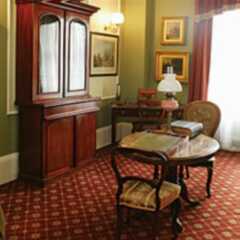 |
Lichfield
Street
Walsall
WS1 1TR
Sat - 12noon-2pm
Email: www.walsall.gov.uk/museums |
01922 653116
01922 632824 |
Jewellery
Quarter Birmingham's
Gem
A unique area with Conservation Area status,
Birminghams Jewellery Quarter still makes an
estimated 40% of UK jewellery. Dating back over
250 years it contains Birmingham's last
remaining Georgian Square and is being
sensitively regenerated with the support of the
Birmingham City Council funded Jewellery Quarter
Regeneration Partnership.
|
 |
JEWELLERY
QUARTER
CLICK
|
|
JW Evans –
The Silver Factory
English Heritage stepped in to rescue J.
W. Evans Silver Factory in 2008. With the
completion of the repairs programme, the site
will open to the public in summer 2011 on a
pre-booked guided-tour basis only.Established in
1881, J. W. Evans is one of the most complete
surviving historic factories in Birmingham's
Jewellery Quarter. To walk into the factory
today is to enter a lost industrial world.Behind
the frontage of four terraced houses, the
workshops retain their original drop stamps and
fly presses. They are packed with thousands of
dies for the manufacture of silverware, as well
as the whole of the working equipment, stock and
records of the business. Guided Tours Tours of
J. W. Evans are available on a limited number of
days throughout Summer 2011. The size of the
property means these are limited to 10 people
per tour, and must be booked in advance.The
property opens for guided tours on 1 June 2011.
For tour times and to book, please call Customer
Services on 0870 333 1181.
|
 |
54-57
Albion Street
Birmingham B1 3EA
JW
EVANS
CLICK
|
0870
333 1181.
|
Kings
Heath Park
An award winning Birmingham Park and home to the
BBC television series 'Gardeners World'.Kings
Heath Park is not a particularly large park but
it is beautifully presented and is definately
worth a stroll round. The flowers and mature
trees make this one of the most pleasant inner
city parks of Birmingham.
|
 |
Kings Heath
Park
Vicarage Road
Kings Heath
Birmingham, B14 7TQ |
Tel:
0121 444 2848 |
Lapworth Museum
The Lapworth Museum of Geology is a
fascinating place to visit if you have
even a passing interest in the earth that
lies beneath our feet. This collection
represents one of the most impressive of
its type in the country, and has many fine
samples and specimens that have been
collected from across the world, piecing
together the natural history of our
planet.
|
 |
University
of
Birmingham, Edgbaston, Birmingham, B15
2TT
|
Phone:
+44
(0)121 414 4173 - Fax: +44
(0)121 414 4942 |
Leather
Museum
Leather MuseumAdmission to the Museum is free
Discover why Walsall became the British leather
goods capital in this fascinating working
museum, housed in a restored leather factory.
For two hundred years Walsall people have been
making some of the world's finest saddles and
leather goods. Walsall Leather Museum seeks to
celebrate this great tradition and reflect the
achievements of the leather craftsmen and women
of Walsall. Dog Collar MakingIn our atmospheric
workshops you can watch skilled leather workers
in the process of hand-crafting leather goods
such as wallets and purses and perhaps have-a-go
yourself. The displays around the museum tell
the stories of the Walsall leather trade and
feature splendid examples of local craftsmanship
past and present, including saddles made for the
Royal Family and exciting contemporary designs.
"Excellent, friendly and welcoming staff, well
maintained grounds and buildings together with
very high standards of presentation,
interpretation and cleanliness throughout all
areas of the museum…fresh flowers, daily
newspapers and clean menu cards added a
welcoming feel to the café… The museum continues
to offer a very good quality visitor experience,
with staff providing very high standards in
visitor welcome….The museum has met the
standards of the Visitor Attraction Quality
Assurance Service at a very high standard."
(Extract from our VAQAS report for 2010) Walsall
is still home to over ninety leather companies
between them making an astonishing variety of
items which are exported to most parts of the
world.
|
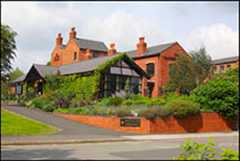 |
Leather
Museum
Littleton Street West
Walsall
WS2 8EQ
LEATHER
MUSEUM
CLICK
|
Telephone
01922 721153
Fax 01922 725827
|
Lickey Hills
Lickey Hills is one of the regions oldest parks.
An area of outstanding beauty this has long been
a favourite destination for the citizens of
Birmingham. The views from Beacon Hill across
the city are outstanding. The park itself covers
some 500 acres as well as having a golf course,
bowls, tennis and putting green.The visitor
centre which was built in 1990 is a popular
place for a rest and refreshments. It also has
plenty of guide books and recommended walks to
offer. Lickey Hills has over 500,000 visitors a
year and it is an excellent adventure playground
for the children. If snow falls the visitor
centre is invaded by local children with their
sledges and the hill on which the visitor centre
stands makes a good and yet safe launch
pad.Lickey Hills is home to a variety of
different habitats with over 380 species of
flowering plants and a wide range of wildlife.
The area became a designated Country Park in
1971.
|
 |
|
|
Lord
Nelson Statue
This bronze statue was the
first publicly funded statue in Birmingham, and
the first statue of Horatio Nelson in Britain.
It was made in 1809 by public
subscription of £2,500 by the people of
Birmingham following Nelson's visit to the town
on 31 August 1802, the year before he sailed
against the fleets of Napoleon.
The statue was unveiled on 25 October 1809, that
being the day decreed as the official golden jubilee of George III. |
 |
stands in the
Bull Ring,
Birmingham |
|
Mailbox
Birmingham's Mailbox shopping arcade
opened just before Christmas 2000. The mailbox
is one of the newest prestige buildings to be
added to the growing collection. Advertised as
Britain's largest mixed use building the
mailbox will soon have a brand new square at
the entrance. What is
suprising about the mailbox is the sheer length
of the arcade. The upper floor goes even further
and opens into a courtyard. The Mailbox is a
landmark building in Birmingham city centre's
ongoing renaissance. Since opening in December
2000, it has fast become a key attraction
alongside the city's existing tourism and
visitor destinations. The Mailbox is an upmarket
development of offices, designer shops,
restaurants, bars and luxury city-centre
apartments in the City Centre and on the
boundary of the City Centre Core in
Birmingham, It includes a mini supermarket
and three art galleries: the Artlounge, Castle
Galleries and the Three White Walls Gallery. It
is also home to BBC Birmingham.
The Mailbox is about 300 metres (980 ft) long
from front to back including The Cube. Above the
front shops it has an additional 6 floors. The
Birmingham and Worcester Canal passes along the
back.
|
 |
61
Wharfside
Street
The Mailbox
Birmingham B1 1XL
MAILBOX
CLICK
|
Tel:
0121
632 1000 |
Merry Hill Shopping Centre
Westfield Merry Hill is a shopping
centre in Brierley Hill near Dudley, West
Midlands, England. The first businesses moved
into the complex in 1985 and the centre was
fully occupied by 1989 with several expansion
projects taking place since then. The original
developers and owners were Richardson
Developments but the Centre has had a number of
other owners including Chelsfield and
Mountleigh. The current owners are Westfield and
QIC.[2] It was built by Tarmac Construction.
Merry Hill is home to over 250 Shops, Retail
Park, Cinema and a Eat Central food hall
including Pizza Express & Nandos with 10,000
Car Parking Spaces. Adjacent to the main
shopping site is The Waterfront, which
accommodates offices for HM Revenue and Customs
amongst others, and has a marina area providing
space for a number of bars and restaurants.The
Dudley No.1 Canal passes though the adjacent
Waterfront site and high above the edge of the
shopping centre, before descending Delph Locks.
|
 |
Merry Hill ,
Merry Hill Centre ,
Brierley Hill
DY5 1QX
Westfield Merry Hill is easily accessible
from the M5 and the main routes leading from
Birmingham city centre.
MERRY
HILL
SHOPPING CENTRE CLICK
|
Tel: 01384 487 911 Fax: 01384
487 910 |
Moseley
Old Hall
This atmospheric Elizabethan
farmhouse conceals a priest's hole and hiding
places, in one of which Charles II hid while on
the run after being defeated at the Battle of
Worcester in 1651. You can also see the bed on
which the royal fugitive slept. Follow the story
of the King's dramatic escape from Cromwell's
troops and find out about 17th-century domestic
life in this friendly and fascinating historic
home. The Hall is an integral part of the
Monarch's Way Trail. The garden has plant
varieties in keeping with the period and has a
striking knot garden following a 17th-century
design. |
 |
Moseley Old Hall Lane,
Fordhouses,
Wolverhampton,
Staffordshire WV10 7HY
MOSELEY
OLD
HALL CLICK
|
Telephone:
01902 782808 |
Museum and Art Gallery
This
excellent museum at the heart of the city
centre was opened in 1885, and stands in a
good looking museum that is filled with pieces
that relate to both the history and
development of Birmingham and the surrounding
areas. There is a large collection on offer
that includes artefacts, paintings, documents,
maps and many other pieces that help tell the
story of the city.
|
 |
Chamberlain
Square,
Birmingham, B3 3DH
Birmingham Museum &
Gallery CLICK
|
Phone:
+44
(0)121 303 2834 |
Museums
Collections Centre
The Museums Collections Centre in Nechells has
brought together 80 per cent of Birmingham
Museums and Art Gallery’s stored collections
under one roof. The 1.5 hectare site, close to
Duddeston Station, holds hundreds of thousands
of objects. Among the collections are steam
engines, sculptures, an entire collection of
Austin, Rover and MG motor cars, a red phone box
and even a Sinclair C5.
|
 |
25
Dollman Street, Birmingham B7 4RQ
MUSEUMS
COLLECTION
CENTRE CLICK
|
Tel:
+44 (0)121 303 0190
|
National Exhibition Centre (NEC)
The
Birmingham NEC (National Exhibition Centre) is
one of the largest exhibition spaces in
Britain with 20 interconnected halls. The
centre is often chosen to host the most
prestigious events outside of London due to
its flexible nature with events large and
small often running in parallel. The NEC is
situated near to the J6 of the M42 motorway,
adjacent to Birmingham International Airport
and next to Birmingham International railway
station allows visitors easy transport access.
Annual events generally include BBC Gardeners’
World Live, BBC Good Food Show, Gadget Show
Live, Horse of the Year Show and Crufts
International Dog Show.
|
 |
National
Exhibition
Centre,
Birmingham B40 1NT
NATIONAL EXHIBITION CENTRE
CLICK
|
Phone:
0121
780 4141 |
National Indoor Arena (NIA)
The
National Indoor Arena is situated in central
Birmingham and used for many of the most
prestigious sporting events in the country.
The arena has a seating capacity of 12,700 and
is by default designed around a ring, thus
making it best suited for sporting and other
ringside events. Examples of its use include
the World Badminton Championships, World Judo
Championships, Davis Cup tennis matches and
the The Gladiators television programme from
1992 to 2000. The arena is located next to the
National Sea Life Centre. There are four car
parks on site with ticket machines, and the
NIA is around a 5 minute taxi ride from
Birmingham New Street Station.
|
 |
The
NIA,
King Edwards Road,
Birmingham B1 2AA
NATIONAL INDOOR ARENA CLICK
|
Tel : 0121 780
4141 |
National Motorcycle Museum
The
National Motorcycle Museum has a vast
collection of British made motorcycles (from
past and present) making it is one of the best
and largest motorcycle museums in the world.
This museum pays tribute to those involved in
the British motorcycle industry, an industry
that once dominated world markets for
approximately 60 years. The museum also hosts
a range of conferences, seminars and other
functions.
|
 |
Coventry
Road,
Bickenhill,
Solihull, B92 0EJ
|
Phone:
+44
(0)1675443311 |
National Sea Life Centre
Situated at Brindley Place this is an underwater
wonderland. Collections of sealife from around
the globe. National Sea Life Centre The National
Sea Life Centre in Brindleyplace is a popular
tourist attraction which features over 60
displays of various sea and freshwater
creatures. It boasts the worlds first
transparent 360 degree tunnel which provides
spectacular views of an ocean floor, complete
with stingrays and sharks and other fish and
marine life.The one million litre ocean tank
also has giant green sea turtles which are often
a favourite with visitors. The building was
designed by Sir Norman Foster. The diverse and
colourful displays along the tour route of this
unique building give the visitor a close look at
sea life from a perspective they would probably
never see in real life. This is a popular
destination for school tours and groups. The
National Sea Life Centre also breeds seahorse,
is home to a Giant Pacific Octopus, crabs,
lobsters, otters and many species of fish.
|
 |
The Waters Edge,
Brindleyplace,
Birmingham, B1 2HL
We are located in the corner of Brindleyplace,
Birmingham on the Waters Edge.
NATIONAL
SEA
LIFE CENTRE CLICK
|
0121 643 6777
|
Nature
Museum
The Birmingham Nature Centre can be found
situated on the Pershore Road not far from BBC
Pebble Mill. Set back off the road it is easily
missed. An oasis of calm adjoining Cannon Hill
Park, this is a delightful inner city animal
kingdom on your doorstep. It's only 2 miles from
the city centre.The centre strives to retain the
original habitat of the animals and it expresses
the importance of conservation. A place for
young children to find out about animals, the
Nature Centre is perched right along aside the
River Lea. Six and a half acres and with a wide
selection of domestic and wild
animals.Advertising itself as having 134 species
of British and European wildlife, the centre
allows free admission to children. The Nature
centre is home to otters, foxes, deer, owls,
sheep, goats, wallaby, donkeys, pigs, polecats,
chickens, rabbits, rodents, beavers, reptiles,
porcupine, cats, waterfowl, lynx, and has a
selection of wild flowers and birds.
|
 |
Pershore Road,
Birmingham, B5 7RL
|
Tel :
0121 472 7775 |
Neville
Chamberlain's House
Neville Chamberlain was born in 1869, the son of
Joseph Chamberlain
|
 |
Edgbaston,
Birmingham
|
|
New Hall
Mill
New Hall Mill, a Grade 2 listed
building, is one of only two water mills still
surviving in the Birmingham area. The Mill and
its meadow field are privately owned and managed
by the New Hall Water Mill Preservation Trust
(Registered Charity No. 502226). Although now
surrounded by the New Hall Valley Country Park,
the Mill is only open to the general public on
specific Open Days, or by prior arrangement. Now
restored to a working condition, New Hall Mill
is located off Wylde Green Road, Walmley, Sutton
Coldfield, in the West Midlands area of central
England. It is a significant local example of
our industrial heritage and has been described
as 'Sutton's little gem'. The present structure
dates from the 18th century, although some parts
are much older. An external overshot waterwheel
provides power for the two pairs of millstones,
while a diesel engine over 50 years old powers
various other milling machinery.
|
 |
Off Wylde
Green Road
Birmingham B76 1QU
NEW
MILL
CLICK |
Tel:
0121 526 3131 |
Newman
Brothers Coffin Fittings Works
Newman Brothers Coffin Fittings Works in Fleet
Street is to be refurbished and opened to the
public. Production stopped in 1998, but
the company made some of the world’s finest
coffin furniture, including fittings for the
coffins of Churchill, Chamberlain and Diana,
Princess of Wales. Thanks to the unique
atmosphere of the interiors, the building
reached the finals of the BCC programme
‘Restoration’ featuring Griff Rhys Jones.
|
 |
Fleet
Street
|
|
Numbernine
Gallery
Birmingham's most exciting and ambitious art
gallery which has created ripples of
enthusiastic interest, at both local and
international level.Number nine was established
by Lee Benson in 1999. The business features
upcoming and existing artists who specialise in
art, glass, ceramics, sculpture and Rock Art.
The website is continually updated with fresh
material and artists. The idea behind Number
nine the gallery is to display art in a
commerical environment. When you are next in
Brindleyplace you might like to stop by and take
a look. Anyone interested in fine and modern
arts will find something to their taste here.
|
 |
Number
nine the gallery
9 Brindleyplace, Birmingham, B1 2JA,
NUMBERNINE
GALLERY
CLICK
|
(0)121
643 9099 or fax: +44(0)121 643 9199
|
Oak House,
West Bromwich
16th century timber framed yeoman
farmer's house surrounded by pleasant grounds,
housing Tudor and Jacobean furniture.
|
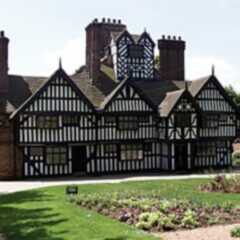 |
Oak House
Museum
Oak Road
West Bromwich B70 8HJ
Email: oakhouse@sandwell.gov.uk
OAK HOUSE CLICK |
0121 553 0759
0121 525 5167 |
Oratory
Hagley Road
After several oratory locations in the city the
current location in Edgbaston commenced in
1852. The church was
constructed between 1907 and 1910 in the Baroque style as a
memorial to Cardinal Newman, founder of the
English Oratory. His papers are located here. It
was designed by the architect Edward Doran Webb .
It is also known as Little Rome in
Birmingham. The Grade II listed
church is served by the Congregation of the
Oratory; who also serve the Brompton
Oratory in London and the Oxford Oratory. J. R.
R. Tolkien, the author of The Lord of the
Rings, worshipped here for about seven
years.The Oratory was visited by Pope Benedict
XVI, immediately after the Beatification Mass of
John Henry Cardinal Newman which was held at
Cofton Park, Birmingham, on the morning of
Sunday September 19, 2010. |
 |
Oratory House
Hagley Road
Edgbaston
Birmingham
B16 8UE
ORATORY
CLICK
|
Telephone
+44 (121) 454 0496
Facsimile
+44 (121) 455 8160 |
Packwood
House
The house is
originally 16th-century, yet its interiors
were extensively restored between the world
wars by Graham Baron Ash to create a
fascinating 20th-century evocation of domestic
Tudor architecture. Packwood House contains a
fine collection of 16th-century textiles and
furniture, and the gardens have renowned
herbaceous borders and a famous collection of
yews.
|
 |
Packwood Lane,
Lapworth,
Warwickshire
B94 6AT
PACKWOOD
HOUSE
CLICK
|
Telephone:
01564 782024 |
Pen Room
Museum
During the 19th Century, 75% of everything
written in the world was with a ‘Birmingham’
pen. Birmingham was at the forefront of
this trade until it declined in the 1950’s with
the invention of the biro and fountain
pen. At one time there were about 100
factories in the Jewellery Quarter area.
The development of the steel pen reduced the
cost of writing and enabled the spread of
literacy throughout the world.Set in the
atmosphere of a former Victorian pen factory,
the Pen Room Museum is dedicated to preserving
and promoting the legacy of this trade.
There is ongoing research into the social,
historical and technical aspects of the trade
and also the Jewellery Quarter itself. The
museum has assisted people tracing their
genealogy and is keen to hear from anybody who
has had connections with the trade. The Pen Room
is more than just a passive museum with objects
on display. It is a hands on
collection! Visitors can try writing with
a variety of different implements including
quills and typewriters; you can also try writing
in Braille or make your own pen nib using
original machinery.
The Pen Room has a range of educational
activities that covers both formal and informal
learning. The collection can be used to
support a variety of curricular subjects
including literacy, local history and
citizenship. Calligraphy Classes are held
at the Pen Room on Saturday mornings from 10am –
11.30am.The Museum is keen to form partnerships
with community groups to encourage participation
in various cultural activities
|
 |
Pen
Room Museum & Learning Centre
Unit 3, The Argent Centre
60 Frederick Street
Hockley
Birmingham
B1 3HS
Email: pentalk@penroom.freeserve.co.uk
PEN
ROOM MUSEUM CLICK
|
Tel:
0121 236 9834
|
Perrot's
Folly
The tower or folly is not actually one hundred
feet tall. It is in fact 94 feet high and offers
panoramic views of leafy Edgbaston and the
surrounding area from its top.he enchanting
tower that inspired Tolkien's 'Two Towers' in
Lord of the Rings is open for an extended period
for the first time in over 20 years.Birmingham's
historic landmark tower Perrott's Folly,
celebrating it's 250th anniversary, will be open
to the public for an extended period the first
time in over twenty years.The tower was built by
eccentric landowner John Perrott in 1758. Though
the reason for its construction is unknown,
historical accounts suggest that in keeping with
the fashion of the day, it was built as an
elaborate hunting lodge for the entertainment of
Perrott’s wealthy friends. It later went onto be
used as a weather observatory |
 |
Edgbaston,
Birmingham |
0121
248 0708
|
Ragley
Hall
Ragley Hall is the home of the Marquess
& Marchioness of Hertford & the seat of
the Conway-Seymour family since 1680. The
Stately Home and Gardens include extensive
parkland, a large lake with a picnic and play
area, an Adventure Wood, Maze, Woodland Walk,
Stables and the Jerwood Sculpture Park.
Refreshments of food and drink can be obtained
from Bodgers cabin near the Adventure Park as
well as in a dedicated Tea Room in the house.
There is also a gift shop.This is an ideal
location for a family day out. Take a picnic and
let the kids enjoy themselves in the Adventure
Wood. There are climbing frames, trampoline,
swings, wooden walkways and rope climbs and
plenty of places to run and hide. The 3D maze is
also very popular. Ragley Hall Gardens contain
some fascinating sculptures with some very
lifelike human figures and unusual stone and
metal ones with various themes. Ragley Hall
itself was designed n 1680 by Robert Hooke, a
friend of Sir Christopher Wren. Of particular
note is the Baroque plasterwork by James Gibbs
which is dated 1750 and the collection of 18th
century paintings, china and furniture. The
gardens and lakeside of Ragley are set in 400
acres of parkland which was landscaped by
'Capability' Brown. There are also some 18th
century carriages and equestrian memorabilia
with an ice house and game larder.
|
 |
Ragley
Hall
Alcester
Warwickshire
B49 5NJ
RAGLEY
HALL CLICK
|
Hall
Office 01789 762 090
|
Red House
Glass Cone Museum
There are only four surviving glass cones
in the UK. This one at Stourbridge is the best
preserved. At one time there would have been
many dotted around the landscape. Glass cones
were quite common in the UK and first appeared
around the end of the 17th century. Glass cones
were used to provide a work space for the
glassmakers and at the same time they acted as a
giant chimney for the furnace itself. Through
the use of underground tunnels, air was
channelled to the furnace to ensure that the
high temperatures necessary for glass making
were achieved. Glass cones should not be
confused with the kilns of the potteries which
were in effect large ovens where ceramics were
fired. The current site was purchased in 1788 by
a Richard Bradley and the Red House Cone was
completed around 1790. It changed hands several
times and in 1916 Stuart Crystal purchased the
large glassworks ( now disused ) across the
road. In 1920 they purchased the Red House Cone.
Production ceased here in 1936 and was moved to
Vine Street in Birmingham. A new factory was
opened in Gwent in 1965. The Red House Cone is a
Grade 2 listed building and after the closure of
Stuart Crystal the restoration of the buildings
and restored craft shops continued until in 2002
it was opened as a visitor attraction. Inside
the cone the building becomes even more
impressive than from the outside where its size
is misleading. The attraction features working
glassmakers, an exhibition, information on the
history of glassmaking, a tea room and a Stuart
Crystal shop. This is an attraction suitable for
all the family and there is plenty to do and
see.
|
 |
Wordsley,
High Street, Stourbridge DY8 4AZ
RED
HOUSE
CONE MUSEUM CLICK
|
01384
812750
|
Ruskin
Glass Centre
Glassmaking has taken place in Stourbridge for
over 400 years. Glass and Crystal is still made
here today. Following a £1.4m refurbishment,
made possible thanks to funding from Advantage
West Midlands, the site that once was home to
the glass trade greats of Royal Doulton and Webb
Corbett is continuing to help the glass trade
thrive in Stourbridge. Ruskin Glass Centre is
home to a wide array of glass crafts; from live
glassblowing, respected studio glass artists,
engravers, glass decorators, and glass repair
specialists to the diverse yet complementary
trades of furniture design, handmade soap,
textiles, photography, printing and publishing.
There is also a brand new 30 cover cafe on site
serving high quality fresh organic snacks, meals
and desserts.
|
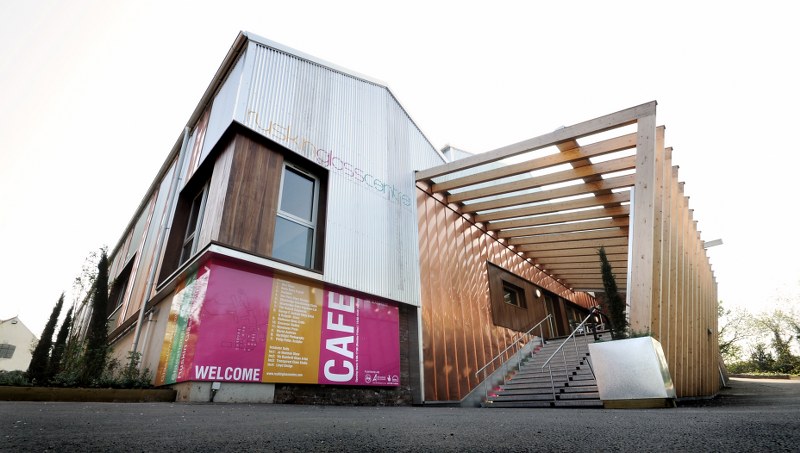 |
Ruskin
Glass Centre, Wollaston Road, Amblecote,
Stourbridge, West Midlands, DY8 4HF
email: info@ruskinglasscentre.co.uk
RUSKIN
GLASS CENTRE CLICK
|
tel:
01384 399 419
|
St.
Martin's Church
St. Martins is the parish church of Birmingham,
or "The Cathedral of the Bull Ring", as some
would say. The first church was probably Norman,
but was rebuilt in the 13th century. As it
stands today, most of the church dates from the
late 19th century, though inside you can see
effigies of the de Berminghams, who were Lords
of the Manor. Their home was nearby. There are
windows by Burne-Jones and William Morris
inside. In 2003, the exterior was cleaned and
refurbished, in conjunction with the
redevelopment of the adjacent Bullring area.
This is one of the most ancient and contemporary
buildings in Birmingham. Most of this Grade II
listed church is from the nineteenth century. It
was built in 1873 and is an example of gothic
Victorian architecture, designed by Alfred
Chatwin, from Birmingham, who also worked on the
houses of parliament. But St Martin's is much
older than that. There has been a church on this
site since 1290 and may well have been a simple
place of worship here in Saxon times. St
Martin's is also a place of worship for a
thriving community who refurbished the building
in 2000 making it more light and open. In 2009
we created a tea lounge, healing centre, and
learning and advice service so our hospitality
in the heart of the city could be extended. We
believe that what Jesus called 'Life in all its
fullness' can be discovered right here in the
crosscurrents of the marketplace. You are very
welcome to come in and walk around.
|
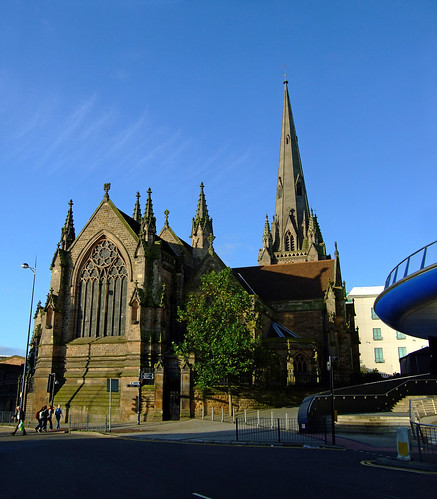 |
St.
Martin in the Bull Ring,
Edgbaston Street,
Birmingham
B5 5BB.
ST.
MARTINS CLICK
|
0121-600
6020
|
St.
Paul's Church and St. Paul's Square
St Paul's Church was built in 1777-9 when the
estate of the Colmore family was released for
development. It was the parish church of James
Watt, Matthew Boulton and Washington Irving. The
rectangular church has a West Tower and its
spire was added in 1823. Unfortunately, over
time the church became run down. However it has
since undergone refurbishment and restoration.
It stands in the centre of Birmingham's only
remaining Georgian square. This was built in
1779 as part of the Newhall estate. Once a most
elegant area, it was encroached upon by
factories and fell into disrepair. In recent
times regeneration has taken place and a number
of bars (such as the Jam House) and restaurants
are now situated in and around the square,
making it a desirable and vibrant place to be
once more.
|
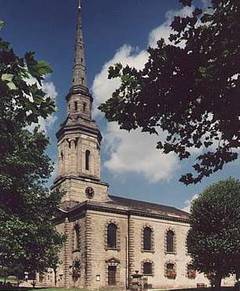
|
St.
Paul's Church, St. Paul's Square
Birmingham, B3 1QZ
ST
PAUL'S CLICK
|
Tel)
0121 236 7858 (Fax) 0121 233 0332
|
St.
Philip's Cathedral
St. Philip's Church was consecrated in 1715,
having been designed by Thomas Archer in the
baroque style. When Birmingham became a
bishopric in 1905, St Philip's, despite rival
claims from St Martin's, became its cathedral. A
statue of the first bishop, Charles Gore, stands
by the west door. Inside there are fine windows
by Burne-Jones, for which the artist waived his
fee, being himself a Birmingham man.
|
 |
Birmingham Cathedral, Colmore Row, Birmingham B3
2QB
Email us enquiries@
birminghamcathedral.com
ST.PHILLIP'S
CLICK
|
Tel:
0121 262 1840 Fax: 0121 262 1860
|
Sandwell Valley Country Park
2000 acres of
lakes, woodland and farms with hidden pools,
wildlife refuges and the remains of an old
Benedictine monastery. |
 |
Salters
Lane
West Bromwich
B71 4BG
Email: enquiries@sandwellvalley.com
SANDWELL COUNTRY PARK CLICK |
tel : 0121
553 0220
0121 525
9435
|
Sandwell
Valley Park Farm
Sandwell Park Farm is a fully restored working
Victorian farm. Grazing meadows, a traditional
farmyard, walled kitchen gardens, Grade II
listed buildings, a small museum and award
winning Tea Rooms provide a perfect day out.
|
 |
Sandwell
Park Farm, Salters Lane, West Bromwich, B71 4BG.
SANDWELL
PARK FARM CLICK
|
Telephone 0121 553 0220. |
Sarehole Mill
he 200-year-old mill at Sarehole is one of only
two surviving watermills in Birmingham. The
cobbled courtyard and mill pool are a tranquil
haven from 21st century life outside, while the
buildings and their impressive machinery give a
unique insight into the lives of the millers who
once inhabited this rural retreat.More than
seventy watermills once occupied the riverbanks
around Birmingham and there has been one at
Sarehole for at least 460 years. Sarehole
was first built as a corn-grinding mill but has
also been used for rolling sheet metal, grinding
blades and wire rolling.The Mill was once rented
to Matthew Boulton before he moved to Handsworth
to build his famous Soho Manufactory. The local
landscape also provided inspiration for the
stories of JRR Tolkien who spent his childhood
here.
|

|
Cole Bank Road,
Hall Green
Birmingham, B13 0BD
SAREHOLE
MILL
CLICK
|
Tel: +44 (0)121 777 6612
|
Selfridges
Birmingham
Selfridges is a chain of department stores in
the United Kingdom. It was founded by American
entrepreneur Harry Gordon Selfridge who opened a
large store in London's Oxford Street on 15
March 1909..The Birmingham store is covered in
15,000 spun aluminium discs and was designed by
architects Future Systems. A further store is
scheduled to open in Glasgow in 2007.
The Birmingham store, designed by architects
Future Systems, is covered in 15,000 spun
aluminium discs. Since it opened in 2003, the
Birmingham store has been named every year by
industry magazine Retail Week as one of the 100
stores to visit in the world.
The current shopping centre at the Bull Ring is
the busiest in the United Kingdom with 36.5
million visitors in 2004. It is also the UK's
eleventh largest shopping complex and it houses
one of only four Selfridges department stores
and the largest Debenhams outside of London.
Consequently, the centre has been a huge
success, attracting custom from all over the
world, including New York.
|
 |
Selfridges & Co
The Bullring
Upper Mall East Birmingham
B5 4BP
SELFRIDGES
CLICK
|
Tel:
0800 123 400
|
Selly Manor
Selly Manor is one of Birmingham's oldest
buildings. It used to stand in Bournbrook Road.
First mentioned in the Court Rolls in 1327,
Selly Manor was originally a sub-Manor of Weoley
Castle. Early last century it was condemned to
be demolished to make way for new building
development.It was bought by George Cadbury and
transported piece by piece from the original
site in Bournbrook (about a mile away) then
repaired and re-built in his new village of
Bournville. Owned by the Bournville Village
Trust, Selly Manor was opened to the public in
1917 and houses the Laurence Cadbury collection
of furniture. dating from c. 1500-c.1750 it is
one of the best collections of vernacular
furniture in the country. The garden surrounding
Selly Manor and the smaller Minworth Greaves is
planted with many herbs and plants that would
have been familiar to the people living in the
houses.
|
 |
Corner of Maple Road and Sycamore Road
Bournville
Birmingham
SELLY
MANOR
CLICK
|
Tel: (0121) 472 0199
|
|
Severn
Valley Railway
The Severn Valley Railway runs for 16
miles from Kidderminster in Worcestershire to
Bridgnorth in Shropshire and boasts one of the
largest collections of working steam
locomotives and coaches, including some
rolling stock which is over 80 years old. It
hosts many special events throughout the year
including visits by those children's
favourites 'Thomas the Tank Engine' and of
course 'Santa'. Other events include the
popular '1940s Weekend', 'Classic Car and Bike
Day' and 'Severn Valley in Bloom', which
highlights the beautiful Station gardens.The
Railway also offers a wide variety of catering
facilities ranging from the buffets at the
main stations, a trolley service on the
trains, through to the ever popular Sunday
luncheon trains. These trains operate on most
Sundays throughout the year and advance
booking is required. The beautiful valley of
the River Severn is best seen from the train
or by alighting at one of the intermediate
stations you can enjoy a walk along the
riverside paths.
|
 |
The
Railway Station
Bewdley
Worcestershire
DY12 1BG
SEVERN
VALLEY
RAILWAY CLICK |
Tel:
01299
403
816 |
Shakespeare
Express
Birmingham ( Snow Hill ) to Stratford and back
twice a day on Sundays during July, through to
the beginning of September and occassionally on
other Sundays The Shakespeare Line - the railway
line between the City of Birmingham and
Stratford-upon-Avon. Stations along this line
serve the City’s shopping and business
districts, urban suburbs, market towns, rural
communities and Stratford-upon-Avon’s
international visitor centre and facilities. The
Shakespeare Line offers residents and visitors
quick, convenient and economical travel for
business, leisure and educational purposes.
Shoppers, in particular, find the trains a quick
and easy way to get to the Birmingham, Stratford
and Henley markets and for other shopping
outings. The route is relatively unusual as it
is used by regular modern diesel services and
seasonal heritage steam train operations. Over 2
million passengers per annum use the stations
between Stratford and Small Heath, with many of
those people using Birmingham Moor Street and
Snow Hill stations travelling to and from other
Shakespeare Line stations.
|
 |
* Birmingham - Snow Hill (BSW)
* Birmingham - Moor Street
(BMO)
* Bordesley (BBS)
* Small Heath (SMA)
* Tyseley (TYS)
* Spring Road (SRI)
* Hall Green (HLG)
* Yardley Wood (YRD)
* Shirley (SRL)
* Whitlocks End (WTE)
* Wythall (WYT)
* Earlswood (EWD)
* The Lakes (TLK)
* Wood End (WDE)
* Danzey (DZY)
* Henley-in-Arden (HNL)
* Wootton Wawen (WWW)
* Wilmcote (WMC)
* Stratford-upon-Avon (SAV)
SLPG,
12 Morris Field Croft.
Hall Green,
Birmingham B28 0RN
SHAKESPEARE
EXPRESS
CLICK
|
|
Soho House
Soho House was the elegant home of industrialist
and enterpreneur Matthew Boulton from 1766 to
1809. Carefully restored, this fashionable
Georgian house features period room interiors
with fine collections of ormolu, silver,
furniture and paintings. It was once a regular
meeting place for some of the greatest minds of
the 18th century. Matthew Boulton (1728-1809)
was a founding member of the Lunar Society, a
group of great thinkers and inventors who met
regularly at his home at Soho House. Boulton’s
guests included James Watt, Erasmus Darwin,
Josiah Wedgwood and Joseph Priestley.
|
 |
Soho Avenue (off Soho Road) Handsworth
Birmingham B18 5LB
SOHO
HOUSE CLICK
|
Tel: +44 (0)121 554 9122
|
Solihull
and District Hebrew Congregation
The Solihull
and District Hebrew Congregation is a small
and vibrant community which holds regular
religious services as well as a wide range of
social activities. It also operates a
successful Cheder which utilises the latest
audio/visual teaching aids to bring Judaism
alive for its pupils. Visitors are always
welcome
|
 |
3 Monastery Drive,
Solihull,
B91 1DW
SOLIHULL
& DISTRICT HEBREW CONGREGATION
|
Tel:
+44(0)121 603 5170
|
 |
Star City
Europe's largest cinema complex right here in
Birmingham. Warner Village.The Warner Village
cinema at Star City is just off Junction 6,
Cuckoo Road near the Heartlands Spine Road. A
massive entertainment complex, it is very close
to Spaghetti Junction.Star City came into being
as a result of the regeneration of the
Heartlands area of Birmingham. It was opened in
2000 by George Clooney, having been referred to
as Warner Village and now as Vue under its new
branding.Star City is a premier destination for
family leisure in Birmingham and the West
Midlands. There are a host of attractions under
one roof including the recently opened Adventure
Island Golf which is the UK's first indoor
Adventure Golf Complex with two 18 hole gold
courses - all with a tropical theme complete
with palm trees, volcanoes, caves, waterfalls
and villages.Star City boasts one of the largest
Cinemas in Europe alonge with a 22 lane bowling
alley, a 5 a side football centre, gym, Laser
Station and Climbing Centre. It also has a huge
choice of restaurants and a few shops.The UK's
largest Casino is also based here. Star City
went through a major redevelopment in 2008 and
the venue is host to several shows and events
throughout the year. This is no longer just a
big cinema. This is an impressive family leisure
destination of significant value to the region.
Vue's theatre screens all the usual Hollywood
blockbusters and many popular Bollywood films.
You can't go wrong with Star City. If the
weather is bad and you feel like being cheered
up then head straight here.
|
 |
StarCity Birmingham
32 Watson Road
Birmingham
B7 5SA
STAR
CITY
CLICK
|
|
|
"Stourbridge
Schindler"
The plaque above can be seen at the
entrance to Mary Stevens Park in Stourbridge
in recognition of the late Frank Foley, the
Stourbridge man who saved thousands of Jews in
World War 2. The plaque was unveiled on 27
January 2004, Frank Foley was a secret service
agent who posed as a passport officer in
Berlin, issuing fake documents to around
10,000 Jews, saving them from almost certain
death in the Nazi concentration camps. Mr
Foley lived most of his life in Stourbridge
and died in 1958 and is buried at Stourbridge
Crematorium.
Foley: The Spy who saved 10,000 Jews - buy the
book |
 |
 Foley:
The
Spy
who saved 10,000 Jews Foley:
The
Spy
who saved 10,000 Jews
by Michael Smith
Published by Hodder & Stoughton General |
|
|
Sutton
Arts Theatre
|
|
Sutton Arts
Theatre
, South Parade,
Sutton Coldfield
, B72 1QU
http://www.suttonartstheatre.co.uk/
|
|
Sutton
Park
Sutton Park is not just another park. It
is a nature reserve which consists of woodland,
heathland and wetland. Plentiful in water, a
variety of plant life and tree specimens grow
here. Sutton park covers an area of some 2,400
acres.Henry VIII used Sutton Park as one of his
favourite hunting parks and settlements have
been here from much earlier times. The park was
used by the military in the first and second
world war for training purposes. There was even
a prisoner of war camp here. Sutton Park is a
National Nature Reserve under the management of
the Birmingham City Council. The park handles
large numbers of visitors especially in the
summer months. It also caters for a wide range
of leisure pursuits from model aircraft flying,
kite flying clubs to joggers and cyclists as
well as families who just love to visit and
picnic within the grounds. There is a visitor
centre, a restaurant by the lake, a nearby golf
course and plenty of open space and fresh air.
|
 |
Sutton
Coldfield
The main entrance is Town Gate in Tudor Hill.
The postcode for satnav users is B73 6BU.
SUTTON
PARK CLICK
|
|
Symphony
Hall
The Birmingham Symphony Hall opened in 1991 and
is situated just opposite the Hyatt Hotel
adjacent to Centenary Square. Birmingham's
Symphony Hall is an impressive 2,262 seat
concert hall in the heart of the city. Located
in the ICC ( International Convention Centre )
building, it was officially opened by the Queen
in 1991. The Symphony hall has world class
acoustics and an impressive auditorium that must
place it amongst the finest in the UK. The
Birmingham Symphony Orchestra are based here and
it is host to numerous international orchestras.
It is also a venue for community events and has
a diverse programme which includes all types of
music, comedy acts, conferences and graduations.
Over 300 events a year take place here with
nearly 400,000 people visiting the Symphony Hall
each and every year. At a cost of £30 million it
was designed by Russell Johnson of Artec
Consultants Inc and features state of the art
acoustics and 8 inch ( 200 mm ) thick concrete
walls and ceilings with dampening curtains and
sound reflection equipment. Many people are
unaware that the Symphony Hall is built just 98
feet ( 30 metres ) from a railway line. To
alleviate any interference the railway track is
mounted on rubber cushions as is the entire
hall.
|
 |
Symphony
Hall is located in the International Convention
Centre (ICC) on Broad Street. On entering the
Convention Centre from Centenary Square,
SYMPHONY
HALL CLICK
|
Box
Office and information: 0121 780 3333
|
Town Hall
Designed by architect Joseph Hanson but based on
Palladio's Books of architecture the Birmingham
Town Hall is an impressive building. Town Hall
re-opened on Thursday 4 October 2007, with a
two-week festival of events on the theme
Celebrating the Past, Pioneering the Future.
Town Hall has undergone a £35m renovation,
funded by Birmingham City Council (£18.3m),
Heritage Lottery Fund (£13.7m) and European
Regional Development Fund (£3m).
Acclaimed at its opening in 1834 as the finest
music hall in the country, this Grade 1 listed
landmark has been lovingly and painstakingly
renovated by a dedicated team of conservation
and construction professionals. Since that time,
its imposing neo-classical design has dominated
the City centre’s Victoria and Chamberlain
Squares.
|

|
Town Hall
Victoria Square
Birmingham
B3 3DQ
TOWN HALL
CLICK
|
Box Office and information: 0121 780
3333
|
UNIVERSITY
COLLEGE
The origins of our College can be traced back to
the late nineteenth century with the foundation
of a Municipal Technical School offering cookery
and household science courses. In 1927 the
name of the School was changed to the Central
Technical College. By the 1950s the College had
been renamed the College of Technology and a
department of Bakery and Domestic Science had
been established. The new College of
Bakery, Catering, Domestic Science and
Associated Studies opened to students in 1957.
The following year, the name was changed yet
again to the Birmingham College of Food and
Domestic Arts. The College continued to operate
on many sites across the City until 1968 when
HRH The Duke of Edinburgh opened our main site
in Summer Row. Another name change, in the late
1980s, to the Birmingham College of Food,
Tourism and Creative Studies, was designed to
recognise the diversification of the College's
programmes. We
welcome members of the public into University
College Birmingham to try our facilities and
give our students valuable practical experience,
so why not make the most of what's on offer?
Restaurants : bringing
fine
dining at affordable prices, with lunchtime and
evening menus to rival the best Birmingham has
to offer.
With a 3 course lunch from just £8.50 why not
take time out of your busy day and let us serve
you, or if time is short our Express Dish of the
Day is an ideal choice for those who want a
quick bite to eat. The
Atrium
Restaurant is open Monday - Friday evenings with
a range of fine dining menus, or if you're
looking for a night out with a difference try
one of our popular theme nights in the Brasserie
Restaurant.
Cakes and Bakes : Pick
up delicious freshly baked goods and ready meals
in our shop, Cakes
and Bakes.
The Spa :You
could treat yourself to top class pampering
in The Spa
, with facilities that rival the most exclusive
salons our students learn in the best possible
environment and you can benefit from that too.
Sports Therapy Clinics :And
if you require Sports Therapy because
of participation in sport or merely the
rigours of everyday life then our Sports Therapy
Clinics are for you. |
 |
University
College
Birmingham, Summer Row,
Birmingham, B3 1JB,
UCB
CLICK
|
Telephone: +44
(0)121 604 1000
Restaurant Reservations: 0121 604
1010.
Sports Therapy:
To book a treatment call our
dedicated reservation line on
0121 604 1020.
|
Vintage Trains (Birmingham
Railway)
Vintage Trains is the operating company for the
collection of steam locomotives kept at Tyseley
Locomotive Works under the guardianship of the
Birmingham Railway Museum Trust.
|
 |
Vintage Trains
670 Warwick Road
Tyseley
Birmingham
B11 2HL
VINTAGE
TRAINS
CLICK
|
0121 708 4960
|
Walsall Art Gallery
The New Art Gallery Walsall opened on 16th
February 2000 in the heart of Walsall town
centre. A unique civic building for Walsall, the
gallery is also a rare example of a brand-new
building for the millennial arts and has been
hailed as one of the most exciting new art
galleries to be built in the UK in the last 20
years.
|
 |
Gallery
Square
Walsall West Midlands WS2 8LG
Tuesday to Saturday 10.00am to 5.00pm
Sunday 11.00 am to 4.00 pm
E mail info@artatwalsall.org.uk
WALSALL ART GALLERY CLICK |
Phone: 01922 654 400
Fax: 01922 654 401
|
Walsall
Arboretum, Walsall
Walsall Arboretum is a beautiful
park containing lakes, trees and gardens.
Probably best known for the annual lightshow,
Walsall Illuminations, which takes place during
September and October. With over 50 illuminated
features, lakeside lights, laser show, floodlit
gardens, children's rides, entertainment and
refreshments.
|
 |
Lichfield
Street/Broadway North
Walsall
WS4 2BU
From M6 Junctions 7,9 and 10, follow the brown
and white tourist signs.
Open daily all year round from 7.15am.
Email: tourism@walsall.gov.uk
WALSALL ARBORETUM CLICK |
Tel:
01922 650309
01922 721682 |
Walsall
F.C
BOTH Walsall Town (founded
1877) and Walsall Swifts (founded 1879) had
been in existence for a number of years
before, in the course of the 1887/88 season,
it was decided to end their fierce local
rivalry and amalgamate.
They were natural choices
for one of the places in the new Football
League second division when it was formed in
1892. Situated
less than a mile from junction nine of the
M6, Banks Stadium, opened in 1990, is close
to the Walsall ring road; it has a mainline
railway station across the road and there is
parking space for well over 1,000 vehicles.
|
 |
Banks's
Stadium, Bescot Crescent, Walsall, West
Midlands, WS1 4SA
Main Club Email - info@walsallfc.co.uk
SADDLERS
CLICK
SEE
OUR SOCCER SITE
|
Ticket
Office: 0871-663 0111 or 0871-663 0222
Ticket Office Fax: 0871-423 1966
|
Walsall
Local History Centre
Welcome to Walsall Local History Centre, the
Archive Service and Local Studies Library for
Walsall Council.We collect, preserve and make
available records relating to the history of
the borough. Among the kind of records
which we hold are council minutes, accounting
records for local firms, registers for
non-conformist chapels, events programmes for
local organisations, photographs, maps,
recordings of peoples’ memories and sale
catalogues. We hold records of Walsall
Football Club, Shannon’s Mill and the Walsall
Society for the Blind among many others.
|
 |
Walsall
Local History Centre
Essex Street
Walsall
WS2 7AS
LOCAL
HISTORY
CENTRE CLICK
|
Telephone
01922 721305
Fax 01922 634954
|
Walsall
Museum
This friendly and welcoming community-focused
museum is located in the heart of
Walsall. Dedicated to the history of
Walsall, the museum is home to a wide-ranging
collection of artefacts reflecting Walsall’s
proud heritage, its many industries, and the
lives of the people who lived here. In
particular the museum houses the nationally
important ‘Hodson Shop’ collection of
twentieth century working clothing. The borough’s
history is explored in the museum’s permanent
local history gallery, The Changing Face of
Walsall, while an exciting programme of
activities for children and adults means
everyone can engage with their heritage.
Admission to
the Museum is free.
|
 |
Walsall Museum
Lichfield
Street
Walsall
WS1 1TR
WALSALL
MUSEUM
CLICK
|
Telephone 01922 653116
|
Walsall
Wharf Narrowboat
A 40 seat narrowboat, which runs
cruises throughout the year along the Walsall
Canal starting from Town Wharf, next to the New
Art Gallery. The Wharf is also available for
private hire. |
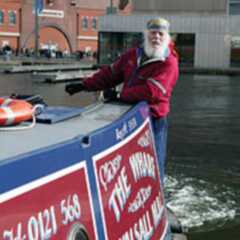 |
Wharf
Narrowboat, c/o Sport & Leisure Development
Services
Library Building, Walsall Street
Willenhall
WV13 2EX
Email: sportdev@walsall.gov.uk
Website: http://www.walsall.gov.uk |
Tel:01922
605500
01922 605752
|
Warwickshire
County Cricket Club
Warwickshire County Cricket Club
is one of the 18 major county clubs which make
up the English and Welsh domestic cricket
structure, representing the historic county of
Warwickshire. Its limited overs team is called
the Warwickshire Bears. Their kit
colours are black and gold and the shirt sponsor
is Gullivers Sports Travel. Its home is
Edgbaston Cricket Ground in south Birmingham,
which regularly hosts Test and One Day
International matches.
|
 |
The County
Ground
Edgbaston
Birmingham
B5 7QU
WARWICKSHIRE
CCC CLICK
|
0844 635 1902 |
Warwickshire County Cricket
Club Museum
Warwickshire
County Cricket Club Museum at Edgbaston takes
visitors on a fascinating trip through more
than a hundred years of history. Located at
the heart of one of the most important cricket
grounds in the country, the museum houses an
impressive collection of memorabilia. There
are pieces of equipment, scorecards, trophies,
photographs, paintings and books amongst the
treasure trove of things to see here.
|
|
County Ground,
Edgbaston,
Birmingham, B5 7QU
|
Phone: +44
(0)121 446 4422 - Mobile: +44
(0)121 446 4544 |
Waseley
Hills Country Park
Follow the A491. There is ample metered
parking and a visitor centre with refreshment
facilities. It is run by Worcestershire County
Council and there are purpose built meeting and
training rooms with seats up to 40. This is not
a large park. Don't expect that there will be a
lot going on. It is mainly used for hikers and
people just using it as a base to go wandering
off in the countryside.It is popular with dog
owners.This a a good place to just park the car
and go for a walk. You are just far enough
outside Birmingham to appreciate the countryside
and it provides an alternative to Lickey Hills
if you are seeking something different and dont
wish to travel too far. Consider paying a vist.
|
 |
Countryside
Service
Waseley Hills Country Pk Gannow Green Lane
Rubery, Birmingham.
|
Tel:
01562 710025 |
Weoley
Castle
The ruins at Weoley Castle are over 700 years
old and are the remains of the moated medieval
manor house that once stood here. The site has
been inhabited from the 12th century and,
according to the Domesday Book, was part of the
estates of William Fitz Ansculf. Weoley changed
hands several times between 1485 and 1531 when
it began to fall into disrepair. In the
centuries that followed, stone from the castle
was removed to build a nearby farm and the
Dudley no.2 canal. Today the site is a scheduled
Ancient Monument of national importance. The
ruins can be viewed from a viewing platform.
Direct access to the actual ruins is only
available via one of our event days or for
groups and schools by a pre-booked guided tour.
Telephone 0121 464 2193 for further information.
|

|
Alwold
Road Weoley Castle Birmingham B29
WEOLEY
CASTLE
CLICK
|
Tel:
+44 (0)121 464 2193
|
West
Bromwich Albion F.C.]
1878 - Club formed
by workers from Salter's Spring Works in West
Bromwich. Won first game 1-0 versus Hudsons.
1879 - Took name of West Bromwich Strollers
after walking to Wednesbury to buy a ball.
1880 - Changed name from Strollers to
Albion.1888 - Became founder member of the
Football League, winning first game at Stoke
City, 2-0, on September 8 .1900 - Albion
moved to The Hawthorns, the highest ground
above sea level in the UK at 551 feet Why the
Baggies? 4 Different explanations:A
corruption of 'Magee' - a popular full back in
the 20's. Unlikely, since Baggies was in use
in the 1900's -The name of protective trousers
factory workers used in the area -From
supporters who took bags (baggies) round to
local pubs to save the club from extinction in
1905 -When the club was nearly bankrupt in the
1900's, a number of the larger players left to
have not only their shoes, but their kit
filled by smaller players. 'Spotting their
voluminous drawers, a wag in the crowd is
supposed to have shouted 'up the Baggies'..
the rest is history -Former club secretary Eph
Smith gave his explanation in a Throstle Club
News as going back to 1904 and a stocky back
known as Amos Adams. 'His thickness of hips
made his baggy pants look even more huge, and
one day when he was not playing well, a fan
shouted 'Baggy'. Albion and Adams recovered
quickly, the name stuck.'
|
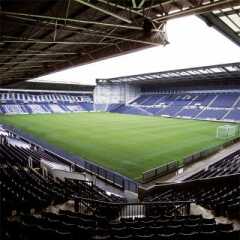 |
The
Hawthorns, West Bromwich,
West
Midlands B71 4LF
EMAIL:
enquiries@wbafc.co.uk
BAGGIES
CLICK
SEE
OUR SOCCER SITE
|
Tel:
0871 271 11
|
|
West
Midlands Safari Park
We are continually
adding to our events programme and you will
find all the latest news and details about
new events and the coming season, as well as
family favourites on our website. There are
usually all kinds of baby animals on show
throughout the season - how many will you
spot in the amazing four mile Safari drive!
|
 |
West Midland Safari and
Leisure Park
Spring Grove, Bewdley
Worcestershire DY12 1LF
The West Midland Safari And Leisure Park is
open 10.00am daily, including Bank Holidays,
from Saturday 11th February, until Friday,
3rd November 2006.
WEST
MIDLANDS
SAFARI PARK CLICK |
Tel
:01299 402114 |
Weston
Park
The
beauty and tranquility of the House is the
result of centuries of creativity, collecting
and patronage of artists and craftsmen, by
generations of one family, the Bridgemans,
Earls of Bradford. Gifted to the nation in
1986 by Richard the 7th and present Earl of
Bradford, and with the suppport of the
National Heritage Memorial Fund, it is now in
the care of the Trustees of the Weston Park
Foundation. Award winning 17th Century Stately
Home set in 1000 acres of 'Capability' Brown
Parkland and situated on the
Staffordshire/Shropshire border. The
attractions include the House, Adventure
Playground, Miniature Railway, Gallery and
Gift Shop, Stables Coffee Bar and Restaurant,
Auditorium, formal gardens, woodland walks,
lakes, follies and much, much more.
|
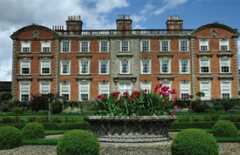 |
Weston-under-Lizard,
Staffordshire, TF11 8LE
on the A5 at Weston-under-Lizard, just 30
minutes from central Birmingham, three miles
off the M54 Jct 3 and eight miles off the M6
Jct 12. New M6 Toll Road, Jct 11A.
email: enquiries@weston-park.com
WESTON PARK CLICK |
Tel: 01952 852100 |
|
Wightwick
Manor, Wolverhampton
Wightwick
Manor is one of only a few surviving examples
of a house built and furnished under the
influence of the Arts & Crafts
Movement.The many original William Morris
wallpapers and fabrics, Pre-Raphaelite
paintings, Kempe glass and de Morgan ware help
conjure up the spirit of the time. An
attractive 7-hectare (17-acre) garden reflects
the style and character of the house.
|
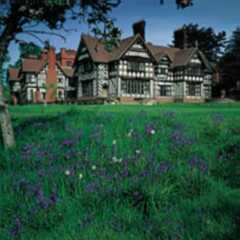 |
Wightwick
Bank
Wolverhampton
WV6 8EE
Email: wightwickmanor@nationaltrust.org.uk
WIGHTWICK MANOR CLICK |
Tel: 01902
761400
01902
764663
|
Wolverhampton
Art Gallery, Wolverhampton
Wolverhampton Art Gallery is located in
the heart of Wolverhampton's historical city
and aims to provide a friendly, accessible and
inclusive environment for visitors to explore
art, at their leisure.
With exhibitions such as Hidden Treasures,
which explores the far reaching influence, of
arts and crafts from India and the Middle East,
on Victorian interior design. And Sensing
Sculpture, which allows you to use senses such
as touch, smell, sound and sight to explore the
artworks. |
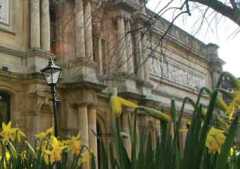 |
Lichfield
Street
Wolverhampton West Midlands WV1 1DU
Monday – Saturday 10am – 5pm
Email: info@wolverhamptonart.org.uk
WOLVERHAMPTON ART
GALLERY CLICK |
Tel: 01902
552055 |
Wolverhampton
Grand Theatre
Grade II Listed Victorian theatre
presenting No 1 touring productions of musicals,
drama, dance, opera, family shows, concerts and
pantomime. |
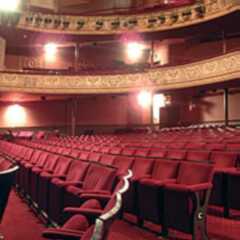 |
Lichfield
Street
Wolverhampton
WV1 1DE
Email: marketing@grandtheatre.co.uk
GRAND THEATRE CLICK |
tel: 01902
429212
01902 573302 |
Wolverhampton
Racecourse
Wolverhampton
Racecourse,
Dunstall Park, is Britain's first floodlit
horse racing track bringing you the thrills of
racing, day and night. It is also the UK's
busiest racetrack as we host around 100
fixtures during the year.The unique and
electric atmosphere of racing has enthralled
punters and families alike for generations.
The modern facilities at Wolverhampton are
testament to the fact that racing can move
with the times but retain the excitement of
the sport. Racing takes place on the
all weather flat course throughout the year,
so whether you're a seasoned race goer or a
novice, we can tailor a package to suit your
requirements. |
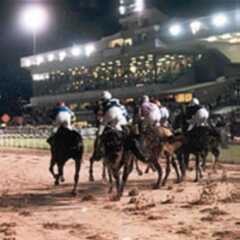 |
Wolverhampton Racecourse,
Dunstall Park, Wolverhampton. WV6 0PE
Located north of the city centre, off
the A449 dual carriageway. Follow the brown
tourist signs to Dunstall Park.
WOLVERHAMPTON
RACETRACK CLICK |
Tel :
0870 220 0140
|
Wolverhampton
Wanderers
F.C.
Wolves first began life as a schoolboy team when
the headmaster of St. Luke's school in
Blakenhall, Harry Barcroft, presented a football
to a group of pupils who had enjoyed an
exceptional year's school work. The presentation
of the football was instigated by the
co-founders of the team, John Baynton and Jack
Brodie.St Luke's FC were formed in 1877 and, two
years later, after merging with the local
cricket and football club known as The
Wanderers, they became known as Wolverhampton
Wanderers. Eight years later, the club moved to
a new ground which is still their home today -
Molineux.. Wolves became founder members of the
Football League in 1888
|
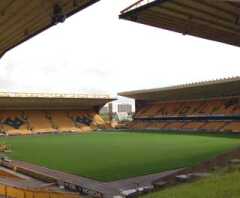 |
Molineux
Stadium
Waterloo Road
Wolverhampton
WV1 4QR
General email: info@wolves.co.uk
WOLVES
CLICK
SEE
OUR SOCCER SITE
|
Main
phone:
0871 880 8442
Main fax:
01902 687006 Ticketline:
0871 880 8433
Ticket Office fax: 01902 687003
|
Birmingham,
Shopping Centres
FOR INDIVIDUAL SHOPS & SERVICES IN
BIRMINGHAM CLICK
HERE
|
Bull
Ring
In September
2003, the Bullring Shopping Centre reopened
its doors after a £500 million revamp of the
original building. Widely recognised by the
Selfridges building, the Bullring houses
over 140 shops, covering the size of 26
football fields, making it the largest
shopping complex in Europe. Just outside the
main building, the famous “Bronze Bull”,
designed by Laurence Broderick, stands at
2.2m tall and weighs 5 tonnes. Just a
two-minute walk from the Bullring is Moor
Street railway station.
|
|
Birmingham,
B5 4BU
|
Phone: +44
(0)121 632 1500 |
City Plaza
Still in the bustling city centre but
retaining an air of calm and tranquillity, City
Plaza is a shopping centre that offers a choice
of stylish designer ware and specialist
boutiques. For a leisurely look at some of the
finest labels around, you’ve found a true home
from home.City Plaza
shopping centre is located in the heart of
Birmingham city centre in Cannon Street. It is
full of some of Birmingham's most exclusive
shops and designer stores |
 |
47
Cannon Street, City Centre,
Birmingham,
B2 5EF |
Tel :0121 633
3969 |
Custard Factory
The Custard
Factory is a buzzing quarter in Birmingham
which is home to a hive of young
creative companies, galleries, fine
artists, independent shops and terrific
restaurants. We have office
space, studio offices and exhibition
space available so if you fancy
working amongst our thriving creative
community, get in touch now. |
|
Gibb Street
Birmingham
B9 4AA
CUSTARD
FACTORY
CLICK |
Tel:
0121 224 7777 |
|
Fort Shopping
Park
The Fort Shopping Park is
packed with everything you need for a great
day out; excellent shops, delicious food and
great entertainment all under one roof.
Located in Birmingham just off junction 6 of
the M6, The Fort has 28 stores including
high street names; Burton, Boots, Desire by
Debenhams, Next, Topshop, HMV, Oasis, Miss
Selfridge and many more. The Food Court also
provides a range of refreshments including
Nando’s, Burger King and Starbucks.
|
 |
20 Fort Parkway,
Birmingham
B24 9FP
FORT
SHOPPING
PARK
CLICK
|
Tel :0121 386
4442 |
Great
Western Arcade
Welcome to the Great Western Arcade website
where you’ll find everything you need to know
about one of Birmingham’s most historic and
loved shopping destinations.Situated
at the retail heart of the UK’s second city, the
Great Western Arcade is renowned for offering
more choice and a ‘niche’ retailer experience. Elegant
and overflowing with Victorian charm, the Great
Western Arcade is a favourite destination for
city centre professionals and everyday shoppers
alike. Whether it is to purchase a unique, high
quality gift for that special someone or to
simply ‘grab a sandwich’ at lunchtime, the
Arcade has something for everyone. The
Great Western Arcade is home to a wide variety
of shops many of which are independently run, or
part of small local or regional chains. This
means that the Arcade's retail offering is
significantly different to what you would expect
to find in most high streets or modern shopping
malls. From shoe shops and food shops to
children's wear, men's wear and ladies fashion
shops, art gallery, coffee shop, sandwich bar,
restaurant, health food shop and a day spa. Next
time your'e nearby, have a walk through, stop,
look and take in the elegantly different
shopping experience. We think you'll be
pleasantly surprised.
|
 |
Colmore Row,
Birmingham, B2 5HU
GREAT
WESTERN
ARCADE CLICK
|
Tel: 0121 236
5417 |
Mailbox
Birmingham's Mailbox shopping arcade
opened just before Christmas 2000. The mailbox
is one of the newest prestige buildings to be
added to the growing collection. Advertised as
Britain's largest mixed use building the
mailbox will soon have a brand new square at
the entrance. What is
suprising about the mailbox is the sheer length
of the arcade. The upper floor goes even further
and opens into a courtyard. The Mailbox is a
landmark building in Birmingham city centre's
ongoing renaissance. Since opening in December
2000, it has fast become a key attraction
alongside the city's existing tourism and
visitor destinations. |
 |
61 Wharfside
Street
The Mailbox
Birmingham B1 1XL
MAILBOX
CLICK |
Tel: 0121 632
1000 |
Martineau
Place
Welcome to Martineau Place
Shopping Centre in Birmingham! With over
30 retailers including Boots, Gap, H&M and
Sainsbury, you’ll be sure to find what you need!
Martineau Place isn’t just a place for shopping,
hidden within its' centre is a hub of cafes
and restaurants, where you can sit outside and
take in the atmosphere, whilst sheltering from
the weather under a magnificent overhead sail.
|
 |
Martineau Place is located right in the centre
of Birmingham only two minutes from the
Bullring. We have entrances on Corporation
St, Union Street and Bull St you’ll find bus
stops and taxi ranks in Corporation St and High
St and we’re also not far from the 3 major train
stations of New Street, Snow Hill and Moor
Street.
MARTINEAU
PLACE
CLICK
|
|
|
Merry
Hill Shopping Centre
Westfield Merry Hill is a shopping centre
in Brierley Hill near Dudley, West Midlands,
England. The first businesses moved into the
complex in 1985 and the centre was fully
occupied by 1989 with several expansion
projects taking place since then. The original
developers and owners were Richardson
Developments but the Centre has had a number
of other owners including Chelsfield and
Mountleigh. The current owners are Westfield
and QIC.[2] It was built by Tarmac
Construction. Merry Hill is home to over 250
Shops, Retail Park, Cinema and a Eat Central
food hall including Pizza Express & Nandos
with 10,000 Car Parking Spaces. Adjacent to
the main shopping site is The Waterfront,
which accommodates offices for HM Revenue and
Customs amongst others, and has a marina area
providing space for a number of bars and
restaurants.The Dudley No.1 Canal passes
though the adjacent Waterfront site and high
above the edge of the shopping centre, before
descending Delph Locks.
|
|
Merry
Hill
,
Merry Hill Centre ,
Brierley Hill
DY5 1QX
Westfield Merry
Hill is easily accessible from the M5 and the
main routes leading from Birmingham city centre.
MERRY
HILL
SHOPPING CENTRE CLICK |
Tel:
01384 487 911 Fax: 01384 487 910 |
The
Pallasades, Birmingham
Situated above New Street Station,
The Pallasades is the place in Birmingham if you
are on the look-out for great buys and value for
money. With an eclectic mix of accessories,
gifts, fashion, electrical, sports and beauty
stores, you can dress yourself from top to toe,
check out the latest computer games and pick up
the latest mobile phones. Top names
include Argos, HMV, Peacocks, Poundland, The
Carphone Warehouse and 99p store.
|
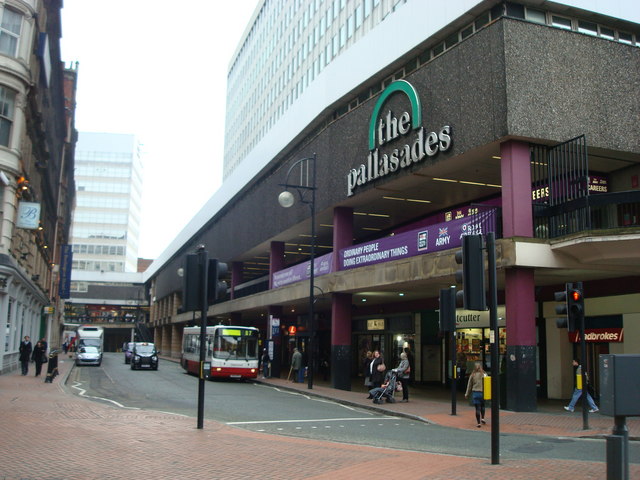 |
68a East Mews
Birmingham
B2 4XJ
PALLISADES
CLICK
|
Tel: 0121 633 3070
|
Pavilions
On Birmingham’s High Street there is Pavilions.
At the heart of the shopping action, it’s
jam-packed with top names. Marks & Spencer,
Waterstones and La Senza are just the starter.
Of course, break time offers nearly as much
choice. Dine and peer down on fellow shoppers
from the spacious Food Loft. |
 |
38 High Street
Birmingham
B4 7SL
PAVILIONS
CLICK
|
t. +440121 631
4121
f. +440121 643 3433 |
Touchwood
Opened in 2001 and costing £110 million to
build, the centre was built on the former car
parks behind the High Street.
Around 250,000 cubic metres of earth were
excavated to form the basements and over 4,000
tons of support the Touchwood structure.
Touchwood has the only John Lewis department
store in the West Midlands, at 265,000
sq ft (24,600 m2), as well as 80
other stores, over 20 restaurants and a
Cineworld nine-screen multiplex cinema.
The Touchwood access also leads to Library
Square, for the Solihull Central Library and
Arts Complex. |
 |
Touchwood is located in the heart of
Solihull and is easily reached by car.
Junction 5 of the
42 is only a short distance away from
Solihull town centre, providing a convenient
link
o the M6, M5 and M40 motorways.
TOUCHWOOD
CLICK
|
Tel :0121 713 3775 o |
THE
GARDENS
OF BIRMINGHAM & SURROUNDING AREA
Garden
|
Picture
|
Address and Website
|
Tel/Fax
|
Arley
Arboretum
Arley Arboretum is one
of the oldest Arboretums in Great Britain.
Tucked away in the beautiful countryside of
the Worcestershire and Shropshire borders
near Bewdley, it boasts more than 300
species of trees in formal and informal
plantings and gardens.
The collection includes many rare and
spectacular domestic and exotic trees.
Nestling in the Severn Valley and
overlooking the river, it has been growing
and maturing in this idyllic setting for two
centuries. |
 |
Arley Arboretum
Arley Estate Office
Arley,
Bewdley,
Worcestershire DY12 1XG
ARLEY ARBORETUM CLICK
|
Tel (+44) 01299 861368 |
Baddesley Clinton Knowle
This atmospheric house dates from
the 15th century and was the home of the Ferrers
family for 500 years. The house and interiors
reflect its heyday in the Elizabethan era, when
it was a haven for persecuted Catholics – there
are three priest's holes. There is a delightful
garden with stewponds and a romantic lake and
nature walk. |
|
Rising Lane,
Baddesley Clinton,
Warwickshire B93 0DQ
BADDERSLEY
CLICK |
Telephone: 01564 783294 |
Birmingham
Botanical Gardens & Glasshouses
The gardens cover 15 acres.
Designed by J. C. Loudon, a leading garden
planner, horticultural journalist and publisher,
they opened to subscribers in 1832. The Tropical
House has a lily pool and lush tropical
vegetation. Palms, tree ferns and orchids are
displayed in the Palm House. Outside there is a
colourful bedding on the Terrace and a tour of
the gardens includes; rhododendron walks, rose
garden, rock garden, a collection of over 200
trees, herb and cottage gardens, museum,
children's adventure playground, aviaries and
the National
Collection of Bonsai.
|
 |
Westbourne Road
Edgbaston
Birmingham
B15 3TR
BOTANICAL
GARDENS
CLICK |
Tel : 0121-454-1860 |
Bodenham
Arboretum
Bodenham Arboretum has a collection of
over 2700 trees. The arboretum is set
in 156 acres of Worcestershire countryside
with 11 pools, four miles of footpaths and a
working farm. The main part of the
Arboretum looks out onto the big pool and
many rare and ornamental trees can be seen
in flower or fruit giving splendid displays
throughout the seasons, the autumn
colours are particularly well worth seeing.
The Grand Avenue, now in its infancy, is
planted with Popes Seat Provenance Beech
which will mature in 200 years time! It
stretches up the hillside to the higher
reaches of the Arboretum where there are
outstanding views to the Clent Hills and
surrounding countryside. Take time to visit
the award-winning Visitor Centre set in the
hillside which overlooks the Big Pool. |
 |
Bodenham
Arboretum & Earth Centre
Wolverley, Kidderminster,
Worcestershire
DY11 5SY.
BODENHAM ARBRETUM
CLICK
|
Telephone: 01562 852444 |
|
Burford
House & Garden Centre
Uniquely situated where three counties
meet, the 7 acres of lawn and stunning borders
of Burford House Gardens sweep along the banks
of the picturesque River Teme. Originally
designed by the late John Treasure in 1952
around an early Georgian Mansion now selling
country house furnishings, the gardens contain
a National Clematis Collection, along with
around 2000 other kinds of plants.Burford
Garden Company's store at Burford House has
been designed to inspire and delight all
garden lovers. We have 200 varieties of
clematis for sale and our excellent garden
centre and café are bursting with a glorious
assembly of garden goods - and wonderful food!
Opening times - All year. Daily execpt
Christmas Day and Boxing Day. Open 9am to 6pm
or dusk if earlier. |
 |
Nr Burford
Tenbury Wells
Worcestershire
WR15 8HQ
Burford House Gardens are 1 mile west of
Tenbury Wells on the A456.
BURFORD
HOUSE
CLICK |
Tel: 01584
810 777 |
Cannon Hill Park
This is the pride of Birmingham Parks.
Birmingham claims to have over 200 parks, more
than any other European city in fact. This is
the flagship and the most varied and attractive.
The park has two lakes, rowing boat facilities,
tennis, fishing and a host of activities
particularly during the summer months. This park
is very much used as a retreat from the hustle
and bustle of the city. It is popular and busy
and yet takes it all in its stride. The
Midlands Arts Centre is also based here and
provides refreshments and regular exhibitions as
well as cinema and theatre productions. The
Nature Centre is also close by and there are two
childrens play areas. A striking war memorial
has the following inscription 'To the glorious
memory of the SONS OF BIRMINGHAM who fell in
South Africa 1890-1902 and to perpetuate the
example of all who served in the war. This
memorial is erected by their fellow citizens' |
|
2
Russell Road
Moseley, Birmingham
B13 8RD
Buses from City Centre: No.1 (to
Edgbaston Road), 45 & 47 (to Pershore Road)
There is a large car park off Edgbaston Road,
opposite the Warwickshire Cricket Ground, near
the Mac entrance. A small car park is located
off the Russell Road entrance.
CANNON
HILL
PARK CLICK
|
|
|
Castle
Bromwich Hall & Gardens
The
gardens of Castle Bromwich Hall are a unique
example of 18th century formal garden design,
with their terraces and surrounding walls. The
on-going restoration programme now provides
the opportunity for visitors to see the work
which has been done to restore these unique
18th century gardens. Much of the 10 acre
gardens has now been recaptured in its
original form and offers numerous points of
interest. The 10 acre Walled Garden contains
over 600 species of plants from the period.
|
 |
Castle
Bromwich Hall and Gardens Trust
Chester Road, Castle Bromwich,
Birmingham, B36 9BT.
CASTLE
BROMWICH HALL & GARDENS CLICK
|
Tel &
Fax 0121 749 4100 |
Coughton Court
Coughton Court has been the home of
the Throckmorton family since 1409. It
holds a unique place in English history with its
close connections to the Gunpowder Plot of
1605. Behind the Tudor gatehouse house you
will find the courtyard with its fine
Elizabethan half-timbering, where a knot garden
leads to lawns and fine vistas of the
Warwickshire countryside. The house stands in 25
acres of grounds containing some of the most
breathtaking gardens in the country. It
was Clare McLaren-Throckmorton's intention to
create a garden that complements the beautiful
house, and to give it the setting it
deserves. She also wanted to create a wide
variety of gardens: formal and informal,
traditional and innovative. Created over
the last 15 years, the gardens are now mature
and varied and are solely managed by the
Throckmorton family. |
|
Throckmorton Estates
Coughton Court
Alcester
Warwickshire B49 5JA
COUGHTON
COURT
CLICK |
Visitor information: +44 (0)1789
762435 |
Croome Landscape Park
A house and park designed
by Lancelot Brown, described by Dorothy Stroud
as 'one of the largest undertakings of Brown's
early practice'. The estate is on low marshy
ground, Brown designed a river, a rotunda, a
grotto and a Corinthian summer house. Croome has undergone 12 years of
restoration, following 18th century plant bills.
There are specimen trees throughout the park
including Gingko, Manna Ash and Plane
trees. Commissioned by the 6th Earl of
Coventry in 1751, Croome is 'Capability' Brown's
first complete landscape, influencing garden
designs around the world and establishing
Brown's reputation. Brown designed the exterior
of the house along with the a number of garden
buildings and the church. Robert Adam had his
first architectural commission in the form of
the Temple Greenhouse and went on to design the
interior of the church and several rooms in
Croome Court. James Wyatt was brought in after
the deaths of Brown and Adam to complete and
tweak several designs - he also introduced a
number of Coade stone statues. Opening times - 1
Feb-1 Mar '09 Saturdays and Sundays 10am-4pm 4
Mar-29 Mar '09 Wednesday to Sunday 10am-5.30pm
30 Mar - 31 Aug '09 every day 10am-5.30pm 2
Sep-1 Nov '09 Wednesday to Sunday 10am-5.30pm 7
Nov-20 Dec '09 Saturdays and Sundays 10am-4pm 26
Dec-3Jan '10 every day 10am-4pm 9 Jan-31 Jan '10
Saturdays and Sundays 10am-4pm |
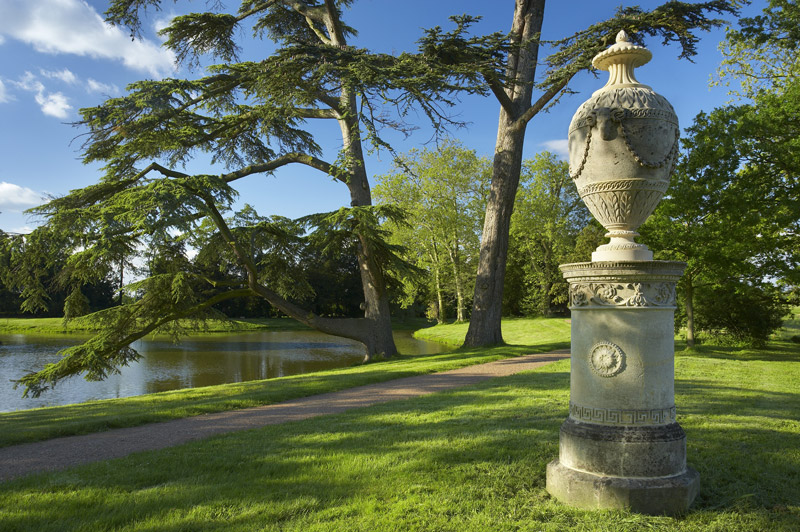 |
High Green,
Severn Stoke
Worcestershire, WR8 9JS
Croome lies 8m South of Worcester off the
A38, and 6m West of Pershore off the B4084.
Exit 1 off the M50 (A38N) and Exit 7 off the
M5 (B4084 to Pershore)
map
CROOME
PARK
CLICK |
Tel: 01905
371 006 |
Dudmaston
This 17th century
House, Dudmaston has delightful gardens
which are a mass of colour in the Spring.
The Dudmaston Gardens are informal with
sweeping lawns overlooking pools with a
superb collection of rhododendrons and
azaleas. There is a fine rock garden, rose
garden, bog garden with moisture loving
plants and a herbaceous border. Amongst the
gardens is an interesting collection of
contemporary sculpture. Lakeside and Dingle
walk with fine views to the Clee Hills. |
 |
Dudmaston,
Quatt, Nr Bridgenorth, Shropshire,
WV15 6QN
Free entry for National Trust members. |
Tel 01746 780866 |
Eastgrove Cottage Garden Nursery
A thatched cottage with a
well-planted cottage garden run in conjunction
with a nursery. The cottage is ancient and set
in lovely countryside. The garden was made by
Malcolm and Carol Skinner. Opening times - Open
April to October. Closed August. Open 2pm to
5pm. |
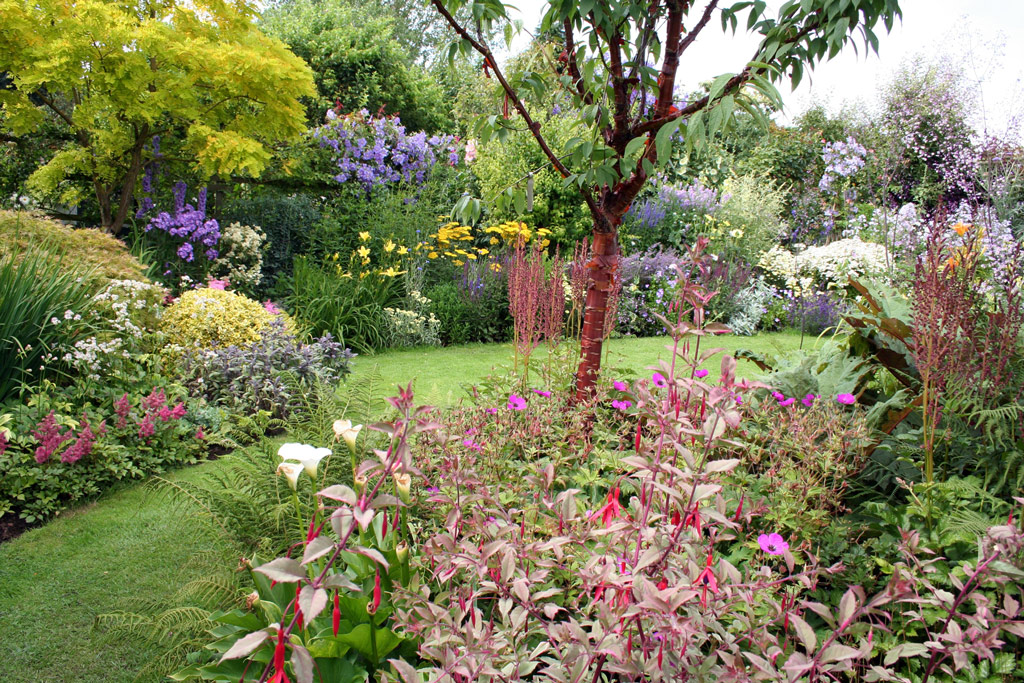 |
Sankyns Green,
Near Shrawley,
Little Witley,
Worcestershire,
WR6 6LQ
Eastgrove Cottage Garden is 8 miles north west
of Worcester, between the B4196 and the A443.
EASTGROVE
COTTAGE
GARDEN CLICK |
|
Hagley
Park
A serpentine park with temples, urns,
obilisks and a ruined castle, laid out by the
owner, George Lyttleton, after 1747. Like the
nearby Leasowes estate, the design is based on a
circuit walk and has good views. Hagley is not
open to the public but the park is visible from
the public footpath which leads to the church
and Milton's Seat.
|
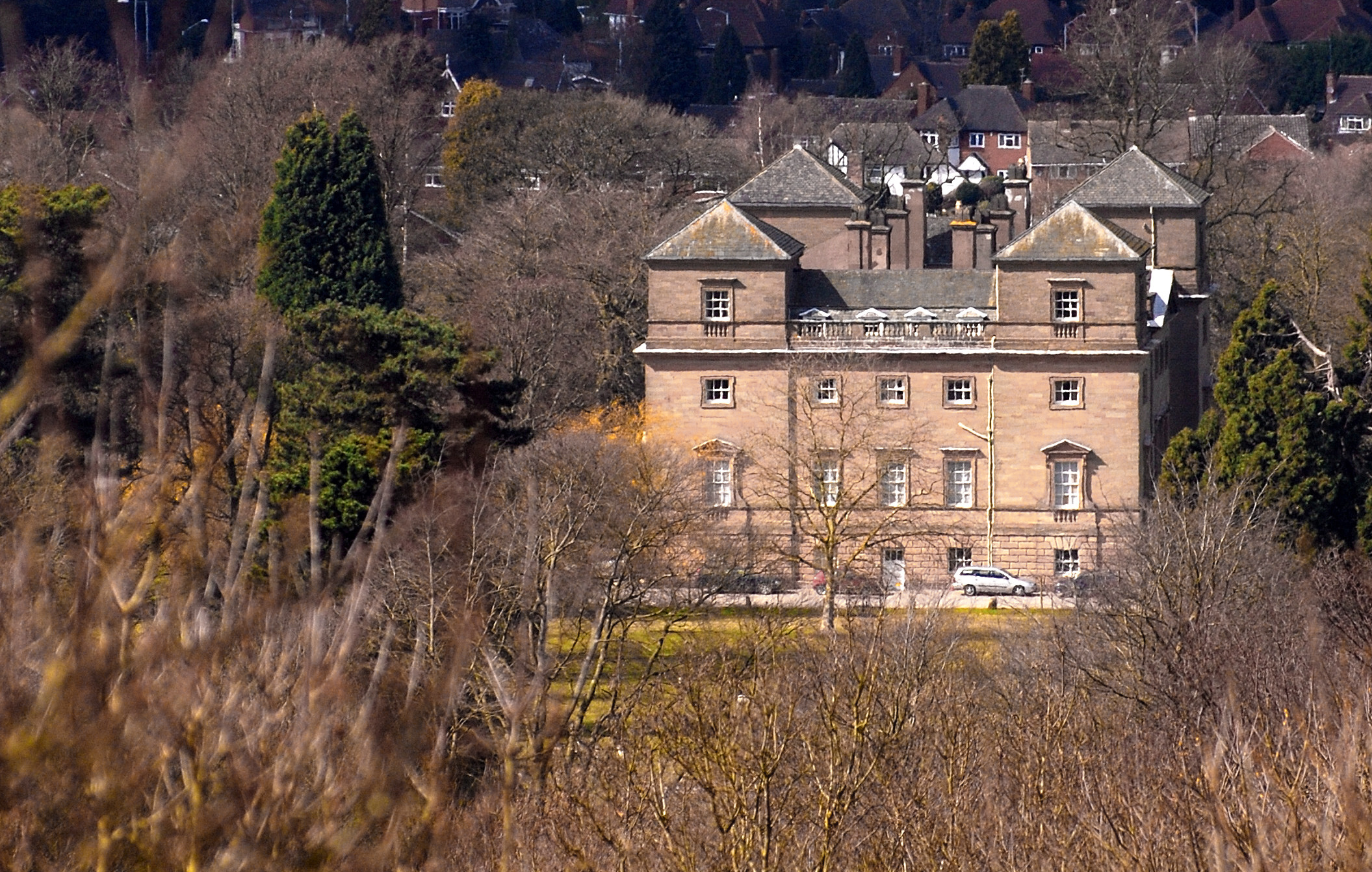 |
Hagley,
Worcestershire,
SO920 810
Hagley Park is in the village of Hagley, on
the A465. |
|
Hanbury
Hall Gardens
A William and Mary house
with an eighteenth century orangery, an ice
house and two domed nineteenth century gazebos.
Hanbury Hall had a 'Dutch style in England'
garden in the early eighteenth century and it is
being restored. Keen
to have an up to date and fashionable garden in
the early 18th century Thomas Vernon employed
the pre-eminent garden designer of the day,
George London, to create such a garden which was
to include all the elements associated with the
formal style of gardening; a Parterre, Fruit
Garden, Wilderness, Grove and Bowling Green. The
garden remained as such until the 1770s when it
was swept away as the fashions changed from the
very formal to the natural landscape style. In the mid 1990s with help from
generous bequests and a European Union grant,
the garden was carefully restored using the
original plan, the distinguished surveyor, James
Dougharty’s, 1731-1733 garden survey, and
archaeological work to confirm the garden design
accuracy. Today the gardens are truly
spectacular; from the beautiful intricately laid
out formal parterre, fruit garden and grove to
the bowling green, a visit to Hanbury Hall’s
garden is unforgettable.Opening times - March to
October: all facilties are open Saturday to
Wednesday open 11am to 5:30pm. Garden, Park,
cafe and shop 7 day opening during local school
holidays and July and August. November to
February: Garden, Park, cafe and shop open
Saturday and Sunday 11am - 4pm. |
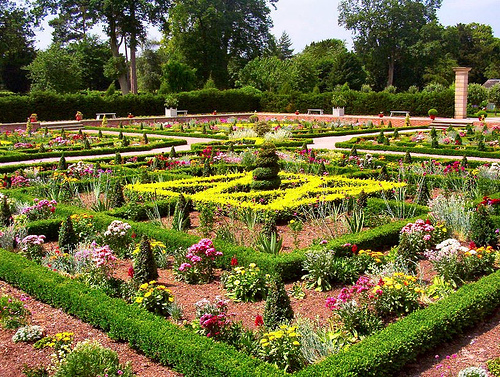 |
School
Road
Droitwich
Worcestershire
WR9 7EA
Hanbury Hall garden is 4.5 miles east
of Droitwich and 4 miles south east of
junction 5 on the M5
map
HANBURY
HALL CLICK |
Tel: 01527 821 214 |
Himley
Hall
In early days, it was a moated manor house,
standing beside the medieval church. For over
four centuries it served as a secondary home to
the Lords of Dudley and their knights. Its
occupants included Dud Dudley, whose
seventeenth-century experiments in smelting iron
ore with coal were carried out nearby. In 1645,
King Charles I encamped in the grounds on his
way to defeat at the Battle of Naseby during the
English Civil War. In 1628, the
Ward family inherited the title Lords of Dudley
through the marriage of Humble Ward to the
heiress to the Dudley estates, Frances Sutton.
Humble Ward was the son of the jeweller and
goldsmith to the court of King Charles I.
Following damage to Dudley Castle during the
Civil War, Himley Hall became the principal
family home. Today's hall dates
from the 18th century when John Ward demolished
the medieval manor to make way for a great Palladian mansion.
The village of Himley was relocated at this
time, and its church rebuilt on its present site
in 1764. In 1774 John Ward died and was
succeeded by his son John junior. He brought in
Lancelot 'Capability' Brown to re-design the
parkland. The 180 acres (728,000
m²) of grounds were designed by Capability Brown to
include a great lake, fed by a series of
waterfalls from a higher chain of smaller pools. |
|
Himley
Hall, Himley Park,
Himley, Dudley, DY34DF |
Tel
:01902 895 207 |
The Leasowes
A famous ferme ornee, owned and designed by
the poet, William Shenstone. Its designed
features were walks through woods and fields,
adorned with urns and quotations from classical
authors. Samuel Johnson described it as ''the
envy of the great, and the admiration of the
skilful; a place to be visited by travellers,
and copied by designers'. Repton thought
Shenstone had made an error in 'attempting to
unite two objects so incompatible as ornament
and profit'. A Heritage Lottery grant of £1.3m
was awarded in 1997 for restoration of the
estate. |
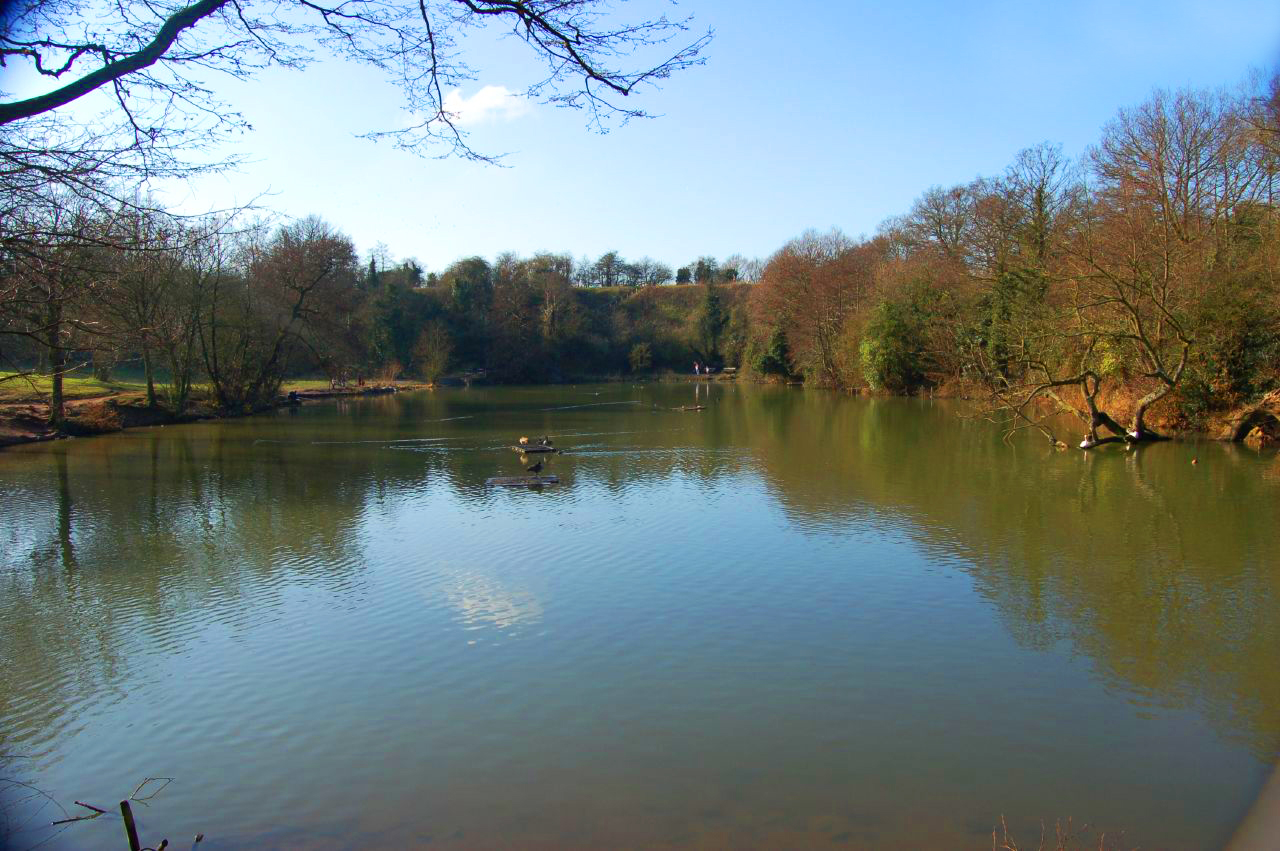 |
Halesowen, West Midlands, |
|
|
Little
Malvern Court
14th
Century Prior's Hall once attached to 12th
Century Benedictine Priory, with Victorian
addition by Hansom. Family and European
paintings and furniture. Collections of 18th
and 19th Century needlework. Home of the
Berington family by descent since the
Dissolution. 10 acres of former monastic
grounds. Magnificent views, lake, garden
rooms, terrace. Wide variety of spring
bulbs, old fashioned roses, shrubs and
trees.Opening dates and times: Sun 21 Mar;
Mon 3 May (2-5).
|
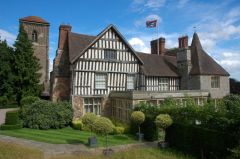 |
Little
Malvern
Malvern
Worcestershire
WR14 4JN
3m S of
Malvern. On A4104 S of junction with A449
map
LITTLE
MALVERN
COURT CLICK |
Tel:
01684 892 988 |
Packwood House
The house is
originally 16th-century, yet its interiors
were extensively restored between the world
wars by Graham Baron Ash to create a
fascinating 20th-century evocation of domestic
Tudor architecture. Packwood House contains a
fine collection of 16th-century textiles and
furniture, and the gardens have renowned
herbaceous borders and a famous collection of
yews. |
|
Packwood Lane,
Lapworth,
Warwickshire
B94 6AT
PACKWOOD
HOUSE
CLICK |
Telephone:
01564 782024 |
|
Picton Gardens
The Picton Garden has evolved
during several decades on the original site of
Ernest Ballard's Michaelmas Daisy nursery. There
are many fine specimens of interesting trees and
shrubs, creating a backdrop to thousands of
herbaceous perennials. The garden is intensively
planted with both traditional borders and areas
of more modern, natural planting schemes.The
main feature is the NCCPG Plant Heritage
Collection of Autumn Flowering Asters. Also
known as Michaelmas Daisies, these create a rich
tapestry of colour through September and
October. A wide range of other late season
Herbaceous Perennials are grown with the Asters.
Many of them bring colour from late July
onwards. The garden has been featured on T.V.
and in many national newspapers and quality
magazines. see website for openings. |
 |
Old Court Nurseries
COLWALL,
Malvern,
WORCESTERSHIRE
WR13 6QE
PICTON
GARDENS
CLICK |
Tel 01684 540416 |
|
Ryton
Organic Gardens
The home
of Garden Organic, the national charity for
organic growing. Explore ten acres of gardens
that show how to grow fantastic flowers,
vegetables and fruit, including formal rose
gardens, ornamental plants, alpine banks,
shrub borders, colourful flower beds, a
wildflower meadow and conservation area. For
practical help, the composting and safe pest
control displays offer plenty of practical
ideas. The organic restaurant and café offer
delicious refreshments and the shop sells
organic plants, gardening goods, food and
gifts. Events, talks and courses held year
round.
|
 |
Ryton Organic Gardens
Wolston Lane, Coventry. |
|
Ragley Hall
Ragley Hall is the home of the Marquess
& Marchioness of Hertford & the seat of
the Conway-Seymour family since 1680. The
Stately Home and Gardens include extensive
parkland, a large lake with a picnic and play
area, an Adventure Wood, Maze, Woodland Walk,
Stables and the Jerwood Sculpture Park.
Refreshments of food and drink can be obtained
from Bodgers cabin near the Adventure Park as
well as in a dedicated Tea Room in the house.
There is also a gift shop.This is an ideal
location for a family day out. Take a picnic and
let the kids enjoy themselves in the Adventure
Wood. There are climbing frames, trampoline,
swings, wooden walkways and rope climbs and
plenty of places to run and hide. The 3D maze is
also very popular. Ragley Hall Gardens contain
some fascinating sculptures with some very
lifelike human figures and unusual stone and
metal ones with various themes. Ragley Hall
itself was designed n 1680 by Robert Hooke, a
friend of Sir Christopher Wren. Of particular
note is the Baroque plasterwork by James Gibbs
which is dated 1750 and the collection of 18th
century paintings, china and furniture. The
gardens and lakeside of Ragley are set in 400
acres of parkland which was landscaped by
'Capability' Brown. There are also some 18th
century carriages and equestrian memorabilia
with an ice house and game larder. |
|
Ragley Hall
Alcester
Warwickshire
B49 5NJ
RAGLEY
HALL CLICK |
Hall Office 01789 762 090 |
Snowshill
Lavender
53 acres of lavender
fields, planted since 2000. The lavender is
harvested and essential oils are extracted and
sold in the farm shop. The best time to visit is
July. Opening times - Late May to late August.
Daily. Open 10am to 5pm. |
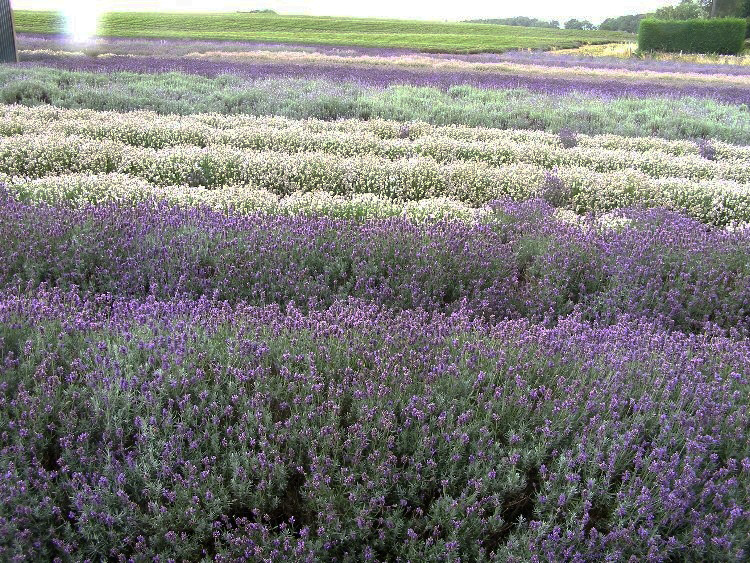 |
Hill Barn Farm,
Snowshill,
Broadway,
Worcestershire, ,
WR12 7JY
SNOWSHILL
LAVENDER CLICK |
|
Snowshill
Manor
This charming small
organic garden surrounds this Cotswold Tudor
Manor House known as Snowshill Manor. It is set
in the middle of the Cotswolds amongst some of
the most beautiful countryside in the British
Isles. Very much in the
Hidcote style but much smaller with garden rooms
planted to the brim. The
2 acre gardens are organically grown with
colourful borders, water features and splendid
views. The Manor House
is also open with fascinating collections of
almost everything. Because the Snowshill Manor
Gardens are small make sure you see the house
too. NT Snowshill Manor and Garden open 2010 -
13 March - 31 October, - Weds to Sundays
11 - 5.30 House - same days but 12 - 5. open BH
Mondays. Restaurant and shop. |
 |
Snowshill Manor,
Broadway
WR12 7JU |
Tel 01386
852410 |
|
Spetchley
Park Gardens
A
Georgian house in a deer park with a lake
and a Victorian garden. The gardens were
largely designed by Rose Berkeley
(grandmother of the current owner) and her
sister, the great Edwardian gardener, Miss
Ellen Wilmott. They comprise a Georgian
House, Deer Park, Garden Lake, Herbaceous
Borders, Fountains, Walled Gardens - and is
widely described as a 'Plantsman's
Paradise'.Opening times - Late March to
September. Wednesday to Sunday and Bank
Holiday Mondays. Open 11am to 6pm. Also open
Saturdays and Sundays in October 11am to
4pm.
|
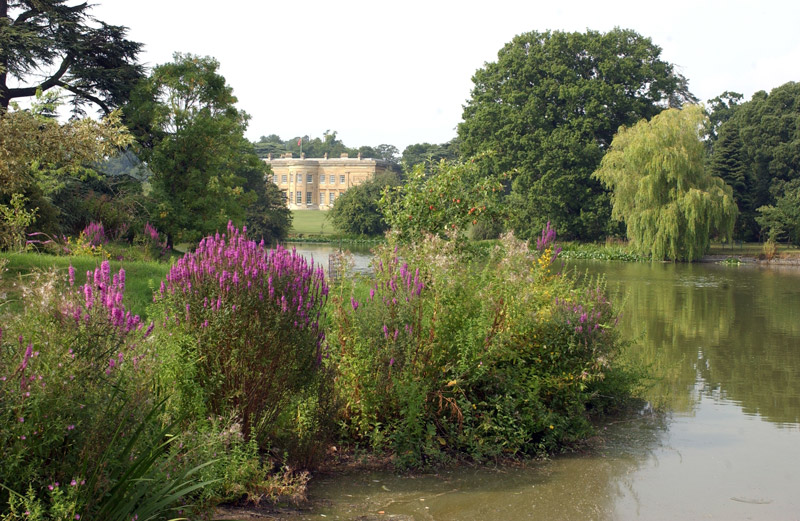 |
Spetchley
Park,
Worcester,
WR5 1RS
Spetchley Park Garden is 2 miles east of
Worcester on the A44. Leave M5 at junction 6
or junction 7.
map
SPETCHLEY
PARK GARDENS CLICK |
Tel: 01905
345224 |
|
Stone
House Cottage Gardens
A
plantman's paradise with over 3000 different
plants, many rare and unusual climbers, wall
shrubs. A romantic garden set in an old walled
kitchen garden. The area is only 1 acre but
seems much larger, hedges divide it into
different compartments and create diverse
habitats in which to grow the vast selection
of rare and unusual plants that thrive here.
Unusual brick follies adorn the walls and
these in turn, are covered with a multitude of
climbing and twining plants in which the
garden specialises.
|
 |
Stone
Near Kidderminster, Worcestershire
DY10 4BG
Stone House Cottage Gardens are 2 miles
south east of Kidderminster via the A448
towards Bromsgrove.
map
STONE
HOUSE
GARDENS CLICK |
Tel 01562 69902 |
Sutton
Park
Sutton Park is not just another park. It
is a nature reserve which consists of woodland,
heathland and wetland. Plentiful in water, a
variety of plant life and tree specimens grow
here. Sutton park covers an area of some 2,400
acres.Henry VIII used Sutton Park as one of his
favourite hunting parks and settlements have
been here from much earlier times. The park was
used by the military in the first and second
world war for training purposes. There was even
a prisoner of war camp here. Sutton Park is a
National Nature Reserve under the management of
the Birmingham City Council. The park handles
large numbers of visitors especially in the
summer months. It also caters for a wide range
of leisure pursuits from model aircraft flying,
kite flying clubs to joggers and cyclists as
well as families who just love to visit and
picnic within the grounds. There is a visitor
centre, a restaurant by the lake, a nearby golf
course and plenty of open space and fresh air. |
|
Sutton Coldfield
The main entrance is Town Gate in Tudor Hill.
The postcode for satnav users is B73 6BU.
SUTTON
PARK CLICK |
|
Wagon House Gardens
The garden is situated by
a nineteenth century barn and wagon house.
Brick walls divide the garden into rooms. There
are herbaceous borders, box hedges and follies.
Opening times - Thursday to Sunday and Bank
Holidays. End March to late December. |
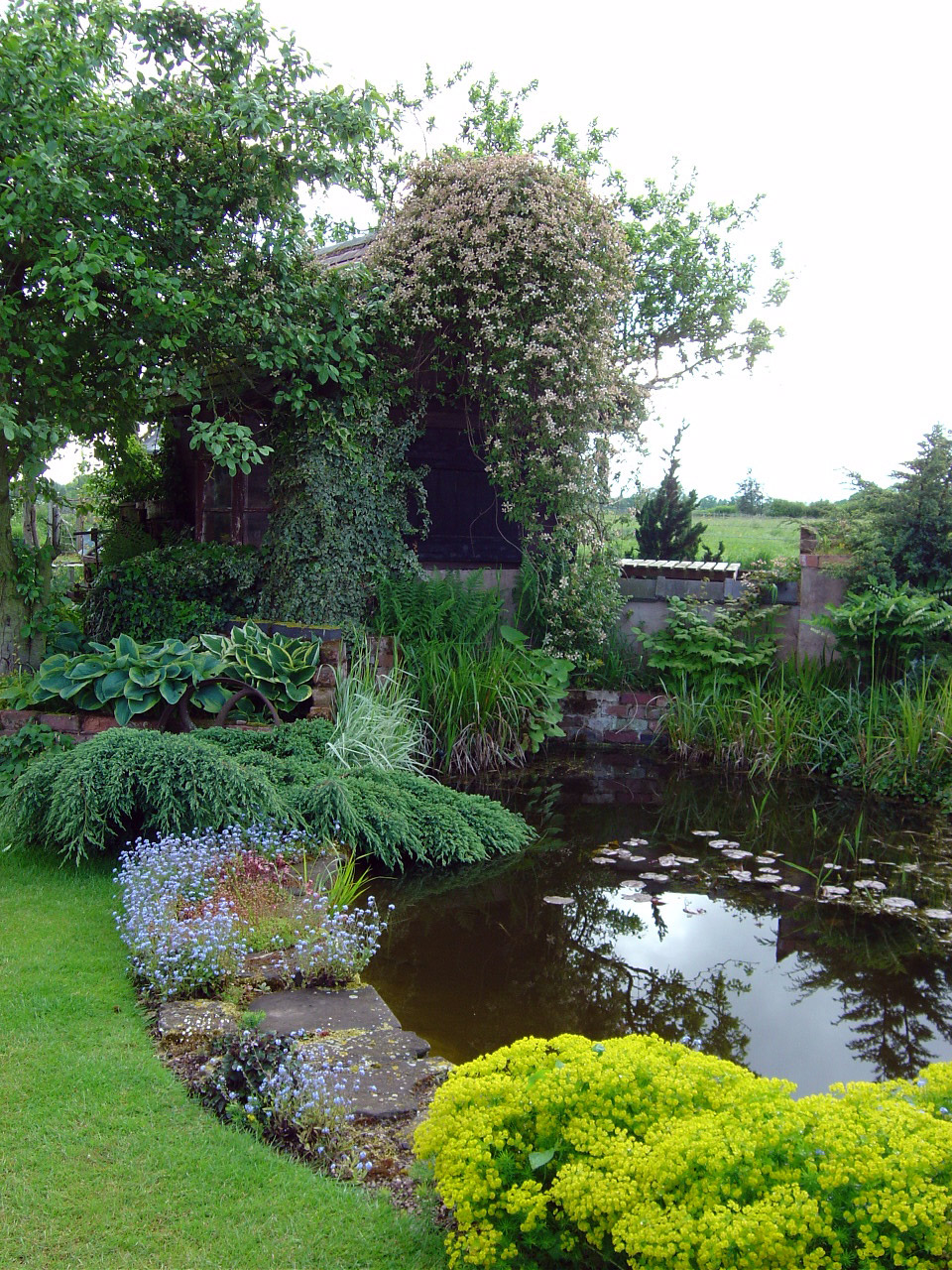 |
Brickhouse Lane,
Stoke Prior,
Bromsgrove,
Worcestershire,
B60 4LY
WAGON
HOUSE
GARDENS CLICK |
|
Walsall
Arboretum,
Walsall
Walsall Arboretum is a beautiful
park containing lakes, trees and gardens.
Probably best known for the annual lightshow,
Walsall Illuminations, which takes place during
September and October. With over 50 illuminated
features, lakeside lights, laser show, floodlit
gardens, children's rides, entertainment and
refreshments. |
|
Lichfield Street/Broadway North
Walsall
WS4 2BU
From M6 Junctions 7,9 and 10, follow the brown
and white tourist signs.
Open daily all year round from 7.15am.
Email: tourism@walsall.gov.uk
WALSALL ARBORETUM CLICK |
Tel: 01922 650309
01922 721682 |
White
Cottage (Cranesbill Nursery)
A
garden run in conjunction with a nursery. It
has herbaceous borders, flowering shrubs, a
stream garden and a wild flower meadow.
A peaceful garden blending formal and informal
areas with almost round the year interest.
Island beds display herbaceous plants, roses
grow up through trees as well as in the rose
garden. The spring wild flower area is
carpeted with fritalleries, primroses and
cowslips.An abundance of colour and form are
displayed in the stream garden. The rockery is
home to many hardy geraniums. The garden
has developed over 27 years from virtually an
overgrown field. It is very heavy clay with
some free lime although the ph is neutral.
Plants of Note We have a nursery in the garden
which specialises in Hardy geraniums and also
a collection of echinacea and other less
common herbaceous plants. Opening times - By
appointment
|
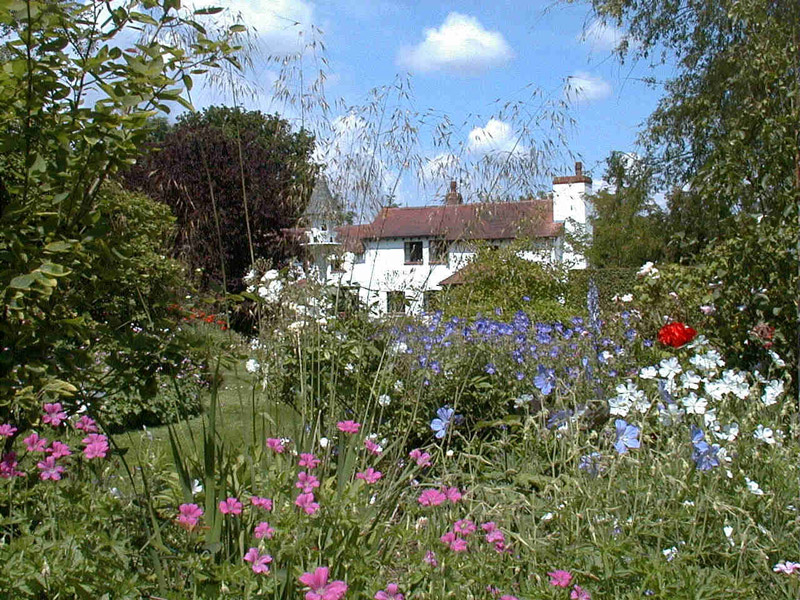 |
Earls Common Road,
Stock Green,
nr Redditch,
Worcestershire,
B96 6SZ
White Cottage garden is 7 miles east of
Worcester.
map
WHITE
COTTAGE CLICK |
Tel : 01386 792414. |
|
Whitlenge
Gardens
Wander through the three-acre show
garden of professional designer Keith J
Southall, set around his 18th century cottage.
Walk the 'Twisted Brick Pergola' with its fan
trained apples and pears, sit in the
'Verdigris Gazebo', see the Water Gardens with
its split level waterfalls, listen to the
Bubblers and marvel at the size of the Gunnera
in the Bog Garden against the compactness of
the Scree gardens. Walk into the manmade Cave
and Fernery, dwell upon the mystic of the
'Green Man' and the 'Sword in the Stone'
features. A plantsman's delight with over 800
varieties. Come and be inspired. Opening dates
and times: Suns, Mons 4, 5 Apr; 2, 3, 30, 31
May; 29, 30 Aug (10-5). |
 |
Whitlenge
Lane
Hartlebury
Worcestershire
DY10 4HD
5m S of
Kidderminster, on A442. Take A449 from
Kidderminster towards Worcester, then A442
(signed Droitwich) over small island, ¼m, 1st R
into Whitlenge Lane. Follow signs
map
WHITLENGE GARDENS CLICK |
Tel:
01299 250720 |
|
Wightwick
Manor, Wolverhampton
Wightwick
Manor is one of only a few surviving examples
of a house built and furnished under the
influence of the Arts & Crafts
Movement.The many original William Morris
wallpapers and fabrics, Pre-Raphaelite
paintings, Kempe glass and de Morgan ware help
conjure up the spirit of the time. Alfred Parsons helped to
design the gardens at Wightwick Manor
- he also designed the gardens at
Great Chalfield Manor. Set in 17
acres this is a Victorian and Edwardian
garden with formal beds, herbaceous
borders and terrace. The poets garden
contains plants from the gardens of
Shelley and Keats. There is a Yew Walk
which leads to shrubberies, ponds and
streams.
|
 |
Wightwick Bank
Wolverhampton
WV6 8EE
Email: wightwickmanor@nationaltrust.org.uk
WIGHTWICK MANOR CLICK |
Tel: 01902
761400
01902
764663 |
Winterbourne
House & Garden
Winterbourne is one of the
best surviving examples of an Edwardian Arts and
Crafts suburban villa garden. Offering colour
and interest throughout the year, the seven acre
Grade II listed garden is home to a beautiful
walled garden, striking colour themed borders,
original sandstone rock garden and stream side
planting. The garden also
displays plants from around the globe with
collections of plants from China, North and
South America and the alpine areas of the world.
There is also a programme of public garden
events running throughout the year including
open days, special interest tours, local
heritage days, music concerts and an Edwardian
fete.
|
 |
Winterbourne House &
Garden
University of Birmingham, 58 Edgbaston Park
Road, Edgbaston, Birmingham. |
|
|
Witley
Court
& The Jerwood Foundation
Spectacular ruins of a once great
country house. This vast Italianate mansion
incorporates porticoes by John Nash and is
surrounded by magnificent landscaped gardens,
the 'monster work' of William Nesfield, which
contains the Perseus & Andromeda Fountain
and the Jerwood Sculpture Park. Opening times
- Open all year except Christmas and New Year.
Closed Tuesdays and Wednesdays November to
February. Open 10am to 6pm or dusk if earlier. |
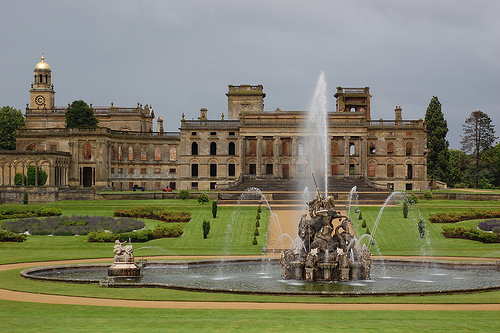 |
Worcester
Road,
Great Witley,
Worcester,
WR6 6JT
Witley Court garden is 10 miles north west
of Worcester, off the A443.
WITLEY
COURT CLICK |
Tel: 01299
896636 |
Birmingham
Events

EATERIES IN BIRMINGHAM
MERCIA TOURIST BOARD
BIRMINGHAM GRUB
|
|
|

New
Yorkers beat a path to Birmingham
From
The Independant January 9th 2012
How do you fancy
strolling around Vienna, sunning yourself in
the Maldives or taking a rocket trip into
space? You'd be better off visiting a curry
house in Birmingham, according to The New
York Times, which has named Britain's second
city as one of its top 20 holiday
destinations thanks to its dining
scene. Birmingham's
placing at No 19 in the list has surprised
some in the Midlands, but many Brummie
foodies are bullish that the accolade is
well deserved. As well as its famed "Balti
triangle" of Indian restaurants, and three
eateries with Michelin-starred chefs –
Purnell's, Simpsons and Turners of Harborne
– Birmingham's smaller cafés, bistros and
bustling farmers' markets are a burgeoning
source of local pride.
One
restaurant cited by the newspaper as proof
of Birmingham's credentials is Lasan,
located in the city's Jewellery Quarter. Its
head chef Aktar Islam – whose signature
dish, hiran achari, combines slow-stewed
shin and loin chops of Balmoral venison with
charred brocolli, curried pumpkin and honied
shallots – said he believed Birmingham was
the best place in the UK in which to eat.
"The great thing is that it's all
concentrated, so you don't have to worry
about travelling," he said. "We have some of
the best chefs – Steve Loves, David Colcombe
at Opus, Andy Waters at Edmunds – and we're
all about a mile or so from each other."
A growth in
small, independent food producers is also
helping Birmingham's kitchens. Alex
Claridge, who runs the vegetarian Warehouse
Café and is about to launch Edible Brum
magazine to promote the community, said
economic problems had helped this part of
the city's food scene. "We have got to the
point where everything else is falling
apart, so you might as well give it a go
doing what you really love," he said. "It's
great for those of us trying to find good
food producers because all these people who
are really obsessive and eccentric in really
loving one thing are coming together."
Tom Baker, a
breadmaker who runs the Loaf cookery school,
said the authentic recipes at Al Frash in
the Balti triangle and the way Moseley
farmers' market heaves with customers, even
in the rain, were further proof of the
city's culinary diversity. "Local chefs like
Glynn Purnell are getting on TV and he's a
proper Brummie – you can't deny that from
his accent," he added.
However, he
said Birmingham still had some way to go
before it deserved the title of "gastro
capital of the UK". "People are guessing
that it's going to be quite an important
place for food in the future," he added,
"but it's still young."
Terry Kirby:
A deserved gastronomic accolade for
Britain's second city
It earned
global accolades for making cars and
chocolate but when it came to eating out,
England's second city – my home town – had a
second-rate reputation: a bleak landscape of
Indian or MSG-dominated Chinese, enlivened
only by a couple of half-decent Francophile
outfits. Then came the "Balti Belt": great
fun, authentic food. In the 1990s, Terence
Conran and Raymond Blanc opened and, since
Glynn Purnell gained his first Michelin
star, others followed.
While The New
York Times rightly highlights the
astonishing transformation, visitors risk
disappointment if they venture far from the
city centre. However, there are encouraging
signs – decent little bistros, cheese shops
– that the foodie revolution is reaching the
suburbs. Now all Birmingham needs is a new
menu for making things again.
From The Birmingham
Restaurant Directory
|
| English Restaurants
in Birmingham (25) |
Indian Restaurants
in Birmingham (12) |
Gastro Restaurants
in Birmingham (9) |
Gastro Card Member
Restaurants (11) |
| Romantic Restaurants
in Birmingham (14) |
International
Restaurants in Birmingham (8) |
Fine Dining
Restaurants in Birmingham (4) |
Vegetarian
Restaurants in Birmingham (1) |
| Thai Restaurants in
Birmingham (2) |
Italian Restaurants
in Birmingham (9) |
Gastro Pubs in
Birmingham (11) |
Chinese Restaurants
in Birmingham (3) |
| Pizza and Pasta
Restaurants in Birmingham (3) |
French Restaurants
in Birmingham (2) |
Nepalese Restaurants
in Birmingham (1) |
Michelin Restaurants
in Birmingham (1) |
| Steakhouse
Restaurants in Birmingham (1) |
Japanese Restaurants
in Birmingham (1) |
Restaurants in
Solihull (6) |
|
From Birmingham
Plus
|

|
African (2)
|
American (15)
|
Arabian (1)
|
Australian (1)
|
Balti (14)
|
Barbecue (1) |
Caribbean (4)
|
Chinese (30)
|
English (58)
|
Fast Food (1) |
French (35)
|
Fusion (3)
|
Gastro Pub (1)
|
Greek (5)
|
Indian (98)
|
International (148) |
| Irish (1) |
Italian (44) |
Japanese (12)
|
Latin American (5)
|
| Malaysian (3) |
Mediterranean (5) |
Mod. British (53) |
Moroccan (1) |
| Nepalese (2) |
Pan-Asian (8)
|
Persian (2) |
Pizza (21) |
| Polish (2) |
Portuguese (4)
|
Pub/Bar (158)
|
Seafood (4)
|
| Spanish (6) |
Steak House (21)
|
Tea/Coffee (7)
|
Thai (19) |
Trad. Cafes (4)
|
Vegetarian (1) |
Vietnamese (1)
|
|
From
Restaurant
Guide.Com 258
Restaurants in Birmingham
|
From
View
Birmingham
Co Restaurant Guide
|
From
Via
Michelin
Birmingham Restaurant Guide
|
50 HOTELS IN
BIRMINGHAM
If we missed you out Click here to
contact us
 |
The Crowne Plaza Birmingham City
Centre ****
Central Square, Holliday Street
Birmingham, B1 1HH
Hotel Front Desk: +44-0121-2245000
Hotel Fax: +44-0121-2245119
Hotel in
Birmingham near International Convention
Centre In city center.
Located in the heart of
Birmingham, this hotel is walking distance
from Adrian Boult Hall, International
Convention Centre, and The Mailbox. Also
nearby are Bullring Shopping Centre and
Victoria Square. CROWNE
PLAZA
CLICK |
 |
Radisson Blu
Hotel, Birmingham ****
12 Holloway Circus Birmingham,
B1 1BT Tel:
+44 121 654 6000 Fax:+44 121 654
6001 E-mail: info.birmingham@radissonblu.com
Business-friendly
Birmingham
hotel near Birmingham Council House
Bullring Shopping Centre
nearby
This business-friendly hotel is
located in Birmingham, close to Birmingham
Royal Ballet, Birmingham Council House, and
Birmingham Central Library. Also nearby are
International Convention Centre and Victoria
Law Courts.
RADISSON BLUE HOTEL CLICK |
 |
Copthorne Hotel
Birmingham ****
Paradise Circus Birmingham,
B33HJ T:
+44 (0) 12 1200 2727 F: +44 (0) 12
1200 1197 E: Email
Us
Modern hotel by
International Convention Centre Near art
gallery
This modern hotel is
adjacent to the International Convention
Centre and 150 metres from Birmingham Museum
and Art Gallery. COPTHORNE
HOTEL
CLICK
|
 |
Four Ashes Road Solihull, B93
8QE
Business-friendly
Solihull hotel with a complimentary
breakfast. Airport nearby. This
business-friendly hotel is located near the
airport, where area attractions include
Sarehole Mill. Regional attractions also
include The Mailbox and Warwick Castle.Show
more
Breakfast included.
In addition to a
restaurant, Hogarths Hotel features a
conference center. Other amenities include
complimentary parking and complimentary
wireless Internet access.
LCD TVs, DVD players
LCD televisions come
with digital channels. Guestrooms also feature
complimentary wireless Internet access, DVD
players, and welcome amenities. |
 |
Novotel
Birmingham Airport ****
Birmingham Airport Birmingham,
B26 3QL
Airport Hotel
Airport location near NEC
The hotel has an
unrivalled location situated directly opposite
the 2 passenger terminals. |
 |
Pendingo Way Natl Exhib Ctr
Birmingham, B40 1PS
Hotel Front
Desk: 44-871-942
9160 Hotel Fax: 44-121-781
4321
Birmingham golf hotel
near National Exhibition Centre
National Exhibition Centre
nearby
Situated in Birmingham,
this golf hotel is close to LG Arena and
National Exhibition Centre. NEC
CROWNE
PLAZA CLICK
|
 |
Hyatt
Regency Birmingham ****
2
Bridge Street, Birmingham, B1 2JZ
Tel:
+44 121 643 1234
Fax: +44
121
616 2323 Email: birmingham.regency@hyatt.com
Maps & Directions
Enjoying a prime location in the
city centre, the luxury Hyatt Regency Birmingham
is a modern, four-star deluxe hotel located in
the city centre, within a five-minute walk of
the exclusive Mailbox and Bull Ring shopping
centres, as well as Broad Street and Brindley
Place, where you can find wide range of vibrant
bars and restaurants, along with theatres and
art galleries. HYATT
REGENCY
CLICK
|
 |
|
 |
Thistle
Birmingham City ***
St Chad’s, Queensway Birmingham B4
6HY Phone: 0871 376 9005 / +44 845 305
8305 Fax: 0871 376 9105 / +44 845 305 8344
At Thistle Birmingham City Hotel, our
city-centre location makes us an ideal venue for
both business and leisure travellers. Our hotel
and meeting rooms are near the Bullring shopping
centre, and within 10 minutes’ drive to the City
Stadium, Villa Park and Edgbaston. THISTLE
BIRMINGHAM
CITY CLICK
|
 |
Hotel du
Vin & Bistro Birmingham, ****
Church Street, Birmingham B3
2NR Telephone: +44 (0)121 200 0600
Email: info.birmingham@hotelduvin.com
This previously
disused Eye Hospital is the distinctive
location for our largest hotel. This ornate,
early Victorian red brick building in the old
city centre, now part of the newly revitalised
Jewellery Quarter, was sympathetically
converted to provide 66 rooms around a
courtyard. A relaxing haven in the city,
offering a spa, gym and Pub du Vin serving
local ales and traditional pub food with a du
Vin twist.
HOTEL
DU VIN CLICK
|
 |
Holiday
Inn Birmingham City Centre ***
Smallbrook
Queensway, Birmingham B5 4EW
Hotel Front Desk: +44-0121-6346200
Hotel Fax:
+44-0121-6161049
Stay central at the
comfortable Holiday Inn Birmingham City
Centre hotel, 3 minutes' walk from
Birmingham New Street station.
Friendly staff welcome you to the
chandelier-lit lobby of Holiday Inn
Birmingham City Centre. Contemporary
decor makes your guest room a stylish
home-from-home and you can check email with
complimentary wireless Internet
throughout the 11-storey hotel. We're
conveniently located in the heart of the
city.
Host banquets and conferences for up to 600
people in Holiday Inn Birmingham City
Centre's 13 modern meeting rooms.
Wireless Internet and projectors make for an
impressive corporate event, and our dedicated
conference staff are on hand to help
with catering and seating arrangements.HOLIDAY
INN
CLICK
|
 |
Novotel
Birmingham ****
70 Broad street, Birmingham,
B1 2HT Tel.
(+44)121/6432000 Fax.
(+44)121/6439786 Email: H1077@accor.com
Novotel Birmingham Centre hotel is a 4-star
hotel on Broad Street in the centre of
Birmingham. Book the hotel to be a short walk
from the National Indoor Arena and the shopping
and nightlife of Birmingham. Each of the 148
modern guest rooms has a flat screen TV and
wireless internet access. Elements Restaurant
and Bar serves international cuisine and a range
of drinks. Relax in the sauna after a work out
in the fitness room. The hotel has 8 function
rooms for up to 300 guests. NOVOTEL
BIRMINGHAM
CLICK
|
 |
Jurys
Inn Birmingham Hotel, ***
245 Broad Street, Birmingham,
B1 2HQ
Tel:+44
121 606 9000, Fax:+44 121 606
9001
Jurys Inn Birmingham hotel is in the
heart of this exciting and regenerated city, on
Broad Street, and perfectly situated for the
world-class convention centres that England’s
Second City is famous for, including the
National Exhibition Centre (NEC), the
International Convention Centre (ICC) and the
National Indoor Arena
(NIA) Our spacious and
comfortable rooms are all en-suite and can
accommodate three adults, two adults and two
children, or just one person in complete
comfort..
JURY's INN CLICK
|
 |
Birmingham
Marriott Hotel ****
12 Hagley Road, Five Ways · Birmingham,
B16 8SJ
- Phone:+44-121-452
1144 Fax: +44-121-456
3442
Enter the lavishly appointed lobby of the
Birmingham Marriott Hotel in the West Midlands,
and you will know that you have arrived.
Centrally located in the heart of the city, this
4-star Birmingham hotel is renowned for
responsive service and comfortable
accommodation. Newly upgraded guest rooms have
been luxuriously appointed with amenities that
ensure a comfortable and productive stay,
featuring king beds, a spacious work desk and
high-speed Internet access. As our guest, you'll
enjoy one of the only hotels in Birmingham
offering full leisure facilities, including a
well-equipped fitness centre, indoor pool and a
blissful full-service spa with two treatment
rooms. Fine dining awaits in the stylish West 12
Restaurant and Bar, with its contemporary
British cuisine and soothing ambience. The
Birmingham Marriott Hotel offers 6 meeting
rooms, expert catering, audiovisual and
communication services. The Marriott Hotel is
one of the only Birmingham Hotels to offer
onsite car parking with direct access to the
hotel BIRMINGHAM
MARRIOTT
CLICK
|
 |
The
Birmingham Malmaison Hotel ***
The Mailbox, One Wharfside Street,
Birmingham, B1 1RD telephone 0121 246
5000
You need a hotel in Birmingham and you need
it sorting at the double. Need a destination bar
with a brasserie? Sorted. You're going to need a
slinky room or a suite. That's sorted too. Then
there's the need to spa. That my little brum
boutique bounty hunter is also on the cards. There's
a hotspot in the heart of the city that never
fails to deliver. Wi-fi, plasma TV's, toiletries
actually worth stealing. A first class room like
no other in our nation's second city. You'll
find it in the Mailbox.
The Birmingham Mal has 189 slinky bedrooms and
rock'n'roll suites. THE
BIRMINGHAM
MAL CLICK
|
 |
Mint
Hotel Birmingham,
1 Brunswick Square,
Brindleyplace, Birmingham , B1 2HW Sat
Nav Coordinates: 52.476981039655705,
-1.914890706539154 Tel: +44
(0)121 643 1003
Mint Hotel Birmingham is situated in
the centre of the city close to all
its shopping and cultural attractions,
including the ICC, the NIA, and the
Symphony Hall. It's also a perfect
option when considering staying over
for one of the many conferences held
at the NEC, with the complex only a
short 20 minute drive away. As
standard in all guest rooms, you’ll
also find a beautiful bathroom with
mist-free mirrors and walk-in power
shower, tea and coffee making
facilities, iron and ironing board and
hairdryer.Mint also provides White
Company luxury toiletries, a menu of
pillows to choose from, all to
make guests feel at home.
MINT
HOTEL BIRMINGHAM CLICK
|
 |
Apollo Hotel
Hagley Road, Edgbaston,Birmingham B16
9RA Telephone: 0121
455 0271 e-mail: info@apollohotelbirmingham.com
Whether you are a business or leisure
traveller, the Apollo Hotel facilities are
renowned for their comfort, affordability and
attentive service.
Great location just two miles from the city
centre. Close to all transport links including
Birmingham New Street Station and M5; M6; M40
and M42 . 126 comfortable en-suite bedrooms to
suit all budgets - economy; standard; larger
executive rooms and suites . 7 air conditioned
meeting rooms all with natural daylight
accommodating from six to 140 people
Complimentary on site car parking. Complimentary
Wi-Fi. Bistro and bar serving good food; beers
and wine in a relaxed and informal atmosphere. APOLLO
HOTEL CLICK |
 |
Ramada
Birmingham City ***
Suffolk Street Queensway. Birmingham
B1 1XL Tel: 0121 643 9344
Our superbly located Birmingham city centre
hotel is in the Mailbox, the exciting shopping
and entertainment area that has changed the face
of Birmingham and made it one of the smartest
places to see and be seen in! Ideally located in
the centre of the City, convenient for the
International Convention Center and the National
Indoor Arena, The Ramada Birmingham City hotel
offers a relaxing oasis in the center of the
city. All 90 bedrooms
are en suite with power showers and offer free
broadband internet access. Cots & family
rooms are also available. For our business
guests, executive rooms are available with a
larger working space, mini fridge, fresh filter
coffee and enhanced toiletries. Canal view rooms
on are available on request. The Ramada
Birmingham City Centre Hotel offers 5 accesible
rooms. RAMADA
CLICK
|
 |
Ramada
Encore Hotel***
Ernest Street/Holloway Head, Brimingham, B1
1NS Tel: 0121 6228 800 Fax 0121 6228
810 Email :reservations@encorebirmingham.co.uk
Ramada Encore concept is simple - fresh stylish
vibrant and upbeat has its own restaurant bar
and offers a complementary wireless internet
access on public areas and limited on-site car
park on a first come first serve basis at the
cost of £10.00 for overnight stay.Ramada Encore
has 131 stylish ensuite bedrooms and 1 modern
purpose built meeting room. All guest rooms
feature a stylish wooden floored room with
modern ensuite wetroom and power shower
high-speed internet access work area direct dial
telephone teacoffee facilities hairdryer and
flat screen satellite TV.
RAMADA
ENCORE CLICK
|
 |
ibis
Birmingham City Centre
Ladywell walk, Birmingham B5
4ST Tel.:
(+44)121/6226010 Fax.:
(+44)121/6226020
Ibis Birmingham City Centre hotel is a
budget hotel located in central Birmingham. Your
hotel booking puts you close to the Chinese
Quarter and the Arcadian Centre. The hotel has
159 contemporary guest rooms, all with air
conditioning, satellite TV and internet access.
The Chilli Bar serves snacks and light meals 24
hours a day, while the bar is a the perfect spot
for a nightcap. The hotel is a 3 minute walk
from Birmingham New Street station, and the 5
meeting rooms can welcome up to 120.
IBIS HOTELS
CLICK |
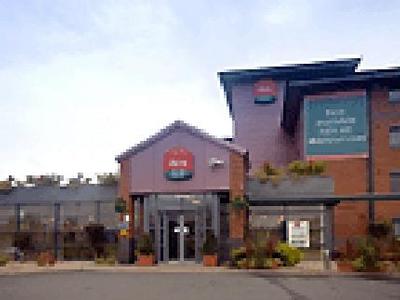 |
Ibis
Birmingham Bordesley Budget Hotel
1 Bordesley Park Road Small Heath ,B10
0PD. Tel.:
(+44)121/5062600 Fax.:
(+44)121/5062610
Located in Birmingham the Ibis Birmingham
Bordesley offer 87 spacious and confortable
bedrooms. They are all en-suite with TV
satellite Flat screen TV Pay and Interactive TV
direct dial telephone tea and coffee making
facilities air cooling. The hotel has a
restaurant open between 6pm and 10 pm daily.
Serving a selection of traditional and
continental cuisine. The bar open between 12
noon and 11 pm. IBIS
HOTELS CLICK
|
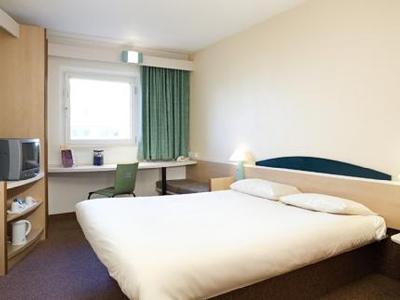 |
ibis
Birmingham Holloway Circus, Budget Hotel
55 Irving Street , Birmingham
B11DH Tel.:
(+44)121/6224925 Fax.:
(+44)121/6224195
The Ibis Birmingham Holloway Circus is in
the city centre 700 m from the train station.
Easily accessible from the M6 M1 and M42
motorways it is 10 min on foot from the
International Convention Centre the National
Indoor Arena and the Symphony Hall 30 min by car
from the National Exhibition Centre. Hotel has
51 rooms warm snacks menu and a bar offering
soft drinks 24 hours 7 days. Alcoholic drinks
are served from 11:00 until 12am. There is a
free car parking for our guests. In each room
there is broadband connection and tea and
cofffee making facilities. In the lobby wireless
Internet access is available for our guests.
Friendly and professional staff are available
247 to assist you IBIS HOTELS CLICK |
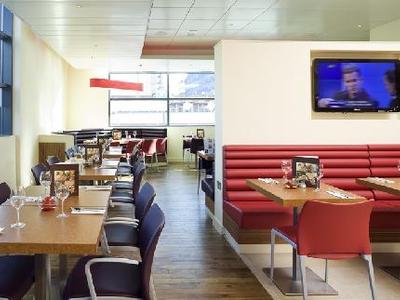 |
Ibis Hotel
Birmingham Airport NEC Hotel**
Ambassador Road Birmingham International
Airport ,B26 3A Tel.:
(+44)121/7805800 Fax.:
(+44)121/7805810
Ibis Hotel Birmingham Airport is located in
the heart of Birmingham International Airport
and only 300 yards away from the Airport
Terminals. LG Arena NEC National Exhibition
Centre and Birmingham International Railway
Station are a free 90 second MonoRail ride away.
Cafe style Restaurant offers a wide variety of
meals. 24 hours Reception as well as 24 hours
Hot and Cold Snacks available for hotel guests.
Cooked Buffet Breakfast on offer from 04:00 am
till 10:00 am every day till 12:00 noon on
weekends. Multimedia broadband TV and WIFI
throughout the building.Plenty of car park
spaces across the road at NCP Short and Medium
Stay 3; great discounts for hotel guests if
pre-booked.IBIS HOTELS CLICK |
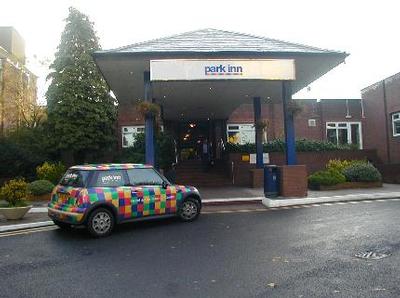 |
Radisson
Park Inn
Birmingham Road, Birmingham ,B70 6TU
A vibrant hotel ideal for both business and
leisure guests; providing 168 contemporary
styled bedrooms with plasma televisions climate
control WiFi and comfy cotton duvets. Fully
equipped gymnasium including a 10 metre indoor
heated simming pool steam room sauna and spa
bath. RBG Restaurant Bar and Lounge and 17
flexible meeting and function rooms
accommodating up to 180 delegates.Ideally
located at Junction 1 on the M5 giving easy
access to the motorway links of the M5 M6 M40
and M42.Sandwell and Dudley Train Station is a
10 minute walk from the hotel giving direct
access to New Street Station.Only 4 miles from
Birmingham city centre the Symphony Hall and
International Conference Centre.
|
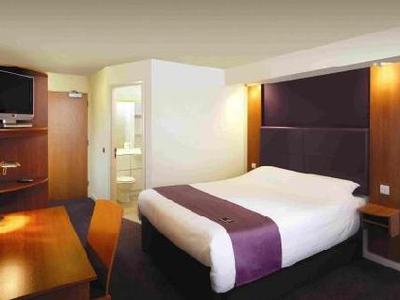 |
Premier Inn
Birmingham Nec/Airport ***
BICKENHILL PARKWAY ,B401QA
Conveniently positioned within easy reach of the
M42. Adjacent to Birmingham NEC complex just a
short walk to the northern Exhibition Halls and
5-minutes drive to the NEC Piazza suites. An
ideal location just 1 mile from both Birmingham
Airport and Birmingham International train
station. Our Birmingham NEC Airport Premier Inn
has everything you'd expect free parking
incredibly comfy beds in every room and an
integrated restaurant serving a mix of
traditional and contemporary dishes.
|
 |
Sheriden
House Hotel Budget Hotel
82 Handsworth Wood Road , Birmingham
B20 2P Tel: 0121 554 2185
.We are a small family run Hotel based just
north of Birmingham City Centre. We are within
easy reach of the following venues; NEC-National
Exhibition Centre NIA-National Indorr Arena
ICC-International Convention Centre Alexander
Stadium UCE-University of Central England Aston
University Aston Villa Football Club West
Bromwich Albion Football Club Handsworth Golf
Club Sandwell Golf Club and Broad Street
Entertainment Venues.
|
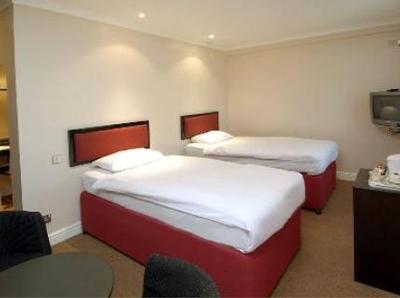 |
Birmingham Hotel Budget Hotel
Poets Corner Golden Hillock Road
Sparkbrook , Birmingham B11
2PN. Tel: 0121 622 4925
The Birmingham Hotel offers you a warm and
welcoming atmosphere that emphasizes friendly
and hospitable service.The hotel features a
variety of facilities and service that are sure
to meet the needs of business and leisure
travellerswith its own restaurant bar conference
and banqueting facilities and extensive free car
parking.With large comfortable en-suite rooms
direct dial telephone with modem TV tea and
coffee making facilities and Wi-Fi internet.The
hotel is located on the A45 opposite Small Heath
Station 2 miles from the Bull Ring and only 5
miles from the NEC and Airport.
|
 |
Quality
Hotel Birmingham, ***
166 Hagley Rd., Birmingham,
B16 9NZ Tel: 0121
454 6621
The Quality Hotel Birmingham, is situated in the
perfect location for both leisure and business.
The Quality Hotel Birmingham is set amidst
beautiful peaceful gardens, and is just a few
minutes aaway from the city centre in
Birmingham. The Quality Hotel Birmingham
has now new leisure facilities free of charge
for guests including gym, sauna,spa, Jacuzzi and
indoor swimming pool. QUALITY
HOTEL
CLICK
|
 |
BEST WESTERN
Westley Hotel ***
Westley Road, Acocks Green, Birmingham,
West Midlands, B27 7UJ Tel: 0121 7064312
The BEST WESTERN Westley Hotel enjoys a
truly wonderful location, equidistant between
the NEC/Airport and Birmingham city centre! We
work hard to make sure you don't have to lift a
finger. By paying such close attention to detail,
our staff will take care of you and your every
need
WESTLEY
HOTEL
CLICK
|
 |
BEST WESTERN
PREMIER Moor Hall Hotel & Spa****
Moor Hall Drive, Four Oaks, Sutton
Coldfield, West Midlands, B75 6LN
Tel: 0121 3083751
The BEST WESTERN PREMIER Moor Hall Hotel
& Spa is a delightful country house hotel
set in parkland yet within easy reach of
Birmingham. As such, you'll enjoy peace and
quiet without having to stay too far away from
all that the city has to offer.Family run for
over 50 years, the hotel has a unique and
charming atmosphere. We'll look after your every
whim, and go out of our way to make sure you
enjoy a most pleasant stay in Sutton
Coldfield.Close to Birmingham, the hotel is a
heartbeat away from countless attractions and
city centre facilities. Sports venues, family
days out and business locations can all be
reached easily, while local castles and
Cathedrals are also well worth a visit during
your stay at the BEST WESTERN PREMIER Moor Hall
Hotel and Spa! MOOR
HALL
HOTEL & SPA CLICK |
 |
Holiday
Inn Express Birmingham Oldbury
M5, Jct 2 ,
Birchley Park
Oldbury,BirminghamB69 2BD Tel: +44 (0) 121
511 0000 Fax: +44 (0) 121 511 0051
The Holiday Inn Express hotel in
Birmingham Oldbury enjoys a great location, well
connected to everything the West Midlands has to
offer. Not far from Junction 2 of the
M5, it makes an excellent base from which
to explore Birmingham and the West
Midlands.Located near Junction 2 of the M5, and
a short drive from the city centre, the Holiday
Inn Express hotel is ideal for business travel,
leisure travel, holidays, or even for overnight
stays for shoppers!Great Value Room Rates: The
hotel offers modern accommodation at great value
rates, including complimentary hot
breakfast. Each en-suite bedroom features
satellite TV with in-room movies, a choice of
firm or soft pillows, telephone, WiFi (fees
apply) power shower and hairdryer.
HOLIDAY INN EXPRESS CLICK |
 |
New Hall
Hotel & Spa ****
New Hall Drive, Walmley Road, Sutton
Coldfield B76 1PH Tel: 0121 378 2442
Twelfth Century New Hall is the oldest
inhabited manor house in England. Set in 26
acres of tranquil grounds, this very special
Grade 1 listed building was once a hunting lodge
for the Earls of Warwick. Today, as a
award-winning country house hotel, it welcomes
another generation of guests. History is all
around you at New Hall from the 16th century
oak-panelled dining room, where our
award-winning chef creates modern classics, to
the four-poster beds and stained-glass windows.
The result is a hotel so unique that it
consistently offers excellent food and service.
Every single one of our 60 bedrooms is
individually and appropriately furnished and
appointed with every modern comfort. Our guests
particularly appreciate the evocative views
through latticed windows, across the shimmering
moat and lawns to wooded arbours and sunlit
glades. Whether you want to play golf, stroll
through the beautiful grounds or simply relax
and enjoy superb food in front of an open fire.
New Hall is the place. NEW
HALL HOTEL & SPA CLICK
|
 |
Hotel
Indigo
The Cube, Wharfside Street, Birmingham ,
B1
1RS Hotel
Front Desk: 44-121-6432010
Hotel Fax:
44-121-3690117
Hotel Indigo located on
the top 3 floors of the iconic Cube building
near to the Mailbox Marco Pierre White
Steakhouse Bar & Grill located within the
hotel brings some affordable glamour to guests
dining experience. The vibrant and stylish
design schemes together with complimentary
Wi-Fi and mini bar make this an ideal place to
stay whilst visiting Birmingham for business
or pleasure. Hotel Indigo in the New
upscale boutique, product by Intercontinental
Hotel Group and boasts 52 beautiful boutique
bedrooms, oozing effortless style and luxury.
The hotel takes on the terminology
Refreshingly Local taking elements of design
form the surrounding area. The New product is
Inspiring, Stylish and Vibrant HOTEL
INDIGO
CLICK
|
 |
Plough
& Harrow***
135 Hagley Rd, Edgbaston, Birmingham B16
8LS Tel:
0121 454 4111 Fax: 0121 454
1868 Email: reception@ploughandharrowhotel.co.uk
A warm welcome and traditional hospitality
awaits guests at the Plough and Harrow Hotel
Birmingham. Built in 1704, originally as a
wayside inn, the hotel has over the centuries
become steeped in history and is recalled by
many as being one of the most popular places to
stay in Birmingham during the last few decades.
In 2010 the hotel returned to private
ownership and the owners intend to gradually
refurbish the entire hotel and return it to its
historic position as a prominent and sought
after hotel in Birmingham The red brick
Victorian architecture of the original building
together with the large garden, lawns and
plentiful car parking serves to set the Plough
& Harrow Hotel apart from other Birmingham
hotels. PLOUGH
& HARROW CLICK
|
 |
|