LONDON
SPORT
Cricket
The Home Counties
|
English
|
Cockney
|
 |
Essex
Latest
news and information from the
official Essex county cricket site.
Visit the online Essex shop for a
wide range of cricketing gear.
Statistics on contracted players.
The club offers a wide range of
coaching for cricketers of all ages
and abilities, a run down on courses
available. |
Blimey!
Latest news an' infawmashun from
da official Essex coun'y cricket
site. Visi' da online Essex shop
fer a wide range ov cricketin'
gear. Statistics on contracted
players. The club offers a wide
range ov coachin' fer cricketers
ov all ages an' abilities, a run
down on caaahrses available. Nuff
said, yeah? |
 |
Kent
The formation of the original
Kent County Cricket Club took
place in Canterbury in August
1842, and played its initial
first-class match against
All-England that same month. On
March 1 1859 there was a
substantial reorganisation and
the present Kent CCC was formed.
Kent had been proclaimed
Champion County in 1837, and
held the title through most of
the 1840s. However, they did not
claim it again before the
formation of the County
Championship as we know it in
1890.
Kent
Fixtures 2010
|
Lawd above! The fawmashun
ov da original Ken' Coun'y Cricket
Club an' allk place in Can'erbury in
August 1842, an' played its initial
first-class match against
All-England what same month. On
March 1 1859 there was a substantial
reorganisashun an' da presen' Ken'
CCC was fawmed. Ken' 'ad been
proclaimed Champion Coun'y in 1837,
an' 'eld da title fruff most ov da
1840s. However, they did not claim
i' again befawer da fawmashun ov da
Coun'y Championship as we know i' in
1890., innit.
|
 |
Middlesex
Welcome to
the site for the Middlesex
Crusaders! Competitions, interactive
games, quizzes, even online
coaching. it's all about cricket.
Details on the club, the players,
match reports and training courses
offered by the club. Enter the
corporate area if you are interested
in sponsorship or advertising. |
Awright geeezzaa! Welcome
ter da site fer da Middlesex
Crusaders! Competishuns, in'eractive
games, quizzes, even online
coaching. It's all abaaaht cricket.
Details on da club, da players,
match repawts an' trainin' caaahrses
offered by da club. En'er da
corpawate area if yew are in'erested
in sponsorship awer advertising.
Sorted mate.
|
 |
Surrey
Its limited overs team is called the
Surrey Brown Caps. The club is the
most financially secure first class
county club, with a turnover of £22
million in 2006. The club's home
since its foundation in 1845 has
been The Oval cricket ground
(currently known officially as the
'Brit Oval' following a sponsorship
deal with the Brit insurance
company), within the Kennington area
of Lambeth in south London. Some
home games each season are also
played at Whitgift School, Croydon
and at Woodbridge Road, Guildford.
The traditional club colours are
chocolate brown and silver. The club
badge is the Prince of Wales' three
feathers. Lord Rosebery obtained the
permission to use this symbol from
the Prince of Wales, owner of the
land on which The Oval stands, in
1915. Surrey
Fixtures
2010 |
Gawdon Bennet! Its limited
overs team is called da Surrey Brown
Caps. The club is da most
financially secure first class
coun'y club, wiv a turnover ov £22
million in 2006. The club's 'ome
since its foundashun in 1845 'as
been The Oval cricket ground
(currently known officially as da
'Bri' Oval' followin' a sponsorship
deal wiv da Bri' insurance company),
wivin da Kennington area ov Lambef
in sowf London. Some 'ome games each
season are also played at Whitgift
School, Croydon an' at Woodbridge
Road, Guildford. The tradishunal
club colaaahrs are chocolate brown
an' silver. The club badge is da
Prince ov Can'erbury Tales' free
fearfers. Lord Rosebery obtained da
permission ter use dis symbol from
da Prince ov Can'erbury Tales, owner
ov da land on which The Oval stands,
in 1915. OK?
|
London
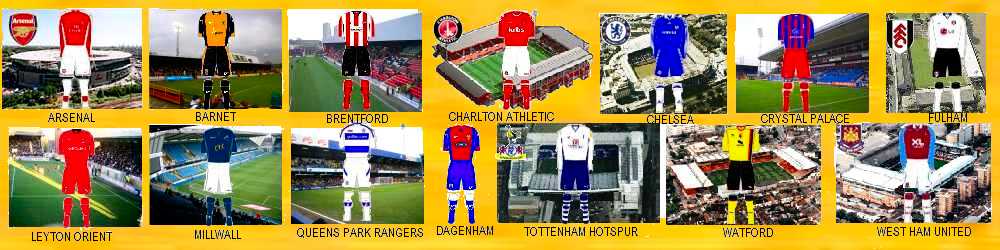
Football
Click On Team of Your Choice
Come
Horse Riding- Meet
New Friends-
Get
Fit. It's Fun

|
Click on your prefered
County Stable door to
view the the
Wessex Counties
Horse Riding Stables
& Tuition &
other Equine sections
or the table
below
Lawd above! Click on
yaaahr prefered Coun'y
Stable Ronald de
Boer ter view da
da Wessex Counties
Horse Ridin' Stables
& Tuishun &
uvver Equine secshuns
awer da table below. ,
innit.
|
|
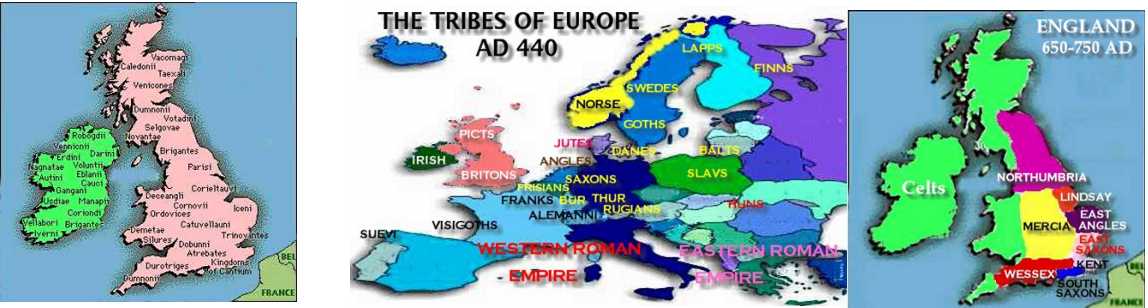 Lor' Awright geeezzaa! The Angles &
Wessaxens came 'ere fer a visi' 1515 years
ago an' liked i' so much they 'ave stayed.
Lor' Awright geeezzaa! The Angles &
Wessaxens came 'ere fer a visi' 1515 years
ago an' liked i' so much they 'ave stayed.
Accordin'
ter saaahrces such as da History ov Bede,
after da invasion ov Britannia, da Angles
spli' up an' founded da kingdoms ov da
Nord Angelnen (Northumbria), Ost Angelnen
(East Anglia), an' da Mittlere Angelnen
(Mercia). Confirmashun is afforded by
English an' Danish tradishuns relatin' ter
two kings named Wermund an' Offa ov Angel,
from whom da Mercian royal family claimed
descen' an' whose exploits are connected
wiv Angeln, Schleswig, an' Rendsburg.
Danish tradishun 'as preserved record ov
two governors ov Schleswig, farfer an'
son, in their service, Frowinus (Freawine)
an' Wigo (Wig), from whom da royal family
ov Wessex claimed descent. Durin' da 5f
century, da Anglii invaded Great Britain,
after which time their name does not recur
on da continen' except in da title ov
Suevi Angili.
Our Group 'as generated over 380
million visits ter aaahr sites since 1999,
an' dis is yaaahr oppawtuni'y ter
participate in da success. Join up wiv
deese leadin' UK advertisin' sites ter
maximise yaaahr website's viewin' in
Britain. Sorted mate.
Early
settlement
Following the virtual
abandonment of the Roman city, the
area's strategic location on the
River Thames meant that the site was
not deserted for long. From the late
5th century, Anglo-Saxons began to
inhabit the area.
There is almost no reliable
evidence about what happened in the
London area during the Sub-Roman
"Dark Age" period from around 450 AD
to 600 AD. Although early
Anglo-Saxon settlement avoided the
area immediately around Londinium,
there was occupation on a small
scale of much of the hinterland on
both sides of the river. There is no
contemporary literary evidence, but
the area must for some time have
been an active frontier between
Saxons and Britons.
Lundenwic
Early Anglo-Saxon settlement
in the London area was not on the
site of the abandoned Roman city,
although the Roman city walls
remained intact.
Instead, by the 7th century a
village and trading centre named Lundenwic,
was established approximately one
mile (1.6km) to the west of Londinium
(named Lundenburh or "London
Fort" by the Saxons Probably
using the mouth of the River Fleet
as a trading ship and fishing boat
harbour.
Lundenwic in the early eighth
century, was described by the
Venerable Bede as "a trading centre
for many nations who visit it by
land and sea". The word "wic"
was an Old
English word for 'trading
town' , so Lundenwic
literally meant 'London trading
town'.
Archaeologists were for
many years puzzled as to where early
Anglo-Saxon London was located, as
they could find little evidence of
occupation within the Roman city
walls from this period. However in
the 1980s it was 'rediscovered'
after extensive excavations were
reinterpreted as of an urban
character by archaeologists Alan
Vince and Martin Biddle working
independently . Recent
excavations
in the Covent Garden area have
uncovered the extensive Anglo-Saxon
settlement dating back into the 7th
century. The excavations show that
the settlement covered about 600,000
square metres, stretching from the
present-day National Gallery site in
the west to Aldwych in the east.
By about 600 AD Anglo-Saxon
England had become divided into a
number of small kingdoms (see
Heptarchy) From the mid-6th century,
the London area was incorporated
into the East
Saxons kingdom, which
extended as far west as St Albans
and included all of later Middlesex,
and probably Surrey too for a
time.In 604 Saeberht of the East
Saxons converted to Christianity and
London received Mellitus, its first
post-Roman bishop. At this time
Essex owed allegiance to the
Bretwalda Ethelbert
of Kent, and it was under Ethelbert
that Mellitus founded the first St. Paul's
Cathedral, traditionally
said to be on the site of an old
Roman Temple of Diana (although
Christopher Wren found no evidence
of this). This would have only been
a modest church at first and may
well have been destroyed after he
was expelled from the city by
Saeberht's pagan successors in 616.
Christianity did not return until
around 675 when Theodore of Tarsus
installed St
Eorconweald as bishop.
|
|
The new town came under direct
Mercian control in c.670 as the East
Saxon kingdom of which it had once
been part was gradually reduced in
size and status. After the death of
the Mercian king Offa in 796,
control of London was disputed
between Mercia and Wessex.
Viking
attacks
Attacks from Vikings
became increasingly common from
around 830 onwards. London was
attacked in 842 in a raid that was
described by a chronicler as the
"great slaughter". In 851 another
raid on London, reputedly involving
350 ships, came to plunder the city.
In 865 the Viking "Great
Heathen Army" launched a large scale
invasion of East Anglia and soon
overran East Anglia, Mercia and
Northumbria and came close to
controlling most of England. By 871
they had reached London, and are
believed to have camped within the
old Roman walls during the winter of
that year. Although it is unclear
what happened during this time,
London may have come under Viking
control for a period.
In 878 however, English forces
led by King Alfred the Great
defeated the Vikings at the Battle
of Edington and forced the Viking
leader Guthrum
to sue for peace. The Treaty of
Wedmore and the later Treaty of
Alfred and Guthrum divided England
into Alfred's Saxon controlled
kingdom and Danish controlled
Danelaw
Lundenburh
English rule in London was
restored by 886. King Alfred quickly
set about establishing fortified
towns or "Burhs" across
England to improve defences, London
was no exception. Within ten years,
settlement within the old Roman
walls was re-established, but known
as Lundenburh. The Roman
walls were repaired and the
defensive ditch re-cut. This move
was effectively the beginning of the
present City of London, the
boundaries of which are still to
some extent defined by the ancient
city walls.
As the focus of the city was
moved back to within the old Roman
walls, the older settlement of Lundenwic
was largely abandoned and gained the
name of Ealdwic or "old
settlement". The name survives today
as Aldwych.
10th
century London
Alfred appointed his
son-in-law Earl Aethelred of Mercia,
who was the heir to the destroyed
Kingdom of Mercia, as Governor of
London and established two defended
Boroughs
to defend the bridge which was
probably rebuilt at this time. The
southern end of the Bridge was
established as the Borough of
Southwark or Suthringa Geworc
(defensive work of the men of
Surrey) as it was originally known.
From this point, the City of London
began to develop its own unique
local government.
|
|
After
Aethelred's death, London came under
the direct control of English kings.
The Kingdom of England established
by Alfred was expanded by his son
Edward the Elder who won back much
land from Danish control. By the
early 10th century London had become
an important commercial centre.
Although the capital of the Kingdom
of England was in Winchester, London
became increasingly important as a
political centre. King Aethelstan
held many Royal Councils in London
and issued laws from there. King Aethelred the
Unready favoured London as
his capital and issued the Laws of London
there in 978.
The
Vikings return
It was during the reign of
Aethelred that Viking raids began
again, led by King Sweyn Forkbeard
of Denmark. London was attacked
unsuccessfully in 994, but numerous
raids followed. By 1013 London
underwent a long siege and Aethelred
fled abroad. King Sven died but his
son Canute continued the attacks,
and the following year overran the
city.
Aethelred returned with his
ally Olaf of Norway to reclaim
London. A Norse
saga tells of a battle
during the Viking occupation where
Aethelred returned to attack
Viking-occupied London. According to
the saga, the Danes lined London
Bridge and showered the attackers
with spears. Undaunted, the
attackers pulled the roofs off
nearby houses and held them over
their heads in the boats. Thus
protected, they were able to get
close enough to the bridge to attach
ropes to the piers and pull the
bridge down, thus ending the Viking
occupation of London. There is some
speculation that the nursery rhyme
"London Bridge is falling down"
stems from this incident.
Following Aethelred's death in
1016, his son Edmund Ironside was
declared king. The Vikings however
returned and again placed London
under siege. Initially the city's
defenders were able to hold back the
invaders. However, Edmund was
eventually forced to share power
with Canute. When Edmund died Canute
became the sole King of England.
After two short lived Danish kings,
(Harold Harefoot and Harthacanute)
the Anglo-Saxon line was restored
when Canute's stepson Edward the
Confessor took up the throne in
1042.
Run up to the
Norman invasion
Following Edward's death, no
clear heir was apparent, and his
cousin, Duke William of
Normandy, claimed the
throne. The Royal Council, however,
met in the city and elected the dead
King's brother-in-law, Harold
Godwinson (The Earl of Wessex) as
King. He was crowned in Westminster
Abbey. William, outraged by this,
then sent an army to invade England.
on 11th of October 1066 Harold
marched his army out of London.At
Hastings, on 15 October 1066, the
Anglo-Saxon Kingdom ended and Norman
England began. The Kingdoms were
demolished and replaced by counties.
|
  THE
LANGUAGE
THE
LANGUAGE
If you are coming to London you will need to
know Rhyming Cockney Slang-
otherwise you will not understand what the
natives are talking about.
Full Details are available on
http://www.cockneyrhymingslang.co.uk/rabbit
There is a handy transalator on the page.
What is Cockney rhyming slang?
|
Cockney
rhyming
slang is not a language but a
collection of phrases used by
Cockneys and other Londoners.
What's
a Cockney?
St
Mary Le Bow church in Cheapside,
London
A
true Cockney is someone born
within the sound of Bow Bells. (St
Mary-le-Bow Church in Cheapside,
London).
However
the term Cockney is now loosely
applied to many born outside this
area as long as they have a
"Cockney" accent or a Cockney
heritage.
The
Cockney
accent is heard less often in
Central London these days but is
widely heard in the outer London
boroughs, the London suburbs and
all across South East England. It
is common in Bedfordshire towns
like Luton and Leighton Buzzard,
and Essex towns such as Romford.
|
What's
Rhyming Slang?
Rhyming Slang phrases are
derived from taking an expression
which rhymes with a word and then
using that expression instead of
the word. For example the word
"look" rhymes with "butcher's
hook". In many cases the rhyming
word is omitted - so you won't
find too many Londoners having a
"bucher's hook" at this site, but
you might find a few having a
"butcher's".
The rhyming word is not
always omitted so Cockney
expressions can vary in their
construction, and it is simply a
matter of convention which version
is used.
Some
Cockney rhyming slang for parts of
the body
In
this
list of example Cockney slang
for parts of the body, you'll
notice that some expressions
omit the rhyming word but
others do not.
Who
uses Cockney Rhyming Slang?
Cockney Rhyming Slang
originated in the East End of
London. Some slang expressions
have escaped from London and are
in popular use throughout the rest
of Britain. For example "use your
loaf" is an everyday phrase for
the British, but not too many
people realise it is Cockney
Rhyming Slang ("loaf of bread:
head"). There are many more
examples of this unwitting use of
Cockney Rhyming Slang.
|
Television
has
raised awareness of Cockney
Rhyming Slang to far greater
heights. Classic TV shows such
as "Steptoe and Son",
"Minder", "Porridge" and "Only
Fools and Horses" have done
much to spread the slang
throughout Britain and to the
rest of the world.
Is
Cockney Rhyming Slang dead?
Not on your Nelly! Cockney
Rhyming Slang may have had its
highs and lows but today it is in
use as never before.
In the last few years
hundreds of brand new slang
expressions have been invented -
many betraying their modern roots,
eg "Emma Freuds: hemorrhoids";
(Emma Freud is a TV and radio
broadcaster) and "Ayrton Senna":
tenner (10 pound note).
How
is Cockney slang developing?
Modern Cockney slang that is
being developed today tends to
only rhyme words with the names of
celebrities or famous people.
There are very few new Cockney
slang expressions that do not
follow this trend. The only one
that has gained much ground
recently that bucks this trend is
"Wind and Kite" meaning "Web
site".
Cockney expressions are
being exported from London all
over the world. Here at
cockneyrhymingslang.co.uk we get
loads of enquiries from folks as
far afield as the USA, Canada and
Japan, all wanting to know the
meaning of Cockney expressions.
|
| Slang |
Meaning |
|
Slang |
Meaning |
| Adam and
Eve |
believe |
|
Holy friar |
liar |
| Almond
rocks |
socks |
|
Holy ghost |
toast |
| Apple
fritter |
bitter
(beer) |
|
House to
let |
bet |
| Apple
peeling |
feeling |
|
Jack the
Ripper |
kipper |
| Apple tart |
heart |
|
Jack 'n'
Jill |
till |
| Apples and
pears |
stairs |
|
Jam jar |
car |
| Ball of
Chalk |
walk |
|
Jam tart |
heart |
| Barnet Fair |
hair |
|
Jeremiah |
fire |
| Bees 'n'
honey |
money |
|
Jimmy
Riddle |
piddle
(Just off for a Jimmy) |
| Boat race |
face |
|
Jim Skinner |
dinner |
| Bo-peep |
sleep |
|
Joanna |
piano |
| Bottle and
glass |
arse |
|
Joe Blake |
steak |
| Bow &
arrow |
barrow |
|
Kate Karney |
army |
| Brown bread |
dead |
|
Lemon
squash |
wash |
| Bubble and
squeak |
speak |
|
Linen
draper |
paper |
| Burnt
cinder |
winder
(window) |
|
Loaf of
bread |
head |
| Butcher' s
hook |
look |
|
Mince pies |
eyes |
| Cain &
Able |
table |
|
Mother
Hubbard |
cupboard |
| Chalk Farm |
arm |
|
Mutt and
Jeff |
deaf |
| Cherry-'ogg
(Hogg) |
dog |
|
Peckham Rye |
tie |
| China plate |
mate
(friend) |
|
Pig's ear |
beer |
| Coach 'n'
badge |
cadge (get
money off) |
|
Plates of
meat |
feet |
| Cock 'n'
hen |
ten or £10 |
|
Pork pie |
lie |
| Currant bun |
son/sun |
|
Rabbit 'n'
pork |
talk
(Bunny) |
| Daisy Roots |
boots |
|
Rocking
horse |
sauce |
| Derby Kelly |
belly |
|
Rory O'More |
floor |
| Dicky Bird |
word |
|
Rosie Lee |
tea |
| Dicky Dirt |
shirt |
|
Rub a Dub
Dub |
pub |
| Dig in the
grave |
shave |
|
Salmon and
trout |
gout |
| Ding Dong |
sing song |
|
Saucepan
lid |
kid
(child) |
| Dr. Crippen |
dripping |
|
Sexton
Blake |
cake |
| Dog and
bone |
phone |
|
Six to four |
whore |
| Duke of
Kent |
rent |
|
Skin 'n'
blister |
sister |
| Friar Tuck |
luck |
|
Sky rocket |
pocket |
| Frog and
toad |
road |
|
Taters in
the mould |
cold |
| George Raft |
daft
(crazy) |
|
Tea leaf |
thief |
| Ginger beer |
queer |
|
Tit for tat |
hat |
| Gold watch |
scotch |
|
Tom and
Dick |
sick |
| Ham and
eggs |
legs |
|
Tommy
Tucker |
supper |
| Hampstead
Heath |
teeth |
|
Trouble and
strife |
wife |
| Harry Lime |
time |
|
Two and
Eight |
state |
| Heap of
coke |
bloke |
|
Uncle Ned |
bed |
| Hen 'n' fox |
box |
|
Whistle and
Flute |
suit |
|
|
 |
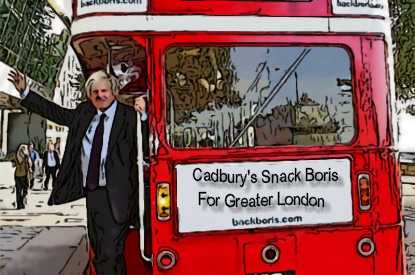
Gawdon
Bennet! Ken Livingstone Eat Yaaahr
Horse an' Cart Out. OK?
|
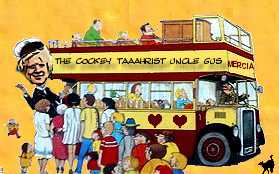
Blimey!
All Aboard. Nuff said, yeah?
|
|
|
 |
THE
PEARLY KINGS & QUEENS OF LONDON
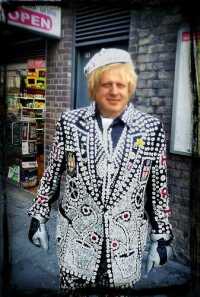
One of
the great traditions at the Epsom
horseracing course, on the southern
outskirts of London, on Derby Day is
the arrival of the Pearly King and
Queen in their decorated
donkey-cart.
The
Pearly Royals started in Victorian
days and some still reign today in
their various London districts.
The 'Pearlies' were
costermonger's…street vendors of
fruit and vegetables, and their
distinctive costumes are said to
have sprung from the arrival of a
big cargo of pearl-buttons from
Japan in the 1860's. It seems
that one of the costers sewed some
of the buttons round the edge of his
wide-bottomed trousers, and the
fashion caught on. Traditionally,
costers elected 'Kings' to lead them
against bullies seeking to drive
them from their pitches.
Each individual area of London
had a king and his 'donah', (as the
wives are called) and both were
elaborately turned out.
The
magnificent suits, hats and dresses,
handed down together with hereditary
titles, are sewn with mystic
symbols, stars, moons, suns,
flowers, diamonds, Trees of Life,
Eyes of God and fertility designs.
Each outfit can have as many
as 30,000 buttons on it and can
weigh as much as 30 kilograms or
more. These suits
are worn at charity events,
christenings, weddings and funerals.
Where
there is a special charity drive the
kings and queens ride in splendour
on their decorated carts.
At the annual autumn Harvest
Festival service at St.
Martin-in-the-Fields church in
London, the Pearly princesses take
bouquets of vegetables as thank -
offerings.
Today,
around 30 Pearly Families continue
the tradition to raise money for
various charities.Each London
Borough has a King and Queen, as
do the City of London and the City
of Westminster. It's a colourful
London tradition and one that has
been kept alive by a few dedicated
people, who remain figureheads for
the capital's working class
communities. It
will be very sad if the tradition
of the Pearly King and Queen dies
out, as
they are a very colourful part
of London's history. Long
live the Pearly Kings and
Queens!
|
|
The London
tradition of the Pearly
Kings and Queens began in
1875, by a small lad named
Henry Croft.
Henry was
born and raised in an
orphanage in Charlton
Street, Somers Town,
London, NW1. At the age of
13 he had to leave the
orphanage and make his own
way in life. His first job
was as a Municipal Road
Sweeper in the market of
Somers Town. Henry worked
hard in the market and
soon made many friends, he
was particularly drawn to
the Costermongers who were
a tough breed of market
traders. He got to know
more about their way of
life, their generosity and
their fashion of smoke
pearl buttons sewn on the
piped seams of their
trousers, jackets,
waistcoats and caps. This
showed their status as
they worked the market
stalls from day to day.
The Costermongers were
caring and looked after
each other if they were
sick or in need.
Henry was so
fascinated by this way of
life and decided he would
like to help those who
were more unfortunate than
himself, including the
children back at the
orphanage where he had
spent his early life. He
knew that in order to
collect a lot of money he
needed to draw attention
to himself. So as Henry
swept the market streets
he started to collect all
the pearl buttons he found
that had fallen off of the
clothes of people visiting
the market, and when he
had enough he started to
sew them on his cap and
then continued until his
entire suit was filled,
the very first smother
suit.
Because Henry
was an orphan he had no
one to help him with his
suit so he had to learn
how to sew. It was this
that started the
tradition, which is still
carried on by descendants
of original Pearly
Families, that the Kings
do all the designs and
sewing.
|
Designs
on suits tend to run in
families but here are a
few that you may see and
recognise:
Horseshoe
= Luck
Doves = Peace
Heart = Charity
Anchor = Hope
Cross = Faith
Wheel = Circle of Life
Symbols of Playing Cards
= Life is a gamble
Flower Pots =
Costermongers
Donkey Carts =
Costermongers
Henry Croft was
in so much demand for his
charity work, as many of
London's hospitals,
workhouses and orphanages
needed help, that he
turned to his friends the
Costermongers and they did
not let him down. Many of
the Costermongers became
the first Pearly Families.
There were 28 families,
one for each of the London
boroughs, one for the City
of Westminster, and one
for the City of London.
Each
outfit can hold many tens
of thousands of buttons on
it and can weigh as much
as 30 kilograms or more.
There are two types of
suit - a Smother Suit and
a Skeleton Suit, the
former having very little
cloth showing and totally
covered in buttons, and
the latter having far
fewer buttons.
|
It is estimated
that when he died in 1930
(aged 68), he had
collected over £5000. The
equivalent in today's
values would be
approximately £200,000.
His funeral was
a spectacular affair, and
was filmed by Pathe News.
All of the Pearlies
attended (roughly 400) and
they followed the coffin
to where Henry was buried.
The charities that he had
helped over the year all
pulled together to help
pay for a statue of Henry
for his grave.
Unfortunately in 1995 the
statue was vandalised and
no longer stands in the
cemetery. It has been
replaced with a headstone,
inlaid with Henry's
photograph, so it can be
easily found by visitors.
The statue has
now been fully restored
and can be seen in the
crypt at the church of St.
Martins in the Field,
Trafalgar Square.
 The Pearly
tradition has survived for
over 125 years and
hopefully it will continue
for many more to come. We
still have a few families
who can be traced back to
the original generation of
Pearlies. Henry Croft's
family still carries on
the tradition with his
Great-Granddaughter
wearing the title of
'Somers Town'. The Pearly
tradition has survived for
over 125 years and
hopefully it will continue
for many more to come. We
still have a few families
who can be traced back to
the original generation of
Pearlies. Henry Croft's
family still carries on
the tradition with his
Great-Granddaughter
wearing the title of
'Somers Town'.
By Jon
Arrowsmith, the Pearly
King of Walthamstow
|
|
|

Lambeth
Walk
Lambeth
Walk is a walk, a song, a
dance, two films, a
photograph, a market and a
street in Kennington .The
original "Lambeth Walk" was an
evening promenade by the
predominantly poor residents
of North Lambeth:- that is the
area around Black Prince Road.The
Song The walk was
popularised by Noel Gay who
wrote the song Doin'
the
Lambeth Walk with
its catchy tune for the 1937
Douglas Furber musical comedy
Me
and My Girl.
The main
verse of The Lambeth
Walk is:-
Any
time you’re Lambeth way
Any evening, any day,
You ’ll find us all
Doin’ the Lambeth
walk. ... Oi!
The
Lambeth Walk also became a
very popular walking dance, done
in a jaunty, strutting fashion.
The hero
of the musical was Bill Snibson,
the black sheep of an
aristocratic family, who
inherited the family
fortune.
BRITISH
KING GETS LESSON FROM 'LAMBETH
WALK' STAR.
King George and Queen
Elizabeth saw the "Lambeth
Walk" show, "Me and My Gal" at
the Victoria Palace
Theatre . The Queen wore
a white slipper-satin gown, a
white fox cape and two
gardenias in her hair. The
King, in evening dress, wore a
gardenia in his buttonhole.
Both joined in the shouted
"Oi" which ends the Lambeth
Walk chorus. Lupino Lane, star
of the show, was presented to
the King and Queen after the
performance. "They said they
had been walking the Lambeth
Walk the wrong way - the
ballroom way - and promised to
do it our way in the future.""
 "Knees
Up
Mother Brown" is a 1938 song
composed by Harris Weston and
Bert Lee. It became a popular
pub song, and was particularly
associated with Cockney culture.
The expression "knees up" came
to mean a party or a dance "Knees
Up
Mother Brown" is a 1938 song
composed by Harris Weston and
Bert Lee. It became a popular
pub song, and was particularly
associated with Cockney culture.
The expression "knees up" came
to mean a party or a dance.
"Oh, knees up Mother Brown,
Knees up Mother Brown,
Come along, dearie, let it go
E-I-E-I-E-I-Oh!
It's your blooming birthday
Let's wake up all the town;
So knees up, knees up
Don't get the breeze up
Knees up Mother Brown!"
|
Accommodation
in
London university halls
NEWLY AVAILABLE!
Staying in
London university accommodation is a
convenient and affordable way to stay in
London. With brand-new rooms
(completed in 2008) from £40, it
is a comfortable and cost effective
alternative to staying in a hostel or a
hotel. We
currently have self-catered
accommodation in Victoria: an
extremely central location and a
perfect starting point from which to explore
the city, being walking distance from both
Buckingham Palace and the Houses of
Parliament.Availability is mainly in the
summer vacation period (June, July,
August, September), when students clear
their rooms. Rooms typically become
available two to three months in
advance, so please revisit the website
within that period if nothing is available
now.
Click
here for Bed & Breakfast at
The University of London
or
Directly
from
Landlords - our rooms include all
bills, wireless internet &
maintenance. Now you
(professionals or students) in
your 20s or 30s can reserve or
view cheap rooms in London well
within your budget with prices
that will beat hostel
accommodation...Click Below

|